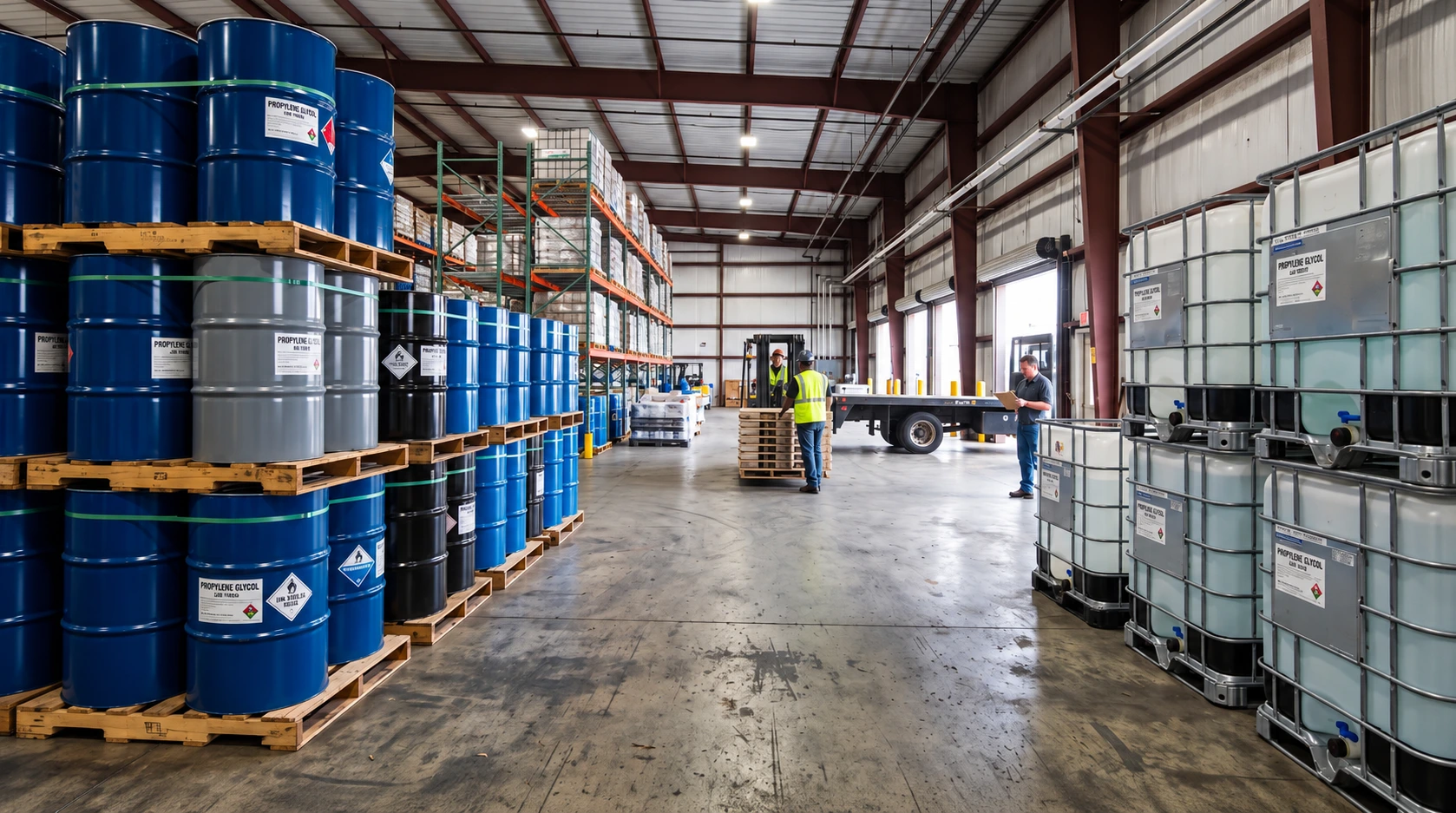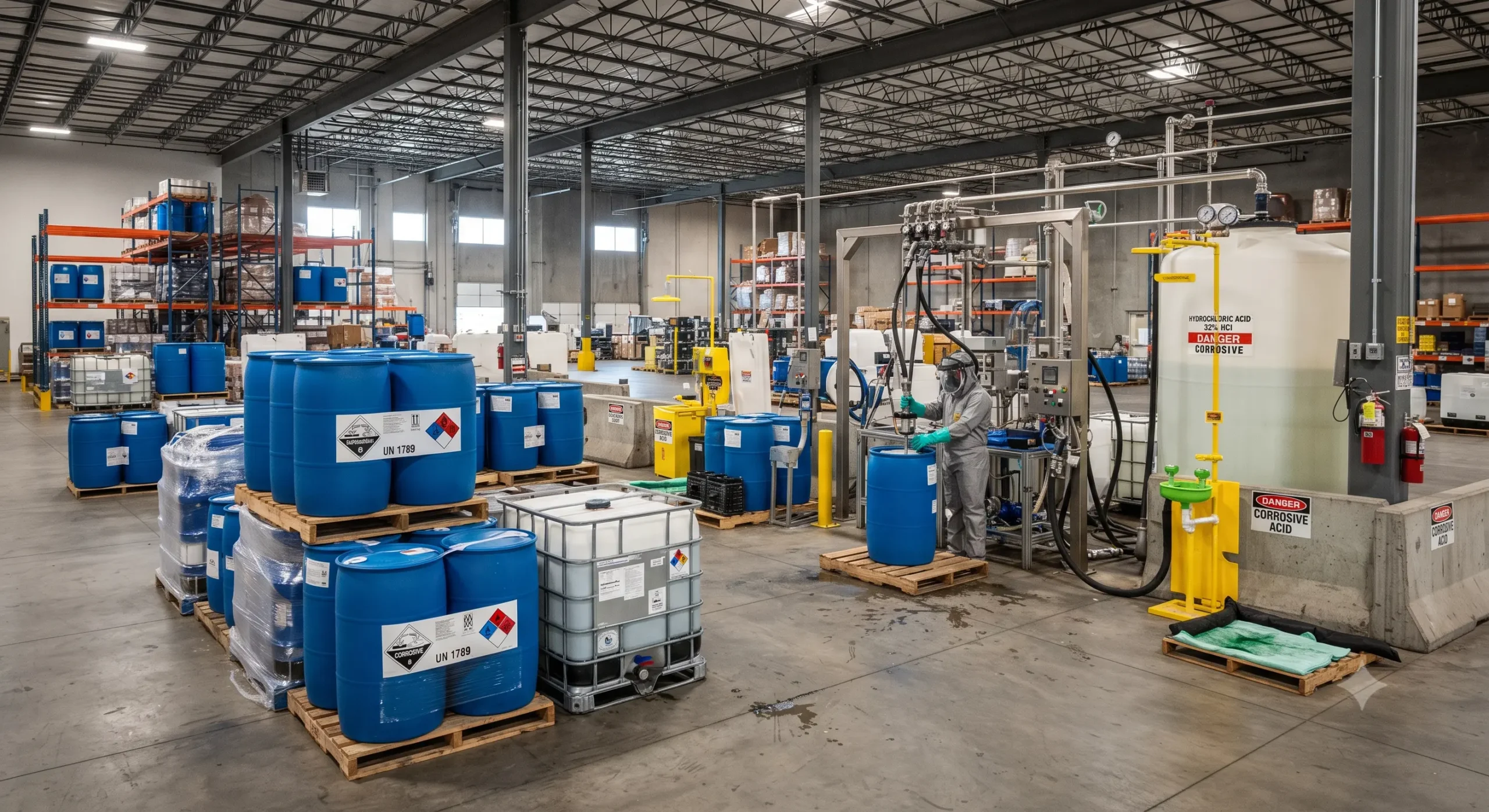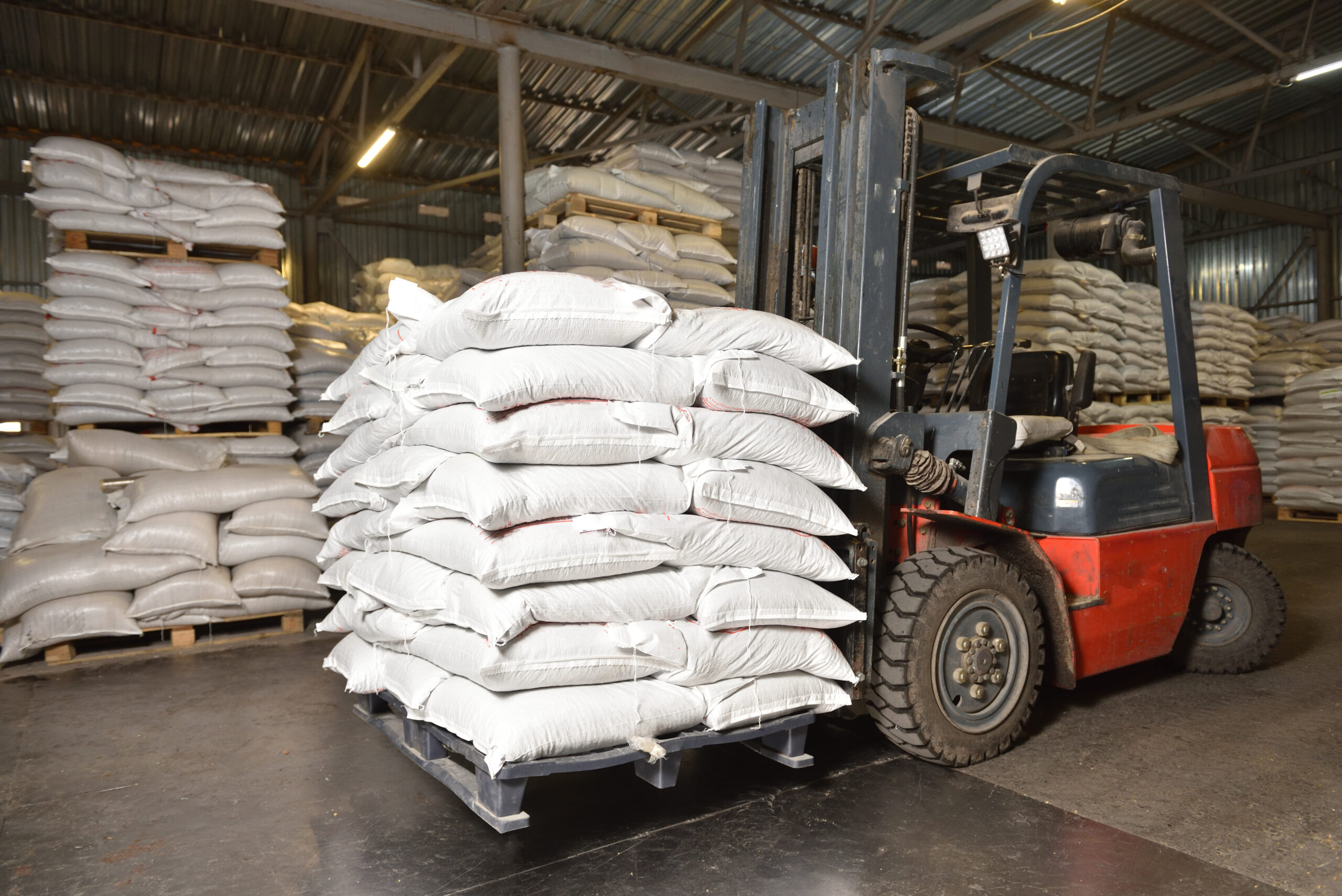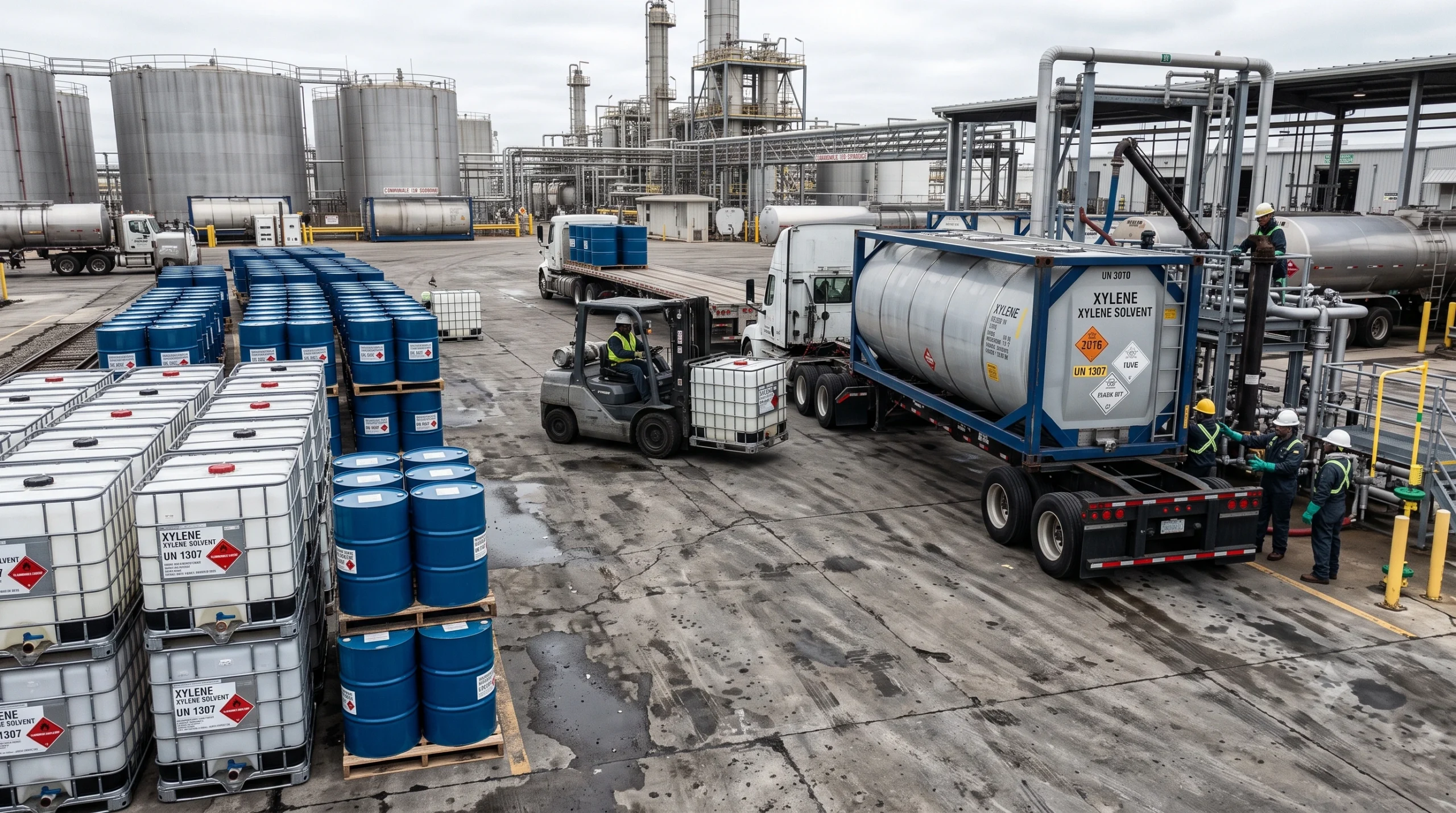


At a Glance
- Start with form: Sodium hydroxide source selection starts with the required physical form, not the supplier’s name.
- Specify separately: Flakes, beads, prills and liquid lye need separate specifications, handling plans and RFQ language.
- Avoid false equivalence: A producer of liquid caustic is not automatically a caustic soda flakes manufacturer.
- Compare documents: Request current TDS, SDS, COA, packaging, origin and delivery information before comparing quotes.
- Use the right route: The companies below are not ranked. The best route depends on your form and destination.
- Match the buying model: A domestic-stock offer and an import programme can require different lead-time, origin and Incoterm checks.
What you’ll learn: how to qualify US producer and supplier routes for the exact sodium hydroxide form your process requires.
For caustic soda manufacturers USA procurement searches, buyers should first verify physical form, assay, packaging, shipment mode, documentation and delivery destination. This matters especially when a process requires caustic soda flakes, rather than beads, prills or liquid lye. USGS estimates that US salt production reached 40 million tons in 2025. Chlorine and caustic soda manufacturers were the main chemical-industry consumers of salt. This makes supply-route clarity important for procurement teams. USGS Mineral Commodity Summaries 2026 provides national context.
This guide separates producers from suppliers. Confirm flakes availability. Request a Quote for your required form and destination.
Contents
- Forms, supply routes and selection criteria
- U.S. manufacturers and suppliers to consider
- Flakes specifications, pricing and RFQ requirements
- Safety and storage scope
- Frequently asked questions
Caustic Soda Beads vs Flakes and Liquid Lye
Caustic soda is sodium hydroxide, or NaOH, with CAS number 1310-73-2. Its physical form can change storage, handling, transport and process suitability.
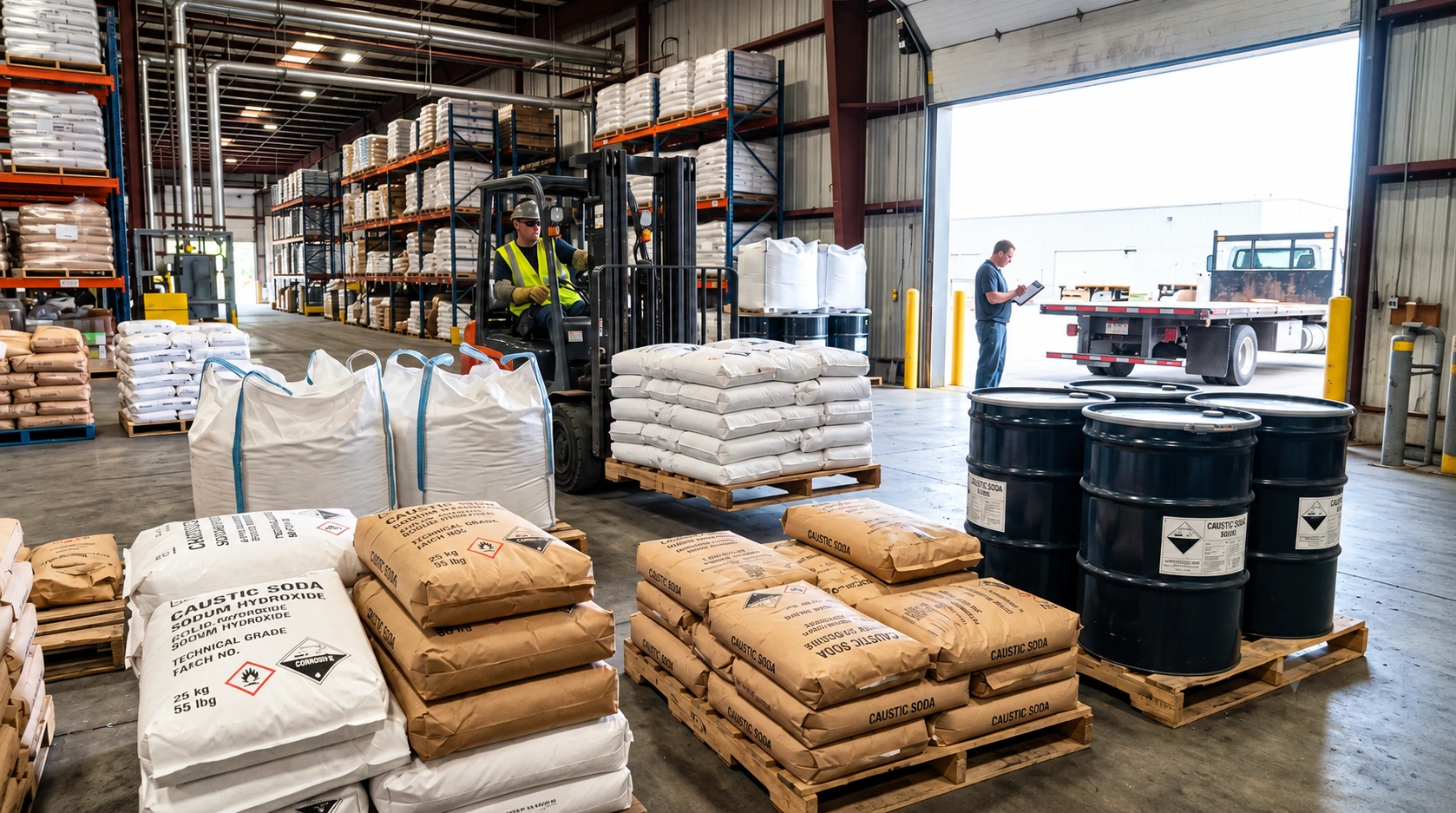
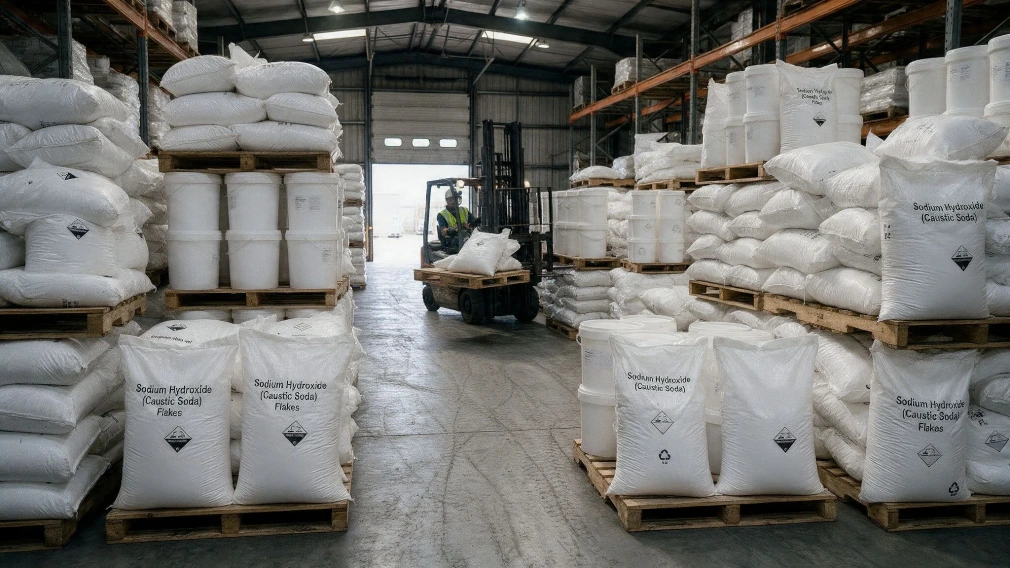
Flakes are thin solid pieces. Beads, pearls and prills are distinct particle forms. Liquid lye is sodium hydroxide dissolved in water at a stated concentration. A buyer should not assume one form can replace another without process review. The supplier’s current SDS and site procedures should guide safe handling.
| Form | Buyer should confirm | Do not assume |
|---|---|---|
| Flakes | Assay, moisture, packaging, net weight, COA and origin | Every sodium hydroxide producer supplies flakes |
| Beads, pearls or prills | Particle form, dust handling, assay and packaging | Beads are flakes |
| Liquid lye | Concentration, grade, truck or rail route, and compatible unloading | It replaces a solid form without process review |
Choose the supply route before building a shortlist
Use the required form and operating model to narrow the list before comparing company names:
| If your requirement is | Start with | Verify before comparing price |
|---|---|---|
| Solid sodium hydroxide for batch use or dry storage | A supplier that explicitly confirms flakes | Assay, moisture, particle form, pack size, handling compatibility and COA route |
| Continuous or high-volume automated dosing | A producer or distributor offering liquid lye | Concentration, grade, tank-truck or rail fit, unloading configuration and serving location |
| Food, pharmaceutical or tightly controlled process use | A route that can document the required grade | The applicable specification, certification scope, impurity limits and batch-document trail |
| A lane with continuity risk or uncertain lead time | More than one qualified commercial route | Actual manufacturer, origin, inventory or production lead time, Incoterm and contingency plan |
The manufacturer name does not answer these questions by itself. A supplier may be the right route for flakes or a specific delivery lane, while a direct producer route may fit repeat liquid demand. Qualify the material and route that will actually be quoted.
How this list was selected
This list uses five procurement gates: US commercial relevance, an official company page, a stated producer or supplier role, a stated physical form, and a documentation or contact route. It is not a capacity ranking or an endorsement. Public information can change, so each buyer should complete a fresh qualification before an order.
Publisher disclosure: Elchemy publishes this article and is included as a supplier/sourcing-partner route using the same published criteria. It is not presented as a US caustic-soda manufacturer.
Last verified: 22 September 2026. The list is intentionally transparent about evidence gaps. Where a company states dry sodium hydroxide but not flakes, the profile says to confirm the form before RFQ.
Caustic Soda Manufacturers USA and Suppliers to Consider
The comparison table distinguishes confirmed product form from the commercial role a buyer should investigate. Companies are presented as sourcing routes rather than ranked by capacity, quality, price, stock, safety or delivery speed. Elchemy publishes this article; its supplier role and disclosure are stated below.
| Company | Role | Confirmed form | Buyer action |
|---|---|---|---|
| ChemCeed | Supplier/distributor | Liquid 50% | Confirm whether a solid form is available before RFQ. |
| Dow | Integrated producer/supplier | Liquid 32% and 50% | Confirm the US route, applicable grade and product form. |
| Elchemy | Supplier/sourcing partner | Caustic soda flakes; North American supply route stated | Confirm assay, current stock or lead time, packaging, origin and delivery terms. |
| ERCO Worldwide | Producer/supplier | Form to confirm | Request the required physical form and current SDS or specification. |
| Hawkins | Supplier/distributor | Liquid and dry | Confirm whether dry material is flakes, beads, prills or another form. |
| Hydrite | Supplier | Flakes, beads and liquid | Confirm flake grade, assay and packaging. |
| Kraft Chemical | Supplier | Form to confirm | Request form, packaging, origin and commercial availability. |
| Olin Chlor Alkali | Producer | Liquid solution | Confirm grade, supplying site and delivery route. |
| Occidental Chemical | Producer | 50% liquid | Confirm liquid compatibility, grade and shipment method. |
| Univar Solutions | Distributor | Flake listing | Confirm flake availability for the destination and order size. |
| Westlake | Producer | Liquid and beads | Confirm which form fits the process before RFQ. |
ChemCeed
ChemCeed presents caustic soda as a commercial-grade product for chemical processing. Its product page identifies membrane grade availability and totes or bulk packaging. Request the TDS, SDS, representative COA, concentration, package, origin and shipment method. Confirm in writing whether a solid form is offered.
Dow
Dow’s TRACELIGHT caustic soda page identifies 32% and 50% products. Its public page describes a specialised range and should not be treated as proof of US flakes supply. Request the current product specification, SDS, COA route, actual supplying site, concentration and shipment mode. Confirm the serving region and commercial availability directly.
Elchemy
Role: Supplier/sourcing partner. Elchemy publishes this article and is not presented as a US caustic-soda manufacturer. It provides product and quote routes for defined flakes, lye, or prills requirements, while the actual source, documentation, and delivery fit remain subject to confirmation for the individual order.
Buyer benefits:
- Product-form options: Caustic Soda Flakes, Caustic Soda Lye, and Caustic Soda Prills.
- A requirement-led enquiry built around assay, application, volume, packaging preference, and destination.
- A clear request for current source or origin, product specification, SDS, COA where required, and commercial delivery terms.
ERCO Worldwide
ERCO Worldwide identifies itself as a caustic soda producer and supplier with two membrane-grade plants. Its caustic soda page lists documentation for Port Edwards, Wisconsin. The public page does not establish flakes or beads. Request the SDS, product specification, COA, supplying site, concentration or physical form, and transport method. For liquid-source checks, use this guide to select a caustic soda manufacturer. Obtain written confirmation before treating any solid form as available.
Hawkins
Hawkins states that it distributes both liquid and dry sodium hydroxide. Its sodium hydroxide page also identifies bulk and multiple packaging options. Dry sodium hydroxide is not a confirmed flakes statement. Ask for TDS, SDS, batch COA, exact dry form, packaging, manufacturer and origin. Confirm whether the dry offer is flakes, beads, prills or another form.
Hydrite
Hydrite’s caustic soda range explicitly lists caustic soda flakes, beads and liquid variants. That makes it a confirmed flakes supplier entry, rather than a flakes manufacturer claim. Request the current flake specification, assay, moisture limit, packaging, COA, origin and delivery method. State the required application, annual volume and destination in the RFQ.
Kraft Chemical
Kraft Chemical has a dedicated caustic soda product page, supporting its inclusion as a supplier route. The public evidence used here does not confirm a particular solid form. Request a TDS, SDS, COA, manufacturer or site, origin, physical form, package and transport option. Do not assume caustic soda flakes, beads or liquid availability until Kraft confirms the required form in writing.
Olin Chlor Alkali
Olin’s sodium hydroxide page provides US safety-data listings for sodium hydroxide solution grades. This supports a producer profile for liquid caustic. It does not support calling Olin a flakes manufacturer in this guide. Request the SDS, TDS, concentration, supplying site, shipment method and COA route. Confirm actual serviceability for the destination.
Occidental Chemical Corporation
OxyChem’s official information identifies 50% liquid diaphragm caustic soda at Taft, Louisiana and Wichita, Kansas. It also identifies 50% liquid membrane caustic soda at New Johnsonville, Tennessee and Wichita. This is a liquid-caustic producer entry only. Request the specification, SDS, COA, grade, supplying site and tank or rail suitability.
Univar Solutions
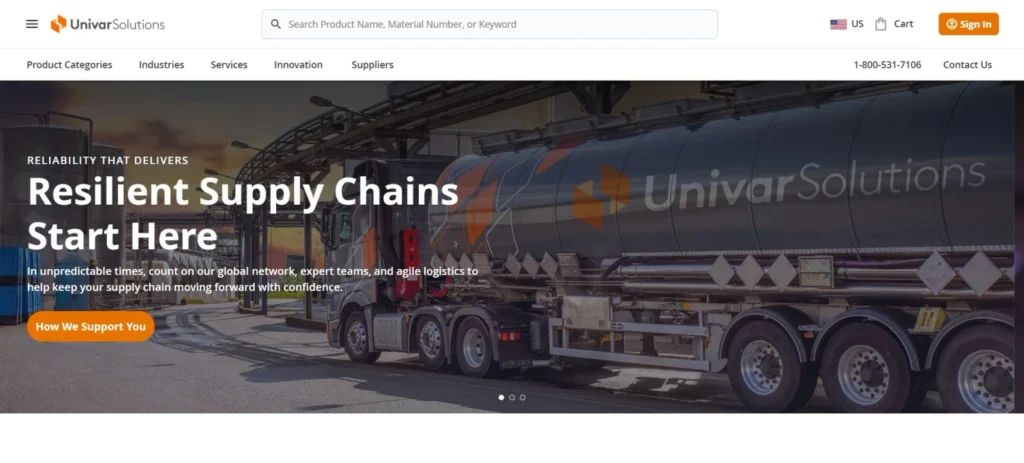
Univar Solutions lists a technical-grade caustic soda flake product, making it a confirmed flakes supplier entry. Review the product listing and obtain a current document pack before selection. Request the TDS, SDS, COA, assay, packaging, net weight, manufacturer and origin. Confirm that the flake product is commercially available for the destination and order size.
Westlake

Westlake’s caustic soda page supports a producer profile and distinguishes liquid caustic from anhydrous caustic beads. Beads should not be described as flakes. Request the SDS, TDS, COA, exact form, grade, package and supplying site. Buyers needing flakes should seek written confirmation rather than infer it from the producer role.
How Elchemy can support caustic soda sourcing
Elchemy is included as a supplier/sourcing partner and article publisher, not as a US caustic-soda manufacturer. Its North America caustic soda flakes page provides a quote route for defined US or Canadian requirements. Include the assay, application, volume, packaging and destination, then confirm the source, documents and delivery terms before approval. For broader context, see Elchemy’s guides to global caustic soda manufacturers and how to choose a caustic soda supplier.
Manufacturer or distributor: which sourcing model fits?
Direct producer engagement can suit repeat, higher-volume demand that needs plant-level information. A distributor or sourcing partner may help with form-specific availability or destination coordination. In either model, confirm the actual manufacturer, origin, form and batch-document route; a company label alone does not establish supply fit. See bulk sodium hydroxide routes before selecting a model.
Caustic Soda Flakes Specifications: What to Verify
An offer described as “98%” or “99%” flakes is not a complete comparison. Ask each supplier to state the values and conditions that apply to the quoted material:
| Field | Why it matters |
|---|---|
| NaOH assay and test basis | Confirms the active sodium hydroxide content against the approved specification. |
| Sodium carbonate, chloride and other relevant impurity limits | Process tolerance can differ by application; do not infer a suitable impurity profile from the assay alone. |
| Flake form, moisture and packaging | Affects storage, dosing, handling and delivered net weight. |
| Grade and intended-use documentation | “Food grade” or another label does not by itself prove suitability for a particular regulated use. |
| TDS, SDS and batch-specific or representative COA | Establishes the document set and the path to the actual batch record. |
| Manufacturer, site, origin and dispatch point | Makes the supply chain and landed-cost assumptions visible. |
| Quote validity, Incoterm, MOQ and lead-time basis | Prevents an apparently lower price from hiding different freight, duty, timing or quantity assumptions. |
For regulated uses, have the buyer’s technical, quality and regulatory teams confirm that the offered grade and documents meet the intended use.
Domestic stock or import route: what changes?
For domestic stock, ask which warehouse will serve the destination, the inventory basis and the material origin. For an import route, ask for manufacturing and dispatch country, trade term, transit window, customs responsibility and contingency plan. Compare the same form, assay, package, origin, delivery point, documents and quote-validity period.
Caustic Soda Flakes Price: What Affects a Quote?
Industrial caustic soda flakes price depends on assay, grade, form, package, volume, origin, delivery point, freight, duties, Incoterm and contract structure. A 25 kg bag enquiry and a bulk import programme are not comparable. Request a dated quote that states the specification, packing basis, origin, trade term, validity and delivery assumptions. Review the caustic soda price index for market context.
Documents and questions to include in your RFQ
Use a complete RFQ to reduce clarification cycles. These supplier-selection checkpoints add due-diligence context:
- Required form: flakes, beads, prills or liquid lye.
- Application, assay and any application-specific limits.
- Annual volume, order size and preferred shipment frequency.
- Delivery destination and receiving constraints.
- Current TDS and SDS.
- Batch-specific or representative COA.
- Packaging, palletisation and net weight.
- Actual manufacturer, site and country of origin.
- Dispatch country and proposed Incoterm.
- Transport mode, MOQ and lead-time estimate.
- Repeat-supply plan and alternative-source approach.
Safety, storage and handling
Sodium hydroxide is corrosive. Follow the supplier’s current SDS and site procedures, using trained personnel, compatible equipment, appropriate PPE and established emergency arrangements. This guide does not replace a site-specific hazard assessment or current product documentation.
FAQs
What is another name for caustic soda flakes?
Caustic soda flakes are also called sodium hydroxide flakes or NaOH flakes. “Caustic soda” and “sodium hydroxide” describe the chemical. “Flakes” describes the physical form. Your RFQ should state both the chemical identity and the required form, then request the supplier’s current specification and SDS.
Are caustic soda flakes and beads the same product form?
No. Both are solid sodium hydroxide, but flakes and beads are different physical forms. Particle characteristics, packaging and handling considerations can differ. Treat them as separate procurement options. Confirm the exact form, assay, packaging and process suitability before approving a substitute.
Who are the main caustic soda producers in the USA?
The producer routes discussed here include Olin, OxyChem, Westlake and ERCO Worldwide. Their public documentation should be reviewed for the relevant grade and supply route. A producer list does not confirm flakes availability. Buyers should qualify form, site, documentation and delivery terms for their own requirement.
How do I compare caustic soda flakes suppliers?
Start with the required form and assay. Then compare TDS, SDS, COA route, packaging, origin, shipment method, delivery terms and quote validity. Ask each supplier the same questions. This produces a clearer comparison than a company name or an unverified product label.
What should a caustic soda flakes specification include?
State the required NaOH assay, applicable impurity limits, flake form, moisture limit where relevant, intended application, documentation requirements, package, volume and delivery destination. Include any site or regulatory requirements. The supplier should confirm each point against the proposed material rather than quote against a generic “caustic soda” description.
Should I buy domestic-stock or imported caustic soda flakes?
Choose based on the required delivery window, volume, approved source, cost structure and continuity plan. Ask domestic suppliers for the serving warehouse, inventory basis and origin. Ask import suppliers for origin, dispatch point, trade term, transit window, customs responsibilities and the backup plan. Compare quotations on the same landed-delivery basis.
What affects industrial caustic soda flakes pricing?
Assay, grade, packaging, volume, origin, freight, delivery point, duties, Incoterm and contract structure all affect the landed cost. Request a dated, specification-matched quote. A lower unit price can be misleading when documentation, packaging or delivery assumptions differ between supplier offers.
What documents should I request before ordering?
Request a current TDS, SDS and batch-specific or representative COA. Also request package details, net weight, manufacturer, manufacturing site, origin, dispatch country, trade term, transport mode and lead-time estimate. Confirm which document will apply to the material you receive, rather than relying on an old file.
Can Elchemy help source caustic soda in the required form?
Elchemy’s North America caustic soda flakes page provides a quote route for a defined flakes requirement. Submit the needed assay, application, volume, packaging preference and destination. Ask for current product documentation and commercial terms, then assess the offer against your internal technical, safety and supplier-approval requirements.
Make the form your first sourcing decision
Start with the physical form, then compare documentation, package, origin, logistics and continuity planning. This avoids treating a liquid producer as a flakes source without evidence. Review chemical supply-chain risks, then submit your requirement to Elchemy with the form and delivery destination.