

At a Glance
- Identity: Caustic soda = Sodium hydroxide = Lye = NaOH (identical compound)
- Global production: Over 70 million tonnes annually
- Molecular weight: 39.9971 g/mol
- Forms available: Flakes, pearls/beads, liquid solution (20-50%), micropowder
- Primary production: Chlor-alkali electrolysis process
- pH: Approximately 14 (highly alkaline)
- Main hazard: Highly corrosive to skin, eyes, and organic materials
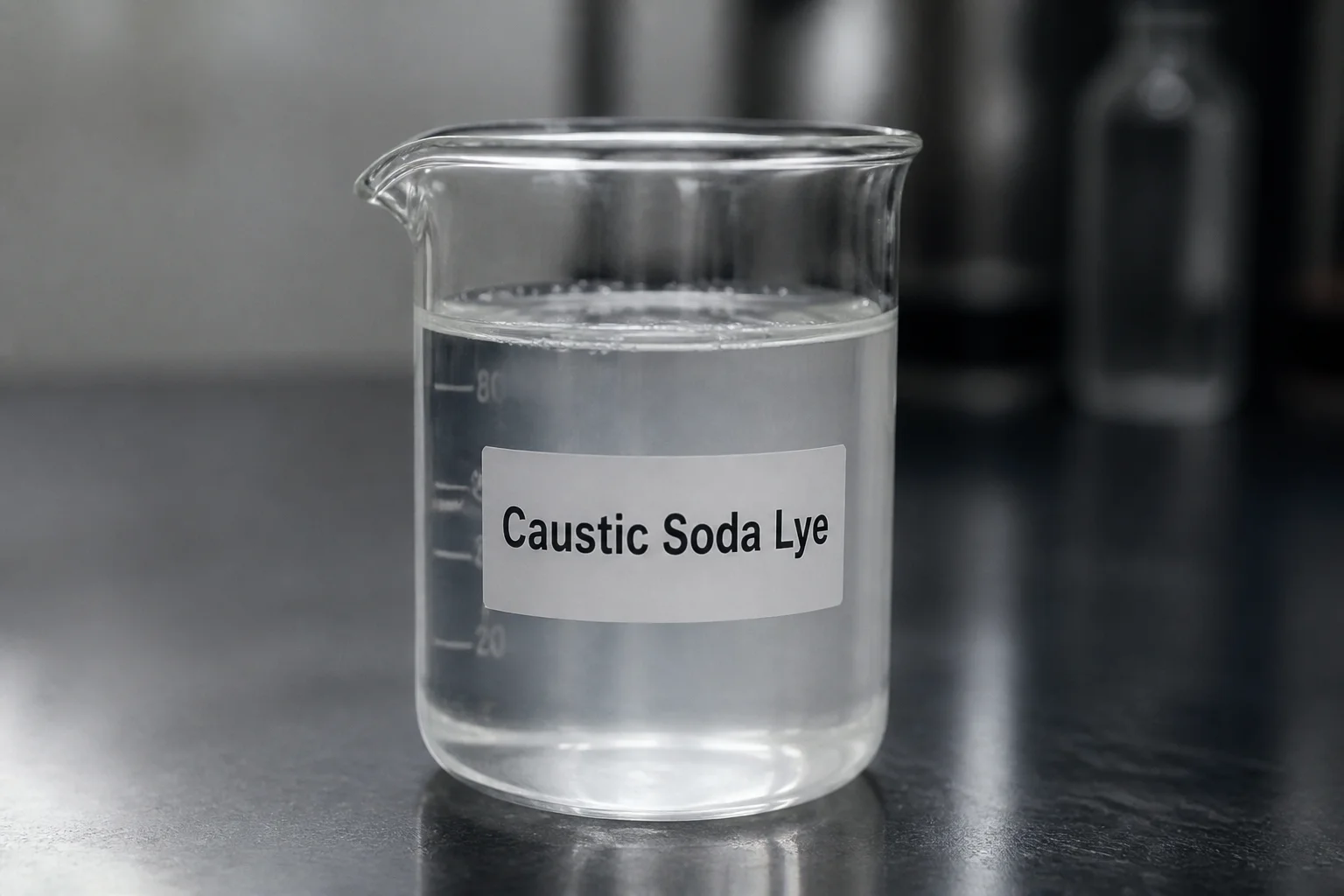
There’s no actual difference. Caustic soda, which is the same chemical as sodium hydroxide and is also known as lye, is a strong alkaline inorganic compound. These three names—caustic soda, sodium hydroxide, and lye, all refer to the exact same chemical compound with the formula NaOH. It is important to recognize that the terms “caustic soda,” “sodium hydroxide” and “lye” all refer to the same chemical compound of NaOH. These terms are used interchangeably throughout the industry.
Yet confusion persists. People search “sodium hydroxide vs caustic soda” expecting to find differences in properties, applications, or safety profiles. The reality is simpler: different industries and regions simply prefer different names for the same chemical. Understanding where each name comes from and how this versatile compound functions across industries reveals why it ranks among the world’s most important industrial chemicals. Leading caustic soda suppliers across North America, Europe, and Asia-Pacific collectively produce over 80 million tonnes annually to serve these diverse applications.
Why Three Names for One Chemical?
Naming Reference Guide Caustic Soda, Sodium Hydroxide, Lye, NaOH
|
Name |
Who Uses It |
Context |
Chemical Formula |
|
Caustic soda |
Industrial buyers, traders, manufacturers |
Procurement, bulk supply, logistics |
NaOH |
|
Sodium hydroxide |
Chemists, regulators, academics |
SDS, IUPAC nomenclature, certificates of analysis |
NaOH |
|
Lye |
Soap makers, home users, food artisans |
Soap making, food processing, traditional crafts |
NaOH |
|
NaOH |
All technical contexts |
Shorthand across science, engineering, and industry |
NaOH |
Caustic Soda:
- The term “caustic soda” originates from its highly corrosive nature, with “caustic” referring to its ability to break down organic materials and “soda” stemming from its historical production from soda ash (sodium carbonate)
- Preferred in industrial and commercial contexts
- Common in manufacturing, chemical processing, and bulk supply
Sodium Hydroxide:
- Sodium hydroxide is the chemical name of caustic soda and has been derived from its chemical structure
- Used in scientific, technical, and regulatory documentation
- Standard nomenclature in chemistry, safety data sheets, academic papers
Lye:
- Often referred to by its household name of “lye,” which literally means “wash stuff” in Old English, caustic soda has probably been used since the time of the ancient Babylonians and Egyptians
- Traditional name in soap-making and household applications
- Most familiar to consumers and artisans
Caustic Soda vs Sodium Hydroxide: Are They Really the Same?
Yes completely and without exception. Caustic soda and sodium hydroxide are two names for the identical chemical compound: NaOH. There is no difference in molecular structure, chemical formula, molecular weight, pH, reactivity, or safety profile between a drum labeled “caustic soda 99%” and one labeled “sodium hydroxide 99%.” The name on the container does not alter the chemistry inside it.
The distinction is entirely contextual. Industrial procurement teams, logistics companies, and bulk chemical traders use “caustic soda” because it has been the established trade name in those sectors for more than a century. Chemists, regulatory affairs professionals, and safety officers use “sodium hydroxide” because it aligns with IUPAC nomenclature and appears on safety data sheets, certificates of analysis, pharmacopoeial monographs, and customs declarations.
When a soap maker reads “lye” on a consumer container and a water treatment engineer reads “sodium hydroxide 50% solution” on an ISO tank label, they are looking at the same compound at different concentrations and in different physical forms.
For industrial buyers, the variables that actually matter are: purity grade (technical, food-grade FCC, pharmaceutical USP/EP), physical form (flakes, pearls, liquid solution), solution concentration (typically 32%, 45%, or 50% for liquid), and supplier certifications. The name is irrelevant to product quality, the specification sheet is everything.
Chemical Properties
Basic Physical Properties
| Property | Value/Description |
| Chemical formula | NaOH |
| Molecular weight | 39.9971 g/mol |
| Appearance | White solid (various forms) |
| Melting point | 318°C (604°F) |
| Boiling point | 1,388°C (2,530°F) |
| Solubility in water | Highly soluble (exothermic reaction) |
| pH (0.5% solution) | ~13 |
| pH (1% solution) | ~14 |
| Odor | Odorless |
Key Chemical Characteristics
Hygroscopic Nature:
- It readily absorbs moisture and carbon dioxide from the air
- Must be stored in airtight containers
- Exposure to air causes gradual degradation and carbonation
- Weight increases as it absorbs atmospheric moisture
Exothermic Dissolution:
- Releases significant heat when dissolved in water
- Safety rule: Always add caustic soda to water, never water to caustic soda
- Rapid mixing can cause violent boiling and splashing
- Temperature can exceed 80°C during dissolution
Corrosive Action:
- Sodium hydroxide is a highly corrosive base and alkali that decomposes lipids and proteins at ambient temperatures, and may cause severe chemical burns at high concentrations
- Dissolves fats, oils, greases (saponification)
- Breaks down proteins
- Attacks glass slowly (etching over time)
- Corrodes aluminum, zinc, tin, and other amphoteric metals
Commercial Forms
Caustic Soda Commercial Forms Comparison
|
Form |
NaOH Content |
Appearance |
Typical Packaging |
Best For |
|
Flakes |
98–99% |
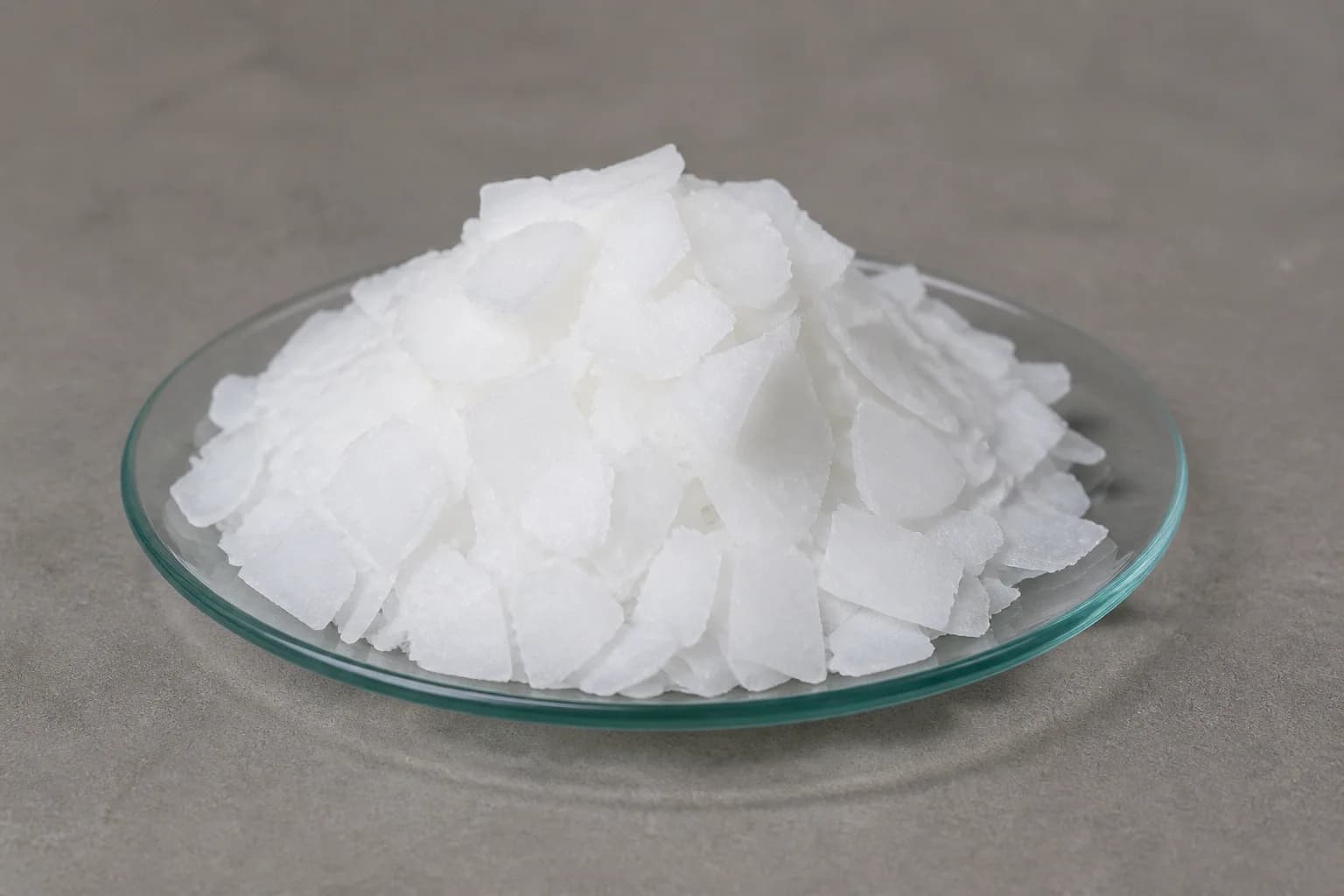
Thin white irregular flakes |
25 kg woven bags, bulk |
Soap making, general industrial use |
|
Pearls / Beads |
98–99% |
Small uniform white spheres |
25 kg bags, steel drums |
Precise dosing, lower dust, lab use |
|
Liquid 32% |
32% solution |
Clear to pale yellow liquid |
ISO tanks, IBC |
Water treatment, continuous feed systems |
|
Liquid 50% |
50% solution |
Clear to pale yellow liquid |
ISO tanks, chemical tankers |
Alumina refining, large-scale synthesis |
|
Micropowder |
99%+ |
Very fine white powder |
Sealed lined containers |
Specialty chemical synthesis |
Caustic soda is commercially available in several forms, each tailored to specific industrial or domestic applications
1. Caustic Soda Flakes
Characteristics:
- Caustic Soda Flakes are a kind of ionic salt composed of sodium ions Na+ and hydroxide ions OH- in the form of NaOH
- White, flat pieces with narrow thickness
- Typical purity: 98-99%
- Easy to measure and handle
- Lower dust generation than powder
Applications:
- Paper manufacturing (pulping and bleaching)
- Textile processing
- Chemical synthesis requiring precise dosing
- Water treatment facilities
2. Caustic Soda Pearls/Beads
Characteristics:
- Caustic soda pearls are spherical shaped. They are also named as soda grain and granulated caustic soda
- Uniform spherical shape
- Typical purity: 99%
- Free-flowing properties
- Easier automated dosing
Applications:
- Automated industrial systems
- Batch chemical processes
- Soap and detergent manufacturing
- Pharmaceutical production
3. Caustic Soda Liquid
Characteristics:
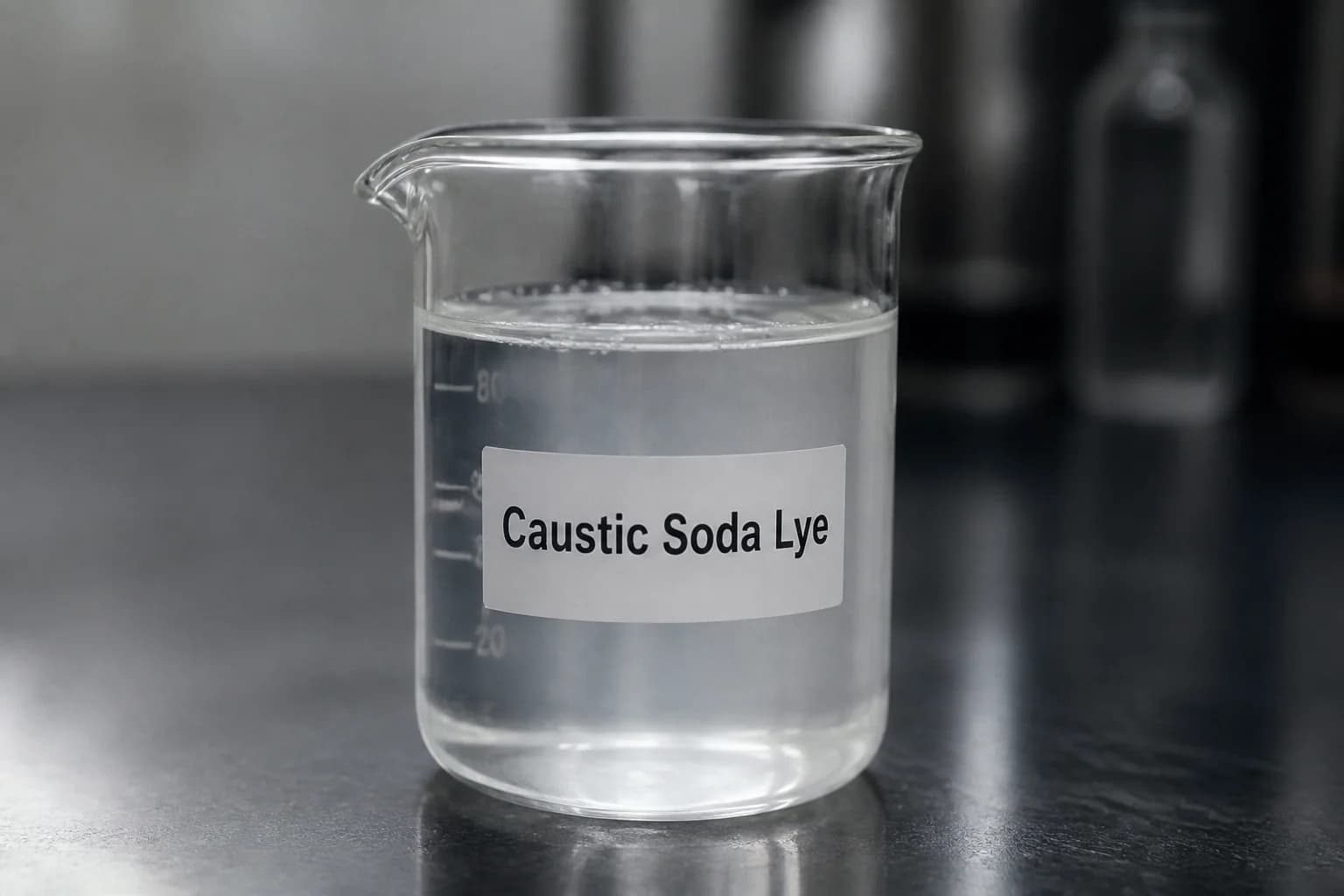
- Caustic soda liquid, or lye, is clear like water but has more viscosity. It could be made in different concentrations by evaporating water or by adding more water to a concentrated solution
- Common concentrations: 20%, 25%, 32%, 50%
- Clear, colorless appearance
- Higher viscosity than water
- Immediate usability (no dissolution needed)
Applications:
- Continuous process industries
- Water treatment (pH adjustment)
- Pulp and paper mills
- Food processing
Viscosity Considerations:
- The viscosity of sodium hydroxide solutions plays a direct role in its application as well as its storage
- 50% solution has viscosity ~78 mPa·s (vs. water at 1.0 mPa·s)
- Viscosity decreases with temperature increase
- Affects pumping requirements and mixing efficiency
How to Prepare Caustic Soda Solutions: Concentration and Dilution Guide
Dissolving caustic soda flakes or pearls in water to create a working solution releases significant heat and the reaction is strongly exothermic. Always add NaOH to water slowly, never pour water onto solid NaOH. The inverse causes a violent boiling and spattering reaction. Use a heat-resistant HDPE or borosilicate glass container and stir continuously during dissolution.
Common industrial working concentrations:
|
Target Concentration |
NaOH (g) per 1 L water |
Typical Application |
|
10% w/v |
100 g |
Lab titrations, drain cleaning |
|
20% w/v |
200 g |
General chemical processing |
|
32% w/v |
320 g |
Paper pulping, water treatment |
|
50% w/v |
500 g |
Alumina production, bulk synthesis |
Safety during preparation: Wear chemical splash goggles (full seal, not safety glasses), nitrile or neoprene gloves, a face shield, and an acid/alkali-resistant apron. Work in a well-ventilated area concentrated solutions produce aerosols and fumes during exothermic dissolution. Allow the solution to cool to ambient temperature before sealing and transferring to storage. Never use aluminum or zinc containers; NaOH reacts with both metals to produce flammable hydrogen gas. HDPE and stainless steel 304/316 are the appropriate storage materials.
For industrial-scale preparation, consult your supplier’s technical data sheet for density-concentration tables, as solution viscosity and density shift significantly at temperatures above 40°C.
Production: The Chlor-Alkali Process
Manufacturers produce sodium hydroxide as a co-product with chlorine and hydrogen through the electrolysis of brine, a salt solution (NaCl)
Three Cell Technologies:
1. Membrane Cell (Modern Standard):
- Uses ion-selective membrane
- Produces high-purity caustic soda
- Lower energy consumption
- Minimal environmental impact
- Most new facilities use this technology
2. Diaphragm Cell:
- Uses asbestos or polymer diaphragm
- Produces lower concentration (10-12%)
- Requires concentration step
- Being phased out in many regions
3. Mercury Cell (Largely Phased Out):
- Uses mercury cathode
- Environmental concerns about mercury
- Being replaced globally
- Still operates in some older facilities
Production Scale:
China is the only country in Asia with a considerable sodium hydroxide market, and it is one of the leading producers of this chemical
Top Global Producers:
- China (largest producer)
- United States
- Germany
- Oceania
- Middle East (growing capacity)
Annual Global Production:
- Sodium hydroxide is ranked in the top five in terms of the amount produced globally per year, at more than 70 million tonnes
Major Industrial Applications
Paper and Pulp Industry

Functions:
- Scouring: Removes natural fats, waxes, and oils from cotton. Bleaching: Assists in whitening fabrics before dyeing. pH control: Essential for dyeing processes to ensure color stability
- Delignification (breaking down lignin in wood)
- Brightening and bleaching pulp
- De-inking recycled paper
- pH adjustment in process water
Typical Usage:
- 40-60 kg per ton of pulp produced
- Usually applied as 10-20% solution
- Critical for kraft pulping process
Chemical Manufacturing
The largest single broad use of sodium hydroxide is in the manufacturing of other chemicals and end-products
Products Synthesized:
- Organic chemicals (phenolics, epoxides)
- Active pharmaceutical ingredients: Used in the synthesis of aspirin, anticoagulants, and lipid-lowering drugs
- Synthetic fibers (rayon, spandex)
- Plastics and polymers
- Dyes and pigments
Soap and Detergent Production
Saponification Process:

- Commonly known as lye, it has been used to make soap for centuries
- Reacts with fats and oils to produce soap
- When combined with oils or fats in the saponification process, the caustic soda compound is transformed during the reaction to make the soap safe to use
- Traditional cold-process soap requires precise NaOH calculations
- Industrial soap manufacturing uses continuous saponification
Detergent Applications:
- Neutralizing fatty acids
- pH adjustment in liquid detergents
- Processing surfactants
- Manufacturing builders and chelating agents
Water Treatment
Municipal Applications:
- By absorbing both water and carbon dioxide, caustic soda (sodium hydroxide, or NaOH) elevates the pH of water
- Neutralizing acidic water supplies
- pH adjustment in drinking water treatment
- Coagulation aid for impurity removal
- Regenerating ion exchange resins
Industrial Water Treatment:
- Boiler water pH control
- Cooling tower maintenance
- Wastewater neutralization
- Heavy metal precipitation
Textile Industry
The textile sector uses caustic soda at multiple stages of fabric processing
Processing Stages:
- Scouring: Removes natural fats, waxes, oils from raw cotton
- Mercerization: Strengthens cotton fiber, increases luster and dye uptake
- Bleaching: Assists whitening before dyeing
- pH Control: Maintains proper conditions for dyeing
Mercerization Benefits:
- Increases fiber strength by 20%
- Improves dye absorption
- Creates silk-like appearance
- Requires 18-28% NaOH concentration
Food Processing
Food uses of sodium hydroxide include washing or chemical peeling of fruits and vegetables, chocolate and cocoa processing, caramel coloring production, poultry scalding, soft drink processing, and thickening ice cream
Specific Applications:
| Food Product | Purpose | Typical Process |
| Olives | Olive debittering: Used to remove oleuropein, the bitter component in olives | Lye curing |
| Pretzels | Creates the unique shiny crust and firm texture through a quick lye dip before baking | Dipping in dilute solution |
| Fruits/vegetables | Peeling fruits and vegetables: Especially potatoes, tomatoes, and peaches; softens outer layers for easier removal | Chemical peeling |
| Hominy | Processing corn | Nixtamalization |
| Asian noodles | Alkaline texture | Kansui water preparation |
Food-Grade Standards:
- Must meet strict purity requirements
- Heavy metal limits enforced
- Controlled production environment
- Complete dissolution required (no residual flakes)
Petroleum Refining
Applications:
- Removing acidic impurities from crude oil
- Neutralizing sulfur compounds
- pH control in various refining processes
- Processing specialty petroleum products
Aluminum Production
Bayer Process:
- The chemical compound is also used to break down the sedimentary rock that aluminum is extracted from
- Dissolving aluminum oxide from bauxite ore
- Consuming ~1.5 tonnes NaOH per tonne alumina
- Creates aluminum production’s largest NaOH demand
Biodiesel Manufacturing
For the manufacture of biodiesel, sodium hydroxide is used as a catalyst for the transesterification of methanol and triglycerides. This only works with anhydrous sodium hydroxide, because combined with water the fat would turn into soap
Process Requirements:
- Anhydrous NaOH essential (moisture creates soap)
- Typical catalyst loading: 0.5-1.5% by weight
- Preferred over potassium hydroxide for cost reasons
- Enables conversion of vegetable oils to biodiesel
Caustic Soda vs Caustic Potash (NaOH vs KOH): Choosing the Right Alkali
|
Property |
Caustic Soda (NaOH) |
Caustic Potash (KOH) |
|
Chemical formula |
NaOH |
KOH |
|
Molecular weight |
39.997 g/mol |
56.105 g/mol |
|
Solubility in water (20°C) |
111 g/100 mL |
121 g/100 mL |
|
Relative cost |
Lower (commodity pricing) |
Higher (~2–3× NaOH price) |
|
Soap type produced |
Hard bar soap |
Soft / liquid soap |
|
Primary industrial uses |
Paper, alumina, water treatment, textiles |
Liquid soaps, alkaline batteries, specialty synthesis |
|
Annual global production |
~80 million tonnes |
~1.5 million tonnes |
|
Key incompatibility note |
Reacts with Al, Zn; strong exotherm with acids |
Same incompatibilities; higher solubility increases reaction speed |
Caustic soda (NaOH) is frequently evaluated against caustic potash (potassium hydroxide, KOH) the two dominant strong alkalis in industrial chemistry. While both are highly corrosive bases with similar reactivity profiles, they are not interchangeable across all applications, and the choice between them is driven by chemistry, not cost alone.
Soap and personal care: This is the clearest distinction. NaOH saponifies oils to produce hard bar soap; KOH produces soft or liquid soap. The difference is fundamental no formulation adjustment bridges this gap.
Solubility: KOH is more soluble in water and organic solvents than NaOH at equivalent temperatures, making it preferred for liquid-phase reactions and certain electrochemical cells where high dissolved-alkali concentrations are required.
Cost: Caustic soda is significantly cheaper per tonne than caustic potash typically one-third to one-half the price because global NaOH production exceeds 80 million tonnes/year versus approximately 1.5 million tonnes/year for KOH. This cost differential makes NaOH the default for high-volume applications.
Biodiesel production: Both catalyze transesterification of triglycerides with methanol. KOH is sometimes preferred for its higher methanol solubility, though NaOH is used in most commodity biodiesel operations due to cost.
Batteries and electronics: KOH electrolyte is standard in alkaline batteries and certain fuel cell membranes where sodium ion contamination would degrade performance.
For paper pulping, alumina refining, water treatment, and most large-scale chemical manufacturing, caustic soda (NaOH) is the economically and technically preferred choice.
Safety Considerations
Health Hazards
Skin Contact:
- Causes severe chemical burns immediately
- Dissolves proteins and fats in skin tissue
- Painless initially (nerve endings destroyed)
- Penetrates deeply if not washed immediately
Eye Contact:
- Causes permanent blindness if untreated
- Corneal damage occurs within seconds
- Requires immediate copious water flushing
- Medical attention mandatory
Inhalation:
- Mist or dust irritates respiratory tract
- Can cause pulmonary edema at high concentrations
- Chronic exposure damages lung tissue
- Proper ventilation essential
Ingestion:
- Severe burns to mouth, throat, esophagus, stomach
- Can cause perforation of digestive tract
- DO NOT induce vomiting
- Immediate medical attention critical
Personal Protective Equipment (PPE)
Minimum Required:
- Chemical-resistant gloves (nitrile, neoprene, or rubber)
- Safety goggles or face shield
- Chemical-resistant apron or suit
- Closed-toe shoes (chemical-resistant boots for large quantities)
- Long sleeves and pants
For Large-Scale Operations:
- Full face shield over safety goggles
- Chemical-resistant overalls
- Respiratory protection if dust/mist generated
- Emergency eyewash stations within 10 seconds reach
- Safety showers accessible
Storage Requirements
Sodium hydroxide must be stored in airtight containers to preserve its normality as it will absorb water and carbon dioxide from the atmosphere
Container Materials (Compatible):
- Common materials that are compatible with sodium hydroxide and often utilized for NaOH storage include: polyethylene (HDPE, usual, XLPE, less common), carbon steel, polyvinyl chloride (PVC), stainless steel, and fiberglass reinforced plastic (FRP, with a resistant liner)
Storage Conditions:
- Caustic soda is a hazardous material, so it should be stored in a cool and dry place with a good ventilation system. Keep caustic soda away from sunlight, moisture, and reactive materials such as acids
- Temperature-controlled environment preferred
- Segregated from acids, oxidizers, reactive metals
- Clear labeling with hazard warnings
- Spill containment for liquid storage
Incompatible Materials:
- Aluminum (reacts violently)
- Zinc and tin (hydrogen gas generation)
- Glass (slowly etches)
- Organic materials (combustion risk)
First Aid Procedures
Skin Contact:
- Remove contaminated clothing immediately
- Flush with copious water for minimum 20 minutes
- DO NOT attempt to neutralize with acid
- Seek medical attention even if burn seems minor
Eye Contact:
- Flush with water immediately for minimum 20 minutes
- Hold eyelids open to ensure thorough rinsing
- Remove contact lenses if possible during rinsing
- Seek immediate emergency medical care
Inhalation:
- Move to fresh air immediately
- Keep warm and at rest
- Administer oxygen if breathing difficult
- Seek medical attention
Ingestion:
- DO NOT induce vomiting
- Rinse mouth with water (do not swallow)
- Give water or milk to drink if conscious
- Seek immediate emergency medical attention
Chemical Incompatibilities: What Not to Mix with Caustic Soda
Caustic soda is a highly reactive strong base. Understanding its incompatibilities is essential for safe storage, formulation work, and emergency response planning. The following combinations create serious hazards:
Strong acids (HCl, H₂SO₄, HNO₃, acetic acid): Mixing NaOH with strong acids causes a violent exothermic neutralization reaction, potentially boiling or spattering the solution. Neutralization must always be performed under controlled conditions with cooling and gradual addition.
Aluminum, zinc, and tin metals: NaOH dissolves these metals, producing flammable hydrogen gas (H₂). This is a serious fire and explosion risk in enclosed storage areas. Never store liquid caustic soda in aluminum tanks or fittings.
Chlorinated solvents (chloroform, carbon tetrachloride, trichloroethylene): Reacts with NaOH to produce toxic and potentially explosive chlorocarbene and dichloroacetylene compounds.
Ammonium salts (ammonium chloride, ammonium nitrate): Reaction releases toxic ammonia gas a serious inhalation hazard in enclosed spaces.
Concentrated nitric acid: Risk of violent reaction and generation of nitrogen oxides.
Organic peroxides and oxidizers: Can initiate decomposition reactions when contacted by strong alkali.
Storage segregation requirements: Under OSHA 29 CFR 1910.1200 and standard chemical storage guidelines, caustic soda must be stored away from acids, oxidizers, flammables, and organic materials. Dedicated, ventilated storage with secondary containment is required for liquid forms. Solid caustic soda must be kept dry moisture causes caking and accelerates container corrosion.
Quality Specifications
Industrial Grade Standards
Caustic Soda Flakes (98% min):
| Parameter | Specification |
| NaOH content | 98.0% min |
| Na₂CO₃ | 0.5% max |
| NaCl | 0.03% max |
| Fe₂O₃ | 0.005% max |
Caustic Soda Liquid (50%):
| Parameter | Specification |
| NaOH concentration | 50% ± 0.5% |
| Na₂CO₃ | 0.5% max |
| NaCl | 100 ppm max |
| Fe | 5 ppm max |
Food Grade (FCC) Standards
- Higher purity requirements
- Stricter heavy metal limits (As, Pb, Hg)
- Mercury: <1 ppm
- Lead: <2 ppm
- Arsenic: <3 ppm
Pharmaceutical Grade (USP/EP)
- Highest purity level
- Comprehensive impurity testing
- Batch-specific documentation
- Certified manufacturing facilities
Caustic Soda Global Market: Production, Pricing, and Supply Chains
Caustic soda is one of the world’s highest-volume commodity chemicals, and understanding market dynamics helps industrial buyers make better sourcing and timing decisions.
Global production: Annual production exceeds 80 million tonnes, with China accounting for approximately 40–45% of world output. The United States, Germany, Japan, and India are the other major producers. Capacity additions have been concentrated in Asia-Pacific over the past decade.
The chlorine-caustic soda price relationship: Because NaOH and chlorine are produced in a fixed molar ratio (1.1 tonnes of NaOH per tonne of Cl₂) through the same electrolysis process, their prices move inversely. When chlorine demand rises typically driven by PVC production cycles increased chlor-alkali output depresses NaOH prices. When chlorine demand weakens, NaOH supply tightens and prices rise. Buyers who understand this relationship can better time procurement.
Physical supply chain: Liquid caustic soda (32–50%) ships in ISO tank containers or dedicated chemical tankers. Solid forms (flakes, pearls) ship in 25 kg HDPE woven bags, 250 kg steel drums, or 1,000 kg bulk supersacks (FIBCs). From Indian manufacturers to export markets, typical lead times run 2–4 weeks port-to-port.
Price benchmarking: ICIS, Chemical Week, and regional spot market indices are the standard references for NaOH pricing. Buyers sourcing from India should also track domestic Indian chemical exchange rates and port availability at Kandla, Nhava Sheva, and Mundra.
Sourcing Industrial Caustic Soda
For manufacturers requiring sodium hydroxide across various grades and forms, partnering with suppliers who understand application requirements and provide consistent quality makes operational success possible. Elchemy’s technology-driven platform connects industrial buyers with verified suppliers of caustic soda meeting specifications from food-grade to technical grade.
Founded by engineers from IIT Bombay, IIT Delhi, and IIM Ahmedabad, Elchemy transforms chemical distribution through customer-centric technology. Whether you need caustic soda flakes for soap manufacturing, liquid solutions for water treatment, or pharmaceutical-grade material for drug synthesis, our platform addresses supply chain challenges through transparent sourcing from both Indian and global suppliers. We provide certificates of analysis, safety documentation, logistics support, and technical assistance that helps companies maintain reliable access to this essential industrial chemical.
FAQ
Q1: Is caustic soda the same as sodium hydroxide?
Yes, caustic soda and sodium hydroxide are exactly the same chemical compound NaOH. There is no chemical difference whatsoever between a product labeled “caustic soda” and one labeled “sodium hydroxide.” “Caustic soda” is the industrial trade name used in manufacturing, procurement, and bulk supply, while “sodium hydroxide” is the IUPAC chemical name used in scientific documentation, safety data sheets, and regulatory filings. Both terms, along with “lye,” describe an identical white solid with molecular weight 39.997 g/mol and a pH of approximately 14.
Q2: What is the difference between caustic soda flakes and caustic soda pearls?
Both caustic soda flakes and pearls are solid NaOH at 98–99% purity the only difference is physical shape. Flakes are thin, irregular pieces produced by cooling molten NaOH on a rotating drum; pearls (or beads) are small uniform spheres produced by a prilling process. Pearls typically offer better flowability, reduced dust generation during handling, and more consistent dosing. Flakes are generally marginally lower in cost and widely used in soap making. Both dissolve identically in water and are chemically equivalent.
Q3: What pH is sodium hydroxide (caustic soda)?
A 1 M sodium hydroxide solution (approximately 4% w/v) has a pH of 14 the upper limit of the standard pH scale. More dilute solutions have slightly lower pH values: 0.1 M measures pH 13, and 0.01 M measures pH 12. Commercial liquid caustic soda at 32–50% concentration exceeds pH 14 on extended scales. Even highly dilute NaOH solutions remain strongly alkaline and corrosive, which is why proper PPE is required at all working concentrations, not just concentrated solutions.
Q4: What is caustic soda used for in everyday life?
While primarily an industrial chemical, caustic soda appears in several consumer contexts. It is the active ingredient in drain cleaners (it dissolves grease, hair, and organic blockages) and oven degreasers. Food-grade lye is used to cure olives, glaze pretzels, make hominy corn, and process certain noodles (ramen, Hong Kong-style). Artisan soap makers use NaOH to saponify vegetable oils into hard bar soap. Most people encounter caustic soda indirectly in the paper they write on, the textiles they wear, and the aluminum in consumer goods without being aware of it.
Q5: How is caustic soda produced?
Caustic soda is produced almost entirely through the chlor-alkali process, in which a sodium chloride (salt brine) solution is electrolyzed to simultaneously yield chlorine gas, hydrogen gas, and sodium hydroxide. Three cell technologies are used commercially: the membrane cell (dominant in new installations, highest purity NaOH), the diaphragm cell (widely used in North America, produces lower-purity NaOH requiring further processing), and the mercury cell (being phased out globally due to mercury contamination concerns). Global annual production exceeds 80 million tonnes.
Q6: Is caustic soda dangerous to handle?
Yes. Caustic soda is highly corrosive and causes severe chemical burns on skin and eye contact even brief exposure to concentrated NaOH can cause permanent eye damage. Fumes from hot solutions or dissolution irritate the respiratory tract. Required PPE includes chemical splash goggles with full seal, nitrile or neoprene gloves, a face shield, and an acid/alkali-resistant apron. On skin contact, flush immediately with large amounts of water for at least 20 minutes. Eye contact requires immediate copious irrigation and emergency medical attention. Neutralization is not recommended before flushing flush first, always.
Q7: What is the difference between food grade and industrial grade caustic soda?
Industrial (technical) grade caustic soda meets general purity requirements (typically ≥98% NaOH) but may contain trace heavy metals, iron, and other impurities acceptable for industrial processes. Food grade caustic soda complies with the Food Chemicals Codex (FCC) specification, which enforces strict limits on arsenic (≤3 ppm), lead (≤10 ppm), mercury (≤1 ppm), and iron (≤10 ppm), making it safe for direct food contact applications. Pharmaceutical grade (USP/EP) has the most stringent purity requirements of all and is mandatory for drug manufacturing. Never substitute a lower grade for food or pharmaceutical applications.
Q8: Can caustic soda be used to treat drinking water?
Yes. Food-grade and NSF/ANSI 60-certified sodium hydroxide is widely used in municipal water treatment. It serves two primary functions: pH correction (raising the pH of acidic source water to the 7.0–8.5 range to prevent corrosion of distribution pipes and infrastructure) and heavy metal precipitation (at elevated pH, lead, copper, and other metals form insoluble hydroxides that can be filtered out). It is also used in lime-soda softening to reduce calcium and magnesium hardness. Water treatment applications must use only NSF/ANSI Standard 60 certified caustic soda to ensure it introduces no contaminants into the drinking water supply.
Conclusion
The distinction between caustic soda and sodium hydroxide exists only in terminology, not in chemistry. Whether called sodium hydroxide in scientific contexts, caustic soda in industrial settings, or lye in household applications, NaOH remains one of the most important and versatile chemicals in modern industry. Its production exceeds 70 million tonnes annually because virtually every manufacturing sector depends on its unique properties: strong alkalinity, protein-dissolving capability, fat-saponification power, and acid-neutralizing function. Understanding that these three names represent identical chemistry helps avoid confusion while emphasizing the need for proper safety protocols regardless of which term appears on the label.