
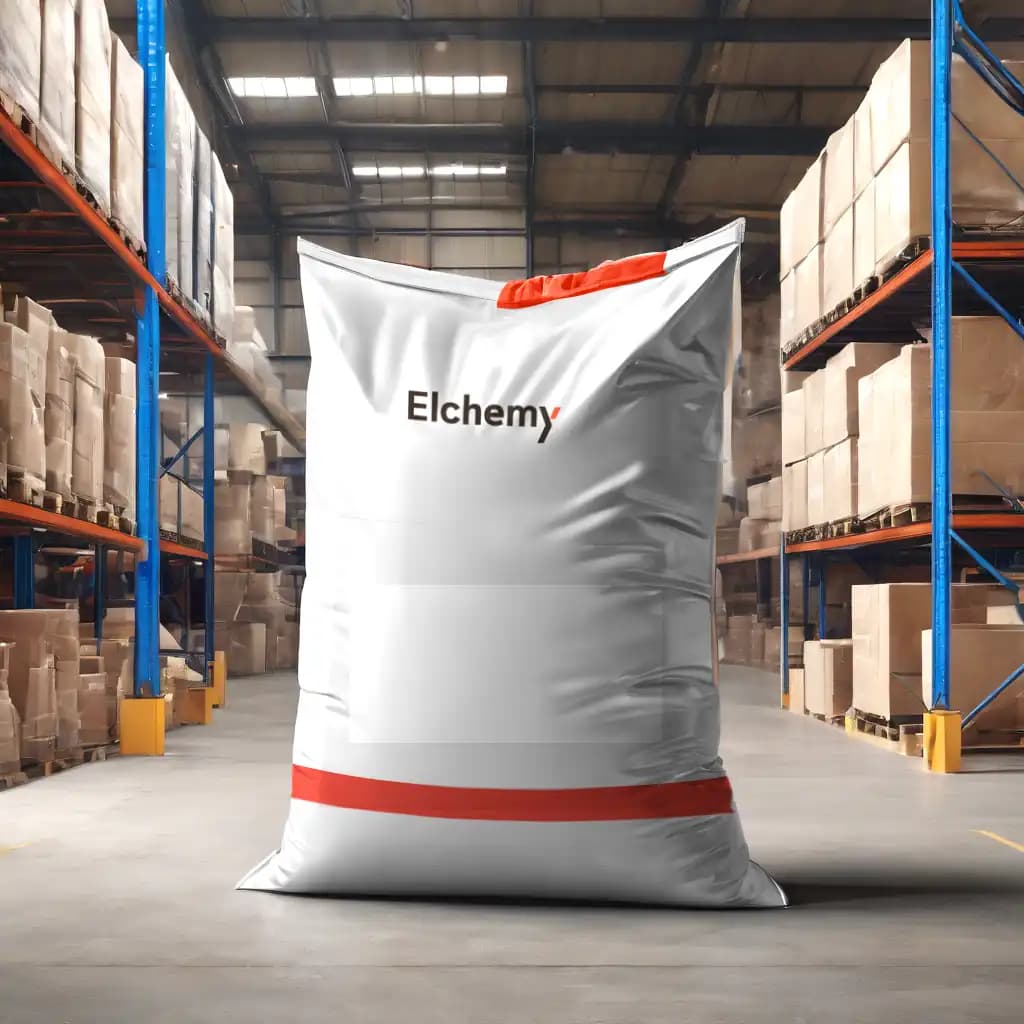
Caustic Soda Prills

Get Pricing for This Product
Need pricing? Request a quote for this product and we'll get back to you shortly.
 Free Samples Available
Speed Up Your Sample Testing Process
We deliver domestic samples within 24 - 48 hours, helping you evaluate product without delays.
Caustic Soda Prills are the free-flowing, spherical bead (pearl) form of sodium hydroxide (NaOH). Also known as caustic soda pearls, sodium hydroxide prills or caustic prills, they deliver the same…
CAS Number
1310-73-2
HS Code
2815.11.10
INCI Name
-
Molecular Formula
NaOH
Caustic Soda Prills
Caustic Soda Prills are the free-flowing, spherical bead (pearl) form of sodium hydroxide (NaOH). Also known as caustic soda pearls, sodium hydroxide prills or caustic prills, they deliver the same strong alkaline performance as flakes with less dust, easier handling and faster…
CAS Number
1310-73-2
INCI Name
-
HS Code
2815.11.10
Molecular Formula
NaOH
Get Pricing for This Product
Need pricing? Request a quote for this product and we'll get back to you shortly.
Free Samples AvailableSpeed Up Your Sample Testing Process
We deliver domestic samples within 24 - 48 hours, helping you evaluate product without delays.
 By

Specialty chemicals, delivered right
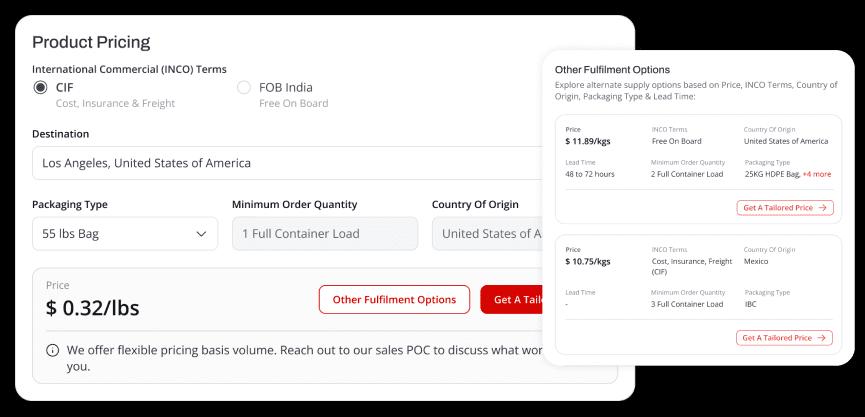
Access live, grade-specific pricing for every chemical, so your teams talks with data, not intuition on Elixir.
Compare fulfilment options across grades, INCO terms, origins, and lead times: all in one platform.

Live, transparent pricing
Real-time quotes across 12,000+ specialty chemicals.
About Caustic Soda Prills
Caustic soda prills are the solid, spherical-bead form of sodium hydroxide (NaOH) - small white pearls, typically 1–2 mm, that are colourless in solution, odourless and highly hygroscopic. Also called caustic soda pearls, sodium hydroxide prills or caustic prills, they are produced by solidifying molten caustic soda in a prilling tower, which gives a uniform, free-flowing product with minimal dust.
Chemically, prills are identical to caustic soda flakes - a strong alkali (pH ~14 in solution) that reacts readily with acids and dissolves organic matter. The difference is purely physical: the uniform prill shape flows cleanly, stores well in silos, doses precisely in automated systems and dissolves quickly and evenly. That makes prills the preferred NaOH form wherever dust control, accurate metering or enclosed handling matters.
Elchemy is a trusted caustic soda prills supplier, manufacturer partner and distributor, offering 99%, 98% and 96% grades to buyers across 40+ countries, each with a Certificate of Analysis. Buyers comparing the caustic soda prills price against flakes should weigh the handling savings - lower dust, easier dosing and silo storage - not just the per-tonne rate.
Grades Available
- 99% (high purity) - assay ≥99.0% NaOH. Suited to water treatment, chemicals, textiles, and food-contact duty where specified.
- 98% - assay ≥98.0% NaOH. The general-purpose grade for industrial processing.
- 96% - assay ≥96.0% NaOH. For bulk industrial and cost-sensitive applications.
Caustic Soda Prills vs Flakes: Which Form to Choose
Prills and flakes are the same chemical in different physical forms, at the same purity levels of 96%, 98% and 99%. The choice is about handling rather than chemistry - see the caustic soda flakes page for the flake form.
- Form - prills are uniform spherical pearls; flakes are thin, irregular pieces.
- Dust - prills generate far less dust, so handling is cleaner; flakes produce more fines.
- Flow and storage - prills are free-flowing and suit silos and automated dosing, while flakes can bridge or cake and are usually handled manually.
- Dissolution - both dissolve quickly, but the even bead size of prills gives a more predictable rate.
- Best suited to - prills for automated, enclosed or dust-sensitive sites; flakes for manual batching and general industrial use.
Manufacturing Process of Caustic Soda Prills
Sodium hydroxide is produced by the electrolysis of brine (sodium chloride solution) in a membrane cell, which yields caustic soda lye. The lye is concentrated by evaporation to near-anhydrous molten NaOH.
To form prills, the molten caustic soda is sprayed from the top of a prilling tower. As the droplets fall through a counter-current of cool air, they solidify into uniform spherical pearls.
The prills are screened for size and packed under dry conditions to protect them from moisture and CO₂. Every batch Elchemy supplies is tested for NaOH assay, carbonate, chloride and iron, with a Certificate of Analysis per order.
Caustic Soda Prills Price: Bulk Pricing for Buyers
If you're looking for current caustic soda prills pricing for bulk procurement, Elchemy provides quotes based on your requirements. Share your grade (96, 98 or 99%), volume, packaging and destination on the quote request form and our team reverts within 24–48 hours.
Pricing is quote-based because the caustic soda prills price moves with chlor-alkali costs (electricity and salt), grade, order volume, packaging, Incoterm and destination. Prills usually carry a modest premium over flakes to cover the prilling step, offset by lower dust and easier handling.
Buyers benchmark the price per kg for small lots and the price per MT for contracts, but a direct quote remains the definitive number.
Packaging & Logistics
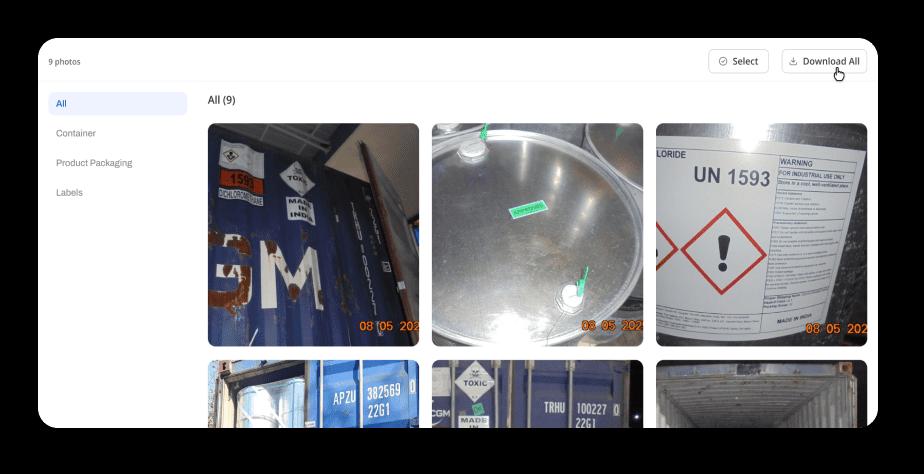
Caustic soda prills ship in 25 kg HDPE/PE bags with an inner liner and 1 MT jumbo bags (FIBC), palletised. Bulk silo and road-tanker delivery is available for large users, thanks to the free-flowing form. A 20' container holds roughly 25–27 MT.
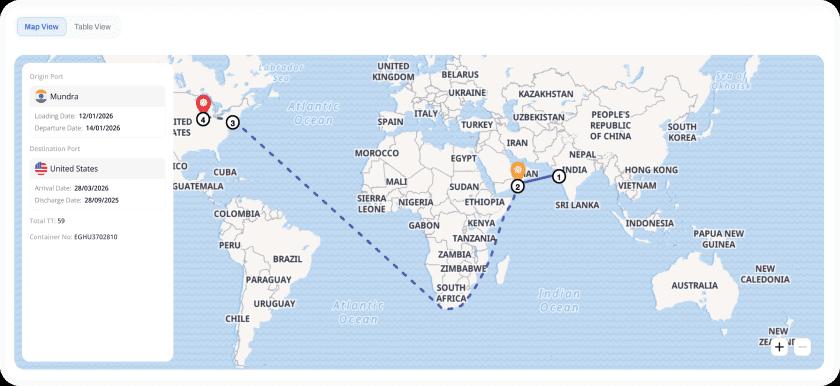
For US-bound orders, domestic stock supports faster fulfilment. Material from other origin countries typically transits 24–28 days to the US East Coast, on FOB, CIF or DDP terms.
Because prills are very hygroscopic, store them sealed in a cool, dry, well-ventilated area away from acids, aluminium, zinc and moisture. Their low dust makes them cleaner and safer to handle than flakes.
Why Choose Elchemy as a Trusted Caustic Soda Prills Supplier?
Elchemy makes caustic soda prills procurement straightforward - 96%, 98% and 99% grades from audited manufacturers, with tailored packaging and grades available through custom manufacturing.
- Multiple purity grades - 96, 98 and 99% matched to your process
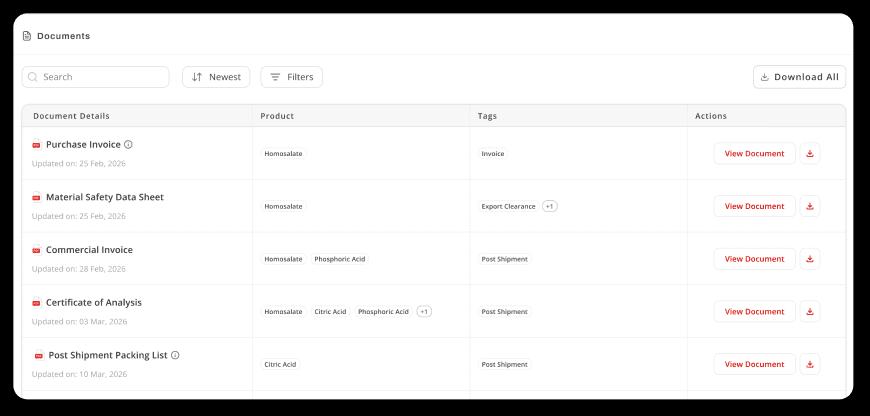
- Full documentation - COA, TDS and GHS-compliant SDS with every order
- Samples in 24–48 hours - qualify material before any bulk order
- 40+ countries served - competitive global sourcing with US domestic stock
- Form flexibility - prills, flakes or lye from one partner, whichever suits your handling
Safety & Handling
Caustic soda prills are strongly corrosive and cause severe burns to skin and eyes. Always add prills to water, never water to prills, with stirring in a ventilated area, as dissolution releases significant heat and can cause splashing. Avoid contact with acids, aluminium, zinc and tin, which react to liberate flammable hydrogen gas.
Handlers should wear chemical goggles, a face shield, gloves and protective clothing. In case of contact, flush immediately with plenty of water for at least 15 minutes and seek medical attention. Their low dust reduces inhalation risk compared with flakes, but respiratory protection is still advised where dust can form. A full 16-section GHS-aligned SDS ships with material orders.
Production Technique and Raw Materials
Produced from brine (sodium chloride) by membrane-cell electrolysis to caustic soda lye, concentrated to molten NaOH, then prilled in a spray tower to form uniform pearls. Key raw materials are sodium chloride, water and electricity.
Tentative Side Effects
Caustic soda prills are corrosive: direct contact causes skin and eye burns, and dust or mist can irritate the respiratory tract. There are no side effects in the pharmacological sense - the hazards are handling-related and are controlled by PPE, ventilation, and adding prills to water rather than the reverse.
- Low dust - uniform spherical beads handle cleaner and safer than flakes
- Free-flowing - suits silo storage and automated dosing without bridging or caking
- Fast, even dissolution - consistent bead size dissolves quickly and predictably
- Precise metering - uniform shape doses consistently in enclosed systems
- Multiple purity grades - 99%, 98% and 96% NaOH to match your process
- Documented quality - COA, TDS and GHS-compliant SDS with every order
FAQs - Caustic Soda Prills
Related Products
Related Products

Streamline
Your Chemical
Procurement
Get fast responses from real experts