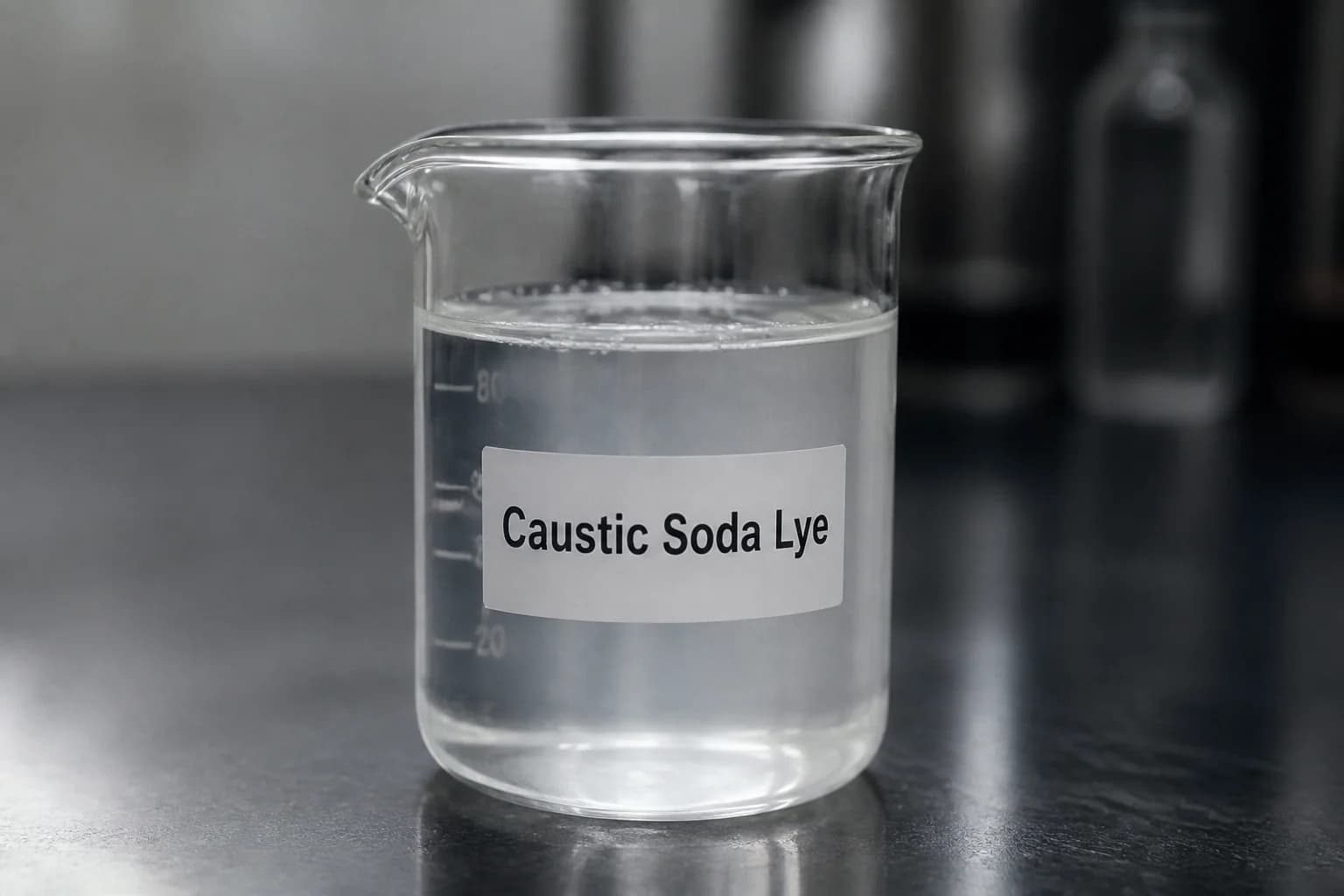
Caustic Soda Lye
ELRASATM – CSL
Get Pricing For This Product
Need pricing? Request a quote for this product and we'll get back to you shortly.
Speed Up Your Sample Testing Process
Express Delivery in 24–48 Hours
Caustic soda lye, also known as sodium hydroxide solution or caustic soda solution, is a liquid form of NaOH dissolved in water. It appears as a clear, colorless liquid with a slippery texture and…
CAS Number
1310-73-2
HS Code
28.15.11
INCI Name
Caustic Soda
Molecular Formula
NaOH
Caustic Soda Lye
ELRASATM – CSL
Caustic soda lye, also known as sodium hydroxide solution or caustic soda solution, is a liquid form of NaOH dissolved in water. It appears as a clear, colorless liquid with a slippery texture and strong alkaline nature. Due to its hygroscopic properties, this solution readily…
CAS Number
1310-73-2
INCI Name
Caustic Soda
HS Code
28.15.11
Molecular Formula
NaOH
Get Pricing For This Product
Need pricing? Request a quote for this product and we'll get back to you shortly.
Speed Up Your Sample Testing Process
We deliver domestic samples within 24 - 48 hours, helping you evaluate product without delays.
Product Specification
Physical Properties
| Property | Specification |
|---|---|
| Appearance | White prills |
| Odor | Odorless |
| Molecular Weight (G/Mol) | 40 |
| Density Or Specific Gravity | 1.515 g/mL at 20 °C |
| Refractive Index | 1.473-1.475 |
| Ph (If Aqueous Solution) | 10.98(1 mM solution);11.95(10 mM solution);12.88(100 mM solution) |
| Ph | 10.98(1 mM solution);11.95(10 mM solution);12.88(100 mM solution) |
Chemical Properties
| Property | Specification |
|---|---|
| Incompatibilities | Acids, alkali metals, alkaline earth metals, halogens, organic materials |
| Hazardous Reactions | Reacts violently with water (exothermic), acids (exothermic), and some metals (releases hydrogen) |
Thermal Properties
| Property | Specification |
|---|---|
| Melting Point | 681 °C(lit.) |
| Boiling Point | 1390°C |
| Flash Point | 176-178°C |
| Thermal Stability | Stable under normal conditions; protect from moisture |
Processing Methods & Reference Formulations
A. Laundry Detergent
Dissolve caustic soda prills in water to form a clear solution before adding to the detergent slurry Handle with care and ensure proper cooling before mixing with other ingredients.
| Key Ingredients | Indicative Dosage (% w/w) |
|---|---|
| Caustic soda | 0.65–2.60% |
| LABSA | 5–20% |
| Sodium silicate | 6-12% |
| Sodium carbonate | 8-12% |
| Optical brightner | 0.2% |
| Water | 50-70% |
| Enzyme, Perfume, CMC etc. | 15% |
B. Soap
In soap production, slowly add caustic soda prills to cold water with constant stirring to form the lye solution, allowing it to cool before mixing with oils. Add the cooled lye solution gradually to the oils during soap making, maintaining temperature control.
| Key Ingredients | Indicative Dosage (% w/w) |
|---|---|
| Fats/Oils (e.g., coconut, palm, olive) | 70-80% |
| Water | 15-25% |
| Caustic Soda Prills (NaOH) | 0.5-3% |
| Optional additives (fragrance, color, botanicals) |
C. Cleanser
Dissolve caustic soda prills slowly in cold water with constant stirring in a well-ventilated area, allowing the solution to cool before adding to the formulation. Always add caustic soda to water (never the reverse) to avoid exothermic splashing and ensure safe handling.
| Key Ingredients | Indicative Dosage (% w/w) |
|---|---|
| Water (Aqua) | 65% |
| Sodium Laureth Sulfate (SLES) | 15% |
| Cocamidopropyl Betaine | 8% |
| Polyethylene Glycol | 2% |
| Glycerin | 3% |
| Polyquaternium-10 | 0.5% |
| Caustic Soda Prills (NaOH) | 2% |
| Preservative (e.g., Phenoxyethanol) | 1% |
| Fragrance, Citric Acid |
D. Hair shampoo
When using caustic soda prills in hair shampoo formulation, dissolve them carefully in cold deionized water with constant stirring, then allow the solution to cool completely. Add slowly with thorough mixing, monitoring pH to keep it between 5.5 and 7 for scalp safety.
| Key Ingredients | Indicative Dosage (% w/w) |
|---|---|
| Deionized Water | 54% |
| Sodium Lauryl Sulfate (SLS) | 25% |
| Cocamidopropyl Betaine | 10% |
| Glycerin | 2% |
| Sodium Hydroxide | 0.5% |
| Sodium Chloride | 0.6% |
| Preservative (e.g., Phenoxyethanol) | 0.05% |
| Fragrance, Citric Acid |
Dosing Guidelines
A. Products
| Products | Authorized dosage |
|---|---|
| Laundry Detergent | 1-5% |
| Soap | 0.5-3% |
About Caustic Soda Lye
Caustic soda lye, chemically sodium hydroxide in aqueous solution, is one of the most widely supplied industrial alkalis in liquid form. It carries the same reactivity as solid caustic soda but offers practical advantages for buyers running continuous processes: no dissolving step, easier dosing, and faster integration into liquid-based systems.
The product is produced from membrane cell electrolysis, then held in solution at controlled concentrations rather than evaporated into flakes. This makes it especially suited for industries where liquid handling and metered dosing are operationally simpler than solid handling.
Sodium hydroxide (CAS 1310-73-2) is listed on the US TSCA Chemical Substance Inventory, meeting federal import and commercial use requirements for US-bound shipments. Buyers placing bulk orders also track the price of caustic soda in solution form, since contract rates feed directly into the cost of what they produce downstream.
Manufacturing Process of Caustic Soda Lye
Caustic soda is produced through the electrolysis of purified brine, a saltwater solution that yields sodium hydroxide along with chlorine and hydrogen as co-products. Modern producers use membrane cell technology to keep purity high and impurity levels low.
For lye production, the sodium hydroxide solution is held at the target commercial concentration rather than evaporated and solidified into flakes. This step removes the energy-intensive evaporation phase and delivers a ready-to-use product at consistent strength.
Every shipment Elchemy supplies is tested for assay strength, sodium carbonate, and chloride content before dispatch, with a Certificate of Analysis travelling alongside each order.
Caustic Soda Lye Price: Bulk Pricing for Industrial Buyers
If you're looking for current caustic soda lye pricing for bulk procurement, Elchemy provides quotes based on your specific requirements. Fill out the quote request form with the required details, such as volume, concentration, destination, and any other relevant information about your procurement, and our team will revert with a detailed offer within 24 to 48 hours.
Pricing works on a quote basis because caustic soda lye is a chlor-alkali commodity, so rates move with global demand for chlorine and sodium hydroxide rather than tracking a fixed list. Concentration also matters for liquid grade: a 50% solution and a 32% solution carry different commercial values per unit volume.
Beyond the core chemistry, several factors layer in: regional power tariffs, freight (which is higher for liquid than for flakes per unit of active NaOH), Incoterm choice, and applicable import duty for US-bound shipments.
For an approximate read on where the market sits, procurement teams often track the caustic lye price in trade publications alongside chlor-alkali demand signals, particularly when planning quarter-ahead requirements.
The liquid caustic soda price is also reported separately from solid grade in some market references, since liquid and flake forms move on slightly different supply-demand dynamics even though the underlying chemistry is identical.
For long-term sourcing contracts at scale, the caustic soda bulk price is the figure most procurement teams build their annual budgets around, since it captures volume commitment, contract structure, and committed destination.
For an exact rate, none of these references replace a direct quote. The actual price depends on your concentration, volume, contract structure, destination, and dispatch timing, which is why a quote from our team will always be the most accurate number for your specific procurement.
Packaging & Logistics
Caustic soda lye ships in HDPE drums for standard orders, with bulk tankers and ISO containers available for larger commercial volumes, supplied as per buyer requirements. Tanker shipments require buyer-side receiving infrastructure such as compatible storage tanks and offloading equipment.
For US-bound orders, domestic stock from our US warehouses supports faster fulfillment. If chemical sourcing is required from India or other origin countries, transit times typically run 24 to 28 days to the US East Coast and 18 to 22 days to the West Coast. Elchemy offers FOB, CIF US port, and DDP terms, depending on how your procurement team prefers to handle landed cost and customs.
Material should be stored in tightly sealed containers in a cool, well-ventilated area at temperatures above its freezing point, since high-concentration solutions can crystallize in cold conditions. Keep clear of acids, aluminum, zinc, and incompatible substances. Standard dispatch follows agreed contract terms, with expedited timelines available where needed.
Safety & Handling
Caustic soda lye is highly corrosive and needs careful handling at every stage. The solution causes severe burns on skin and eye contact and is classified as a hazardous industrial chemical under OSHA HazCom 2012 (GHS), with the additional risk that splashes carry further than solid material. For US transport, the solution falls under DOT Hazmat Class 8 (Corrosive), UN1824, Packing Group II.
Handlers should wear chemical-resistant gloves, splash goggles or a full face shield, closed footwear, and chemical-resistant aprons or clothing rated for caustic splashes. If contact occurs, flush the affected area with water for at least 15 minutes and seek medical attention.
Store the solution in tightly sealed, compatible containers (HDPE, FRP, or stainless steel) in a cool, well-ventilated space, kept above the freezing point and clear of acids, aluminum, zinc, and other incompatible substances. Contain spills with dry inert absorbent rather than diluting with water, since concentrated caustic releases significant heat when diluted.
The full 16-section GHS-aligned SDS is available alongside material orders for reference by EHS and operations teams.
Regulatory & Certification Status
- Sodium hydroxide (CAS 1310-73-2) is listed on the US TSCA Chemical Substance Inventory
- NSF/ANSI 60 certified caustic soda lye, alongside other industry-specific certifications, can also be supplied based on procurement requirements
Why Choose Elchemy as a Trusted Caustic Soda Lye Supplier?
Elchemy makes caustic soda lye procurement straightforward for industrial buyers. That means high-purity material at consistent, controlled concentrations, with other concentrations sourced on request, and a Certificate of Analysis for every batch.
For US buyers, domestic stock from our US warehouses cuts lead time when timelines are tight. Sodium hydroxide is TSCA-listed and ships with a GHS-aligned SDS (OSHA HazCom 2012). NSF/ANSI 60 certified material is also available on request. Flexible Incoterms (FOB, CIF, or DDP) give your procurement team room to structure the deal the way it works best.
Elchemy ships into 40+ countries with samples available for qualification before any bulk order and competitive pricing based on volume, concentration, destination, and contract terms.
- Strong Alkaline Solution: Effective for neutralization and chemical reactions
- Industrial Versatility: Suitable for chemicals, textiles, water treatment, and oil & gas
- High Purity: Ensures consistent industrial performance
- Cost-Efficient: Optimized through competitive caustic soda bulk price
- Reliable Supply: Available through global suppliers with stable caustic soda pricing
- Efficient Processing: Enhances productivity across manufacturing processes
- With increasing industrial demand, tracking the caustic lye price, monitoring the liquid caustic soda price, and analyzing the price of caustic soda remains crucial for businesses aiming to maintain cost efficiency and competitive advantage.
About Caustic Soda Lye
Caustic soda lye, chemically sodium hydroxide in aqueous solution, is one of the most widely supplied industrial alkalis in liquid form. It carries the same reactivity as solid caustic soda but offers practical advantages for buyers running continuous processes: no dissolving step, easier dosing, and faster integration into liquid-based systems.
The product is produced from membrane cell electrolysis, then held in solution at controlled concentrations rather than evaporated into flakes. This makes it especially suited for industries where liquid handling and metered dosing are operationally simpler than solid handling.
Sodium hydroxide (CAS 1310-73-2) is listed on the US TSCA Chemical Substance Inventory, meeting federal import and commercial use requirements for US-bound shipments. Buyers placing bulk orders also track the price of caustic soda in solution form, since contract rates feed directly into the cost of what they produce downstream.
Manufacturing Process of Caustic Soda Lye
Caustic soda is produced through the electrolysis of purified brine, a saltwater solution that yields sodium hydroxide along with chlorine and hydrogen as co-products. Modern producers use membrane cell technology to keep purity high and impurity levels low.
For lye production, the sodium hydroxide solution is held at the target commercial concentration rather than evaporated and solidified into flakes. This step removes the energy-intensive evaporation phase and delivers a ready-to-use product at consistent strength.
Every shipment Elchemy supplies is tested for assay strength, sodium carbonate, and chloride content before dispatch, with a Certificate of Analysis travelling alongside each order.
Caustic Soda Lye Price: Bulk Pricing for Industrial Buyers
If you're looking for current caustic soda lye pricing for bulk procurement, Elchemy provides quotes based on your specific requirements. Fill out the quote request form with the required details, such as volume, concentration, destination, and any other relevant information about your procurement, and our team will revert with a detailed offer within 24 to 48 hours.
Pricing works on a quote basis because caustic soda lye is a chlor-alkali commodity, so rates move with global demand for chlorine and sodium hydroxide rather than tracking a fixed list. Concentration also matters for liquid grade: a 50% solution and a 32% solution carry different commercial values per unit volume.
Beyond the core chemistry, several factors layer in: regional power tariffs, freight (which is higher for liquid than for flakes per unit of active NaOH), Incoterm choice, and applicable import duty for US-bound shipments.
For an approximate read on where the market sits, procurement teams often track the caustic lye price in trade publications alongside chlor-alkali demand signals, particularly when planning quarter-ahead requirements.
The liquid caustic soda price is also reported separately from solid grade in some market references, since liquid and flake forms move on slightly different supply-demand dynamics even though the underlying chemistry is identical.
For long-term sourcing contracts at scale, the caustic soda bulk price is the figure most procurement teams build their annual budgets around, since it captures volume commitment, contract structure, and committed destination.
For an exact rate, none of these references replace a direct quote. The actual price depends on your concentration, volume, contract structure, destination, and dispatch timing, which is why a quote from our team will always be the most accurate number for your specific procurement.
Packaging & Logistics
Caustic soda lye ships in HDPE drums for standard orders, with bulk tankers and ISO containers available for larger commercial volumes, supplied as per buyer requirements. Tanker shipments require buyer-side receiving infrastructure such as compatible storage tanks and offloading equipment.
For US-bound orders, domestic stock from our US warehouses supports faster fulfillment. If chemical sourcing is required from India or other origin countries, transit times typically run 24 to 28 days to the US East Coast and 18 to 22 days to the West Coast. Elchemy offers FOB, CIF US port, and DDP terms, depending on how your procurement team prefers to handle landed cost and customs.
Material should be stored in tightly sealed containers in a cool, well-ventilated area at temperatures above its freezing point, since high-concentration solutions can crystallize in cold conditions. Keep clear of acids, aluminum, zinc, and incompatible substances. Standard dispatch follows agreed contract terms, with expedited timelines available where needed.
Safety & Handling
Caustic soda lye is highly corrosive and needs careful handling at every stage. The solution causes severe burns on skin and eye contact and is classified as a hazardous industrial chemical under OSHA HazCom 2012 (GHS), with the additional risk that splashes carry further than solid material. For US transport, the solution falls under DOT Hazmat Class 8 (Corrosive), UN1824, Packing Group II.
Handlers should wear chemical-resistant gloves, splash goggles or a full face shield, closed footwear, and chemical-resistant aprons or clothing rated for caustic splashes. If contact occurs, flush the affected area with water for at least 15 minutes and seek medical attention.
Store the solution in tightly sealed, compatible containers (HDPE, FRP, or stainless steel) in a cool, well-ventilated space, kept above the freezing point and clear of acids, aluminum, zinc, and other incompatible substances. Contain spills with dry inert absorbent rather than diluting with water, since concentrated caustic releases significant heat when diluted.
The full 16-section GHS-aligned SDS is available alongside material orders for reference by EHS and operations teams.
Regulatory & Certification Status
- Sodium hydroxide (CAS 1310-73-2) is listed on the US TSCA Chemical Substance Inventory
- NSF/ANSI 60 certified caustic soda lye, alongside other industry-specific certifications, can also be supplied based on procurement requirements
Why Choose Elchemy as a Trusted Caustic Soda Lye Supplier?
Elchemy makes caustic soda lye procurement straightforward for industrial buyers. That means high-purity material at consistent, controlled concentrations, with other concentrations sourced on request, and a Certificate of Analysis for every batch.
For US buyers, domestic stock from our US warehouses cuts lead time when timelines are tight. Sodium hydroxide is TSCA-listed and ships with a GHS-aligned SDS (OSHA HazCom 2012). NSF/ANSI 60 certified material is also available on request. Flexible Incoterms (FOB, CIF, or DDP) give your procurement team room to structure the deal the way it works best.
Elchemy ships into 40+ countries with samples available for qualification before any bulk order and competitive pricing based on volume, concentration, destination, and contract terms.
- Strong Alkaline Solution: Effective for neutralization and chemical reactions
- Industrial Versatility: Suitable for chemicals, textiles, water treatment, and oil & gas
- High Purity: Ensures consistent industrial performance
- Cost-Efficient: Optimized through competitive caustic soda bulk price
- Reliable Supply: Available through global suppliers with stable caustic soda pricing
- Efficient Processing: Enhances productivity across manufacturing processes
- With increasing industrial demand, tracking the caustic lye price, monitoring the liquid caustic soda price, and analyzing the price of caustic soda remains crucial for businesses aiming to maintain cost efficiency and competitive advantage.
Regulatory Compliance
| Region | Max Allowed Level | Notes | Certification Body |
|---|---|---|---|
| China | - | No statutory maximum | NMPA - National Medical Products Administration |
| India | - | Follows EU/US standards | - |
| Japan | - | Aligns with international norms | MHLW – Ministry of Health, Labour and Welfare |
| Republic of Korea | - | No statutory maximum | MFDS - Ministry of Food and Drug Safety |
| United States | - | In the US, caustic soda prills are allowed in cosmetics up to 5% in nail cuticle solvents, 2% for general and 4.5% for professional hair straighteners. | FDA |
| ASEAN | - | No statutory maximum | - |
| European Union | - | The maximum amount of sodium hydroxide to be used in cosmetics is limited as follows: Solvent nail cuticles: 5%, Hair straightening products: 2% for general use and 4.5% for professional use, pH regulator for depilatories: pH <12.7 and for other uses as pH regulator: pH <11. | SCCS (Scientific Committee on Consumer Safety) |
FAQs - Caustic Soda Lye
Related Products
Related Products
Streamline
Your Chemical
Procurement
Get fast responses from real experts