

Introduction
They both add color so why does it matter whether you specify a dye or a pigment? For manufacturers, the distinction between organic dyes and pigments is one of the most consequential choices in product development. It determines whether your color dissolves into a fabric or sits locked inside a cured coating, how long it resists fading, how it behaves at high temperature, and ultimately what it costs. Confuse the two and you risk bleeding textiles, faded plastics, or a finish that fails in the field.
Both are organic colorant carbon-based molecules engineered for vivid, controllable color and both are central to a colorants market growing at roughly 4–7% a year. But they are fundamentally different materials with different jobs. Regulatory shifts are sharpening the distinction too: the FDA’s 2025 revocation of FD&C Red No. 3 and tightening EU rules are pushing formulators to rethink colorant choices across food, cosmetics, and industrial products.
This guide explains exactly how organic dyes and pigments differ, the benefits of each, where they are used, and how to choose between them. For deeper application detail, see organic pigment applications; to source either, see how to choose pigment manufacturers and suppliers.
At a Glance
- Dyes are soluble; they dissolve in their medium and bond to a substrate, losing their crystalline structure.
- Pigments are insoluble; they remain as fine solid particles dispersed in a binder, sitting on or within the substrate.
- Dyes excel where the substrate must be penetrated and colored throughout textiles, leather, paper, inkjet inks.
- Pigments excel where durability and insolubility matter: paints, coatings, plastics, masterbatch, cosmetics.
- Pigments generally offer better lightfastness and weather resistance; dyes often offer brighter transparency and easier application. Lake pigments bridge the two.
What you’ll learn: what dyes and pigments are, the key differences, the benefits and trade-offs of each, where they’re used in industry, and a practical guide to choosing dyes or pigments for your product.
What Are Organic Dyes and Organic Pigments?
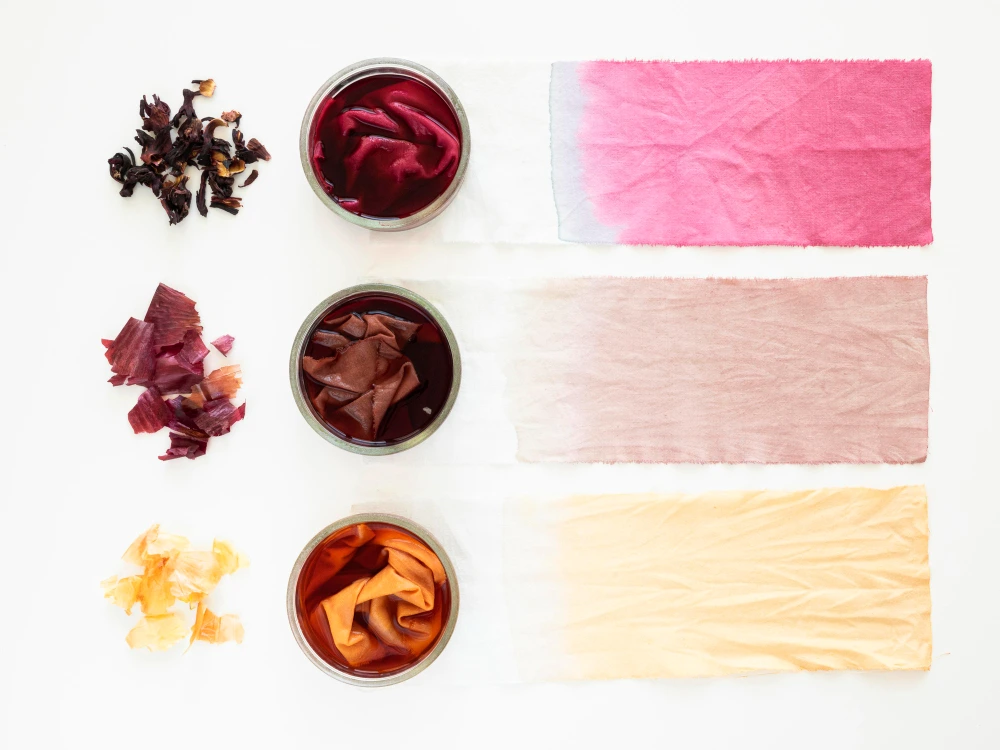
An organic dye is a soluble colorant. When applied, it dissolves in water or another medium and develops an affinity for the substrate bonding to textile fibres, leather, or paper at the molecular level. Because it dissolves, a dye loses its particulate structure and colors the material throughout rather than sitting on the surface.
An organic pigment is an insoluble colorant. It exists as fine solid particles (typically around 0.5 — 2 micrometres) that do not dissolve in the application medium; instead they are dispersed and held in place by a binder, resin, or polymer. This is why pigments resist bleeding and migration once cured and why they dominate durable applications. Both draw on the same chemical families (azo, phthalocyanine, quinacridone, anthraquinone), built from intermediates such as acetoacetanilide and benzenesulfonic acid derivatives.
Organic Dyes vs Pigments: Key Differences
| Property | Organic Dyes | Organic Pigments |
| Solubility | Soluble dissolves in medium | Insoluble dispersed as particles |
| How it colors | Bonds to / penetrates substrate | Sits on or within a binder film |
| Particle structure | Lost on dissolving | Retained (fine solid particles) |
| Lightfastness | Often lower; can fade | Generally higher; more durable |
| Migration / bleed | Higher tendency | Strongly resistant once cured |
| Transparency | High, brilliant | Transparent to opaque by grade |
| Typical cost | Often lower per application | Varies; HPP grades premium |
| Best for | Textiles, leather, paper, inkjet | Paints, plastics, coatings, cosmetics |
Benefits of Dyes and Pigments
Benefits of Organic Dyes
• Brilliant, transparent color that penetrates and colors a substrate evenly throughout.
• Easy application in solution ideal for dyeing fibres, leather, and paper.
• Wide, vivid shade range, often at lower cost per application for soluble systems.
Benefits of Organic Pigments
• Excellent lightfastness, weatherfastness, and resistance to bleeding once locked in a binder.
• Heat and chemical stability suited to plastics processing and durable coatings.
• Insolubility means color stays put no migration into adjacent layers or products.
Industrial Applications: Where Each Is Used
Where Organic Dyes Are Used
Dyes dominate wherever the substrate itself must be colored: textile dyeing (cotton, polyester, nylon), leather and paper coloration, wood stains, and water-based or solvent inkjet inks. Their solubility is the whole point it lets color migrate into and bond with the material.
Where Organic Pigments Are Used
Pigments dominate wherever color must be durable and stay in place: organic pigments for paints and coatings, organic pigments for plastics and masterbatch, printing inks, and cosmetics. In these systems the colorant cannot dissolve; it must remain a stable, dispersed particle that resists light, heat, and migration. Pigments also pair with inorganic colorants like iron oxides and titanium dioxide for coverage. Explore Elchemy’s CASE / coatings and personal care solutions.
Lake Pigments: The Bridge Between Dyes and Pigments
A lake pigment is made by precipitating a soluble dye onto an insoluble substrate (such as alumina hydrate), converting it into a stable, dispersible particle. Lakes are widely used in cosmetics, food coloring, and printing inks where the brilliance of a dye is wanted but the insolubility of a pigment requires a neat illustration of how the two categories converge in practice. The fast-moving natural and food colorant space relies heavily on this approach.
What Is the Difference Between Organic Dyes and Pigments?
The core difference is solubility. Organic dyes are soluble: they dissolve in their application medium and bond to or penetrate the substrate, losing their particle structure. Organic pigments are insoluble: they remain as fine solid particles dispersed in a binder, sitting on or within the substrate. This makes dyes ideal for coloring materials throughout textiles, leather, paper, inkjet inks while pigments are chosen for durable, bleed-resistant color in paints, plastics, coatings, and cosmetics. Pigments generally offer superior lightfastness and migration resistance; dyes often offer brighter transparency and easier application.
Choosing Dyes or Pigments for Manufacturing
Use these questions to decide between organic dyes and pigments for your product:
1. Does the substrate need to be colored throughout, or coated? Throughout (fibres, paper) favours dyes; coated or moulded systems favour pigments.
2. How durable must the color be? For UV, weather, and long service life, choose pigments; for indoor or short-life products, dyes may suffice.
3. Will it face heat or solvents? Plastics processing and aggressive solvents demand insoluble, heat-stable pigments.
4. Is bleeding or migration a risk? If color must not migrate into adjacent layers or products, pigments (or lakes) are essential.
5. What are the regulatory limits? Food, cosmetic, and toy applications have strict colorant rules to confirm approvals for your market and use.
Cost, Sustainability, and Regulatory Considerations
Beyond performance, three factors increasingly drive the dye-versus-pigment decision. On cost, dyes are often cheaper per application in soluble systems, while high-performance pigments command a premium but pigments’ durability can lower total cost of ownership by avoiding rework and fading. On sustainability, both categories are moving toward heavy-metal-free and bio-based chemistries; demand for low-migration pigment grades is rising fastest under the EU’s microplastics and REACH rules.
On regulation, colorant rules differ sharply by end use and market. Food, cosmetic, and children’s-product applications carry the strictest controls the FDA’s 2025 revocation of FD&C Red No. 3 and expanding US state-level action on food dyes show how quickly approvals can change, accelerating the shift to natural and bio-based colorants such as carotene and chlorophyll. Whichever colorant you choose, confirm it is approved for your specific application and destination market, and that the supplier provides full COA, SDS, and compliance documentation.
Common Mistakes When Choosing Between Dyes and Pigments
Even experienced teams trip over the same issues when specifying organic colorants. Avoiding them saves costly reformulation:
• Using a dye where a pigment is needed. Specifying a soluble dye in a coating or plastic that will face UV, heat, or solvent contact leads to fading, bleeding, or migration into adjacent layers. Durable systems need insoluble pigments.
• Ignoring heat history. A pigment that performs in a paint may decompose at plastics-processing temperatures. Always match heat stability to the actual process, not just the final-use condition.
• Overlooking migration in multi-layer products. In packaging and laminates, a poorly chosen colorant can bleed between layers. Low-migration pigment grades (or lakes) prevent this.
• Qualifying on a data sheet alone. Dyes and pigments behave differently in each specific system. Test under real production conditions before committing to bulk.
• Missing regulatory approvals. Food, cosmetic, and toy applications carry strict colorant rules; confirm approval for the exact use and market before sourcing.
Source Organic Dyes and Pigments With Confidence
Whether you need a soluble dye or a durable pigment, tell Elchemy your application and color target. We’ll match the right colorant from a verified supplier, with a sample before bulk.
Conclusion
Organic dyes and pigments are not interchangeable they are different tools for different jobs. Dyes dissolve and color a substrate throughout, making them ideal for textiles, leather, and paper; pigments stay as durable, insoluble particles, making them the choice for paints, plastics, coatings, and cosmetics. Understanding solubility, durability, heat behaviour, and migration risk lets you specify the right colorant the first time. When you’re ready to source either, read organic pigment applications and our supplier selection guide, or get a quote from Elchemy.
Frequently Asked Questions
What is the difference between organic dyes and pigments?
Dyes are soluble and dissolve into their medium, bonding to or penetrating the substrate, while pigments are insoluble and remain as fine particles dispersed in a binder. As a result, dyes color materials throughout (textiles, paper, leather) and pigments provide durable, bleed-resistant color in paints, plastics, coatings, and cosmetics.
Are pigments more durable than dyes?
Generally, yes. Because pigments are insoluble particles locked in a binder, they typically offer superior lightfastness, weather resistance, and migration resistance. Dyes can be brighter and more transparent but are often more prone to fading and bleeding, which is why pigments dominate durable industrial applications.
When should I use a dye instead of a pigment?
Use a dye when the substrate itself must be colored throughout and solubility is required for example dyeing textiles, leather, paper, or producing inkjet inks. Use a pigment when color must stay in place and resist light, heat, and migration, as in paints, plastics, coatings, and cosmetics.
What are lake pigments?
A lake pigment is a soluble dye precipitated onto an insoluble substrate, converting it into a stable, dispersible particle. Lakes are common in cosmetics, food coloring, and printing inks where the brilliance of a dye is wanted but the insolubility and stability of a pigment are required.
Are organic dyes and pigments made from the same chemistry?
They often share chemical families azo, phthalocyanine, anthraquinone, and quinacridone structures appear in both but are engineered differently for solubility versus insolubility. The same chromophore can be formulated as a soluble dye or an insoluble pigment depending on the intended application.
Not sure which colorant fits your product? Talk to an Elchemy sourcing expert.