

At a Glance
- Anhydrous citric acid is the water-free form of citric acid. Confirm the required grade and specification before requesting a quote.
- Compare a manufacturer, distributor, and sourcing partner by documentation, MOQ, packaging, delivery terms, and technical fit.
- Ask for a current COA, SDS, TDS, and batch or sample documentation before approving a new source.
- Imported food ingredients must meet applicable US requirements. Review the FDA’s import guidance with your regulatory team.
- Review Elchemy’s technical data sheet before confirming the specification you need.
What You’ll Learn
This guide explains how US procurement teams can evaluate anhydrous citric acid suppliers and compare commercial sourcing options. It also covers the documents, samples, and import checks to complete before a purchase order.
Introduction
US buyers comparing citric acid suppliers need more than a price quote. They need a product specification, appropriate documents, clear commercial terms, and a source that fits their intended application.
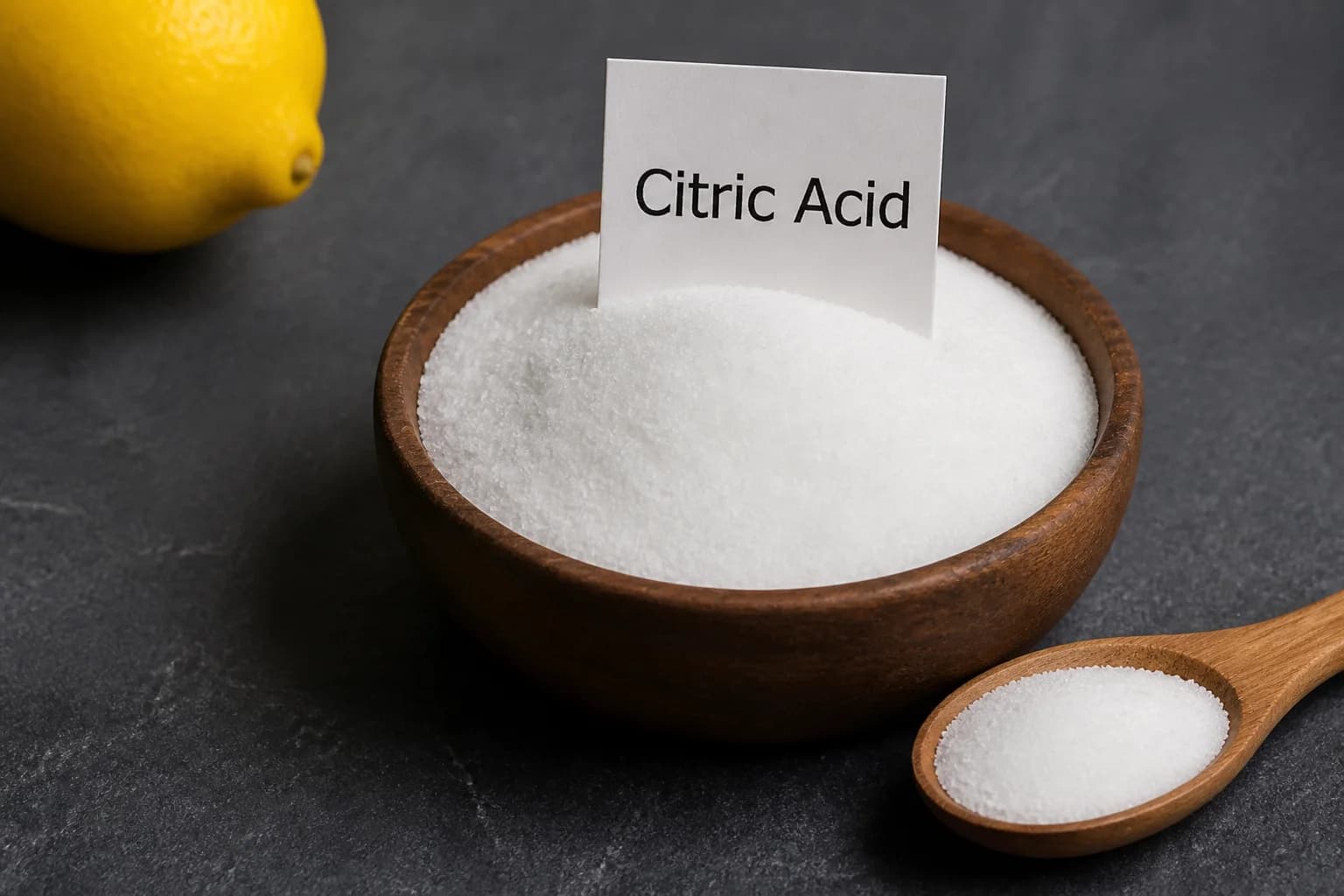
Anhydrous citric acid is the water-free form of citric acid. A buyer should confirm grade, particle size, packaging, documentation, and the intended use before selecting a supplier.
For food, pharmaceutical, personal-care, or industrial use, the approval process should match the application risk. Ask internal quality, regulatory, and formulation teams to review suitability before purchase.
Top Anhydrous Citric Acid Suppliers and Manufacturers
The global citric acid market is dominated by fermentation facilities using Aspergillus niger to convert carbohydrate feedstocks into citric acid. Production capacities range from 50,000 to 500,000+ tonnes annually.
Elchemy
Location: USA (New Jersey, Houston warehouses), Global sourcing network
Key Advantages:
- Multi-source network accessing major Asian, European, American manufacturers
- No minimum orders (25 kg to 1,000+ tonnes)
- Fast US delivery (3-7 days vs. 6-10 weeks international)
- Comprehensive certifications (FDA, USP, FCC, ISO 9001, Kosher, Halal)
- Competitive pricing with US-based service
Specialty: Flexible procurement for buyers consuming 1-1,000 tonnes annually without volume commitments or long-term contracts. Ideal for mid-sized manufacturers requiring multiple grades (food, pharma, technical).
Explore our complete citric acid product range including anhydrous, monohydrate, and specialized grades for diverse industrial applications.
Jungbunzlauer
Location: Switzerland, Austria, France, Germany, Canada
Capacity: 400,000+ tonnes annually
Key Advantages:
- Premium European quality with FSSC 22000, non-GMO, organic certified
- Pharmaceutical focus (USP/EP grade)
- Sustainability leadership
- Technical expertise and application support
Best For: Pharmaceutical manufacturers, organic food producers, European buyers prioritizing quality (+20-30% premium pricing).
Archer Daniels Midland (ADM)
Location: USA (Illinois), Cedar Rapids production
Capacity: 100,000+ tonnes annually
Key Advantages:
- US-based production for North American supply
- Corn processing vertical integration
- FDA, USDA organic, Kosher, Halal certifications
- 1-2 week delivery vs. 6-10 week imports
Best For: US manufacturers requiring domestic sourcing, pharmaceutical companies, buyers valuing supply transparency.
Cargill
Location: USA, Brazil, China partnerships
Capacity: 150,000+ tonnes annually
Key Advantages:
- Global production enabling regional sourcing
- Non-GMO Project Verified options
- Technical innovation labs
- Sustainability commitments
Best For: Multinational corporations, organic/non-GMO manufacturers, global supply coordination.
COFCO Biochemical (China)
Capacity: 250,000 tonnes annually
Key Advantages:
- Massive scale enabling industry-leading pricing
- 70% production exported globally
- Government-backed stability
- Food-grade meeting FDA/FCC standards
Best For: Large-volume buyers (100+ tonnes), cost optimization priority, 20-30% savings vs. Western suppliers.
Considerations: 6-10 week lead times, quality verification recommended.
Weifang Ensign Industry (China)
Capacity: 150,000 tonnes annually
Key Advantages:
- Specialized citric acid producer
- Modern continuous fermentation technology
- Serves 80+ countries, English-speaking team
- Food-grade and pharmaceutical-grade available
Best For: International buyers seeking reliable Chinese suppliers, pharmaceutical distributors, and flexible quantities.
RZBC Group (China)
Capacity: 300,000+ tonnes annually
Key Advantages:
- Vertical integration (glucose to citric acid)
- Product range (anhydrous, monohydrate, citrates)
- ISO 9001, HACCP, FDA, Kosher, Halal
- USP pharmaceutical-grade production
Best For: Large industrial consumers, distributors, pharmaceutical ingredient buyers.
Other Notable Suppliers
Tate & Lyle (UK): 200,000+ tonnes, ingredient solutions focus, technical support
Gadot Biochemical (Israel): 50,000-75,000 tonnes, pharmaceutical USP/EP specialization
Shandong TTCA (China): 120,000 tonnes, cost leadership, export-oriented
How US Buyers Compare Anhydrous Citric Acid Suppliers
Do not treat a manufacturer, distributor, and sourcing partner as interchangeable. Each model can suit a different purchase volume, approval process, or delivery requirement.
|
Supplier model |
What to confirm |
Best fit |
|
Manufacturer |
Grade availability, qualification documents, MOQ, production schedule, and export terms |
Buyers with stable demand and a qualified import process |
|
Citric acid distributor |
Stock position, packaging, documentation, delivery terms, and technical support |
Buyers seeking domestic fulfilment or smaller purchase quantities |
|
Sourcing partner |
Approved-source process, document access, quotation basis, and communication ownership |
Buyers comparing supply options or managing multi-source procurement |
Define the Product Requirement First
Confirm the intended application before contacting suppliers. State the requested grade, target specification, annual volume, packaging, delivery location, and required documents.
For food-use material, verify the importer’s and facility’s obligations with a qualified regulatory professional. FDA notes that imported food must meet applicable US requirements and may be examined when offered for entry. See the FDA’s import requirements.
Compare Documents Before Price
Request a current COA, SDS, TDS, specification sheet, and relevant application documentation. The citric acid SDS should support workplace hazard communication, while the TDS should support technical review.
Do not use a supplier’s FDA registration as proof that a finished product or shipment is approved. FDA states that it does not approve individual food importers, products, labels, or shipments before importation.
Assess Commercial Fit
Compare quotes on the same grade, quantity, packaging, delivery point, and Incoterm. Include freight, customs handling, testing, warehousing, and inventory exposure when evaluating the commercial option.
For a structured approval workflow, use this supplier approval checklist. Review delivery assumptions against the expected supply-chain lead time.
Build a Resilient Supply Plan
A qualified second source can reduce dependency when specifications and internal approval requirements allow it. The commercial team should document the approval status of each source before switching material.
Read Elchemy’s guidance on supply diversification when building a multi-source plan.
|
. |

Asia: Cost Leadership (70% Production)
Key Countries: China (dominant), Thailand, India
Pricing: 20-30% below European/American suppliers
Advantages:
- Lowest global pricing
- Massive capacity (individual facilities 50,000-300,000 tonnes)
- Flexible manufacturing (custom packaging, labeling)
- Well-developed export infrastructure
Challenges:
- 6-10 week lead times (ocean freight)
- Quality variability between suppliers
- Language barriers with smaller producers
- Geopolitical risks (trade tensions, tariffs)
Best For: Large-volume buyers (50+ tonnes), cost-driven procurement, industrial applications, buyers with quality verification capabilities. Learn more about How India Is Becoming The Next Big Destination For Chemical Sourcing
Europe: Premium Quality (15% Production)
Key Countries: Germany, Belgium, France, Austria, Switzerland
Pricing: Premium +20-30% vs. Asian suppliers
Advantages:
- Highest quality standards (FSSC 22000, organic, non-GMO)
- Pharmaceutical specialization (USP/EP, cGMP)
- Regulatory alignment for European buyers
- Sustainability leadership
- Extensive technical support
- 1-3 week lead times for European buyers
Best For: Pharmaceutical manufacturers, organic producers, European buyers, applications justifying premium for quality assurance.
Americas: Regional Supply (10% Production)
Key Countries: USA, Brazil, Mexico
Pricing: Mid-tier (10-20% below Europe, 10-20% above Asia)
Advantages:
- Proximity enables 1-2 week US delivery
- FDA-registered facilities, USDA organic
- Supply chain transparency
- USMCA trade benefits
- Reduced geopolitical risk
Best For: US manufacturers prioritizing domestic sourcing, pharmaceutical companies, rapid delivery requirements, supply chain resilience. Understand the broader context in our guide on Manufacturing Industry Trends 2025.
Middle East & Africa: Emerging (5% Production)
Key Countries: Israel (Gadot), South Africa
Advantages:
- Regional supply reduces freight costs
- Pharmaceutical specialization (Gadot)
- Strategic location bridging Europe-Asia-Africa
Best For: Middle East/African buyers, pharmaceutical manufacturers in region.
Common Mistakes Buyers Make When Selecting Suppliers
1. Prioritizing Price Without Quality Verification
Mistake: Selecting lowest-price Chinese manufacturers without independent testing.
Consequences: Off-spec material, production failures, recalls, regulatory violations.
Solution: Request COA for samples, conduct third-party testing (SGS, Bureau Veritas), start with trial orders, balance cost with quality risk.
2. Ignoring Regulatory Compliance
Mistake: Purchasing without FDA registration, FCC compliance, or application-specific certifications.
Consequences: Unsuitable material, regulatory violations, costly rework, production delays.
Solution: Specify required certifications upfront (FDA/FCC for food, USP/EP for pharma, Kosher/Halal, Organic). Verify certifications directly with issuing bodies. Review our Citric Acid MSDS for safety and compliance information.
3. Underestimating Lead Times
Mistake: Ordering from Asian suppliers without lead time planning, expecting 1-2 week delivery.
Consequences: Production stoppages, emergency air freight (5-10X cost), customs delays, demurrage fees.
Solution: Plan 6-10 week total lead time for Asian imports (manufacturing + ocean freight + customs + inland), maintain 2-3 cycle safety stock, use domestic suppliers for rapid replenishment. Learn more about Explaining Lead Time in Supply Chain.
4. Failing to Diversify Sources
Mistake: Single-sourcing from one manufacturer, creating disruption vulnerability.
Consequences: Complete supply disruption from supplier failure, production stoppages, price leverage loss.
Solution: Implement dual-sourcing (primary 60-70% + secondary 30-40%), geographic diversification (Asian + North American/European backup), maintain 3-5 pre-qualified suppliers. Explore our insights on Supply Chain Diversification: A Strategic Imperative for Procurement Managers.
5. Overlooking Total Cost of Ownership
Mistake: Comparing only quoted price without freight, tariffs, inventory carrying costs.
Consequences: “Cheap” material becomes expensive after 15-20% freight, 6% tariffs, insurance, financing.
Solution: Calculate total landed cost (product + freight + tariffs + insurance + inventory carrying + quality control), compare delivered cost not FOB price. For broader procurement insights, read The Ultimate Supplier Approval Checklist for Chemical Procurement Teams.
A Practical Supplier-Approval Process
1. Document the Requirement
Write a specification request that includes intended use, grade, required documentation, packaging, target quantity, delivery location, and timing. This gives each anhydrous citric acid supplier the same basis for quotation.
2. Screen the Source
Review the supplier’s product documentation, traceability process, commercial terms, and ability to provide a representative sample. Use the chemical supplier guide to structure the first review.
3. Review a Sample
Request a sample with the corresponding COA and SDS. Your quality and formulation teams should determine the tests required for the intended use and approve the material before commercial use.
OSHA explains that SDSs communicate chemical hazard information to downstream users. Review OSHA’s SDS guidance alongside your site-specific procedures.
4. Compare Commercial Terms
Compare the same grade, quantity, packaging, delivery terms, and payment assumptions. Record quote validity, freight assumptions, documentation requirements, and any testing or qualification costs.
5. Approve and Monitor
Start with the purchase quantity your internal approval process allows. Retain the relevant approval record, batch documentation, and performance feedback for future sourcing decisions.
Source Anhydrous Citric Acid for US Requirements
The right sourcing route depends on your specification, internal approval process, purchase quantity, and delivery requirement. Start with the product documents and a clear quotation request.
Elchemy’s Citric Acid Anhydrous product page is the starting point for a product inquiry. [Elchemy verification needed]: confirm available grades, packaging, quantities, documentation, fulfilment locations, and response commitments before publishing any service claim.
FAQs About Anhydrous Citric Acid Suppliers
What should a buyer request before approving a source?
Request a current specification, COA, SDS, TDS, packaging details, and quotation terms. Then confirm which documents are required for the intended application. A sample should correspond to the proposed commercial material where possible. Internal quality and regulatory teams should approve suitability before commercial use.
How is anhydrous citric acid different from monohydrate?
Anhydrous citric acid is the water-free form of citric acid. Citric acid monohydrate contains water of crystallization. The right choice depends on formulation, processing, storage, and the approved product specification. Buyers should confirm the required form with their technical team before comparing quotes.
Should I buy from a manufacturer or a citric acid distributor?
A manufacturer may suit stable, larger-volume demand and direct qualification. A citric acid distributor may suit buyers needing local inventory support, smaller order quantities, or simpler delivery coordination. Compare documentation, MOQ, packaging, and commercial terms before choosing either route.
What documents should accompany a sample?
Ask for the sample’s COA, SDS, TDS, lot or batch identification, and the product specification. Additional records depend on the intended application and your internal requirements. Review each document for consistency with the approved requirement rather than treating a generic certificate as product approval.
How should US buyers evaluate imported material?
US buyers should verify the product’s intended use, required documentation, supplier information, entry responsibilities, and delivery terms. Imported food ingredients must meet applicable US requirements. Engage qualified regulatory, customs, and quality professionals before importing a new material or changing a source.
What affects the delivered cost of citric acid anhydrous?
The delivered cost can include grade, quantity, packaging, freight, insurance, duties, customs handling, testing, warehousing, and payment terms. Compare like-for-like quotations. A lower unit price may not be the lower total cost after required documentation, inventory, and logistics are included.