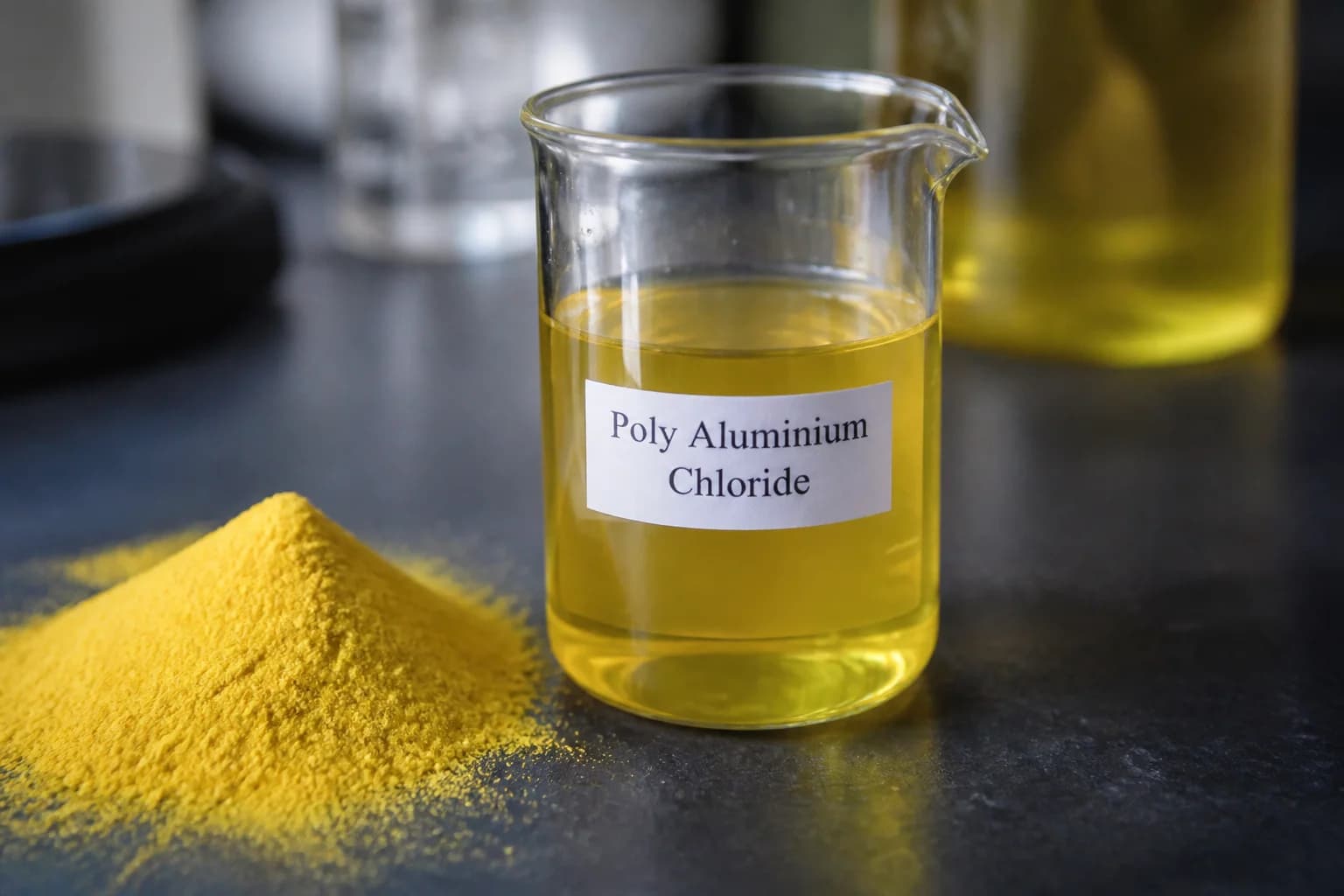
Poly Aluminium Chloride
ELRASA™TM – PyAC

Get Pricing for This Product
Need pricing? Request a quote for this product and we'll get back to you shortly.
 Free Samples Available
Speed Up Your Sample Testing Process
We deliver domestic samples within 24 - 48 hours, helping you evaluate product without delays.
Poly Aluminium Chloride (PAC) is a highly efficient coagulant used in water treatment processes. It is known for its ability to remove suspended solids, organic matter, and other impurities from…
CAS Number
1327-41-9
HS Code
28273200
INCI Name
Poly Aluminium Chloride
Molecular Formula
Aln(OH)mCl(3n-m)
Poly Aluminium Chloride
ELRASA™TM – PyAC
Poly Aluminium Chloride (PAC) is a highly efficient coagulant used in water treatment processes. It is known for its ability to remove suspended solids, organic matter, and other impurities from water, making it ideal for both drinking water and wastewater treatment. PAC is…
CAS Number
1327-41-9
INCI Name
Poly Aluminium Chloride
HS Code
28273200
Molecular Formula
Aln(OH)mCl(3n-m)
Get Pricing for This Product
Need pricing? Request a quote for this product and we'll get back to you shortly.
Free Samples AvailableSpeed Up Your Sample Testing Process
We deliver domestic samples within 24 - 48 hours, helping you evaluate product without delays.
 By
By
Specialty chemicals, delivered right
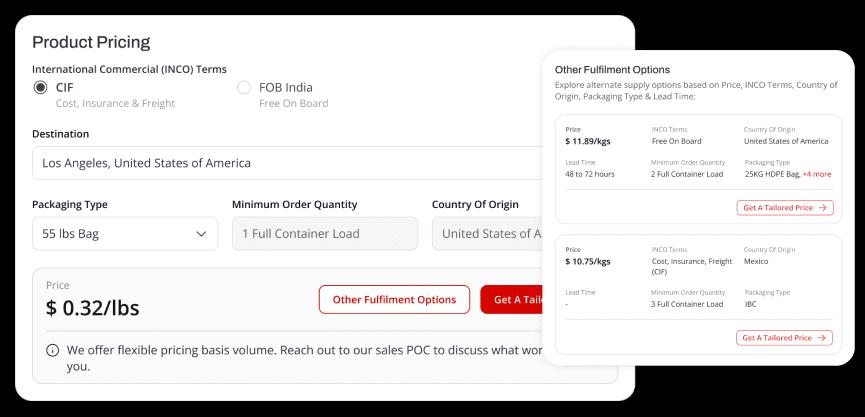
Access live, grade-specific pricing for every chemical, so your teams talks with data, not intuition on Elixir.
Compare fulfilment options across grades, INCO terms, origins, and lead times: all in one platform.

Live, transparent pricing
Real-time quotes across 12,000+ specialty chemicals.
Product Specification
Physical Properties
| Property | Specification |
|---|---|
| Appearance | yellow_powder_or_liquid |
| Odor | Slight chlorine odor |
| Molecular Weight | 133.5 - 174.5 |
| Density / Specific Gravity | 1.15-1.20 g/cm³ |
| Viscosity | 10 to 50 mPa·s (cp) at 25°C |
| Ph (Aqueous Solution) | 3.5-5.0 (1% aqueous solution) |
| Assay / Purity | In liquid form, total Al₂O₃ concentration ranges from 6% to 24% |
| Ph (1% Aqueous Solution) | 3.5–5.0. |
| Assay / Purity (As Al₂O₃) | ≥ 30%. |
Chemical Properties
| Property | Specification |
|---|---|
| Ionic Nature | Inorganic polymeric cation |
| Incompatibilities | Bases (e.g., ammonia, carbonates, sodium hydroxide), organic materials, nitrates, chlorates, carbides, and metals such as aluminum, copper, iron, and steel. |
| Hazardous Reactions / Decomposition Products | Thermal decomposition may produce hydrochloric acid and aluminium oxides. Contact with metals may generate flammable hydrogen gas. |
Thermal Properties
| Property | Specification |
|---|---|
| Decomposition Temperature | > 200 °C |
| Thermal Stability | Stable at normal temperatures and pressure. |
| Melting Point | Not applicable. |
| Boiling Point | Not applicable. |
| Flash Point | Not pertinent / Non-flammable. |
Dosing Guidelines
A. Dosing by Application
| Application | Recommended / Max Dosage |
|---|---|
| Drinking / Domestic Water Treatment | 2.5–25 kg per 1,000 tons of water (2.5 - 25 ppm). |
| Industrial Water Treatment | 2.5–25 kg per 1,000 tons of water (2.5 - 25 ppm). |
| Municipal Wastewater Treatment | 15–50 kg per 1,000 tons of water (15 - 50 ppm). |
| Papermaking (Packaging/Board) | 1.5–4.0 kg per ton of dry fiber. |
| Dyeing Wastewater Treatment | 100–300 kg per 1,000 tons of water (100 - 300 ppm). |
| Leather Wastewater Treatment | 100–300 kg per 1,000 tons of water (100 - 300 ppm). |
| Food Processing Wastewater | 50–150 kg per 1,000 tons of water (50 - 150 ppm). |
| Swimming Pool Circulation (Liquid PAC) | 0.1 ml/m³ of the circulation flow. |
About Poly Aluminium Chloride
Poly aluminium chloride (PAC) is the most widely used inorganic polymer coagulant in modern water and wastewater treatment. Unlike traditional aluminium sulphate (alum), PAC forms larger, faster-settling flocs across a broader pH range and cuts chemical dosage significantly. It is not a single fixed compound but a family of aluminium hydroxychloride polymers characterised by their Al₂O₃ content and basicity.
PAC is sourced globally as both powder (≈28–31% Al₂O₃) and liquid (≈10–11% Al₂O₃), and for buyers dependable supply is as much about matching grade and basicity to the water source as it is about chemistry. PAC (CAS 1327-41-9, HS 2827.32) is used at potable-water grade under NSF/ANSI 60 where certified material is required.
Industrial buyers placing bulk orders also keep a close eye on poly aluminium chloride pricing, since contract rates feed directly into the cost of everything they produce downstream.
Manufacturing Process of Poly Aluminium Chloride
PAC is produced by the controlled partial neutralisation of aluminium chloride, or by reacting aluminium hydroxide (or aluminium metal/hydrate) with hydrochloric acid and, where higher basicity is required, a basifier such as calcium carbonate or aluminate. The degree of neutralisation sets the basicity - the ratio of hydroxyl to aluminium - which is the master performance parameter: higher basicity means more polymerisation, faster floc formation and lower residual aluminium. The reacted liquor is clarified and either sold as liquid (10–11% Al₂O₃) or spray-dried into powder (28–31% Al₂O₃).
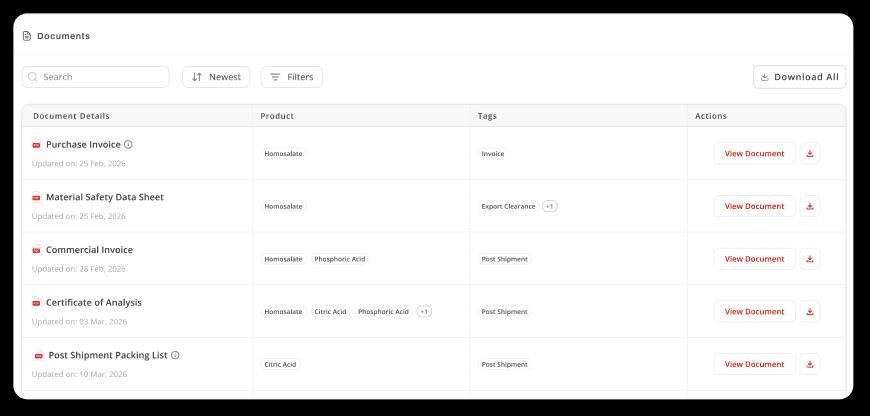
Every shipment Elchemy supplies is tested for Al₂O₃ content, basicity, water-insoluble matter and heavy metals before dispatch, with a Certificate of Analysis travelling alongside each order.
Poly Aluminium Chloride Price: Bulk Pricing for Industrial Buyers
If you're looking for current poly aluminium chloride pricing for bulk procurement, Elchemy provides quotes based on your specific requirements. Fill out the quote request form with your volume, grade, destination and packaging preference, and our team will revert with a detailed offer within 24 to 48 hours.
Pricing works on a quote basis rather than a published rate because the cost is driven by the price of aluminium hydroxide/aluminium chloride feedstock and hydrochloric acid, plus spray-drying energy, rather than tracking a fixed list.
Beyond that, several factors layer in to shape the final number: grade, committed volume, origin country, packaging format, freight, Incoterm choice (FOB, CIF or DDP) and applicable import duty (HTS 2827.32 for US-bound shipments).
For an approximate read on where the market sits, procurement teams often reference aluminium and chlor-alkali price indices, which give a sense of how rates are trending.
Trade publications also report the poly aluminium chloride price per kg as a unit-level benchmark, useful for spotting short-term regional shifts even on large industrial orders.
At bulk procurement scale, however, the poly aluminium chloride price per ton is the most relevant commercial unit, since contracts are typically negotiated and committed at that level.
For an exact rate, none of these references replaces a direct quote. The actual price depends on your contract structure, destination, committed volume and timing of dispatch, which is why a quote from our team will always be the most accurate number for your specific procurement.
Packaging & Logistics
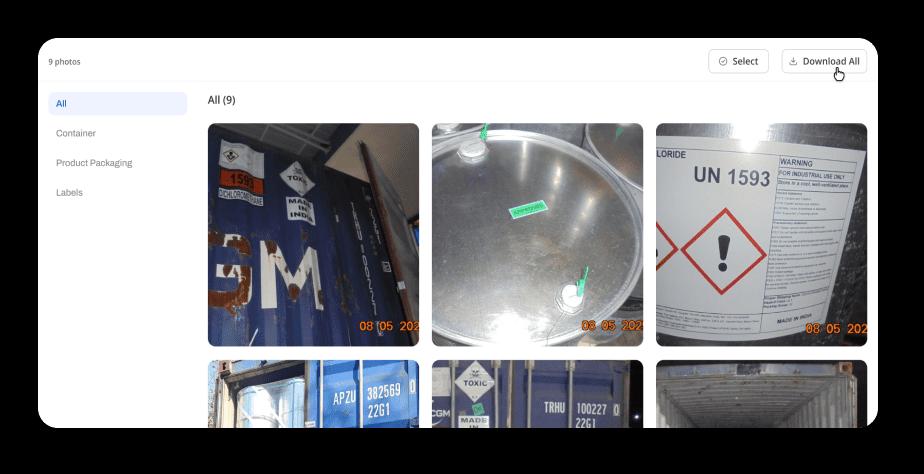
Poly Aluminium Chloride ships in 25 kg (55 lb) bags, 50 lb bags for the US market, or 1 MT (2,205 lb) FIBC jumbo bags (liquids ship in drums, IBCs or ISO tanks as applicable), supplied as per buyer requirements. A typical 20' container holds approximately 18 to 24 MT depending on packaging.
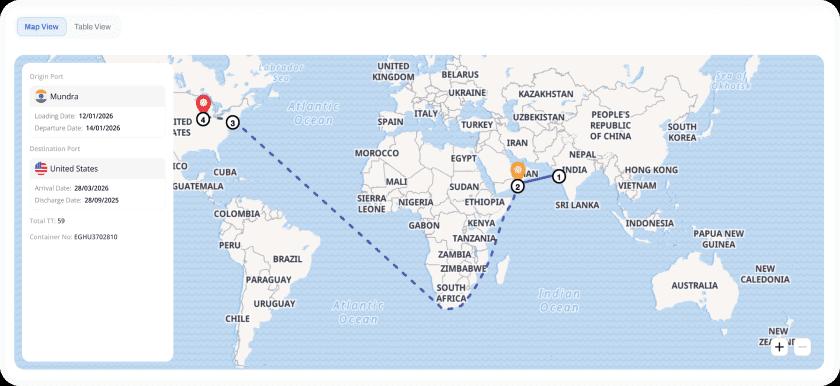
For US-bound orders, domestic stock supports faster fulfilment. Where sourcing is required from origin countries, transit times typically run 24 to 28 days to the US East Coast and 18 to 22 days to the West Coast. Elchemy offers EXW, FOB, CIF and DDP terms, depending on how your procurement team prefers to handle landed cost and customs.
Material should be stored in a cool, dry, well-ventilated area per the storage conditions on the TDS. Standard dispatch follows agreed contract terms, with expedited timelines available where needed. Samples are dispatched within 24 to 48 hours.
Why Choose Elchemy as a Trusted Poly Aluminium Chloride Supplier?
Elchemy makes poly aluminium chloride procurement straightforward for industrial buyers. That means consistent material across the grades listed above, with a Certificate of Analysis for every batch and full documentation (TDS, SDS) as standard.
Because we source across multiple origins, we quote on the best landed cost for your destination rather than a single manufacturer's list price. Our partner plants operate to recognised quality standards (ISO 9001, plus food/pharma certifications where relevant), with Halal and Kosher certification available on request.
Beyond the US, Elchemy ships into 40+ countries with samples available for qualification before any bulk order, and pricing tailored to volume, destination and contract terms.
Safety & Handling
Solution is classified under GHS as Skin/Eye Irritant (Category 2). Some concentrated grades ship as a mildly corrosive material; confirm the SDS classification for the specific grade and concentration.
PAC is acidic in solution and mildly corrosive. Direct contact causes skin and eye irritation, and the dust or mist irritates the respiratory tract. It is not classified as highly toxic, but concentrated solution should be handled with gloves and eye protection. It reacts exothermically with strong bases. There is no significant chronic hazard at industrial handling levels; the main environmental control is avoiding over-dosing, which raises residual aluminium in treated water.
The full 16-section GHS-aligned SDS is available alongside material orders.
- Efficient Coagulation: Rapidly removes suspended solids and impurities, improving water clarity.
- Function: Primarily acts as a coagulant and flocculant in water and wastewater treatment.
- Versatile Applications: Suitable for both drinking water and wastewater treatment, as well as industrial processes.
- High cationic charge: Efficient neutralization of suspended particles.
- High Purity Standards: Ensures consistent performance in various applications.
- Effective over a wide pH range: Approx. 5-9.
- Eco-Friendly Production: Focus on minimizing environmental impact through sustainable practices.
- Forms flocs rapidly: Forms flocs rapidly
- Cost-Effective Solution: Reduces treatment costs by enhancing process efficiency.
- Available in various grades of basicity: For different applications.
- High efficiency at lower dosages: Compared to traditional coagulants like alum.
- Produces less sludge: Denser and easier to dewater.
- Reduces the need for pH adjustment chemicals: Reduces the need for pH adjustment chemicals
- Effective in low-temperature water: Effective in low-temperature water
- Cost-effective: Due to lower dosage and reduced sludge disposal costs.
About Poly Aluminium Chloride
Poly aluminium chloride (PAC) is the most widely used inorganic polymer coagulant in modern water and wastewater treatment. Unlike traditional aluminium sulphate (alum), PAC forms larger, faster-settling flocs across a broader pH range and cuts chemical dosage significantly. It is not a single fixed compound but a family of aluminium hydroxychloride polymers characterised by their Al₂O₃ content and basicity.
PAC is sourced globally as both powder (≈28–31% Al₂O₃) and liquid (≈10–11% Al₂O₃), and for buyers dependable supply is as much about matching grade and basicity to the water source as it is about chemistry. PAC (CAS 1327-41-9, HS 2827.32) is used at potable-water grade under NSF/ANSI 60 where certified material is required.
Industrial buyers placing bulk orders also keep a close eye on poly aluminium chloride pricing, since contract rates feed directly into the cost of everything they produce downstream.
Manufacturing Process of Poly Aluminium Chloride
PAC is produced by the controlled partial neutralisation of aluminium chloride, or by reacting aluminium hydroxide (or aluminium metal/hydrate) with hydrochloric acid and, where higher basicity is required, a basifier such as calcium carbonate or aluminate. The degree of neutralisation sets the basicity - the ratio of hydroxyl to aluminium - which is the master performance parameter: higher basicity means more polymerisation, faster floc formation and lower residual aluminium. The reacted liquor is clarified and either sold as liquid (10–11% Al₂O₃) or spray-dried into powder (28–31% Al₂O₃).
Every shipment Elchemy supplies is tested for Al₂O₃ content, basicity, water-insoluble matter and heavy metals before dispatch, with a Certificate of Analysis travelling alongside each order.
Poly Aluminium Chloride Price: Bulk Pricing for Industrial Buyers
If you're looking for current poly aluminium chloride pricing for bulk procurement, Elchemy provides quotes based on your specific requirements. Fill out the quote request form with your volume, grade, destination and packaging preference, and our team will revert with a detailed offer within 24 to 48 hours.
Pricing works on a quote basis rather than a published rate because the cost is driven by the price of aluminium hydroxide/aluminium chloride feedstock and hydrochloric acid, plus spray-drying energy, rather than tracking a fixed list.
Beyond that, several factors layer in to shape the final number: grade, committed volume, origin country, packaging format, freight, Incoterm choice (FOB, CIF or DDP) and applicable import duty (HTS 2827.32 for US-bound shipments).
For an approximate read on where the market sits, procurement teams often reference aluminium and chlor-alkali price indices, which give a sense of how rates are trending.
Trade publications also report the poly aluminium chloride price per kg as a unit-level benchmark, useful for spotting short-term regional shifts even on large industrial orders.
At bulk procurement scale, however, the poly aluminium chloride price per ton is the most relevant commercial unit, since contracts are typically negotiated and committed at that level.
For an exact rate, none of these references replaces a direct quote. The actual price depends on your contract structure, destination, committed volume and timing of dispatch, which is why a quote from our team will always be the most accurate number for your specific procurement.
Packaging & Logistics
Poly Aluminium Chloride ships in 25 kg (55 lb) bags, 50 lb bags for the US market, or 1 MT (2,205 lb) FIBC jumbo bags (liquids ship in drums, IBCs or ISO tanks as applicable), supplied as per buyer requirements. A typical 20' container holds approximately 18 to 24 MT depending on packaging.
For US-bound orders, domestic stock supports faster fulfilment. Where sourcing is required from origin countries, transit times typically run 24 to 28 days to the US East Coast and 18 to 22 days to the West Coast. Elchemy offers EXW, FOB, CIF and DDP terms, depending on how your procurement team prefers to handle landed cost and customs.
Material should be stored in a cool, dry, well-ventilated area per the storage conditions on the TDS. Standard dispatch follows agreed contract terms, with expedited timelines available where needed. Samples are dispatched within 24 to 48 hours.
Why Choose Elchemy as a Trusted Poly Aluminium Chloride Supplier?
Elchemy makes poly aluminium chloride procurement straightforward for industrial buyers. That means consistent material across the grades listed above, with a Certificate of Analysis for every batch and full documentation (TDS, SDS) as standard.
Because we source across multiple origins, we quote on the best landed cost for your destination rather than a single manufacturer's list price. Our partner plants operate to recognised quality standards (ISO 9001, plus food/pharma certifications where relevant), with Halal and Kosher certification available on request.
Beyond the US, Elchemy ships into 40+ countries with samples available for qualification before any bulk order, and pricing tailored to volume, destination and contract terms.
Safety & Handling
Solution is classified under GHS as Skin/Eye Irritant (Category 2). Some concentrated grades ship as a mildly corrosive material; confirm the SDS classification for the specific grade and concentration.
PAC is acidic in solution and mildly corrosive. Direct contact causes skin and eye irritation, and the dust or mist irritates the respiratory tract. It is not classified as highly toxic, but concentrated solution should be handled with gloves and eye protection. It reacts exothermically with strong bases. There is no significant chronic hazard at industrial handling levels; the main environmental control is avoiding over-dosing, which raises residual aluminium in treated water.
The full 16-section GHS-aligned SDS is available alongside material orders.
- Efficient Coagulation: Rapidly removes suspended solids and impurities, improving water clarity.
- Function: Primarily acts as a coagulant and flocculant in water and wastewater treatment.
- Versatile Applications: Suitable for both drinking water and wastewater treatment, as well as industrial processes.
- High cationic charge: Efficient neutralization of suspended particles.
- High Purity Standards: Ensures consistent performance in various applications.
- Effective over a wide pH range: Approx. 5-9.
- Eco-Friendly Production: Focus on minimizing environmental impact through sustainable practices.
- Forms flocs rapidly: Forms flocs rapidly
- Cost-Effective Solution: Reduces treatment costs by enhancing process efficiency.
- Available in various grades of basicity: For different applications.
- High efficiency at lower dosages: Compared to traditional coagulants like alum.
- Produces less sludge: Denser and easier to dewater.
- Reduces the need for pH adjustment chemicals: Reduces the need for pH adjustment chemicals
- Effective in low-temperature water: Effective in low-temperature water
- Cost-effective: Due to lower dosage and reduced sludge disposal costs.
Regulatory Compliance
| Region | Max Allowed Level | Notes | Certification Body |
|---|---|---|---|
| United States | - | Regulated as a drinking water additive. The EPA sets a secondary maximum contaminant level (SMCL) for aluminum at 0.05–0.2 mg/L. | NSF/ANSI/CAN 60 certification is required for drinking water treatment chemicals. |
| European Union | - | Must comply with REACH (Registration, Evaluation, Authorisation and Restriction of Chemicals) regulations. As a water treatment agent, it may also need to meet Biocidal Products Regulation (BPR) requirements. | REACH Registration |
| Canada | 2% | Approved for use in drinking water treatment. | NSF/ANSI/CAN 60 certification is required for drinking water treatment chemicals. |
| India | - | Regulated for drinking water treatment under Indian Standard IS 15573. Must be manufactured from virgin raw materials to be considered safe for drinking water. | BIS (Bureau of Indian Standards) certification under IS 15573 is required. |
| Japan | - | Allowed in drinking water regulations but with strict limits on residual aluminum and dosage. | - |
| Australia | 5% | Endorsed for use as a drinking water treatment chemical since 1979. Classified as hazardous according to GHS criteria (skin and eye irritant). | - |
| China | - | The Hygienic Standards for Drinking Water (GB5749-2022) set a strict limit on residual aluminum (≤ 0.2 mg/L). The standard for Polyaluminium Chloride for Water Treatment is GB15892-2020. | - |
| Republic of Korea | - | Allowed in drinking water regulations with strict limits on residual aluminum and dosage. Chemicals are regulated under the Chemical Control Act (CCA) and K-REACH. | - |
| Canada | - | Approved for drinking water treatment under NSF/ANSI/CAN 60. | NSF/ANSI/CAN 60 certification for drinking water applications. |
| India | - | Regulated under Indian Standard IS 15573:2018, which specifies requirements for use in drinking water treatment. The material must be manufactured from virgin raw materials. | BIS (Bureau of Indian Standards) certification with ISI Mark is mandatory for production and marketing in India. |
| United States | - | Approved for drinking water treatment under NSF/ANSI/CAN 60. Regulated by the EPA. | NSF/ANSI/CAN 60 certification for drinking water applications. |
| European Union | - | Registered under REACH. Classified as corrosive to metals (Category 1) and causing serious eye damage (Category 1). | REACH Registration. |
FAQs - Poly Aluminium Chloride
Related Products


Related Products

Streamline
Your Chemical
Procurement
Get fast responses from real experts