

At a Glance
- Muriatic acid is hydrochloric acid (HCl) containing impurities that give it a yellow tint, while sulfuric acid (H₂SO₄) is a different compound entirely
- Sulfuric acid is diprotic (donates two hydrogen ions), muriatic acid is monoprotic (donates one hydrogen ion)
- The muriatic vs sulfuric acid comparison shows muriatic producing chlorides as byproducts, sulfuric producing sulfates that can accumulate problematically
- Muriatic acid costs less ($100-200/ton bulk) and is widely available, sulfuric acid runs $300-500/ton and suits specialized applications
- Sulfuric acid acts as an oxidizing agent when concentrated, muriatic acid does not oxidize but its chloride ions act as nucleophiles
- Storage requirements differ: sulfuric acid needs heat-resistant containers, muriatic requires ventilation for fumes
- Industrial applications split: sulfuric dominates chemical manufacturing and fertilizer production, muriatic excels at metal cleaning and pH adjustment
A pool maintenance company in Florida was losing customers because their water chemistry kept going off balance despite regular acid treatments. They’d been using sulfuric acid to lower pH, which worked initially. But over time, sulfate buildup created cloudiness and scaling that confused water balance completely. After switching to muriatic acid, the problem disappeared. The chlorides that muriatic acid left behind integrated harmlessly into the pool’s existing chemistry, while sulfates from sulfuric acid had been accumulating to problematic levels.
This real-world example highlights why understanding sulfuric acid vs muriatic acid matters beyond just knowing they’re both strong acids. While chemically similar in some ways, these two acids behave differently in applications, leave behind different byproducts, and suit different uses based on their distinct chemical properties.
Chemical Composition: What Makes Each Acid Unique
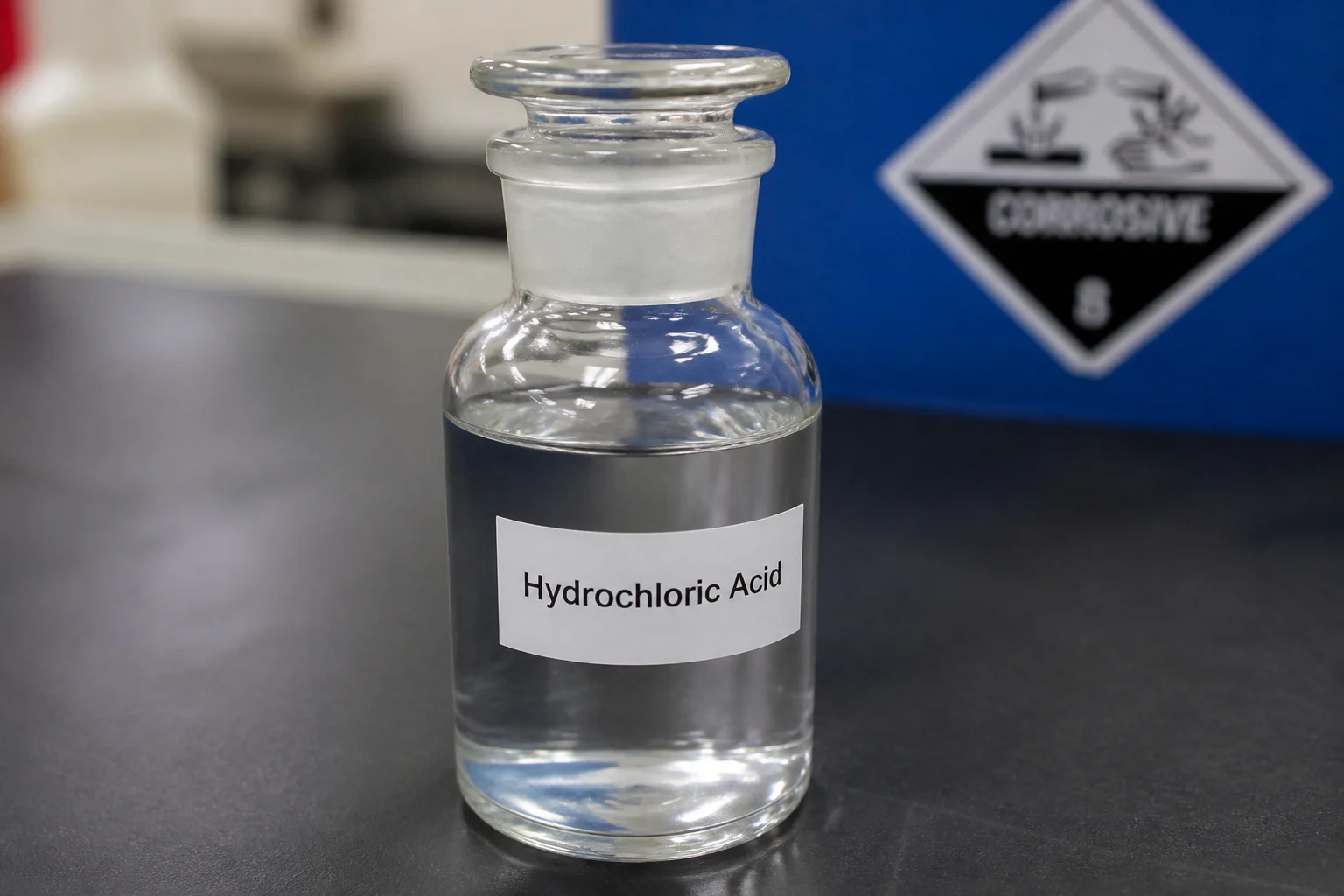
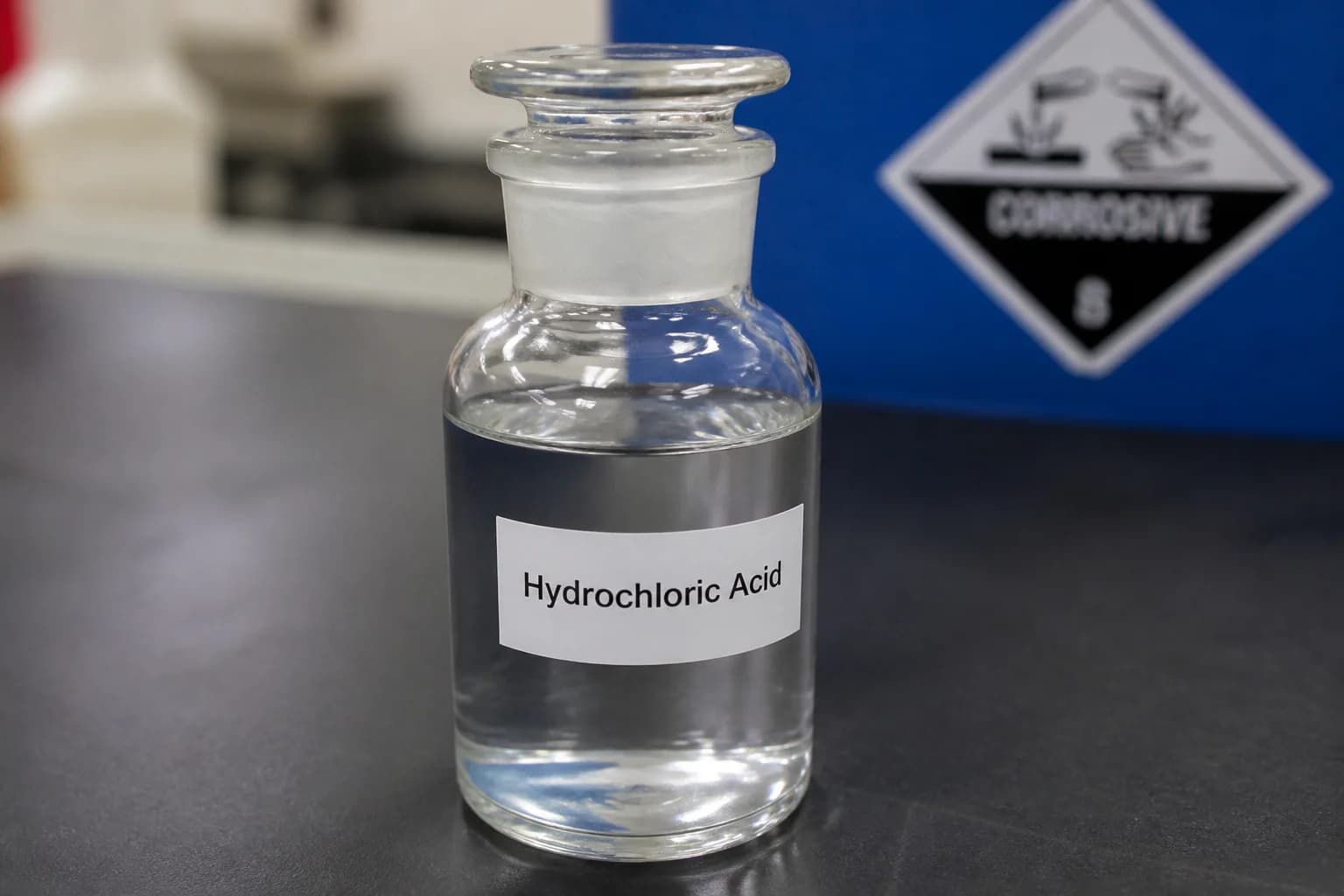
Muriatic acid has the chemical formula HCl, representing one hydrogen atom bonded to one chlorine atom. When dissolved in water (which is how it’s sold), it creates hydrochloric acid. The term “muriatic” historically meant “pertaining to brine” since the acid was originally made from salt and sulfuric acid.
The difference between muriatic acid and pure hydrochloric acid comes down to purity and concentration. Muriatic acid contains impurities, primarily iron compounds, that give it a characteristic yellowish color and stronger odor compared to laboratory-grade hydrochloric acid. These impurities don’t significantly affect performance for most applications but do create the visible differences.
Commercial muriatic acid typically contains 20-32% HCl in the United States. Hardware stores often sell 10-12% solutions for household use, while industrial applications use 30-35% concentrations.
Sulfuric acid has a completely different chemical structure: H₂SO₄. Each molecule contains two hydrogen atoms, one sulfur atom, and four oxygen atoms. This makes it a polyprotic acid capable of donating two hydrogen ions in solution, unlike muriatic acid which can only donate one.
Pure sulfuric acid appears as a colorless, oily liquid with no odor. The oily texture comes from its high viscosity and density. Commercial sulfuric acid commonly comes in 93-98% concentrations, much more concentrated than typical muriatic acid solutions.
Key Chemical Differences
| Property | Muriatic Acid (HCl) | Sulfuric Acid (H₂SO₄) |
| Formula | HCl | H₂SO₄ |
| Protons Donated | 1 (monoprotic) | 2 (diprotic) |
| pKa | -7 (very strong) | -3 (first H⁺), 1.99 (second H⁺) |
| Appearance | Clear to yellowish liquid | Colorless, oily liquid |
| Odor | Sharp, pungent | Odorless (pure form) |
| Common Concentration | 20-35% | 93-98% |
| Oxidizing Agent | No | Yes (when concentrated) |
| Byproduct | Chlorides (Cl⁻) | Sulfates (SO₄²⁻) |
How Each Acid Behaves in Use
The sulfuric acid vs muriatic acid comparison becomes clearer when you understand how they react differently despite both being strong acids.
Muriatic Acid Reactions
When muriatic acid reacts with metals, it produces metal chlorides and hydrogen gas. You can actually see the hydrogen bubbling off. For example, adding muriatic acid to zinc creates zinc chloride and hydrogen:
Zn + 2HCl → ZnCl₂ + H₂
The chloride ions can act as nucleophiles in organic chemistry, making muriatic acid useful for certain chemical syntheses where you want to replace an alcohol group with chlorine. But in most industrial applications, those chloride byproducts just wash away harmlessly or integrate into existing processes.
Sulfuric Acid’s Dual Nature
Sulfuric acid behaves differently because it’s both a strong acid and a powerful oxidizing agent (especially when concentrated). This oxidizing power means it doesn’t just donate hydrogen ions—it can steal electrons from other substances, fundamentally changing their chemical nature.
When sulfuric acid reacts with metals, it often produces sulfate salts and different gases depending on concentration and conditions. Dilute sulfuric acid on zinc produces hydrogen like muriatic acid would. But concentrated sulfuric acid oxidizes the zinc differently, producing sulfur dioxide instead of hydrogen.
The oxidizing property also explains why concentrated sulfuric acid chars organic materials. It literally rips water molecules out of substances, leaving behind carbon.
Industrial Applications: Where Each Acid Dominates
Muriatic Acid Uses
Metal cleaning and pickling represents muriatic acid’s largest industrial application. Steel manufacturers use it to remove rust and scale from metal surfaces before further processing. The acid dissolves iron oxides without damaging the underlying metal, preparing it for galvanizing, rolling, or coating. Typical pickling concentrations run around 18% HCl.
pH adjustment in pools and industrial processes consumes significant muriatic acid. The acid lowers pH effectively and the chloride byproduct doesn’t create problems in most water systems. One gallon of 31.45% muriatic acid adjusts roughly 10,000 gallons of water.
Food processing uses food-grade hydrochloric acid (essentially pure muriatic acid) to regulate acidity in products like pickles, sauces, and gelatin. The FDA approves HCl for food use, making it valuable for pH control in food manufacturing.
Water treatment facilities use muriatic acid to neutralize alkaline water and control pH in treatment processes. The chloride ions it adds to water are the same chlorides that chlorine disinfection produces anyway.
Sulfuric Acid Applications
Fertilizer production dominates sulfuric acid consumption, accounting for roughly 60% of global production. The acid reacts with phosphate rock to create phosphoric acid, which then makes phosphate fertilizers. This single application makes sulfuric acid one of the world’s most important industrial chemicals.
Chemical manufacturing uses sulfuric acid to produce hundreds of other chemicals. It appears in processes making detergents, synthetic fibers, dyes, pigments, and petroleum additives. The chemical industry couldn’t function without massive sulfuric acid supplies.
Petroleum refining relies on sulfuric acid for alkylation processes that improve gasoline quality. The acid helps combine small hydrocarbon molecules into larger ones with better octane ratings.
Battery manufacturing, particularly lead-acid batteries for vehicles, uses dilute sulfuric acid as the electrolyte. Car batteries contain roughly 30-50% sulfuric acid solutions.
Metal processing employs sulfuric acid for cleaning and processing various metals, though muriatic acid often works better for steel pickling.
The Muriatic vs Sulfuric Acid Decision for Specific Tasks
For Pool Maintenance
Muriatic acid wins for most pool applications. It lowers both pH and alkalinity effectively, costs less, and the chloride byproduct doesn’t create problems since pools already contain chlorides from chlorine sanitizers.
Sulfuric acid can work for pools but leaves sulfate residues that accumulate over time. These sulfates contribute to calcium sulfate scaling and can cloud water. One gallon of sulfuric acid adds about 47 ppm of sulfates to 10,000 gallons of water.
The cost and availability also favor muriatic acid for pool use. Every pool supply store carries it, while sulfuric acid often requires industrial suppliers.
For Cleaning Metal
Muriatic acid excels at removing rust, scale, and mineral deposits from metal surfaces. The 18-30% concentrations used for cleaning dissolve iron oxides effectively without being overly aggressive on the underlying metal when used properly.
Sulfuric acid can clean metals but its oxidizing nature makes it more aggressive and harder to control. For routine metal cleaning, muriatic acid’s simpler chemistry and lower cost make it the better choice.
For Chemical Reactions
The choice depends on what reaction you’re running. If you need strong acidity without oxidation, muriatic acid works. If you need both acidity and oxidizing power, sulfuric acid is essential.
Organic chemistry often prefers muriatic acid because the chloride ions can participate in useful reactions. Sulfate ions from sulfuric acid are less reactive and mainly just spectator ions in many reactions.
Safety Considerations
Both acids demand serious safety precautions, but they create different specific hazards.
Muriatic Acid Safety
The fumes are the biggest immediate concern. Hydrochloric acid vapor irritates respiratory passages intensely. Work with muriatic acid outdoors or in well-ventilated areas. Never lean over containers—the fumes rise and will burn your throat and lungs.
Skin contact causes chemical burns, though these are typically less severe than sulfuric acid burns. Flush skin immediately with large amounts of water for at least 15 minutes if contact occurs.
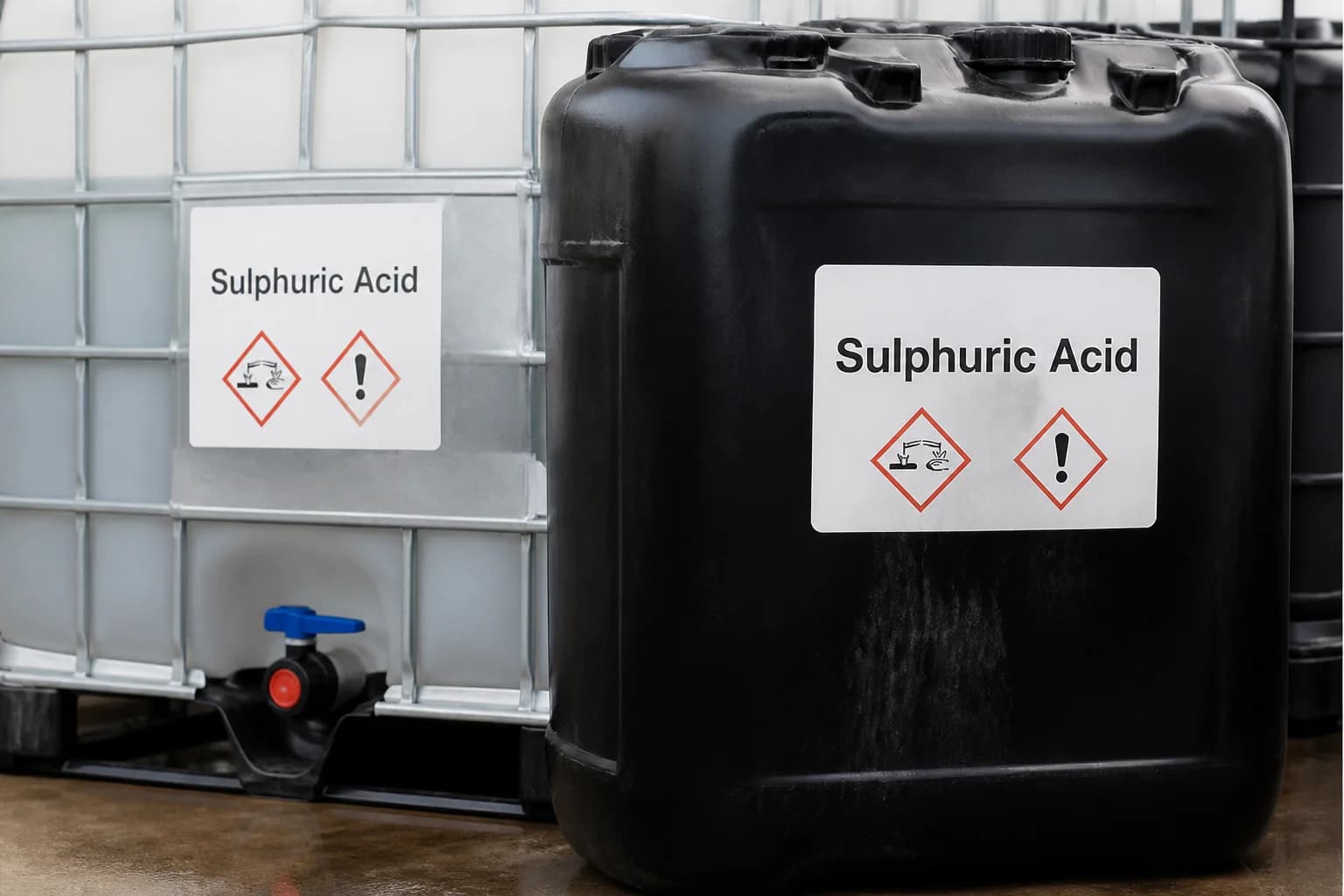
Storage requires plastic containers since muriatic acid corrodes metals. HDPE bottles and tanks work well. Keep containers tightly sealed to prevent fume escape and label clearly.
Never mix muriatic acid with bleach or chlorine-containing compounds. This creates toxic chlorine gas that can be fatal even in small amounts.
Sulfuric Acid Safety
Concentrated sulfuric acid creates extreme heat when mixed with water. Always add acid to water, never water to acid. Adding water to concentrated sulfuric acid can cause violent boiling and splashing that causes severe burns.
Skin contact with concentrated sulfuric acid causes immediate, severe chemical burns that destroy tissue through both chemical action and the heat generated by reaction with moisture in skin. The burns are typically worse than muriatic acid contact.
The acid chars organic materials including clothing, wood, and skin. Even dilute sulfuric acid demands caution.
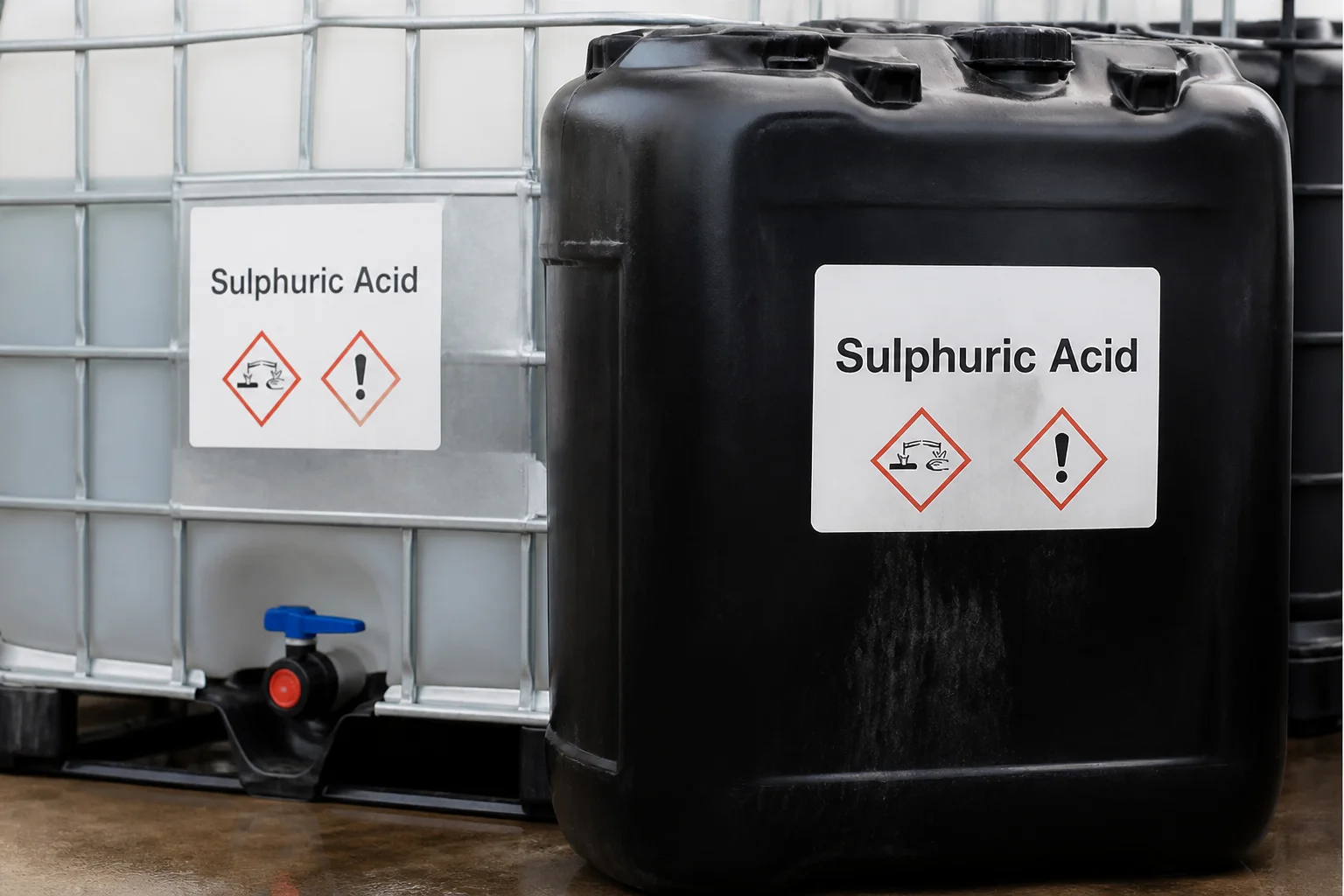
Storage requires containers resistant to both corrosion and heat. Glass works for laboratory quantities. Industrial storage uses specialized tanks rated for sulfuric acid service. Keep away from combustible materials since the oxidizing properties can initiate fires.
Cost and Availability Factors

Muriatic acid costs significantly less than sulfuric acid. Bulk industrial muriatic acid runs roughly $100-200 per ton depending on concentration and location. Retail prices are higher but still economical—a gallon of muriatic acid for pool use costs $8-15.
Availability favors muriatic acid. Hardware stores, pool suppliers, and home improvement centers all carry it. You can buy muriatic acid almost anywhere.
Sulfuric acid costs more—typically $300-500 per ton for industrial quantities. Retail availability is limited. Most consumers and small businesses need to order from chemical suppliers rather than finding it at local stores.
The price difference reflects production complexity and handling requirements. Muriatic acid production is relatively straightforward. Sulfuric acid manufacture requires more complex processes and equipment.
Environmental and Disposal Considerations
Neither acid should be dumped without neutralization and proper disposal procedures.
Muriatic acid neutralizes with bases like sodium bicarbonate or calcium carbonate (limestone). The resulting chloride salts wash away harmlessly in most cases. Small quantities can go to sewers after neutralization in many jurisdictions (check local regulations).
Sulfuric acid also neutralizes with bases, producing sulfate salts. These sulfates can cause environmental issues if discharged in large quantities since they contribute to water hardness and can impact aquatic ecosystems.
Both acids require dilution before disposal. Concentrated acids of any type create hazards in waste systems. Dilute to less than 5% concentration before neutralizing and disposing.
Making the Right Choice
For most general industrial and commercial applications, muriatic acid offers advantages: lower cost, easier handling, wider availability, and simpler disposal. The chloride byproducts rarely create problems.
Sulfuric acid excels in specialized applications requiring its unique properties: fertilizer production, chemical manufacturing requiring oxidizing power, battery electrolytes, and processes where its diprotic nature provides advantages.
Understanding the sulfuric acid vs muriatic acid differences helps industries select the appropriate acid for specific tasks, optimizing both performance and cost while maintaining safety. Neither acid is universally better—each serves distinct purposes based on its unique chemical properties.
For businesses requiring quality industrial acids and chemical expertise, Elchemy connects you with reliable suppliers offering both muriatic acid and sulfuric acid in various concentrations and grades, along with technical support to help match the right acid to your specific application requirements across manufacturing, cleaning, water treatment, and chemical processing operations.