

At a Glance
- Carbon steel works for sulfuric acid concentrations 93% and above but corrodes rapidly below 77% concentration
- HDPE tanks rated at 1.9 specific gravity handle concentrations up to 75% safely at temperatures below 130°F
- OSHA permissible exposure limit for sulfuric acid mist is 1 mg/m³ as an 8-hour time-weighted average
- Secondary containment holding 110% of primary tank volume is mandatory under EPA SPCC regulations
- Hydrogen gas generation from carbon steel reaction requires proper venting with PVC or CPVC vent systems
- Storage temperatures must stay below 100°F for carbon steel tanks to prevent accelerated corrosion
- Emergency eyewash stations and safety showers within 10 seconds travel time are non-negotiable requirements
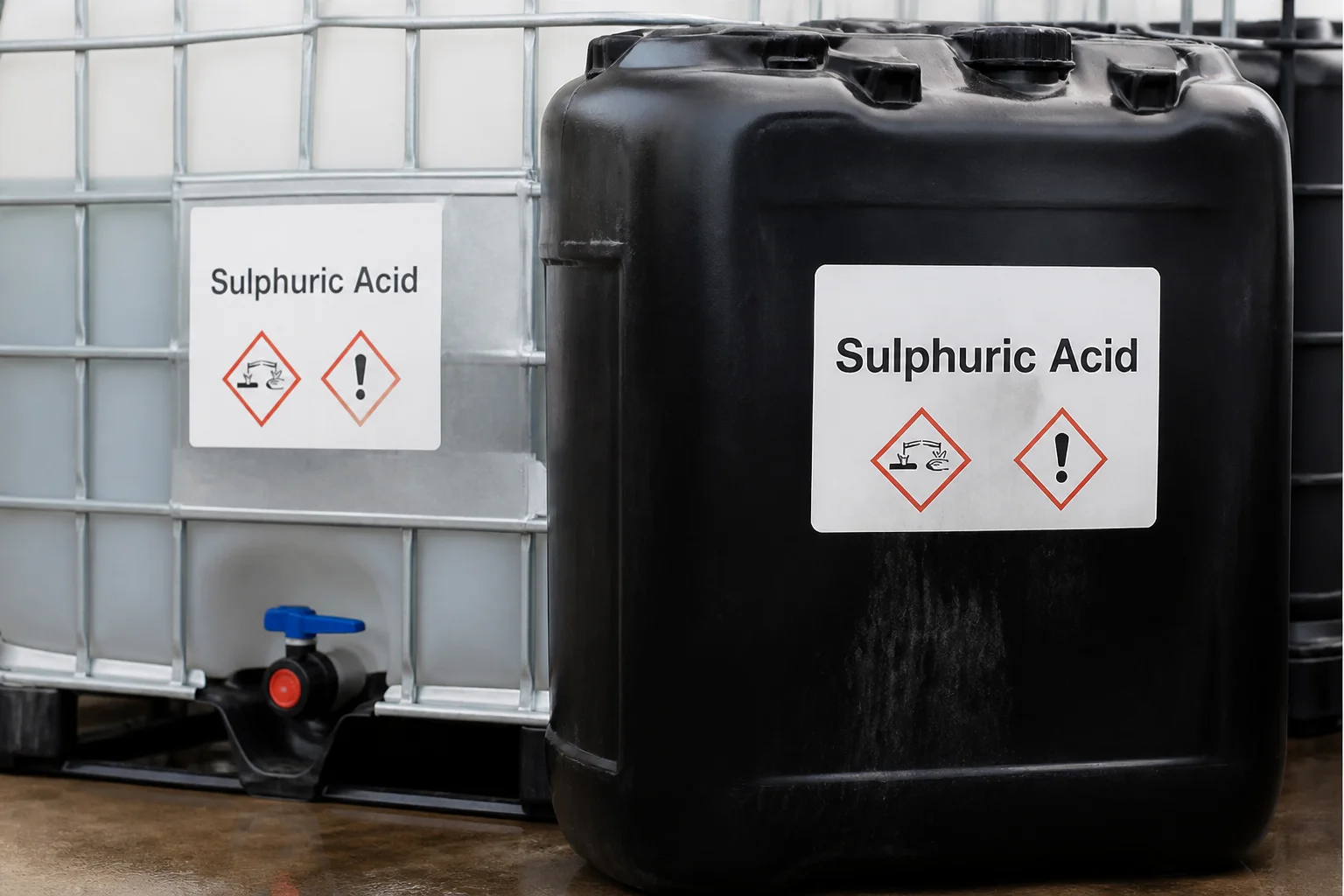
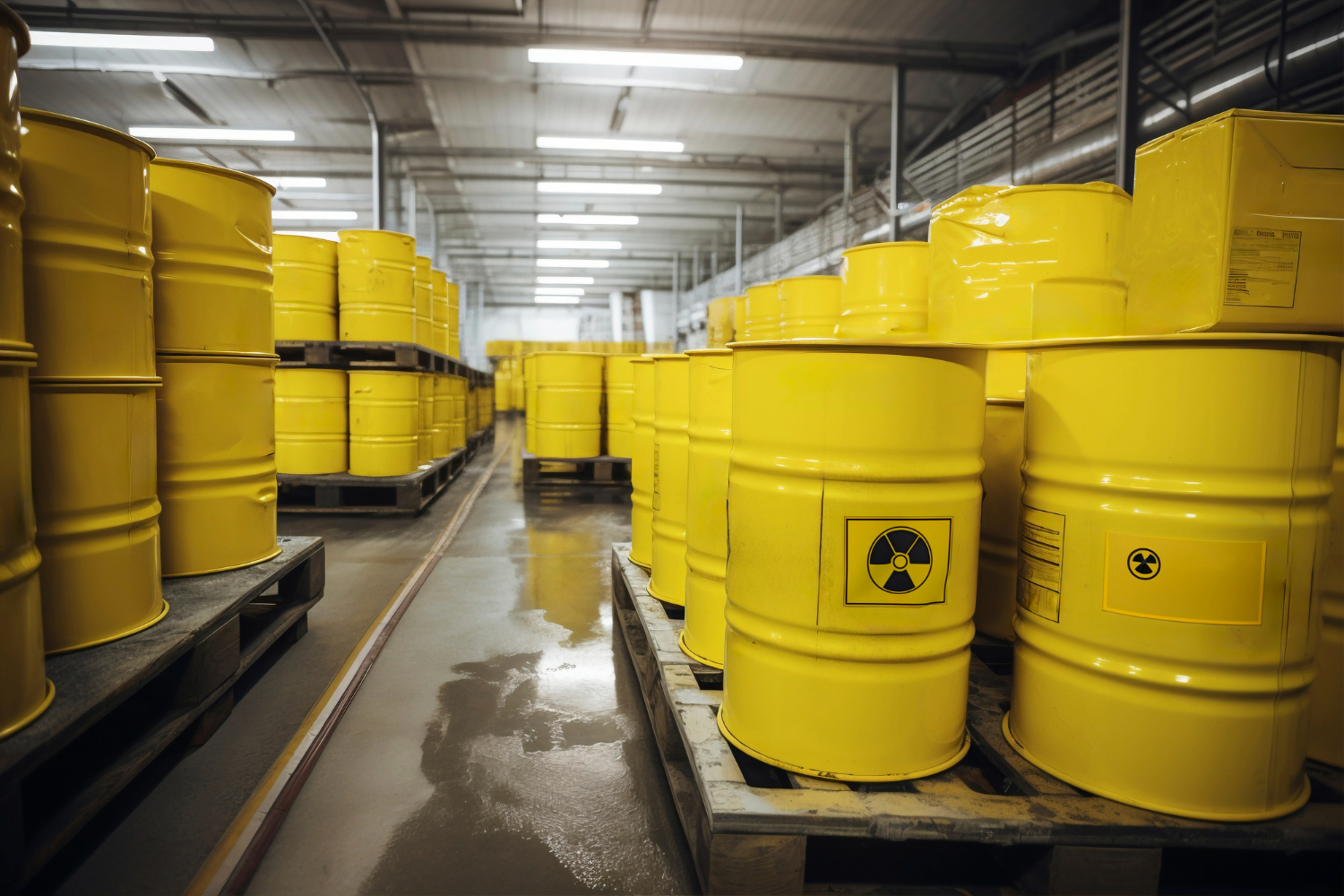
A manufacturing facility in Louisiana discovered their sulfuric acid storage tank had been slowly leaking for three months. The carbon steel tank, designed for 98% concentration, had been receiving diluted 85% acid from a process change nobody documented. The increased water content accelerated corrosion rates tenfold. By the time maintenance caught it, 1,200 gallons had leaked into secondary containment, the tank needed complete replacement, and regulatory fines exceeded $85,000.
This happens more than you’d think. Sulfuric acid storage requirements aren’t just regulatory boxes to check. They’re based on decades of expensive lessons about what goes wrong when one of chemistry’s most corrosive compounds meets improper containment. Understanding concentration-specific material selection, proper ventilation, emergency protocols, and regulatory compliance prevents disasters that cost companies millions.
Whether you’re storing 100 gallons in a small operation or managing 50,000-gallon bulk systems, the fundamentals remain the same: match materials to concentration, plan for worst-case scenarios, and never cut corners on safety systems.
Material Selection Based on Concentration

The storage of sulfuric acid starts with choosing the right tank material. Get this wrong and everything else fails. The decision hinges primarily on acid concentration, which drives completely different corrosion behaviors.
Carbon Steel for Concentrated Acid
Carbon steel tanks dominate large-scale storage above 10,000 gallons for one simple reason: economics. They cost significantly less than alternatives while handling concentrated sulfuric acid safely.
The sweet spot is 93-99% concentration. At these high concentrations, sulfuric acid forms a protective iron sulfate layer on carbon steel surfaces. This passive layer slows further corrosion to acceptable rates of 5-20 mils per year.
Below 93% concentration, things change. Increased water content disrupts the protective layer formation. Corrosion accelerates dramatically. Industry guidelines consider 77% the practical lower limit for carbon steel storage at ambient temperature. Below this threshold, you’re looking at rapid tank failure.
Temperature control matters critically. Keep carbon steel sulfuric acid storage below 100°F. Higher temperatures break down protective layers and spike corrosion rates. Direct sunlight hitting tank surfaces creates localized hot spots that corrode faster than shaded areas.
The hydrogen gas problem can’t be ignored. Carbon steel reacts with sulfuric acid, generating hydrogen gas and iron sulfate sludge. Proper venting prevents dangerous hydrogen accumulation. Use PVC or CPVC vents, never metal, since sulfuric acid fumes corrode standard vent materials.
HDPE for Dilute and Mid-Range Concentrations
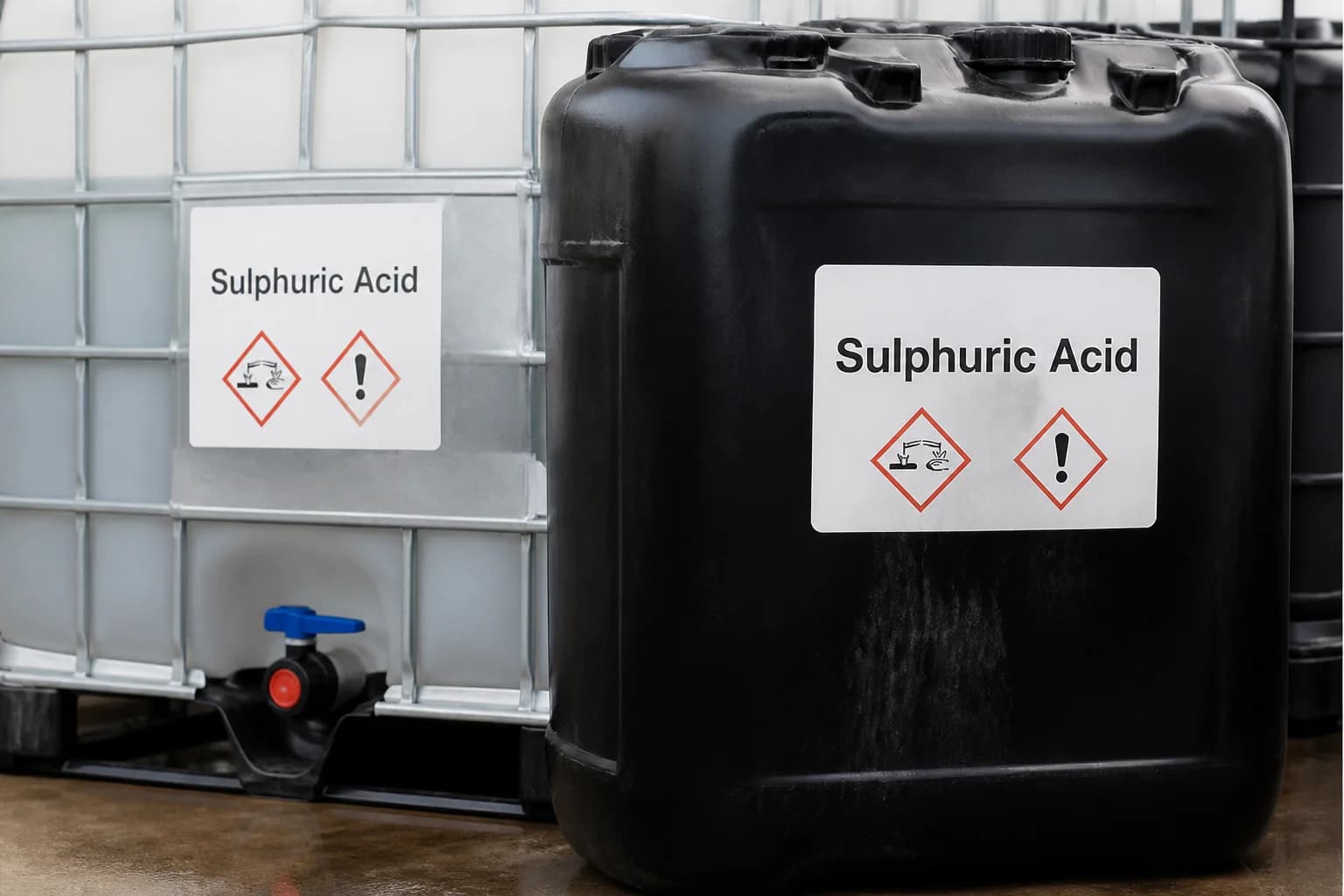
High-density polyethylene tanks excel at storing sulfuric acid concentrations below 75%. The plastic doesn’t react with the acid, eliminating hydrogen generation and iron sulfate sludge issues that plague carbon steel.
Critical specifications for HDPE sulfuric acid storage:
- Specific gravity rating of 1.9 minimum (sulfuric acid is heavy at 1.84 SG)
- Maximum service temperature of 130°F
- CPVC fittings and Viton gaskets
- Hastelloy bolts for hardware
HDPE tanks fail catastrophically if used for dilution operations. Mixing concentrated sulfuric acid with water generates enormous heat that exceeds HDPE’s temperature limits. Always purchase pre-diluted acid if storing in polyethylene tanks.
Cross-linked polyethylene (XLPE) sounds similar but performs differently. Studies show XLPE failing after just six months storing 98% sulfuric acid, even at -40°F. Stick with HDPE for plastic tank applications.
Stainless Steel and Specialty Materials
Type 316L stainless steel works for sulfuric acid concentrations below 85%, particularly for transfer piping where fluid velocity exceeds the 0.61 meters/second limit safe for carbon steel. Above 85% concentration, stainless steel offers no advantage and costs 4-6 times more than carbon steel.
Fiberglass-reinforced plastic (FRP) tanks handle concentrations up to 80% but require vinyl ester resins specifically formulated for acid service. Standard FRP formulations fail quickly. CPVC-lined FRP combines FRP’s structural strength with CPVC’s broad chemical resistance, creating versatile storage solutions.
Tank Material Selection Guide
| Concentration | Recommended Material | Temperature Limit | Key Considerations |
| 93-99% | Carbon steel | <100°F | Requires hydrogen venting, regular inspection |
| 77-93% | Carbon steel or HDPE | <100°F (steel), <130°F (HDPE) | Increased corrosion in steel at lower concentrations |
| Below 77% | HDPE (1.9 SG rating) | <130°F | Cannot use for dilution operations |
| Up to 80% | FRP (vinyl ester resin) | Per manufacturer | Monitor for resin degradation |
| Variable/Process | CPVC-lined FRP | <200°F | Handles concentration variations |
Secondary Containment Requirements
EPA’s Spill Prevention, Control, and Countermeasure regulations mandate secondary containment for sulfuric acid storage. This isn’t optional for facilities storing threshold quantities.
The basic requirement: secondary containment must hold 110% of the largest primary container’s volume. If your main tank holds 10,000 gallons, secondary containment needs 11,000-gallon capacity minimum.
For multiple tanks within one containment area, calculate 110% of the largest tank plus 10% of all other tanks’ combined volume. This accounts for the realistic scenario where the largest tank fails while others remain full.
Containment construction materials must resist sulfuric acid. Bare concrete fails quickly as acid attacks the material. Coat concrete containment areas with acid-resistant epoxy or polyurethane. Properly applied coatings last 10-15 years before requiring renewal.
Leak detection between primary and secondary containment provides early warning. Sensors alert operators to primary tank failure before secondary containment fills. This critical monitoring prevents environmental releases and allows intervention before catastrophic failure.
Double-wall tanks with integral secondary containment eliminate separate dike construction. These “tank-within-a-tank” systems provide built-in leak detection and space efficiency. Premium pricing reflects the engineering advantages.
Ventilation and Exposure Control
Concentrated sulfuric acid below 100% is essentially fume-free. Vapor pressure sits well below 1 psia at normal storage temperatures. But dilute acid, mixing operations, and heated acid all generate mists and vapors requiring control.
OSHA sets the permissible exposure limit at 1 mg/m³ for sulfuric acid mist as an 8-hour time-weighted average. Workplaces must maintain air concentrations below this threshold through engineering controls.
Proper storage area ventilation requires 6-10 air changes per hour minimum. Exhaust systems should discharge outside, away from air intakes and occupied areas. Don’t recirculate air from sulfuric acid storage areas back into the building.
Local exhaust ventilation at filling and transfer points captures any mists generated during tank operations. Enclosed transfer systems prevent exposure altogether, representing the gold standard for worker protection.
Air monitoring verifies ventilation effectiveness. Initial exposure assessments establish baseline conditions. When results approach 50% of the PEL, implement ongoing monitoring to ensure continued compliance.
Personal Protective Equipment Requirements
Sulfuric acid causes severe burns instantly. Concentrated acid literally dehydrates tissue on contact, creating charring damage that penetrates deep into skin. Eyes are particularly vulnerable, with permanent blindness possible from brief exposure.
Minimum PPE for sulfuric acid handling:
Gloves made from nitrile or natural rubber for prolonged contact, vinyl for brief exposure. Inspect gloves before each use for pinholes, cracks, or degradation. Replace immediately when damage appears.
Full-face shields worn over chemical splash goggles provide essential eye and face protection. Goggles alone aren’t sufficient for concentrated acid. Shields deflect splashes that would otherwise reach the face.
Chemical-resistant aprons protect torso during transfer operations. For extensive work or spill response, full chemical suits prevent whole-body exposure.
Rubber boots with chemical-resistant construction protect feet and lower legs. Standard work boots offer no protection against sulfuric acid.
Respiratory protection becomes mandatory when engineering controls can’t maintain air concentrations below 1 mg/m³. Air-purifying respirators with P100 filters handle most scenarios. Supplied-air respirators or SCBAs are required for high-concentration exposure or emergency response.
Emergency Equipment and Response
ANSI Z358.1 standards mandate emergency equipment installation:
Emergency Eyewash Stations must deliver 0.4 gallons per minute of tepid water (60-100°F) for 15 minutes minimum. Install within 10 seconds travel time (approximately 55 feet) from any sulfuric acid exposure point. Test weekly to verify functionality.
Safety Showers providing 20 gallons per minute for 15 minutes must be equally accessible. Monthly activation tests ensure proper operation when needed.
Water temperature matters critically. Too hot causes thermal burns. Too cold creates hypothermia during the required 15-minute flush. Tepid water systems using thermostatic mixing valves maintain safe temperatures automatically.
Spill Response Materials
Never neutralize large sulfuric acid spills with strong bases. The violent exothermic reaction creates hazardous conditions. Instead, contain spills with dikes using dry dirt, sand, or clay. Dilute slowly with fine water spray to approximately 15% concentration, then neutralize with weak bases like sodium bicarbonate or limestone.
Keep neutralization materials, absorbents, and containment equipment readily accessible near storage areas. PPE specifically for spill response should be staged where responders can don it quickly.
Incompatible Materials and Segregation
Sulfuric acid storage requirements include strict separation from incompatible materials. Mixing creates fires, explosions, or toxic gas generation.
Never store sulfuric acid near:
Organic materials including solvents, oils, and flammable liquids. Contact between concentrated sulfuric acid and organics can ignite materials spontaneously.
Strong bases like sodium hydroxide or potassium hydroxide. Acid-base reactions generate tremendous heat and violent spattering.
Water-reactive materials and strong oxidizers. These create unpredictable reactions with potentially catastrophic results.
Metals like aluminum, zinc, tin, and magnesium. These react vigorously with sulfuric acid, generating hydrogen gas and heat.
Minimum separation distance of 10 feet provides basic protection. Physical barriers like walls or chemical-resistant partitions prevent accidental mixing during spills or container failures.
Temperature Management
Sulfuric acid concentration changes with temperature affect both corrosion rates and safe handling. Temperature control isn’t just about comfort—it’s fundamental to storage integrity.
Carbon steel sulfuric acid storage demands temperatures below 100°F. Above this threshold, protective iron sulfate layers break down and corrosion accelerates rapidly. Direct sun exposure on tank surfaces creates localized hot spots reaching 140°F or higher in summer conditions.
Paint external tank surfaces with light-colored, acid-resistant coatings. White or aluminum coatings reflect solar radiation, keeping metal temperatures 15-25°F cooler than unpainted steel.
Insulation reduces temperature swings but requires careful installation. The insulation material itself must resist sulfuric acid fumes. Protect insulation from weather and mechanical damage.
Monitor internal acid temperature with properly located sensors. Temperature excursions indicate process problems or cooling system failures requiring immediate investigation.
Inspection and Maintenance Protocols
Regular inspection prevents small problems from becoming expensive failures.
Daily Visual Checks:
- External tank condition for signs of leaks, corrosion, or damage
- Secondary containment for standing liquid
- Vent operation and condition
- Gauge readings confirming proper levels and pressures
Monthly Detailed Inspections:
- Fittings, valves, and gasket condition
- Coating or liner integrity
- Emergency equipment functionality
- Spill response supplies inventory
Annual Comprehensive Reviews:
- Ultrasonic thickness testing on carbon steel tanks to measure metal loss
- Internal inspection when possible to assess coating, corrosion, and sludge buildup
- Structural assessment of supports and foundations
- Documentation and record review for completeness
Carbon steel tanks accumulate iron sulfate sludge in bottom sections. This material has the consistency of wet clay and becomes harder to remove the longer it sits. Plan sludge removal operations during scheduled maintenance shutdowns.
Tank cleaning requires specialized procedures. Never add water to residual acid remaining in tanks—the violent reaction and heat generation can damage equipment. Remove liquid acid as completely as possible before introducing wash water. Use large volumes of water to dilute remaining acid quickly, minimizing exposure of steel to corrosive dilute acid.
Regulatory Compliance Essentials
Multiple agencies regulate sulfuric acid storage requirements:
OSHA sets workplace exposure limits, PPE requirements, hazard communication standards, and emergency response protocols. The Hazard Communication Standard requires maintaining current Safety Data Sheets and training all workers on sulfuric acid hazards.
EPA regulates environmental protection through SPCC requirements for facilities storing specific quantities. Chemical accident prevention programs apply to facilities with fuming sulfuric acid (oleum) exceeding threshold quantities.
DOT classifies sulfuric acid as Hazard Class 8 “CORROSIVE” with UN number 1830. Proper placarding, shipping papers, and driver training are mandatory for transportation.
State and local agencies often impose additional requirements. Check jurisdictional regulations for specific compliance obligations beyond federal standards.
Document everything. Regulatory inspections scrutinize training records, inspection logs, maintenance histories, and incident reports. Comprehensive documentation demonstrates compliance and protects against citations.
The Concentration-Material Relationship
After formulating with corrosive chemicals for decades, one lesson stands out: concentration determines everything in sulfuric acid storage. The same chemical at 98% versus 85% concentration behaves like completely different materials from a corrosion perspective.
This explains why process changes cause storage failures. A facility optimized for 95% acid receives 80% acid after upstream process modifications. The carbon steel tank designed for high concentration suddenly faces aggressive corrosion from increased water content. Within months, what was safe storage becomes an environmental hazard.
Always verify actual concentration matches storage system design. When processes change, reassess storage materials. Don’t assume existing tanks handle concentration variations without evaluation.
The storage of sulfuric acid demands attention to detail, proper material selection, and unwavering commitment to safety protocols. Regulatory compliance protects your facility from fines. But proper storage protects workers, environment, and your company’s long-term viability.
For businesses requiring quality sulfuric acid and compliant storage solutions, Elchemy connects you with reliable chemical suppliers offering various concentrations and grades, along with storage system design consultation, proper materials specification, and technical support for your specific sulfuric acid storage requirements.