

At a Glance
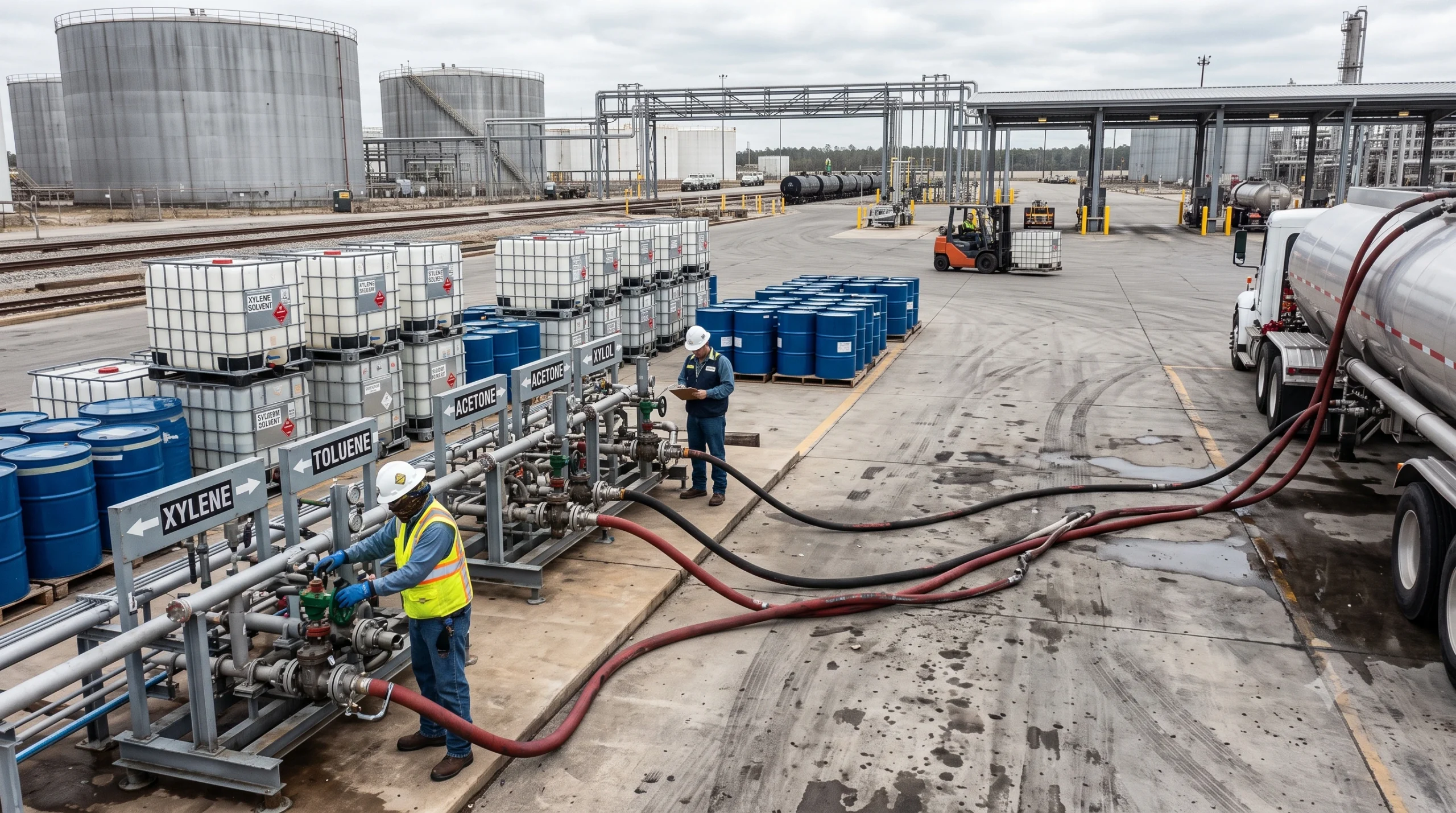
- Terminology first: Xylol is a commonly used name for xylene, so this is primarily a comparison of xylene, toluene, and acetone.
- No universal winner: The right solvent depends on the resin, substrate, soil or residue, process conditions, target drying profile, and site requirements.
- For coatings: Compare solvency, evaporation behaviour, formulation compatibility, finish requirements, and applicable VOC or customer constraints.
- For industrial cleaning: Define the contaminant, substrate, cleaning method, residue tolerance, and downstream process before selecting a solvent.
- For sourcing: Confirm material identity, specification, documentation, volume, and delivery requirements only after technical fit is validated.
- Next step: Use the comparison framework to shortlist a candidate, then obtain formulation, EHS, and supplier review.
What you’ll learn
This guide explains how xylene, toluene, and acetone differ at a decision-framework level, why xylol naming can create confusion, and which questions must be answered before selecting or sourcing an industrial solvent.
Introduction
The title looks like a four-way solvent comparison, but xylol and xylene are not separate choices. Xylol is a common alternate name for xylene. The practical selection is therefore among xylene, toluene, and acetone, with the exact xylene product identified separately.
Industrial solvent selection should not rest on a “stronger” or “better” label. A solvent must be evaluated against the material being dissolved or removed, the resin or substrate, process conditions, target evaporation profile, finish or residue requirements, and site EHS controls. Only after that review should procurement request a quote for the shortlisted material.
Which solvent should buyers evaluate first?
Buyers should begin with the application, not the solvent name. Define whether the solvent is intended to carry a coating ingredient, adjust a formulation, remove a residue, clean equipment, or support another approved process.
Then identify the target material, substrate, process, required evaporation profile, finish or residue tolerance, and customer or regulatory constraints. These inputs determine whether xylene, toluene, acetone, or another solvent needs technical evaluation.
Treat xylol as a xylene naming term, not as a separate fourth material. Supplier pages and SDS documents are essential for product and hazard information, but they do not replace formulation trials, cleaning validation, or site-specific approval.
Xylene vs xylol: are they the same?
Xylene and xylol are commonly used names for the same family of aromatic solvent materials. However, the sourcing request may still require more detail because a buyer could need mixed xylene or a defined individual isomer.
Naming and product-identity clarification
The phrase “xylene” can refer to different commercial materials. Depending on the application, the buyer may need mixed xylene or an individual isomer such as o-xylene, m-xylene, or p-xylene.
That is why product identity should be confirmed through the supplier specification and current SDS. A chemical name alone does not establish the precise material, specification, purity profile, or suitability for the buyer’s intended process.
Why material identity changes sourcing
Before an RFQ is issued, the buyer should confirm the CAS number where applicable, product specification, isomer composition where relevant, impurity limits, intended application, and required COA parameters. These details turn a broad solvent request into a material that can be quoted and qualified accurately.
Use Xylene product sourcing information and Xy mix product information as product-entry points. The final selection still needs to match the buyer’s approved technical requirement.
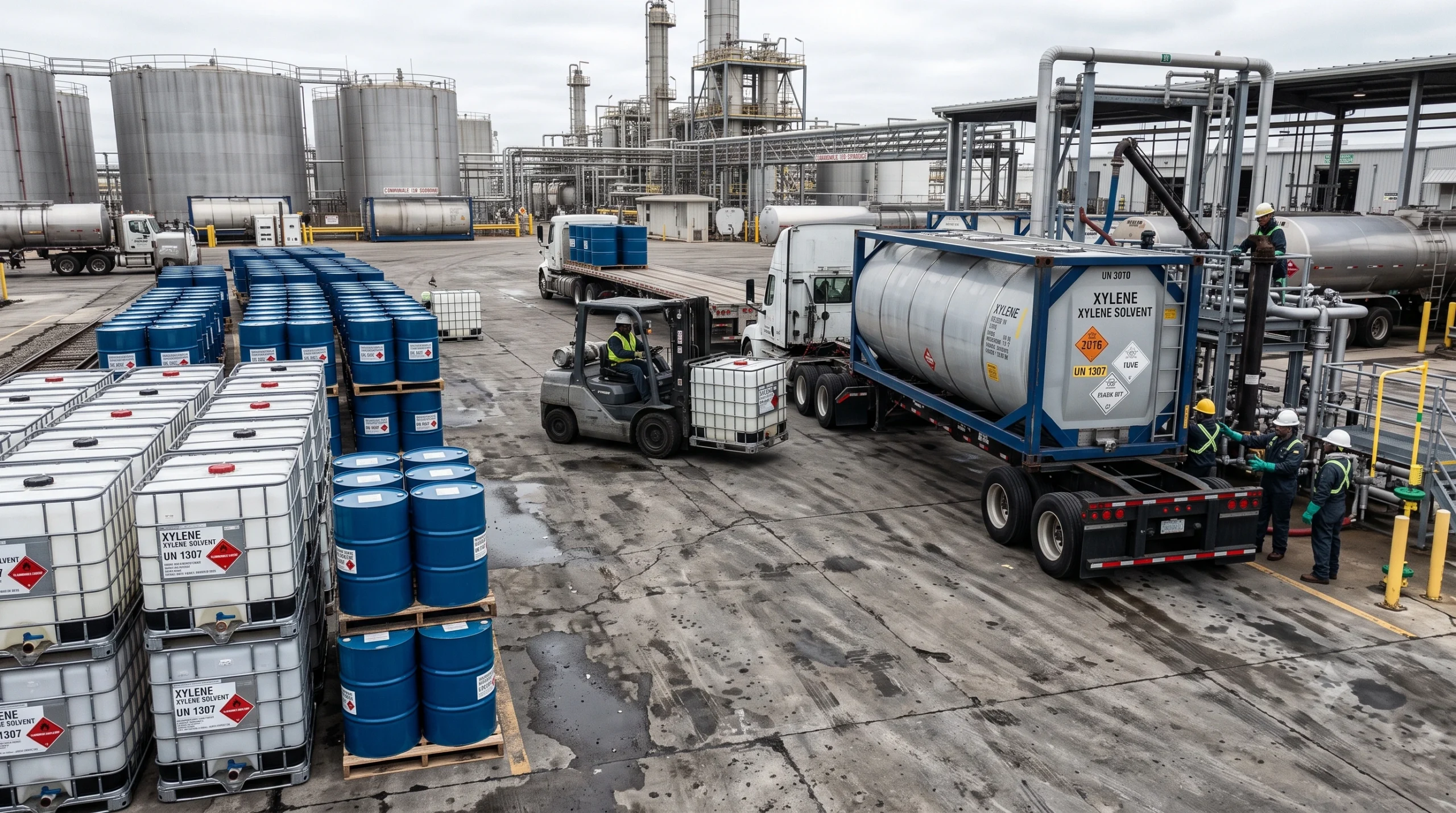
For buyers who have already selected xylene and need commercial context, see bulk xylene sourcing guide [Bulk Xylene Solvent Supplier & Price Guide 2026: Drums, IBCs & Tankers (USA)].
Compare solvents using the same selection criteria
Xylene, toluene, and acetone should be compared against the same decision criteria. This prevents a buyer from selecting based on a single property, a generic supplier claim, or an assumed substitution.
The table below is a decision framework, not a universal performance ranking. Each technical cell should be validated through current product documentation and relevant formulation, cleaning, or process testing.
| Selection criterion | Xylene / xylol | Toluene | Acetone | Validation required |
| Chemical family | Aromatic solvent family | Aromatic solvent | Ketone solvent | Confirm exact material identity |
| Product specification | Mixed xylene or defined product may be relevant | Confirm product specification | Confirm product specification | Supplier documentation |
| Solvency fit | Requires target-system review | Requires target-system review | Requires target-system review | Formulation or cleaning trial |
| Evaporation and process fit | Requires process review | Requires process review | Requires process review | Process validation |
| Resin or substrate compatibility | Must be tested | Must be tested | Must be tested | Compatibility assessment |
| Residue-removal suitability | Depends on contaminant and method | Depends on contaminant and method | Depends on contaminant and method | Cleaning validation |
| EHS and flammability review | Required | Required | Required | SDS and site review |
| Commercial qualification | Product-specific | Availability confirmation needed | Product-specific | Quote and delivery review |
The outcome should be a shortlist, not an immediate solvent replacement. Technical validation decides whether a candidate fits the application. Procurement then confirms the exact product, documentation, volume, delivery route, and commercial terms.
Paint and coatings: how to evaluate solvent choice
Paint and coatings systems create a formulation-specific solvent decision. A solvent may be used for formulation, viscosity adjustment, thinning, cleaning, or equipment flushing, but the selection criteria differ across those tasks.
Formulation questions
Start with the resin or binder system, pigment package, additives, co-solvents, substrate, application method, and required finish. Then identify the process criteria that must be retained, such as flow, appearance, drying profile, or defect-control expectations.
A solvent should not be selected from a general coating-use statement. The responsible formulator must determine whether it fits the complete system and the required customer, VOC, or internal quality constraints.
Validation checkpoints
A controlled bench-scale trial is usually the first technical checkpoint. It should be followed by compatibility review, application or process testing, VOC and customer-specification review, and formal technical approval before a solvent or blend is changed.
This sequence separates a solvent hypothesis from an approved formulation decision. It also avoids a common procurement mistake: treating a lower-priced solvent as suitable before it has passed the required technical review.
Industrial cleaning: how to evaluate solvent choice
Industrial cleaning requires the same discipline as coating formulation. The buyer must identify what needs to be removed and what surface, equipment, or downstream process must be protected.
Define the cleaning challenge
Start with the soil or residue. It may be an oil, adhesive, ink, coating, process contaminant, or another material. Then identify the substrate, its sensitivity, the cleaning method, the acceptable residue level, and the next manufacturing step.
This information matters because a solvent that removes one contaminant effectively may not be suitable for another substrate or process. The right choice must be validated against the actual cleaning system rather than inferred from a generic “industrial cleaner” claim.
Operational and EHS checkpoints
Operational review should include the site-approved process, current SDS, exposure-control review, waste-management pathway, and compatibility with equipment, seals, and containers. These checks belong in the selection process before a buyer approves a new solvent.
For adjacent industry context, see home care and industrial cleaning applications. It supports category discovery, not a solvent-substitution recommendation.
Xylene and xylol in solvent selection
Xylene or xylol may enter the selection process when the formulation or cleaning task calls for evaluation of an aromatic solvent category. The buyer must still confirm whether mixed xylene or a more specifically defined xylene product is required.
NIOSH describes xylene as a flammable liquid and advises employers to use labels and SDSs for hazard information. NIOSH xylene safety overview provides high-level workplace context, but the supplier’s current SDS and the site EHS programme must guide the actual operation.
Do not interpret a xylene product listing as proof that it can replace toluene or acetone. The technical team should validate the material against the target chemistry, process, substrate, and approval criteria.
Toluene in solvent selection
Toluene is a distinct aromatic solvent, not another name for xylene. Its evaluation should begin with the same practical questions: what must the solvent dissolve or remove, what substrate or resin is involved, what process conditions apply, and which technical criteria must be met?
NIOSH toluene chemical profile identifies toluene as CAS 108-88-3 and provides workplace-hygiene context. It should not be used as a formulation recommendation or as evidence that toluene is commercially available from Elchemy.
Where toluene appears to fit the technical shortlist, confirm commercial availability and specification separately. Do not assume a supplier can provide toluene, a particular grade, or a delivery route until that is commercially confirmed.
Acetone in solvent selection
Acetone is a distinct ketone solvent and must be evaluated independently from xylene and toluene. It may be relevant to a solvent shortlist, but it is not an automatic replacement for an aromatic solvent in a coating, cleaning, or process application.
NIOSH acetone chemical profile identifies acetone as CAS 67-64-1 and provides chemical and workplace-hazard context. The solvent’s fit for the actual process should still be established through technical review and approved validation.
For a confirmed acetone requirement, see Acetone product sourcing information. The product page can support the sourcing discussion after the buyer has selected and approved the required material.
From solvent shortlist to sourcing request
A sourcing request should follow the technical shortlist, not replace it. The buyer should document why the selected solvent is being evaluated and which conditions the commercial offer must satisfy.
- Define the application and material to be dissolved, removed, or carried.
- Confirm the substrate, resin, process, and finished-product constraints.
- Compare candidate solvents using the same technical and EHS criteria.
- Complete approved formulation, cleaning, or process validation.
- Confirm exact product specification and documentation needs.
- Request a quote only for the shortlisted, approved solvent.
- Confirm commercial availability, packaging, delivery, and terms.
This process makes the RFQ more useful and prevents suppliers from quoting materials that are similar by name but unsuitable in practice.
Common mistakes when comparing industrial solvents
The first mistake is treating xylol as a separate solvent choice without checking product identity. The second is selecting by “strength” instead of the chemistry, process, substrate, and acceptance criteria that actually determine suitability.
Other mistakes include changing a solvent without formulation or cleaning validation, ignoring material compatibility or site EHS review, and comparing supplier quotes before the specification and delivered basis are aligned. Each can create an avoidable technical, operational, or commercial problem.
Select and source the right solvent with Elchemy
Once a solvent has passed technical review, the sourcing discussion should include the material identity, specification, volume, delivery location, required documents, and timing. This enables suppliers to assess commercial fit on the actual requirement rather than a generic solvent name.
For procurement context, browse industrial chemical intermediates and review North America chemical supply support. To move from a solvent shortlist to a commercial discussion, discuss your solvent requirement.
FAQs
1. Is xylol the same as xylene?
Yes. Xylol is a commonly used alternate name for xylene. However, a sourcing request may still need to distinguish mixed xylene from a defined individual isomer. Confirm the exact product identity, current specification, and required documents before requesting or approving a commercial quote.
2. Are xylene and toluene the same solvent?
No. Xylene and toluene are distinct aromatic solvents. They should not be treated as interchangeable based on general product descriptions or marketplace claims. Any substitution decision requires formulation, cleaning, process, EHS, and commercial review against the actual application requirements.
3. Can acetone replace xylene in paint or coatings?
Not automatically. Acetone and xylene are different solvents, and their suitability depends on the resin system, formulation, substrate, application method, process conditions, required finish, and applicable customer or regulatory constraints. Validate a replacement through the responsible formulator and approved technical testing.
4. Which solvent is best for industrial cleaning?
There is no universal best solvent for industrial cleaning. The selection depends on the contaminant, substrate, cleaning method, residue tolerance, equipment, waste-management path, and site EHS controls. Define those variables first, then validate shortlisted candidates under the approved cleaning process.
5. Why is “stronger solvent” not a reliable selection criterion?
“Stronger” does not define what material the solvent must dissolve, how quickly it must work, whether it is compatible with the substrate, or whether it fits the process and site requirements. A reliable selection uses formulation, cleaning, operational, EHS, and commercial criteria together.
6. What should I provide when requesting a solvent quote?
Provide the selected solvent identity, application, approved specification, expected volume, destination, delivery timing, packaging preference, and document requirements. If the project is replacing an incumbent, also state the technical reason for evaluation and the acceptance criteria that must be met.
7. Can xylene, toluene, and acetone be substituted without a trial?
No. These are distinct materials and should not be substituted without approved formulation, cleaning, or process validation. Review compatibility, performance requirements, documentation, EHS controls, and customer constraints before a new solvent is introduced into production.
Conclusion
Xylene, toluene, and acetone should be treated as distinct solvent candidates, while xylol is a common name for xylene rather than a fourth category. The right selection depends on the material being dissolved or removed, the resin or substrate, process conditions, evaporation needs, finished-product requirements, and site EHS controls.
Use the same decision criteria for every candidate, then complete approved technical validation before comparing commercial offers. Once the material is selected, confirm its exact specification, documentation, volume, delivery location, and commercial terms. For the next step, discuss your solvent requirement with Elchemy.