

At a Glance
- One tracker puts CAPB near $0.93 per kg globally in Q2 2026. The US sits near $1.13 and India near $0.80.
- These are indicative market signals with no stated grade, so they are not Elchemy quotes.
- Compare offers per kg of active matter. A 35% grade can cost more per kg of product but less per kg of surfactant.
- Raw materials, active matter, impurity limits, packaging and delivery terms explain most gaps between quotes.
- Cosmetic buyers should ask for residual amidoamine and DMAPA limits, which are sensitizing impurities.
- Ask for a TDS, SDS and batch COA with every quote so offers match on specification.
What You’ll Learn
This guide shows indicative CAPB prices by region and the factors that move them. It also explains how to compare quotes by active matter and delivered cost.
Introduction
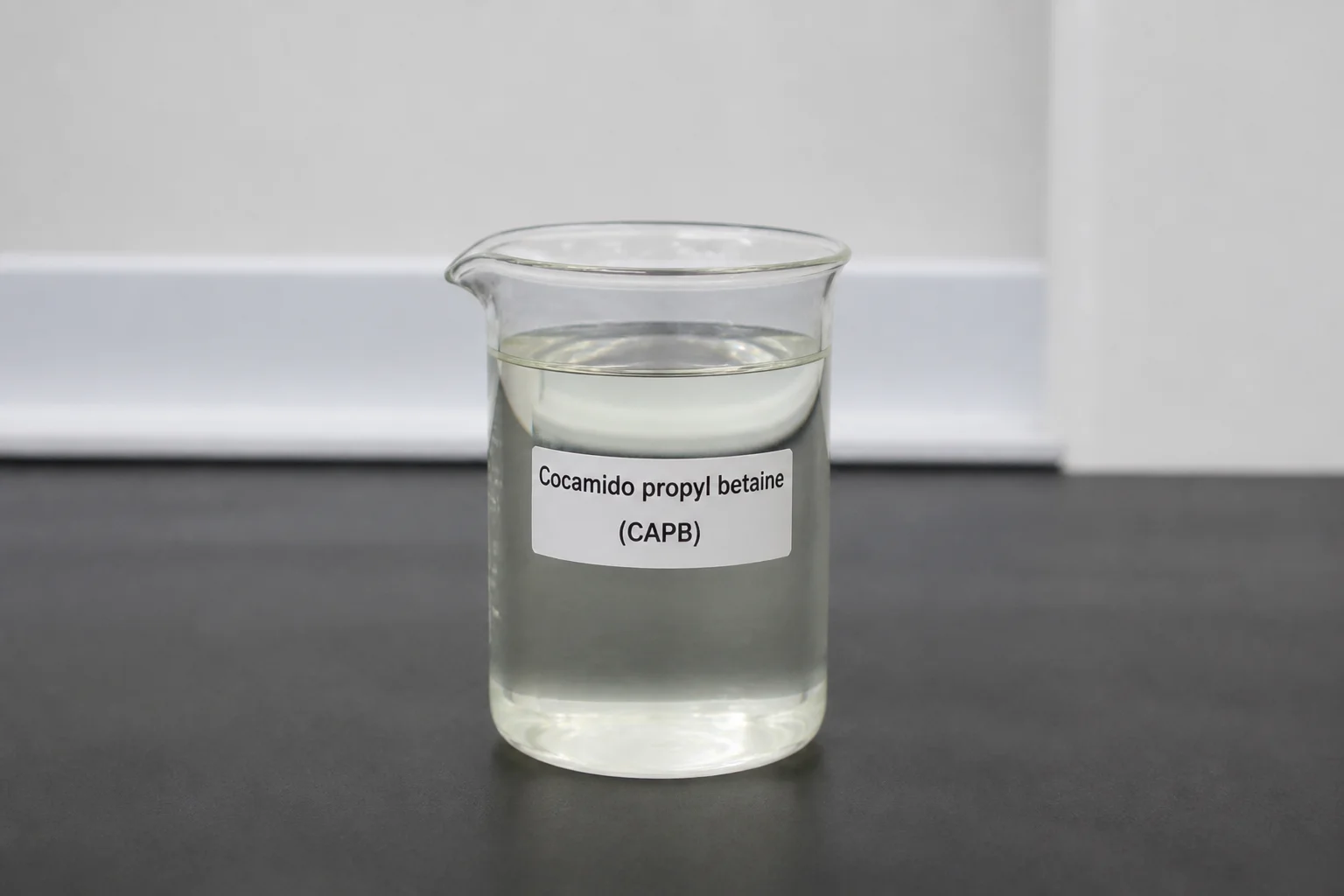
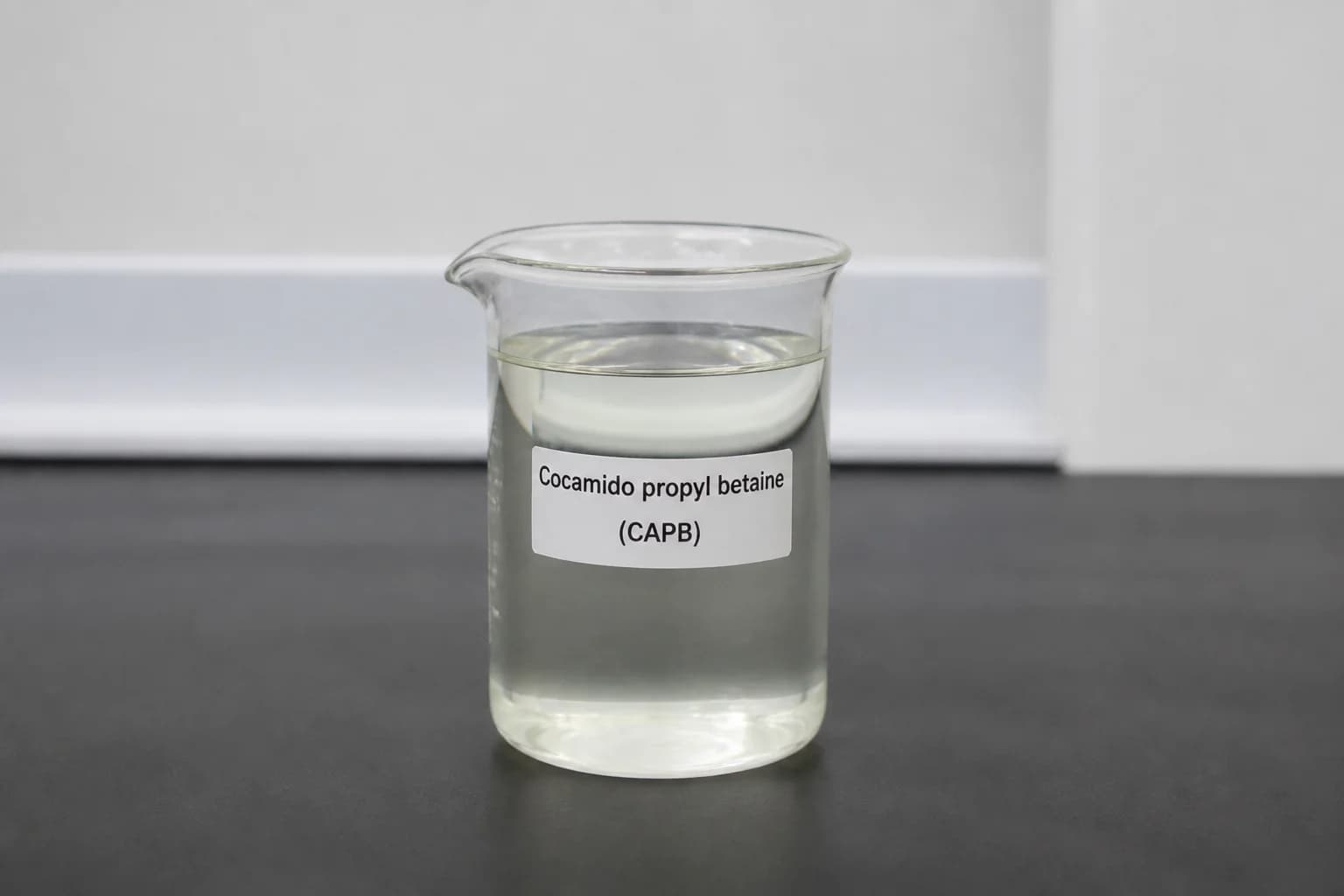
Cocamidopropyl betaine price is a major cost line for shampoo, body wash and cleanser makers. CAPB is a coconut-derived amphoteric surfactant, so its cost follows coconut oil derivatives and chemical intermediates. If you need a source first, read our cocamidopropyl betaine supplier guide.
One published tracker puts the global CAPB price near $0.93 per kg in Q2 2026. It does not state the grade, so treat that figure as a market signal and not as a quote.
This guide gives regional figures, explains what drives quote gaps and ends with a checklist for comparing offers.
Current Cocamidopropyl Betaine Prices
The table shows the indicative CAPB price per kg by region for the last two quarters. For a cocamidopropyl betaine price in the USA, the tracker shows $1.13 per kg in Q2 2026.
|
Region |
Q1 2026 (USD per kg) |
Q2 2026 (USD per kg) |
Change |
Basis stated by the tracker |
|
United States |
1.108 |
1.130 |
+2.0% |
Landed cost |
|
Germany |
0.965 |
0.985 |
+2.1% |
Not stated |
|
China |
0.835 |
0.855 |
+2.4% |
Not stated |
|
India |
0.800 |
0.798 |
Slight dip |
Ex-warehouse (stated for Q1 2026) |
|
Global |
0.919 |
0.933 |
+1.5% |
Not stated |
Source: Expert Market Research, page last updated 8 September 2026 and retrieved 14 October 2026. The source describes its figures as indicative.
How to read these figures. The tracker gives no active matter, packaging or Incoterm for any row. A CAPB chemical price without those details cannot be compared with a quote.
Request a Quote for CAPB with your active matter, packaging and destination.
Active Matter and Grade
CAPB is sold at several active matter levels, including 30%, 35% and 45%. Our CAPB grades and specifications page lists the 35% and 45% specifications.
A higher active matter grade costs more per kg of product. The fair comparison is price per kg of active matter, which is the quoted price divided by the active fraction.
|
Grade |
Example price per kg of product |
Price per kg of active matter |
|
30% active matter |
$0.90 |
$3.00 |
|
35% active matter |
$1.00 |
$2.86 |
This example is an illustration, not a quote. Here the 35% grade costs more per kg of product but less per kg of active matter.
Cosmetic buyers should also compare impurity limits. The Cosmetic Ingredient Review flags DMAPA and amidoamines as sensitizing impurities in CAPB, so ask each supplier for its limits. Qualified formulation and regulatory review is still required.
For safety and formulation context, read our CAPB in skin care guide.
What Affects CAPB Prices
Four groups of costs explain most gaps between quotes.
Raw Materials
CAPB is made in two steps. A coconut-derived fatty acid reacts with DMAPA, then chloroacetic acid and sodium hydroxide complete the reaction.
Coconut oil supply, DMAPA prices and chloroacetic acid prices therefore feed into the CAPB cost.
Grade and Purity
Ask each supplier to state these items in writing:
- Active matter
- Sodium chloride content
- Color and odor
- Residual amidoamine
- Residual DMAPA
Tighter limits usually raise production cost, so a cosmetic grade is rarely priced like a technical grade.
Order Size and Packaging
Small orders cost more per kg because handling and packaging are spread over fewer kilograms. Drums, IBC totes and flexibags or ISO tanks carry different costs per kg. Ask for a price per format so the gap is visible.
Delivery Terms
FOB leaves ocean freight to the buyer. CIF includes ocean freight and insurance to the destination port. DDP puts delivery, duties and import clearance on the seller.
Compare quotes on one Incoterm. Then add freight, insurance, duties, inland transport and handling.
CAPB Price Trend: Q1 2025 to Q2 2026
The tracker’s global series rose in every quarter shown. It reports a cumulative gain of 9.4% from Q1 2025 to Q2 2026.
|
Quarter |
Global price (USD per kg) |
Change on prior quarter |
|
Q1 2025 |
0.853 |
Not applicable |
|
Q2 2025 |
0.878 |
+2.9% |
|
Q3 2025 |
0.899 |
+2.4% |
|
Q4 2025 |
0.907 |
+0.9% |
|
Q1 2026 |
0.919 |
+1.3% |
|
Q2 2026 |
0.933 |
+1.5% |
Regions moved differently in 2025. The tracker shows the US up 12.0% over the year and India down 1.7%.
Bulk, Packaged and Contract Buying
Packaging format and contract terms change the price per kg.
|
Option |
Best for |
Trade-off |
|
Drums |
Trial and small orders |
Highest cost per kg and more handling |
|
IBC totes |
Regular mid-size orders |
Needs storage space and handling equipment |
|
Flexibags or ISO tanks |
Large recurring volumes |
Needs unloading infrastructure and a larger commitment |
|
Spot purchase |
Small or variable demand |
Exposed to price swings and supply gaps |
|
Contract purchase |
Predictable demand |
Locks a price that may sit above the market if prices fall |
Many buyers combine a contract base with spot top-ups.
Want to test a grade before you commit? Request a Sample for your target specification.
How to Check a CAPB Quote
Use this checklist before you accept or compare any offer.
- Match the specification. Confirm active matter, color, residual amidoamine and residual DMAPA against the supplier’s CAPB technical data sheet.
- Convert to price per kg of active matter. This puts 30%, 35% and 45% offers on one scale.
- Match the Incoterm. Add freight, insurance, duties, inland transport and handling to reach landed cost.
- Check the documents. Ask for the SDS and a batch COA. Consider independent testing of first batches for cosmetic use.
- Compare terms in writing. Include minimum order quantity, lead time, payment terms and quote validity.
- Question outliers. Ask why a price sits far from the others, because it may reflect a different specification. Use our supplier evaluation questions as a guide.
- Plan a second source. Relying on one supplier creates supply risk, so qualify a backup where volume allows.
CAPB Price FAQs
1. What is the price of cocamidopropyl betaine per kg?
In Q2 2026 one tracker put the global cocamidopropyl betaine price per kg at $0.93. It listed $1.13 in the US and $0.80 in India. These figures are indicative and state no grade. Your quote depends on active matter, packaging, volume and delivery terms.
2. What affects CAPB prices the most?
Coconut-derived fatty acid, DMAPA and chloroacetic acid costs set the base. Active matter, impurity limits, order size, packaging and Incoterms then move the quote. Freight, duties and handling decide the landed cost, so compare offers on the same delivery terms.
3. How do 30% and 35% CAPB compare on price?
A 35% grade usually costs more per kg of product. The fair comparison is price per kg of active matter, so divide the quoted price by the active fraction. Ask each supplier for a technical data sheet so concentration, color and impurity limits match before you compare.
4. Is CAPB cheaper when bought in bulk?
Larger orders and bulk packaging usually lower the cost per kg, because handling and packaging are spread over more product. Drums cost more per kg than IBC totes, and flexibags or ISO tanks suit the largest volumes. Ask for a price per format and destination.
5. Where can I buy cocamidopropyl betaine in bulk?
Buyers purchase CAPB from manufacturers, distributors and sourcing platforms. Elchemy has a CAPB product page where you can request a quote or sample. Compare each supplier on specification, documents and delivered cost before a first order. Check that every quote states the same grade.
6. Why does the CAPB price differ between regions?
Regional gaps reflect production base, compliance cost, freight and the basis each source uses. The tracker shows the US at $1.13 per kg in Q2 2026 against $0.80 in India. It states landed cost for the US but ex-warehouse for India’s Q1 figure. The rows are not like for like.
Conclusion
A published tracker gives a useful market signal, but a quote decides what you pay. Q2 2026 figures sit near $0.93 per kg globally. Your price will move with active matter, impurity limits, packaging and delivery terms.
Compare offers per kg of active matter and on the same Incoterm. Ask for a TDS, SDS and batch COA before you commit.
Request a Quote for CAPB with your grade, volume and destination.