Products
Our Technology
Sustainability & Compliance

Home / Blogs / CAPB Report / How is CAPB manufactured?

How is CAPB manufactured?

Authored by
Elchemy
Published On
17th Jun 2024
2 minutes read
FacebookTwitterLinkedInLinkedIn

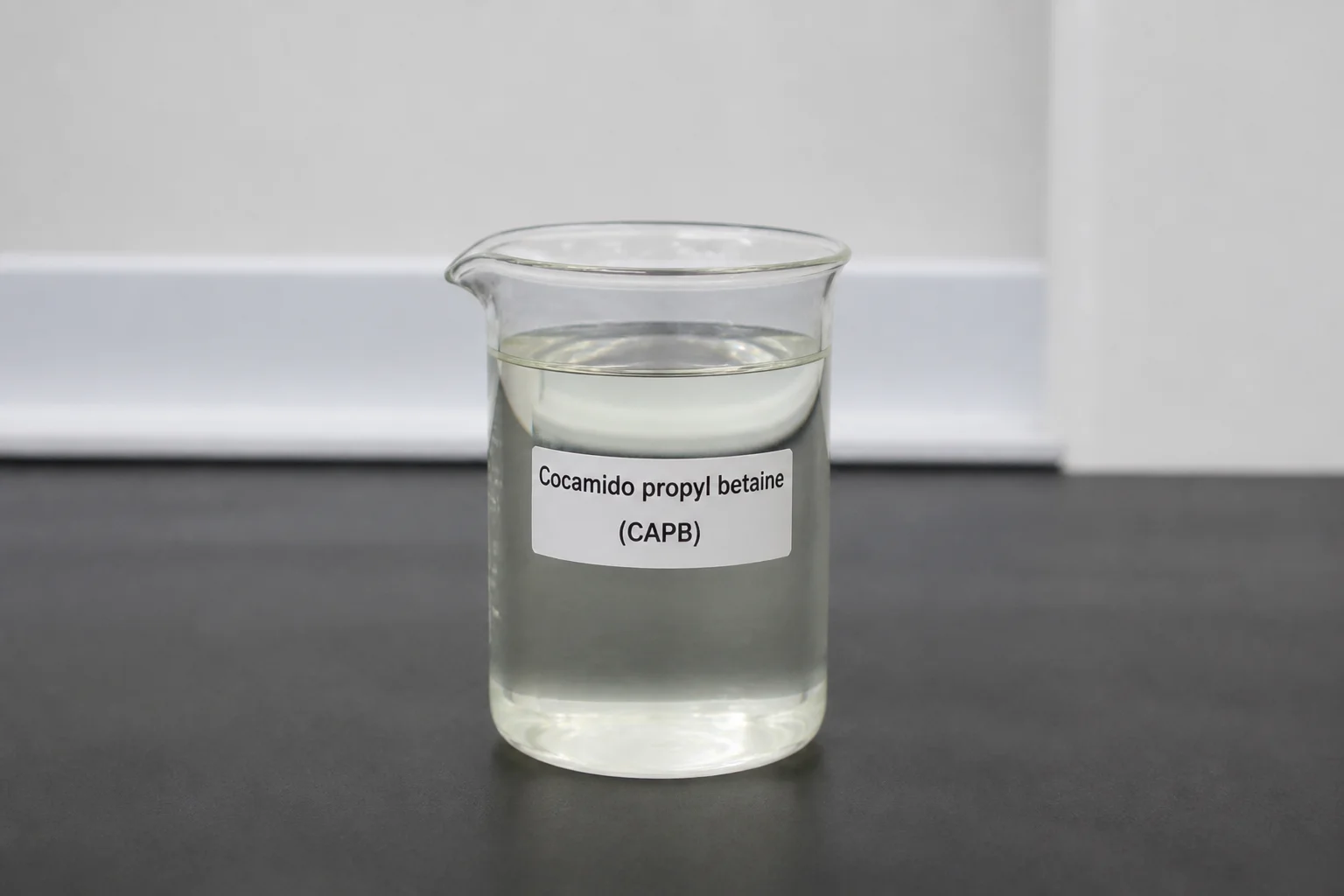
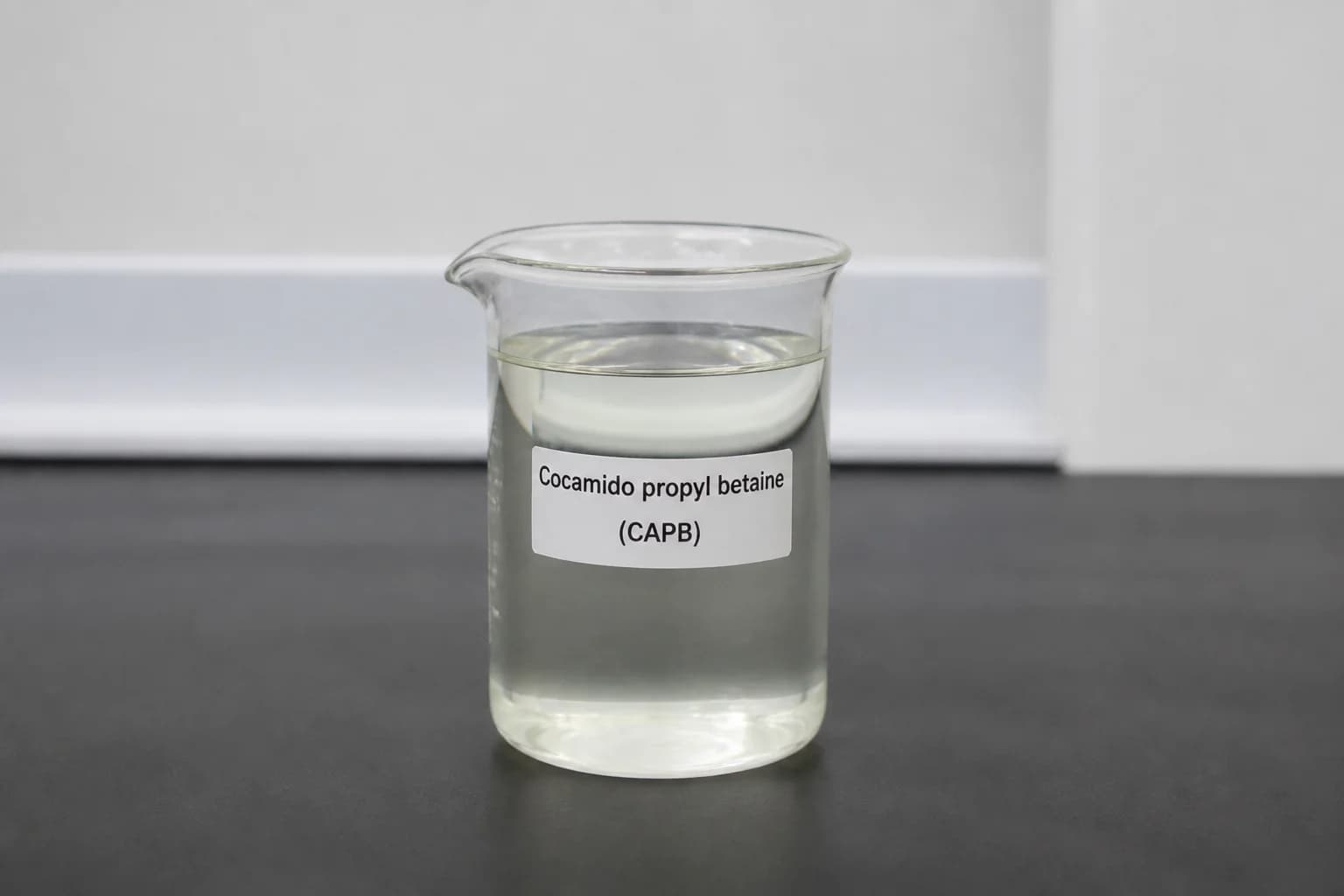
Cocamidopropyl betaine (CAPB), a widely used surfactant in personal care products, is manufactured through a two-step process:

Step 1: Formation of Intermediate Amide

In the first step, dimethylaminopropylamine (DMAPA) undergoes a reaction with fatty acids sourced primarily from coconut or palm kernel oil. This reaction occurs through a cold blend process. Specifically, the primary amine group within DMAPA exhibits higher reactivity and consequently reacts with the carboxylic group present in lauric acid, a predominant constituent of these fatty acid sources. The outcome of this reaction is the formation of an intermediate amide compound.

Step 1 Reaction:

CH3(CH2)10COOH + H2NCH2CH2CH2N(CH3)2CH3(CH2)10CONHCH2CH2CH2N(CH3)2

Lauric acid             +              DMAPA                                      Intermediate Amide

Step 2: Quaternization Reaction to Yield CAPB

Following the formation of the intermediate amide, the subsequent step involves the reaction of chloroacetic acid with the intermediate amide under basic conditions. This reaction, known as quaternization, occurs between the chloroacetic acid and the tertiary amine group within the intermediate amide, resulting in the formation of a quaternary ammonium center. This pivotal reaction yields the final product, Cocamidopropyl betaine (CAPB). The two-step manufacturing process involving fatty acid amidation and quaternization significantly impacts cocamidopropyl betaine price, particularly when raw material costs fluctuate.

Step 2 Reaction:

CH3(CH2)10CONHCH2CH2CH2N(CH3)2    +       ClCH2CO2H          +        NaOH                        →

          Intermediate Amide                        +  Chloroacetic acid    +   Sodium Hydroxide       

CH3(CH2)10CONHCH2CH2CH2N+(CH3)2CH2CO2     +                    NaCl             +          H2O

                Cocamido Propyl Betaine (CAPB)               +     Sodium Chloride      +       Water

This two-step process ensures the production of high-quality CAPB, which finds extensive application in various personal care formulations for its exceptional surfactant properties.

In cleansing and personal care formulations, CAPB is often used alongside foam boosters such as CDEA 85% to improve viscosity, foam stability, and surfactant performance.

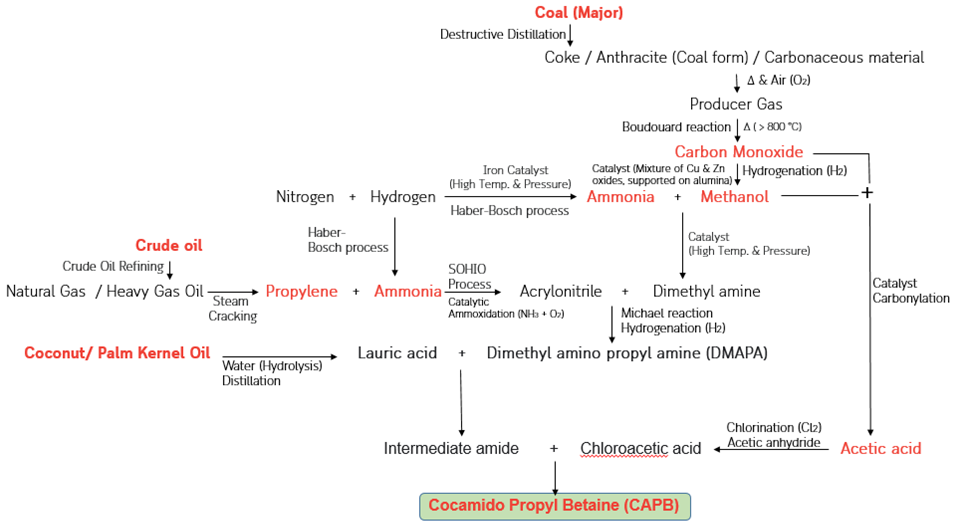
CAPB Upstream Tree:
Related Reading

What is CAPB?2 minutes read

What is CAPB?

Elchemy

17th Jun 2024

CAPB – Grades & Specifications1 minute read

CAPB – Grades & Specifications

Elchemy

17th Jun 2024

CAPB Transportation Regulations1 minute read

CAPB Transportation Regulations

Elchemy

17th Jun 2024

What are the applications of Cocamido Propyl Betaine (CAPB)?1 minute read

What are the applications of Cocamido Propyl Betaine (CAPB)?

Elchemy

17th Jun 2024

CAPB Concerns1 minute read

CAPB Concerns

Elchemy

17th Jun 2024

CAPB- Physical & Chemical Properties1 minute read

CAPB- Physical & Chemical Properties

Elchemy

17th Jun 2024

Related Products

Cocamido propyl betaine (CAPB)

ELSURFACTM – CAB45

ELSURFAC – CAB45

Elchemy supplies ELSURFAC™-CAB35 Cocamidopropyl Betaine (CAPB) in bulk to personal care and cosmetic manufacturers across 40+ countries. CAPB is a coconut-derived amphoteric surfactant widely used as a secondary surfactant in shampoos, body washes, facial cleansers, baby care products, and sulfate-free formulations, valued for its mild cleansing action and rich foam profile. Formulators looking to buy cocamidopropyl betaine at consistent active content can source standard 30% and 35% grades, with other active levels and customer-specific specifications available on request. Domestic stock is also held at our US warehouses for faster fulfillment to US destinations.

View Details
Lauric Acid

Lauric Acid

Lauric acid, a saturated fatty acid found in coconut oil and palm kernel oil, is widely used in the home and personal care industry due to its antimicrobial properties and emulsifying abilities.Lauric acid’s versatility, gentle nature, and effectiveness make it a staple ingredient in home and personal care formulations.

View Details

Related Products

Cocamido propyl betaine (CAPB)

ELSURFACTM – CAB45

ELSURFAC – CAB45

Elchemy supplies ELSURFAC™-CAB35 Cocamidopropyl Betaine (CAPB) in bulk to personal care and cosmetic manufacturers across 40+ countries. CAPB is a coconut-derived amphoteric surfactant widely used as a secondary surfactant in shampoos, body washes, facial cleansers, baby care products, and sulfate-free formulations, valued for its mild cleansing action and rich foam profile. Formulators looking to buy cocamidopropyl betaine at consistent active content can source standard 30% and 35% grades, with other active levels and customer-specific specifications available on request. Domestic stock is also held at our US warehouses for faster fulfillment to US destinations.

View Details
Lauric Acid

Lauric Acid

Lauric acid, a saturated fatty acid found in coconut oil and palm kernel oil, is widely used in the home and personal care industry due to its antimicrobial properties and emulsifying abilities.Lauric acid’s versatility, gentle nature, and effectiveness make it a staple ingredient in home and personal care formulations.

View Details

Elchemy logo is your high-trust gateway to the Indian chemical manufacturers. We offer best payment terms, seasoned chemical consultants, fastest turnaround times, and minimum supply chain risks.