

At a Glance:
- Steel pickling consumes 40% of global HCl production — removing oxide scale before galvanizing or coating
- Food-grade HCl (10–30% concentration) regulates pH in corn syrup, gelatin, and citric acid production
- Oil well acidizing uses 15% HCl to dissolve carbonate rock formations improving hydrocarbon flow
- Water treatment facilities deploy HCl for pH control, alkalinity reduction, and regenerating ion exchange resins
- PVC production requires HCl as direct feedstock for vinyl chloride monomer synthesis
- Pharmaceutical manufacturing uses HCl to synthesise hydrochloride salts improving drug solubility and stability
- Global HCl market exceeds 20 million metric tons annually with pricing ranging $150–$300 per tonne
- Concentration matters — applications range from 5% for delicate pH control to 37% for aggressive pickling
A water treatment supervisor in Phoenix noticed something during a facility tour. The pH control system was burning through three times more caustic soda than the engineering specs predicted. After investigation, the culprit emerged: the incoming water had shifted alkaline due to seasonal changes in source water chemistry. Switching to dilute hydrochloric acid for pH adjustment cut chemical costs 40% while improving process control precision.
Same outcome. Different chemistry. Better economics.
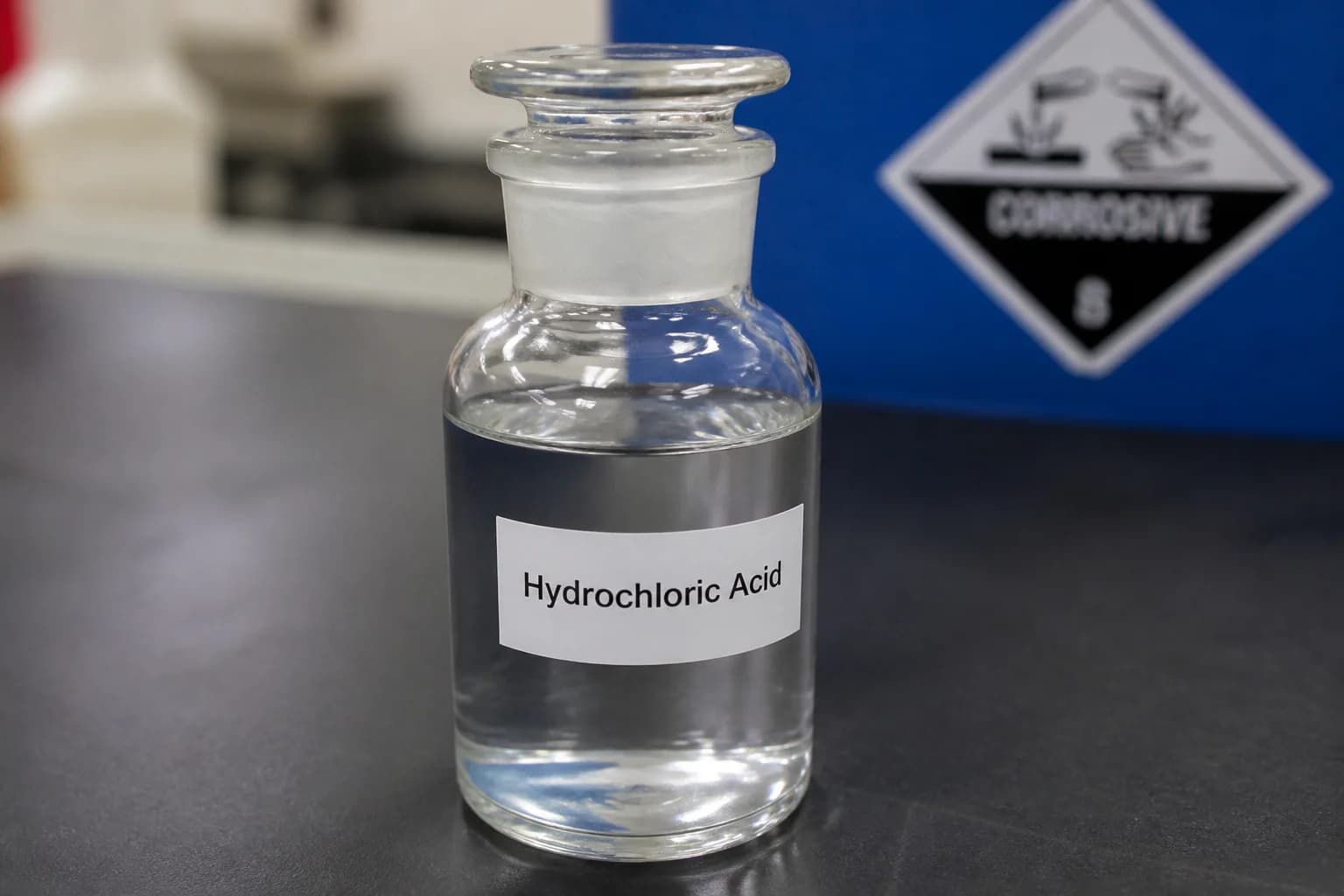
Understanding what hydrochloric acid is used for reveals why this strong acid appears across so many seemingly unrelated industries. From removing rust at steel mills to making your morning corn syrup to cleaning swimming pools, HCl’s combination of aggressive reactivity, complete water solubility, and minimal residue makes it indispensable wherever metals need cleaning, pH requires adjustment, or chemical synthesis demands a reliable proton source. Annual global production exceeds 20 million tonnes precisely because the applications span the entire industrial economy.
Hydrochloric Acid Used For Metal Processing and Surface Treatment
Steel Pickling — The Dominant Application
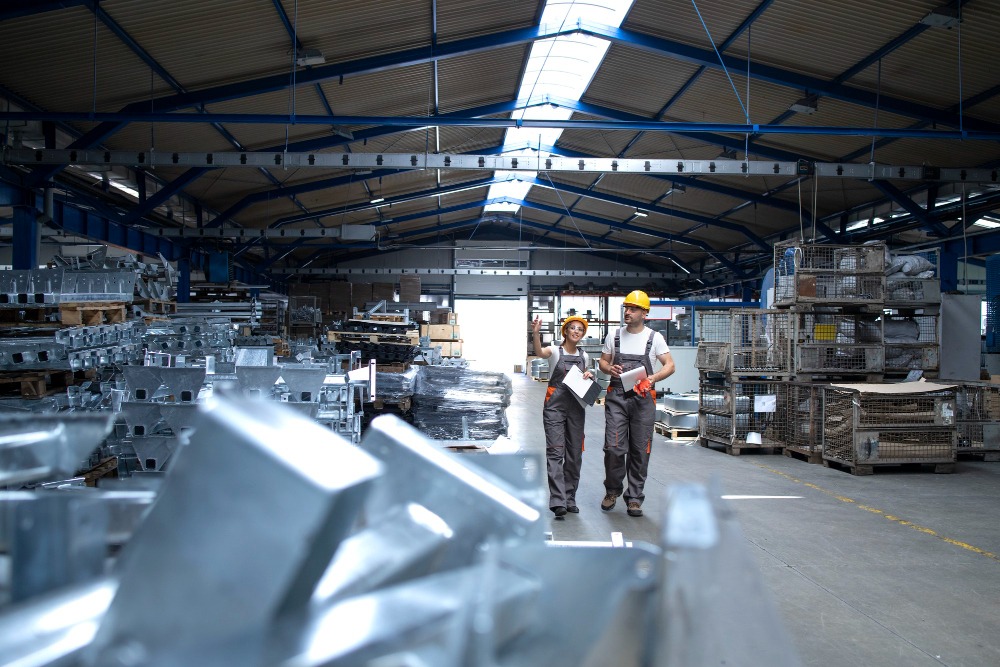
Steel pickling consumes roughly 40% of all HCl produced globally. The process removes iron oxide scale (rust) that forms on steel surfaces during hot rolling. Without pickling, this scale prevents proper adhesion of galvanizing zinc coatings or paint finishes.
Pickling baths operate at 15–20% HCl concentration and 60–80°C. Steel passes through these baths for 2–10 minutes depending on scale thickness. The acid reacts with iron oxide producing soluble iron chlorides that rinse away cleanly.
Here’s the thing: spent pickling liquor contains dissolved iron at 80–120 g/L — too contaminated to reuse but too valuable to discard. Modern facilities regenerate spent acid through pyrohydrolysis or spray roasting, recovering HCl vapour and producing saleable iron oxide pigment. This closed-loop approach cuts fresh acid purchases 30–50%.
Metal pickling parameters by industry:
- Hot-rolled steel: 15–18% HCl at 75–85°C for heavy mill scale removal
- Cold-rolled steel: 8–12% HCl at 40–60°C for light oxide and smut removal
- Stainless steel: 10–15% HCl + 2–5% HNO₃ mixed acid for chromium oxide passivation
- Galvanized steel descaling: 5–8% HCl at ambient temperature for zinc removal
- Wire and tube cleaning: continuous pickling lines at 18–22% HCl with inhibitors preventing base metal attack
Aluminium and Titanium Surface Treatment
Aluminium etching uses dilute HCl (5–15%) to create controlled surface roughness improving paint adhesion or preparing material for anodizing. The reaction rate is fast — complete etching occurs in 30–90 seconds requiring careful process control.
Titanium cleaning employs HCl to remove contamination and alpha-case layers without attacking the base metal when properly inhibited. This application appears extensively in aerospace and medical device manufacturing where surface cleanliness is critical.
| Application | HCl Concentration | Operating Temperature |
| Steel pickling (heavy scale) | 15–20% | 75–85°C |
| Stainless passivation | 10–15% + nitric | 50–70°C |
| Aluminium etching | 5–15% | 20–40°C |
| Galvanized steel descaling | 5–8% | Ambient |
| Titanium cleaning | 10–18% | 40–60°C |
Hydrochloric Acid Industrial Uses in Chemical Manufacturing
PVC and Vinyl Chloride Production
Polyvinyl chloride (PVC) production begins with vinyl chloride monomer (VCM) synthesis. One major production route involves HCl addition to acetylene, while another uses HCl in the oxychlorination of ethylene. These processes consume millions of tonnes of HCl annually.
The PVC industry both produces and consumes HCl in a nearly balanced cycle. Chlorination of ethylene produces HCl as a byproduct, which feeds back into VCM synthesis. This integration makes PVC facilities some of the largest individual HCl handlers globally.
Organic and Inorganic Chemical Synthesis
HCl serves as a chlorinating agent and catalyst across countless chemical synthesis routes. It appears in production of activated carbon, calcium chloride, aluminium chloride, and ferric chloride — all high-volume industrial chemicals.
Pharmaceutical manufacturing relies heavily on HCl to form hydrochloride salts of active ingredients. These salts dramatically improve drug solubility and bioavailability. Approximately 15–20% of all pharmaceutical APIs exist as hydrochloride salts — hydrochloric acid industrial uses in this sector alone justify significant production capacity.
Key chemical synthesis applications:
- Bisphenol-A production: HCl catalyst in phenol-acetone condensation for polycarbonate plastics
- Calcium chloride: direct neutralization of limestone with HCl producing road de-icing salt
- Activated carbon regeneration: removes adsorbed organics restoring carbon effectiveness
- Rare earth processing: dissolves rare earth oxides for metal extraction and purification
- Titanium dioxide production: chloride process uses HCl in TiCl₄ synthesis for pigments
| Chemical Product | HCl Role in Production |
| Vinyl chloride monomer (VCM) | Direct reactant in acetylene chlorination |
| Calcium chloride | Neutralizes limestone to produce CaCl₂ |
| Pharmaceutical APIs | Forms hydrochloride salts improving solubility |
| Bisphenol-A | Acid catalyst in condensation reaction |
| Ferric chloride | Chlorinates iron oxides producing FeCl₃ |
| Titanium tetrachloride | Converts TiO₂ to TiCl₄ for pigment production |
pH Control and Water Treatment Applications
Industrial Water Treatment
Municipal and industrial water treatment facilities use HCl for pH reduction, alkalinity control, and neutralising high-pH waste streams before discharge. Dilute HCl (5–10%) adjusts pH more precisely than sulfuric acid in applications where sulfate contamination is unacceptable.
Ion exchange resin regeneration consumes significant HCl volume. Cation exchange resins treating boiler feedwater or process water require periodic acid regeneration to restore capacity. HCl at 4–8% effectively regenerates these resins without leaving problematic sulfate residues that H₂SO₄ creates.
Swimming Pool and Spa Maintenance
Pool operators use muriatic acid (commercial name for 30–32% HCl) to lower pH and total alkalinity. Concrete and plaster pools particularly require regular acid addition to counteract alkalinity leaching from cementitious surfaces.
The application requires care — adding 1 litre of 32% HCl to a 75,000-litre pool lowers pH by approximately 0.1 units. Overdosing creates corrosion problems and equipment damage, while underdosing allows scale formation and reduced chlorine effectiveness.
Water treatment HCl applications:
- pH control in municipal water systems: maintaining 6.5–8.5 pH regulatory requirements
- Alkalinity reduction: preventing scale formation in heat exchangers and boilers
- Reverse osmosis pretreatment: pH adjustment preventing membrane fouling
- Cooling tower pH control: minimising corrosion while preventing biological growth
- Wastewater neutralisation: treating alkaline discharge streams before environmental release
- Ion exchange regeneration: restoring cation resin capacity in softening systems
| Application | HCl Concentration | Dosing Rate |
| Swimming pool pH reduction | 30–32% (muriatic acid) | 13 mL per 1,000L per 0.1 pH drop |
| Municipal water pH control | 5–10% | Variable by alkalinity |
| Ion exchange regeneration | 4–8% | 2–4% bed volumes |
| RO membrane cleaning | 2–3% | Circulation cleaning |
| Cooling tower blowdown | 10–15% | Automated pH control |
Food Processing and Pharmaceutical Applications
Food-Grade Hydrochloric Acid
The FDA recognises HCl as GRAS (Generally Recognised As Safe) for specific food processing applications. Food-grade HCl meets strict purity specifications with limits on heavy metals, arsenic, and other contaminants below parts-per-million levels.
Corn syrup production uses HCl to hydrolyse corn starch into glucose. The acid cleaves glycosidic bonds between glucose units, controlling the degree of hydrolysis and final syrup composition. After hydrolysis, sodium carbonate neutralises the acid producing sodium chloride (table salt) as a harmless byproduct.
Gelatin manufacture employs dilute HCl (1–3%) to swell and partially hydrolyse collagen from animal hides and bones. This acid pretreatment precedes alkaline processing and determines final gelatin properties — bloom strength, viscosity, and clarity.
Food industry HCl applications:
- Corn syrup production: starch hydrolysis at 3–6% HCl, 130–160°C for controlled sweetener profiles
- Gelatin manufacturing: collagen swelling at 1–3% HCl improving extraction yields
- Citric acid production: pH control during fermentation and downstream crystallisation
- Sodium caseinate: pH adjustment extracting milk proteins for food ingredient applications
- Food-grade phosphoric acid production: intermediate in wet-process phosphoric acid refining
Pharmaceutical Manufacturing
Hydrochloride salt formation represents the most common pharmaceutical application. Converting a free-base drug to its hydrochloride salt often transforms an oil or poorly crystalline material into a stable, free-flowing powder with superior dissolution characteristics.
Examples include diphenhydramine HCl (Benadryl), ranitidine HCl (Zantac), metformin HCl (diabetes medication), and countless antibiotics. The hydrochloride counterion is well-tolerated, highly soluble, and doesn’t interfere with drug activity.
Oil and Gas Industry Applications
Well Acidizing and Stimulation
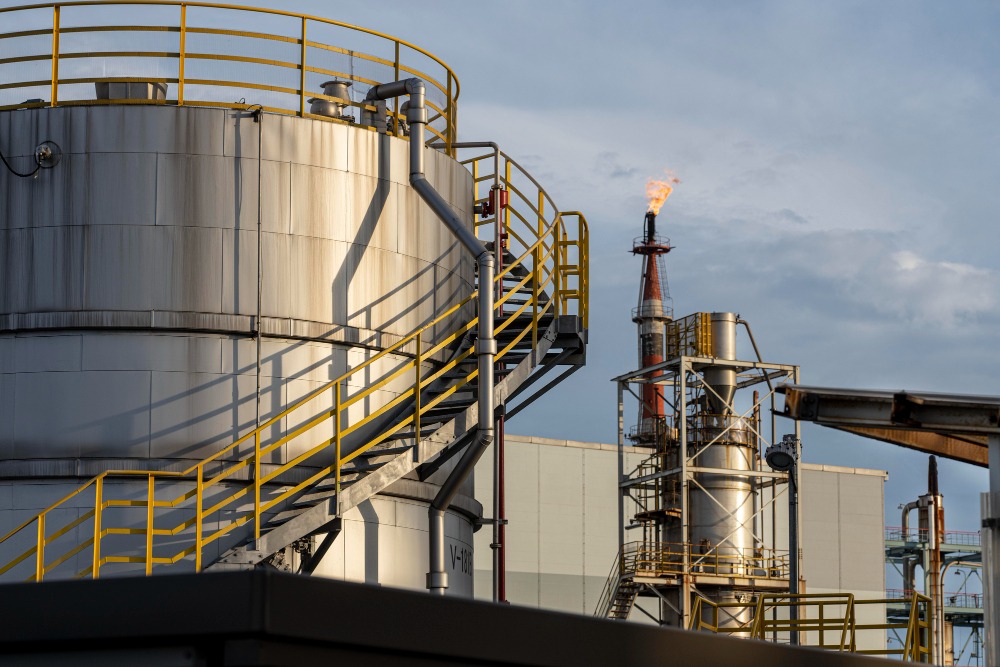
Oil and gas wells undergo acidizing treatments to dissolve carbonate rock formations (limestone, dolomite) surrounding the wellbore. This increases permeability allowing hydrocarbons to flow more freely into the well.
Matrix acidizing uses 15% HCl (sometimes 28% for deeper wells) injected at pressures below fracture pressure. The acid dissolves carbonate minerals creating wormhole channels that dramatically improve flow rates. A successful treatment can increase production 50–300% in carbonate reservoirs.
Fracture acidizing combines HCl with hydraulic fracturing, etching the fracture faces to maintain conductivity after pressure release. This application appears most commonly in carbonate formations where proppants are less effective than acid-etched channels.
Pipeline and Equipment Cleaning
HCl removes scale, rust, and mineral deposits from downhole tubing, pipelines, and processing equipment. Inhibited HCl (with corrosion inhibitors) cleans iron sulfide, calcium carbonate, and barium sulfate scales that reduce flow capacity and heat transfer efficiency.
Oil and gas HCl applications:
- Matrix acidizing: 15–28% HCl dissolving carbonate formations near wellbore
- Fracture acidizing: etching fracture faces in limestone and dolomite reservoirs
- Scale removal: cleaning iron sulfide and carbonate scales from tubing and equipment
- Spent acid neutralisation: treating returned acid fluids before disposal
- Geothermal wells: removing silica and carbonate scale from heat exchanger surfaces
| Industry | Typical Concentration | Primary Purpose |
| Steel pickling | 15–20% | Oxide scale removal |
| Water treatment | 5–10% | pH reduction |
| Food processing | 3–6% | Starch hydrolysis |
| Oil well acidizing | 15–28% | Carbonate dissolution |
| Chemical synthesis | 20–37% | Reactant/catalyst |
| Swimming pools | 30–32% | pH/alkalinity control |
The range of what hydrochloric acid is used for spans nearly every industrial sector — from removing rust on steel destined for your car to making the gelatin in your vitamins to acidizing the well that produced your heating fuel. This versatility stems from HCl’s unique properties: complete water solubility, strong acidity, minimal residue formation, and the chloride ion’s compatibility with most processes.
Concentration determines application suitability. Delicate food processing uses 3–6% HCl. Aggressive steel pickling requires 15–20%. Chemical synthesis may demand 37% fuming grade. Understanding these concentration-application relationships helps procurement teams specify the right grade over-specification costs or under-specification failures.
The 20+ million tonnes produced globally each year isn’t going into a single dominant use. It’s distributed across hundreds of specific applications where HCl’s combination of reactivity, economics, and technical performance makes it the optimal choice. That diversity of demand creates supply stability and competitive pricing that keeps HCl indispensable across the industrial economy.
Elchemy Connection:
For businesses requiring quality hydrochloric acid across concentrations and grades, Elchemy connects you with verified suppliers offering technical-grade HCl (28–37%), industrial-grade (10–32%), and food-grade formulations in bulk quantities — complete with certificates of analysis, regulatory compliance documentation (FDA, REACH, TSCA), and technical support to help optimise concentration selection, handling procedures, and safety protocols for your specific metal processing, water treatment, chemical manufacturing, or food processing applications.