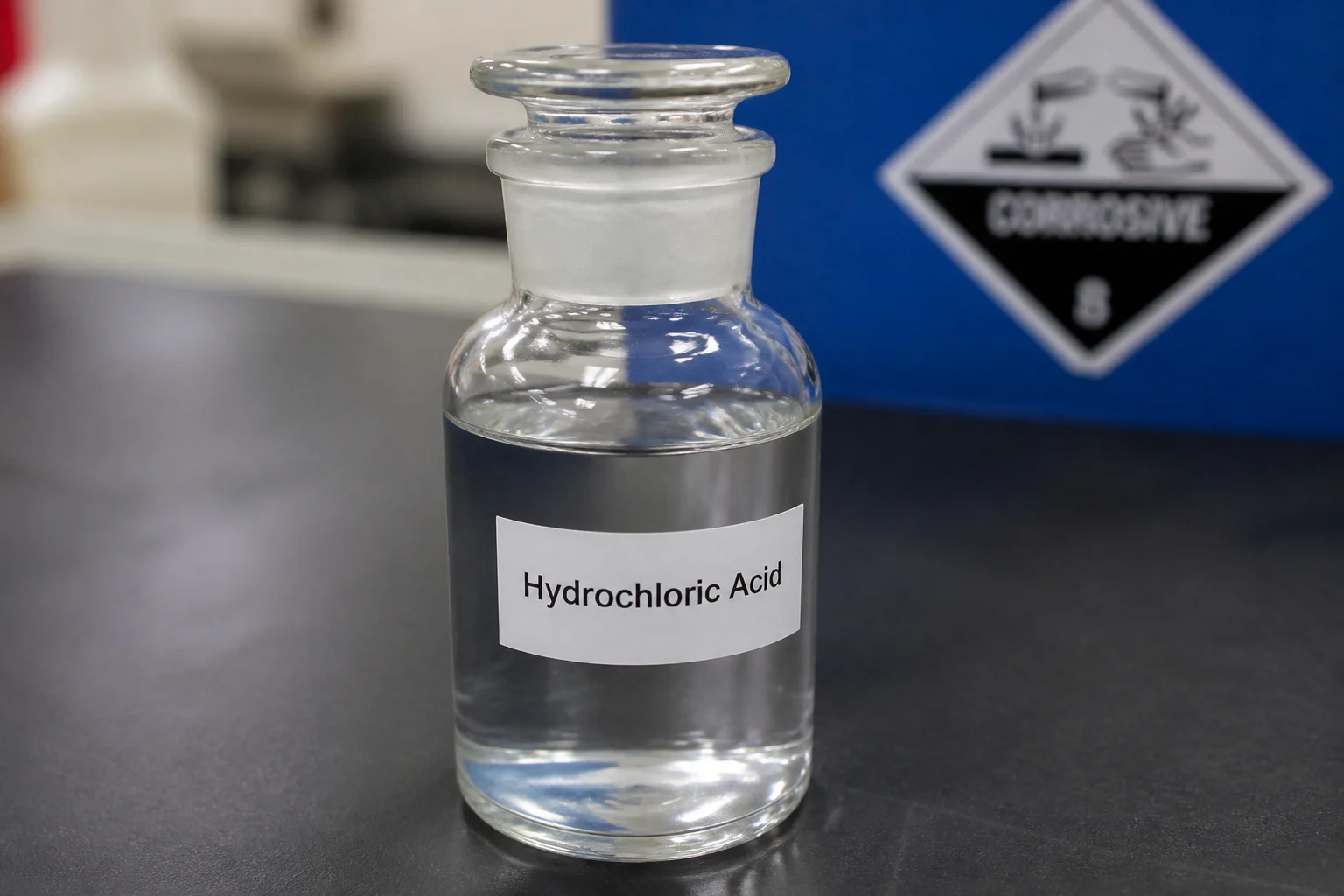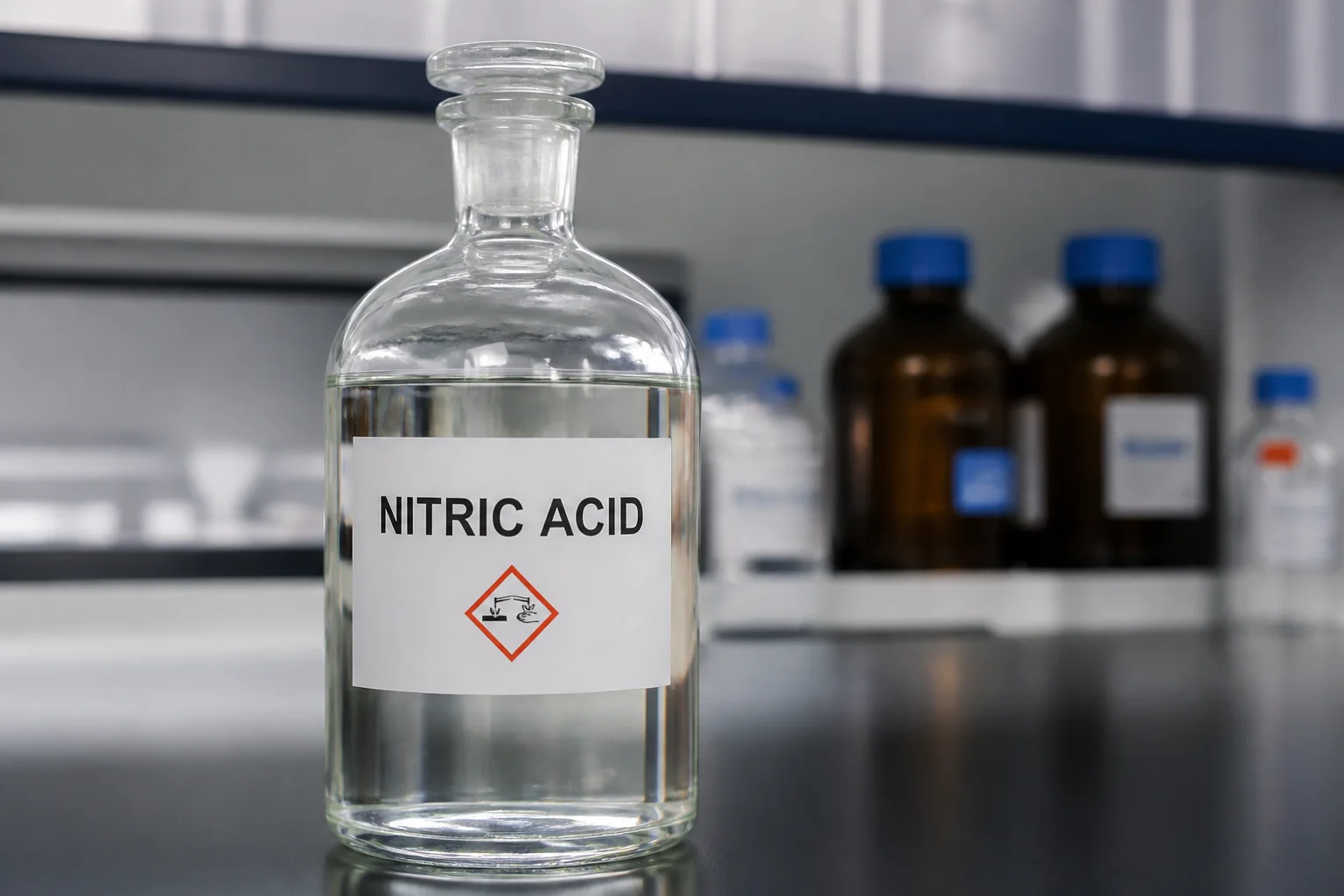


A metallurgy lab in Pennsylvania was trying to refine silver from scrap jewelry when they ran into a problem. They were using hydrochloric acid for the process, but it wasn’t working. The silver wouldn’t dissolve. A visiting consultant took one look and said, “You need nitric acid for this, not hydrochloric acid.” The switch solved the problem immediately, but it highlighted something important: these two acids might look similar in bottles on a shelf, but they behave very differently in real applications.
Both hydrochloric acid and nitric acid are powerful industrial chemicals used across manufacturing, laboratories, and various production processes. Understanding their differences helps industries choose the right acid for specific tasks while ensuring safety and efficiency.
At a Glance
- Hydrochloric acid (HCl) is primarily acidic, while nitric acid (HNO₃) combines strong acidity with powerful oxidizing properties
- HCl dissolves most metals producing hydrogen gas, but nitric acid dissolves metals through oxidation without hydrogen release
- Nitric acid vs hydrochloric acid shows HNO₃ working on noble metals like silver and copper that HCl cannot dissolve
- Industrial applications differ dramatically: HCl dominates metal cleaning and pH control, HNO₃ leads in fertilizer production (80% of use)
- When mixed in 3:1 ratio (HCl:HNO₃), they create aqua regia capable of dissolving gold and platinum
- Safety considerations vary: HCl produces choking fumes, HNO₃ releases toxic nitrogen oxides and stains skin yellow
- Cost and availability favor HCl for general industrial use, while HNO₃ serves specialized applications requiring oxidation
Chemical Composition and Basic Properties
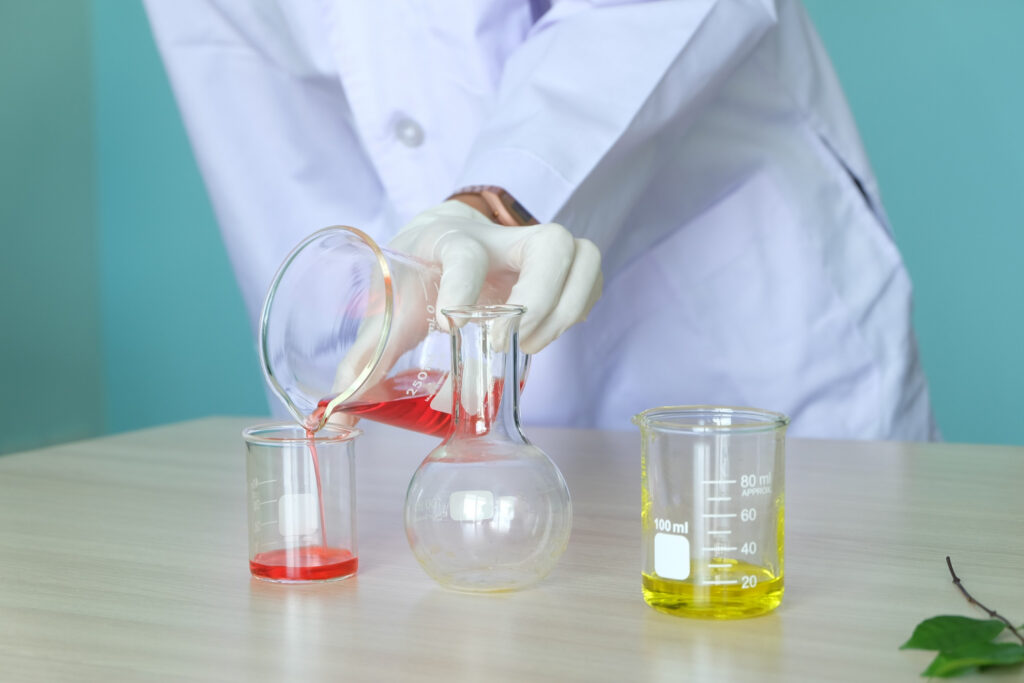
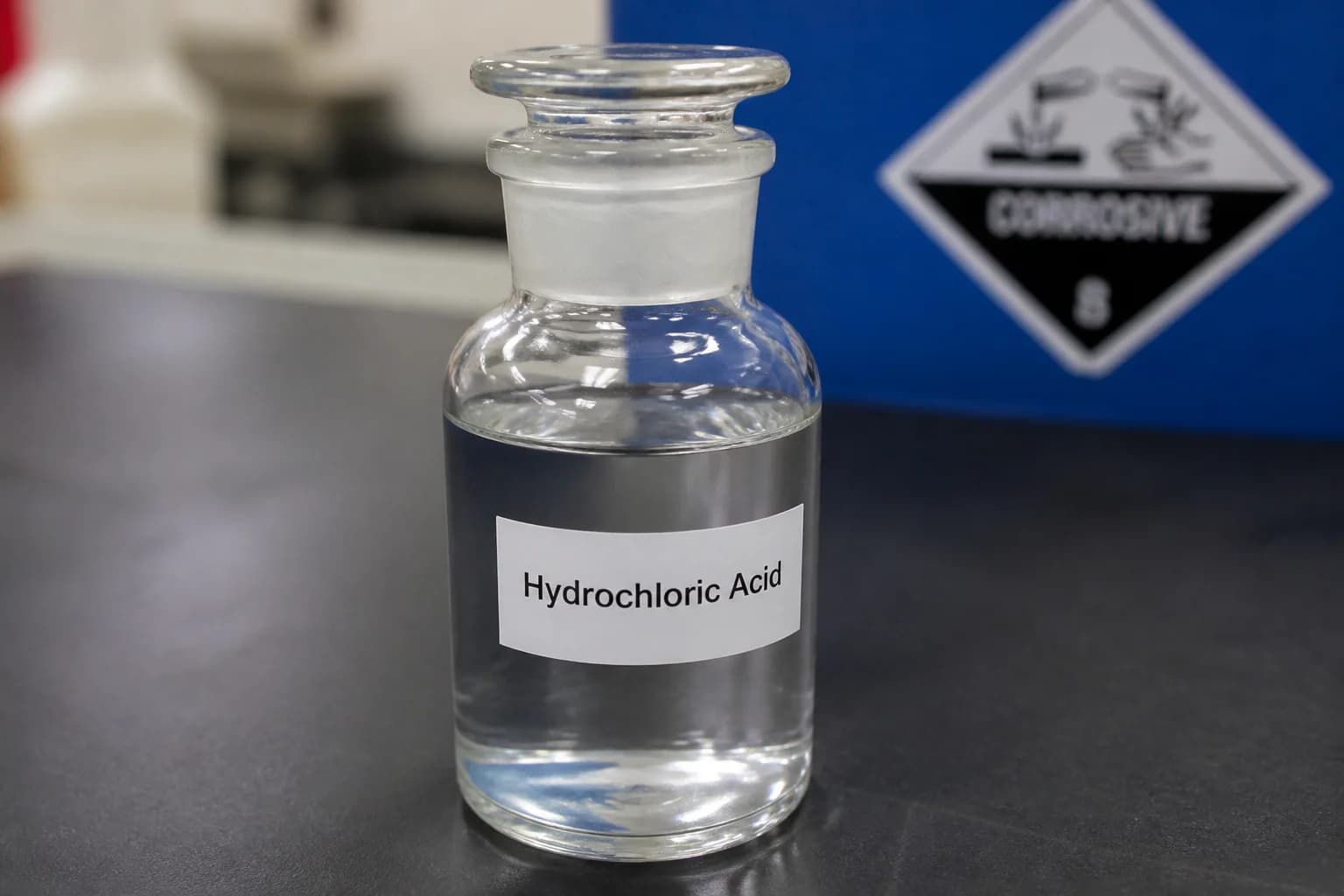
Hydrochloric acid is a solution of hydrogen chloride gas (HCl) dissolved in water. When you buy commercial hydrochloric acid, you’re typically getting a 30-37% concentration, though industrial applications sometimes use higher strengths. The acid appears as a clear, colorless liquid with an unmistakable sharp, pungent smell that makes your nose burn if you get too close.
The chemical formula HCl represents one hydrogen atom bonded to one chlorine atom. When this dissolves in water, it completely dissociates into hydrogen ions (H⁺) and chloride ions (Cl⁻), making it what chemists call a “strong acid.”
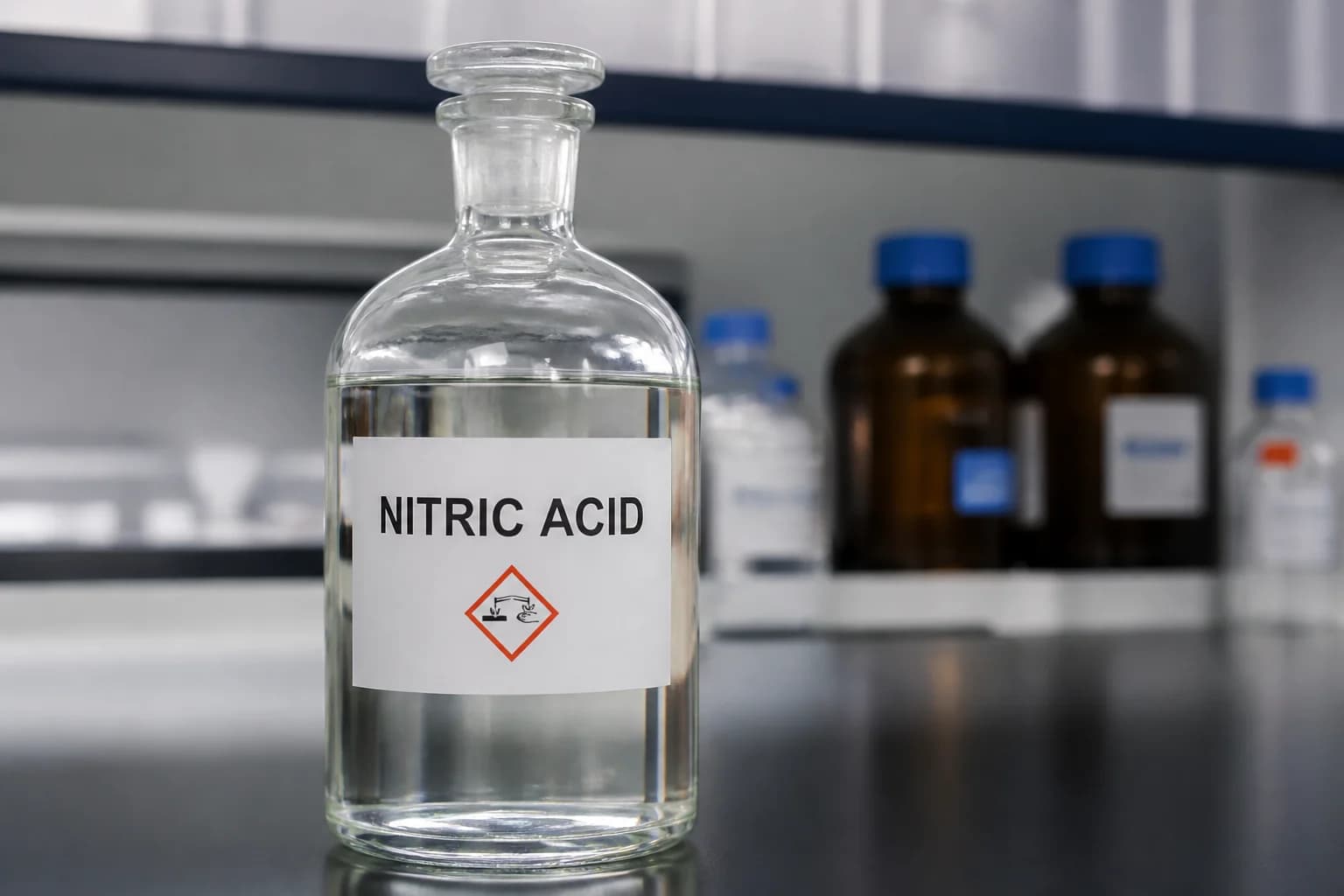
Nitric acid has the chemical formula HNO₃, containing one hydrogen, one nitrogen, and three oxygen atoms. Pure nitric acid is colorless, but you’ll often see it with a yellowish tint. That color comes from decomposition when exposed to light, which breaks the acid down into nitrogen dioxide gas. Commercial nitric acid typically comes in concentrations of 68-70%, though specialized applications use higher concentrations called “fuming nitric acid” at 86-99%.
Here’s what makes nitric acid special: it’s both a strong acid AND a powerful oxidizing agent. That dual nature gives it unique capabilities that hydrochloric acid simply doesn’t have.
The Key Difference: Acidity vs. Oxidizing Power
Both acids will donate hydrogen ions readily, which is what makes them acidic. But nitric acid does something hydrochloric acid cannot—it acts as an oxidizing agent through its nitrate ion (NO₃⁻).
Think of oxidation as electron theft. The nitrate ion in nitric acid steals electrons from other substances, changing their chemical nature in the process. This is why nitric acid can dissolve metals like copper and silver that hydrochloric acid cannot touch. It’s not just breaking bonds with acid—it’s fundamentally changing the metal through oxidation.
When hydrochloric acid reacts with metals, it produces metal chlorides and hydrogen gas. You can see the hydrogen bubbling off. With nitric acid, the reaction produces nitrogen oxides instead of hydrogen. Concentrated nitric acid on copper creates that distinctive reddish-brown nitrogen dioxide gas that’s toxic to breathe.
Comparing Properties Side by Side
| Property | Hydrochloric Acid (HCl) | Nitric Acid (HNO₃) |
| Chemical Formula | HCl | HNO₃ |
| Common Concentration | 30-37% | 68-70% |
| Appearance | Clear, colorless | Colorless to yellow |
| Odor | Sharp, pungent | Sharp, suffocating |
| pH (concentrated) | ~0.1 | ~1 |
| Oxidizing Power | None | Strong oxidizer |
| Metal Reaction | Forms chlorides + H₂ gas | Oxidizes metal, produces NOₓ gases |
| Common Name | Muriatic acid | Aqua fortis (“strong water”) |
Industrial Applications: Where Each Acid Excels
Hydrochloric Acid Applications
Steel pickling represents one of the largest uses for hydrochloric acid. Steel manufacturers use it to remove rust and scale from steel surfaces before further processing. The acid dissolves iron oxides, leaving clean metal ready for coating or galvanizing. This application alone consumes millions of tons of HCl annually worldwide.
Pool maintenance uses hydrochloric acid (sold as muriatic acid) to lower pH and alkalinity in swimming pools. The chloride ions help sanitize the water while the acid neutralizes excess alkalinity from chemical treatments.
Chemical manufacturing relies on HCl to produce numerous chloride compounds. PVC plastic production, water treatment chemicals, and pharmaceutical intermediates all start with hydrochloric acid reacting with various substances to create useful products.
pH control in industrial processes needs reliable, affordable acids. HCl fits perfectly, adjusting pH in wastewater treatment, chemical reactions, and food processing where precise acidity matters.
Nitric Acid Applications
Fertilizer production dominates nitric acid consumption at roughly 80% of global production. The acid reacts with ammonia to create ammonium nitrate, a nitrogen fertilizer that revolutionized agriculture and enabled modern high-yield farming. This single application makes nitric acid one of the most important industrial chemicals produced globally.
Metal refining uses nitric acid’s oxidizing power to separate precious metals. Silver dissolves readily in nitric acid while gold remains untouched. For gold refining, you need aqua regia (which we’ll discuss shortly), but for silver purification, nitric acid alone works perfectly.
Explosives manufacturing consumes significant nitric acid quantities. TNT, nitroglycerin, and other explosives require nitration reactions where nitric acid adds nitrogen groups to organic molecules. The same chemistry produces rocket propellants, where concentrated “red fuming nitric acid” serves as an oxidizer.
Stainless steel passivation involves treating stainless steel with nitric acid after welding or machining. The acid removes free iron from the surface and enhances the protective chromium oxide layer, improving corrosion resistance.
The Nitric Acid vs Hydrochloric Acid Debate for Metal Work
When working with metals, choosing between these acids depends entirely on what metal you’re dealing with and what you’re trying to accomplish.
Hydrochloric acid works great on:
- Iron and steel (rust removal, pickling)
- Zinc (dissolves readily)
- Aluminum (though the reaction can be vigorous)
- Tin and other base metals
Hydrochloric acid won’t dissolve:
- Copper (requires oxidizing acid)
- Silver (needs oxidizing acid)
- Gold (completely resistant)
- Platinum (no reaction)
Nitric acid excels at dissolving:
- Copper (produces blue-green solution and brown NOₓ gas)
- Silver (dissolves completely)
- Lead (though reaction is slower)
- Many other metals through oxidation
Nitric acid cannot dissolve:
- Gold (requires aqua regia)
- Platinum (requires aqua regia)
- Some alloys with protective oxide layers
For general metal cleaning where you’re removing surface oxides and contaminants, hydrochloric acid often works better and costs less. For dissolving the actual metal or working with copper and silver, nitric acid is the only choice.
Aqua Regia: When You Combine Both Acids
Mix three parts hydrochloric acid with one part nitric acid and you create something remarkable: aqua regia, Latin for “royal water.” This mixture can dissolve gold and platinum, the noble metals that resist individual acids.
The chemistry is clever. Nitric acid provides oxidizing power that converts gold into gold ions. But normally those gold ions would just replate onto the metal surface. The chloride ions from hydrochloric acid prevent this by forming stable gold chloride complexes that stay dissolved. Together, these acids accomplish what neither can do alone.
Aqua regia sees use in:
- Gold refining and recovery from electronic waste
- Platinum purification
- Analytical chemistry for dissolving metal samples
- Jewelry making and metal etching
Warning: Aqua regia is extremely dangerous. It must be made fresh before use, stored only briefly in vented containers, and handled with exceptional care. The mixture produces toxic chlorine gas, nitrogen oxides, and other hazardous fumes.
Safety Considerations and Handling
Both acids demand respect and proper safety equipment, but they create different specific hazards.
Hydrochloric Acid Safety
The fumes are intensely irritating. Concentrated HCl releases hydrogen chloride gas that makes you cough and choke immediately. Always work with adequate ventilation or in a fume hood. The acid causes chemical burns on skin contact, though these are typically less severe than nitric acid burns.
Spills need neutralization with sodium bicarbonate or other bases. The acid reacts vigorously with strong bases, so add neutralizer gradually while stirring. Flush contaminated skin with water immediately for at least 15 minutes.
Storage requires corrosion-resistant containers. HDPE plastic works well for dilute to moderate concentrations. Glass or PTFE suits laboratory applications. Keep away from reactive metals and bases.
Nitric Acid Safety
Nitric acid presents additional hazards beyond simple acidity. The nitrogen oxide fumes are toxic and can cause delayed pulmonary edema even hours after exposure. You might feel fine initially, then develop breathing problems later. This delayed toxicity makes proper ventilation absolutely critical.
Skin contact not only burns but also stains skin yellow from the reaction with proteins. This xanthoprotein reaction demonstrates nitric acid’s oxidizing power on organic materials. Concentrated nitric acid on skin requires immediate flooding with water, not wiping, which spreads the damage.
Nitric acid oxidizes organic materials aggressively. Never mix it with alcohols, acetone, or organic solvents. The reaction can be explosive. Even small amounts of organic contamination can create hazardous situations.
Storage demands acid-resistant materials compatible with oxidizers. Some plastics that work for hydrochloric acid fail with nitric acid. Stainless steel works for certain concentrations but not others. Always verify material compatibility before use.
Cost and Availability Factors
Hydrochloric acid costs less and is more widely available than nitric acid. Commercial HCl runs roughly $100-200 per ton in bulk quantities, making it an economical choice for large-scale applications. Every chemical supplier carries it, and supply chains are well-established globally.
Nitric acid costs more—typically $300-500 per ton depending on concentration and purity. Production requires more complex processing (the Ostwald process), and handling demands more stringent safety measures that add to distribution costs.
For applications where either acid could work, cost often drives the decision toward hydrochloric acid. But when you specifically need nitric acid’s oxidizing properties, there’s no substitution. You can’t make fertilizer or dissolve copper with hydrochloric acid no matter how much you use.
Environmental and Disposal Considerations
Hydrochloric acid neutralization produces harmless salt water (sodium chloride if neutralized with sodium hydroxide). Small quantities can be neutralized and disposed of down drains in most jurisdictions after checking local regulations. Large quantities require treatment before discharge.
Nitric acid disposal is more complex because of nitrogen compounds. Neutralization produces nitrate salts that can cause environmental problems in waterways if discharged in large quantities. Agricultural runoff already creates nitrogen pollution concerns, so nitric acid waste needs careful management to avoid adding to the problem.
Both acids require pH neutralization to 6-9 before environmental discharge. Record keeping and reporting may be mandatory depending on quantities used and local regulations.
Choosing the Right Acid for Your Application
The decision between hydrochloric acid and nitric acid should be driven by chemistry requirements, not just cost or availability.
Use Hydrochloric Acid When:
- You need pH adjustment or acid neutralization
- Removing rust and scale from steel
- Producing chloride salts
- General metal cleaning where oxidation isn’t needed
- Cost is a primary concern
- Working with iron, zinc, or aluminum
Use Nitric Acid When:
- Oxidizing power is required
- Dissolving copper, silver, or other noble metals
- Manufacturing fertilizers or explosives
- Passivating stainless steel
- Creating nitrate compounds
- Refining precious metals
Understanding these differences prevents wasted time and money trying to use the wrong acid for a job. That Pennsylvania metallurgy lab learned this lesson—sometimes paying more for the right chemical saves money overall by getting the job done properly the first time.
Both hydrochloric acid and nitric acid play essential roles in modern industry and chemistry. Their different properties make them complementary tools rather than competitors, each excelling in applications where the other falls short.
For businesses requiring quality industrial acids and chemical expertise, Elchemy connects you with reliable suppliers offering both hydrochloric acid and nitric acid in various grades and concentrations, along with technical support to help match the right acid to your specific application requirements.