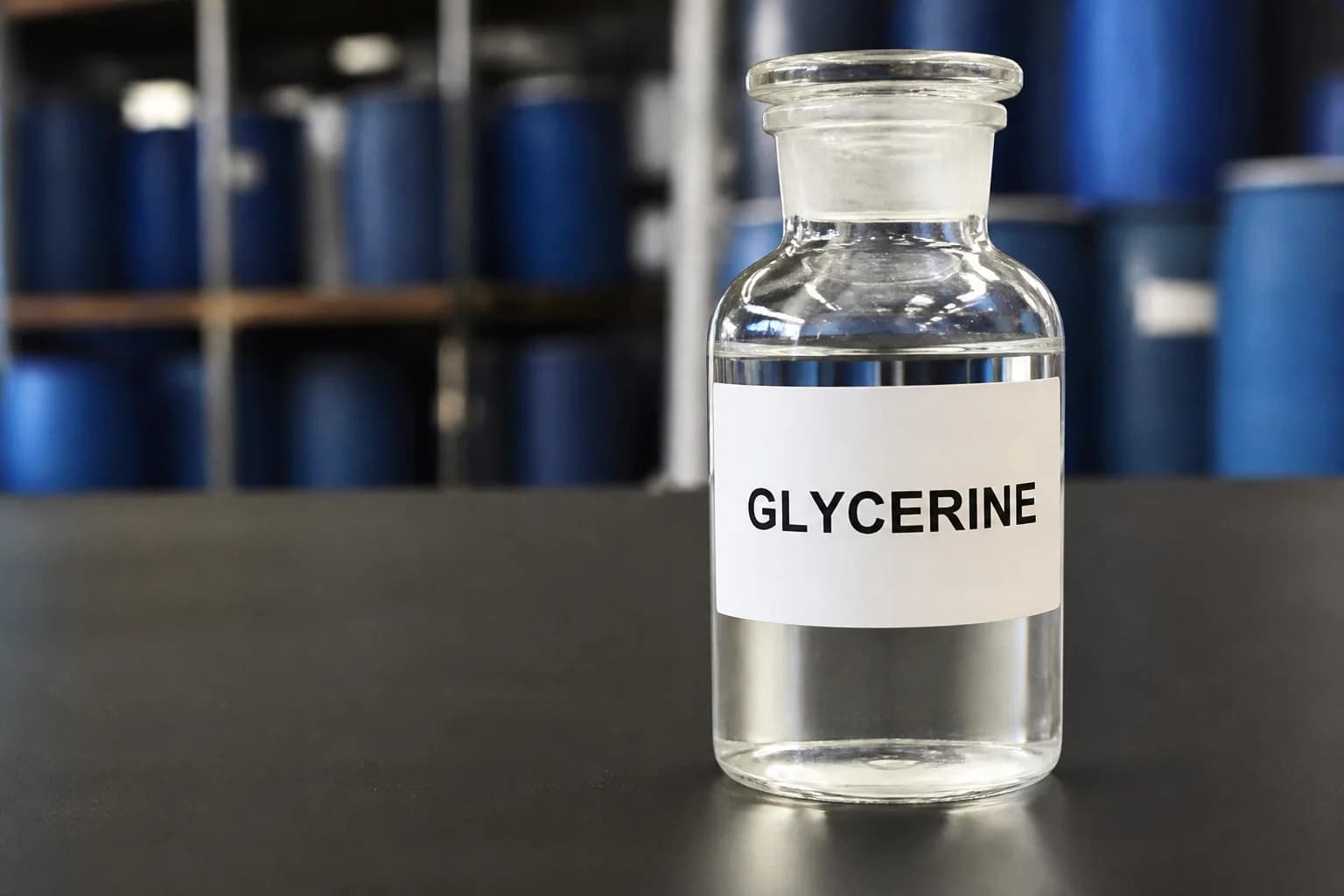


At a Glance
- Refined glycerine achieves 99.5-99.7% purity meeting USP pharmaceutical standards for regulated applications
- Food industry uses include sweetener (60% sweetness of sugar), humectant, preservative, and texture enhancer
- Pharmaceutical applications span drug solvents, laxatives, cough syrups, and topical medication bases
- Skin care benefits include moisture retention at 3-10% concentrations, barrier protection, and anti-irritation properties
- FDA grants GRAS status confirming safety for consumption and topical application across all age groups
- Over 1,500 documented end uses make refined glycerine one of the most versatile industrial ingredients available
Check your pantry right now. Grab that low-fat cookie package. Flip it over. Glycerine’s probably sitting there in the ingredient list, maybe fifth or sixth from the top. Now walk to your bathroom. Pick up that moisturizer you use every day. There it is again, sometimes listed as glycerin, sometimes as glycerol.
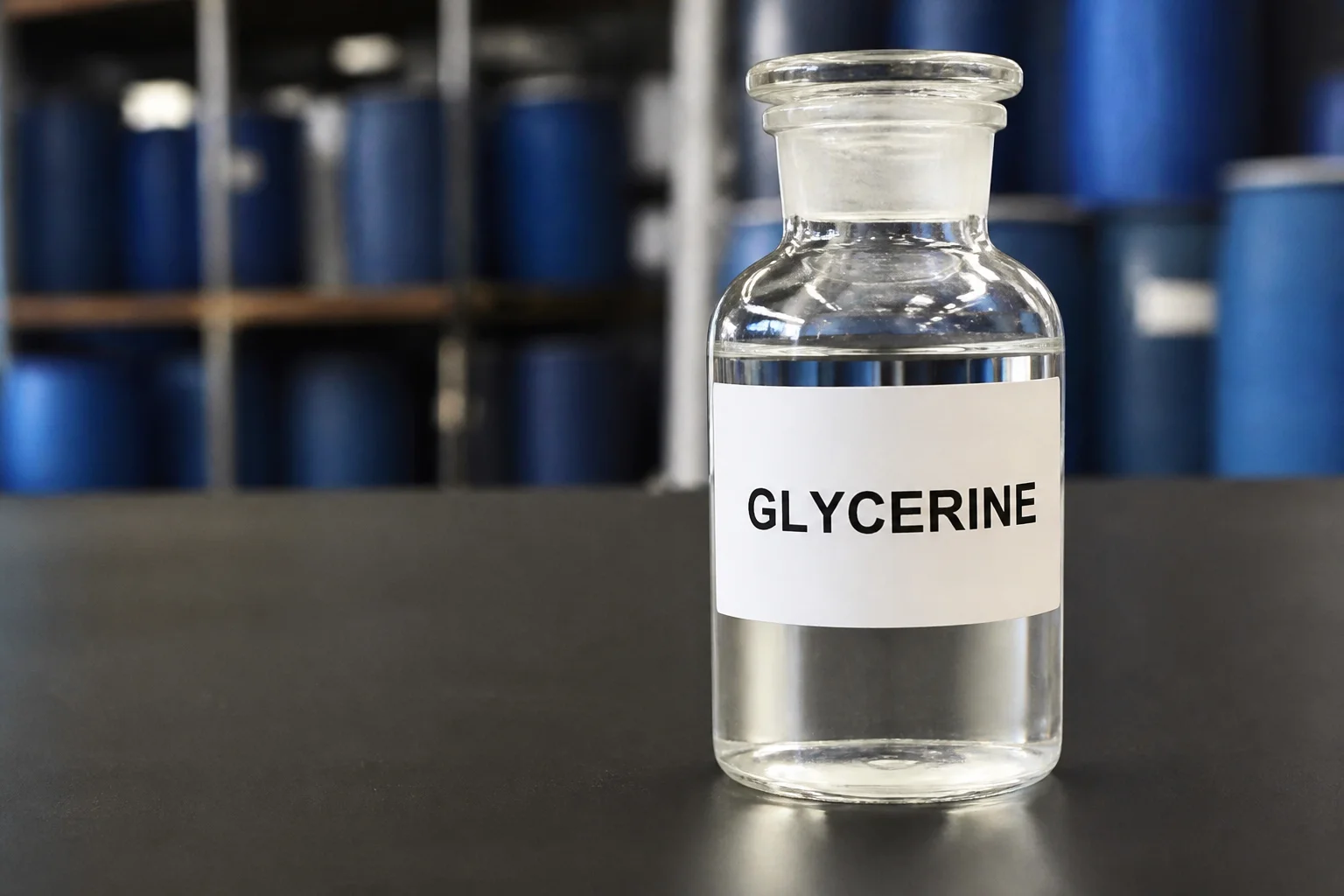
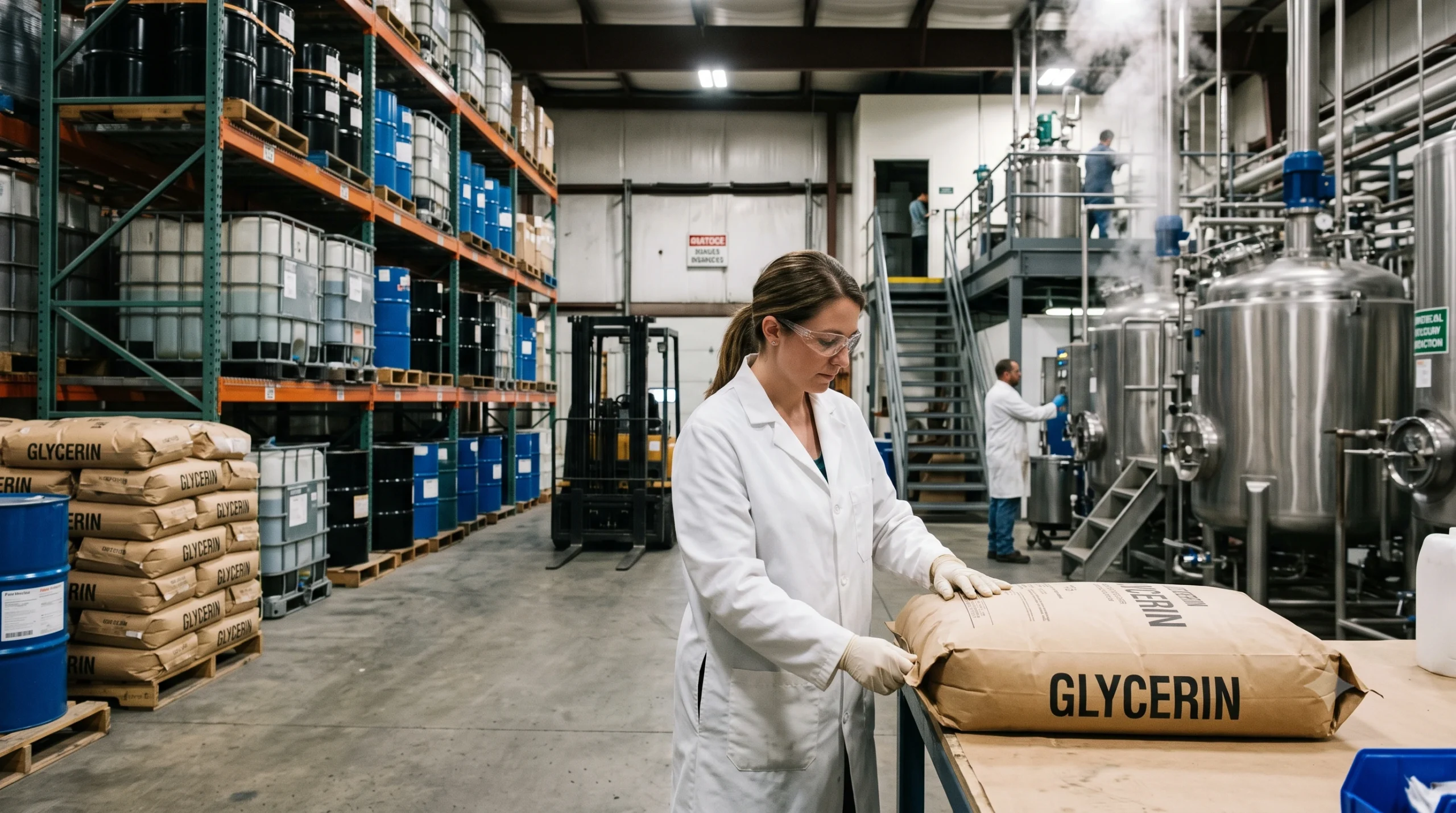
This clear, syrupy liquid shows up everywhere because it actually works. Food manufacturers use it to keep baked goods soft. Pharmaceutical companies rely on it for suspending medications. Skincare brands add it to prevent moisture loss. The refined version, purified to 99.5% or higher, meets the strict standards required for products you consume or put on your body. Understanding refined glycerine uses helps procurement teams, formulators, and quality managers select the right grade for specific applications across food, pharma, and personal care production.
What Makes Refined Glycerine Different
Not all glycerine qualifies for food or pharmaceutical use. The refining process determines purity levels and regulatory approval.
| Grade | Purity Level | Primary Impurities | Regulatory Status | Suitable For | Typical Cost |
| Crude | 40-88% | Salts, methanol, soap residues | Not regulated | Biodiesel byproduct, further refining | Lowest |
| Technical | 98%+ | Minor organics, color | Industry agreements only | Industrial products, tire shine | Low |
| Technical UCO | 99.5% | Trace fatty acids | Not EP/USP compliant | Construction materials, antifreeze | Medium |
| USP/Pharmaceutical | 99.5-99.7% | Meets strict limits | FDA regulated, USP monograph | Food, pharma, cosmetics | High |
| Food Grade (FCC) | 99.5%+ | Food Chemicals Codex limits | FCC standards | Food products, nutritional supplements | High |
Refined glycerine at USP grade undergoes distillation, filtration, and bleaching to remove color and organic impurities. The process eliminates metals, chlorides, sulfates, and other contaminants that might affect taste, stability, or safety. Testing verifies each batch meets specifications before release.
The difference matters. Using technical grade glycerine in a food product violates FDA regulations. Pharmaceutical formulations require documented USP compliance. Choosing the wrong grade creates legal liability and product recall risks.
Refined Glycerine Uses in Food Applications
Food manufacturers incorporate refined glycerine for multiple functional purposes beyond simple sweetening. Its versatility supports diverse product categories.
Sweetener and sugar replacement:
- Provides 60% the sweetness of sucrose with lower calorie content (2.4 kcal/g in EU versus 4 kcal/g for sugar)
- Low glycemic index prevents rapid blood sugar spikes compared to table sugar
- Works in sugar-free and reduced-calorie products targeting diabetic and health-conscious consumers
- Doesn’t feed oral bacteria so it won’t contribute to cavity formation
- Typically used at 2-20% concentration depending on desired sweetness level
Humectant for moisture retention:
- Keeps baked goods soft and fresh by preventing water loss during storage
- Extends shelf life of cakes, cookies, brownies, and bread products
- Maintains pliability in confections including marshmallows, gummy candies, and nougat
- Prevents crystallization in icings and glazes
- Reduces staling rate in commercial bakery products
Texture modification:
- Creates smooth mouthfeel in low-fat foods where fat removal affects texture
- Acts as thickening agent in liqueurs, syrups, and beverage concentrates
- Improves freeze-thaw stability in ice cream and frozen desserts
- Enhances chewiness in energy bars and protein bars
- Prevents separation in salad dressings and mayonnaise
Preservative function:
- Binds free water reducing availability for microbial growth
- Extends shelf life of processed meats by limiting bacterial proliferation
- Works synergistically with other preservatives at lower concentrations
- Maintains quality in dried fruits and fruit preparations
- Prevents mold growth in intermediate-moisture foods
Food manufacturers typically use concentrations between 1% and 15% depending on the application. Regulations require listing glycerine on ingredient labels, often appearing as “glycerin,” “glycerol,” or E422 in European markets.
Pharmaceutical Applications: Where Refined Glycerine Excels

The pharmaceutical industry relies heavily on refined glycerine meeting USP specifications. Its unique properties solve multiple formulation challenges.
Drug solvent and vehicle:
- Dissolves active pharmaceutical ingredients (APIs) that resist water solubility
- Suspends particles evenly in liquid medications preventing settling
- Improves stability of formulations extending product shelf life
- Compatible with most APIs without causing degradation or interaction
- Enables consistent dosing in liquid preparations
Oral medication formulations:
- Cough syrups use 10-30% glycerine for smoothness and slight sweetness
- Elixirs incorporate it as co-solvent with alcohol for herbal extracts
- Liquid vitamin preparations rely on it for palatability
- Children’s medications benefit from sweetening without sugar content
- Reduces throat irritation from active ingredients
Topical pharmaceutical products:
- Creams and ointments contain 5-15% as humectant maintaining moisture
- Prevents products from drying out in tubes and jars during storage
- Improves skin penetration of certain active ingredients
- Reduces irritation from topical medications through barrier protection
- Creates smooth glide during application
Laxative products:
- Glycerine suppositories provide osmotic laxative effect
- Draws water into intestines softening stool
- Acts within 15-60 minutes for predictable relief
- Safe for pediatric and geriatric populations
- Over-the-counter availability for self-care
Tablet and capsule production:
- Functions as binder holding compressed powders together
- Acts as coating material for controlled-release formulations
- Prevents tablets from crumbling during handling
- Improves dissolution rates for faster drug release
- Compatible with gelatin in soft-gel capsule shells
Pharmaceutical-grade refined glycerine costs more than food grade due to stricter testing requirements and regulatory oversight. However, the reliability and safety documentation justify the premium for regulated drug production.
Refined Glycerine Uses for Skin and Personal Care
The cosmetics industry recognizes refined glycerine as one of the most effective moisturizing ingredients. Its skin benefits have been documented for over 50 years.
How It Works on Skin
Glycerine functions as a humectant pulling moisture from the atmosphere and deeper skin layers to the surface. The molecule penetrates the stratum corneum (outermost skin layer) where it binds water creating a moisture reservoir.
Research shows glycerine is naturally present in healthy skin as part of the Natural Moisturizing Factor (NMF). Topical application replenishes this endogenous glycerine improving barrier function. When the skin barrier works properly, it prevents water loss and protects against environmental irritants.
Specific skin benefits:
- Increases skin hydration measurably for up to 24 hours after single application
- Reduces transepidermal water loss (TEWL) maintaining moisture balance
- Softens and smooths rough, dry, flaky skin texture
- Accelerates wound healing by creating optimal moisture environment
- Reduces irritation from surfactants in cleansers and body washes
- Plumps skin temporarily minimizing appearance of fine lines
- Supports healthy skin microbiome unlike some antimicrobial ingredients
- Well-tolerated by sensitive skin and those with inflammatory conditions like eczema
Studies indicate glycerine outperforms or equals hyaluronic acid for skin hydration at equivalent concentrations. It’s less expensive, more stable, and rarely causes adverse reactions.
Optimal Concentrations and Formulations

Effective glycerine concentration depends on product type and intended skin area. Formulators balance hydration benefits against the sticky feel at high percentages.
Concentration guidelines:
- 1-3%: Minimum effective level when combined with other humectants and lipids
- 3-5%: Standard concentration in facial products for light feel
- 5-10%: Optimal range showing full moisturizing benefits without excessive tackiness
- 10-15%: Used in body lotions, hand creams, and foot creams for enhanced hydration
- 15-40%: Specialized treatments for extremely dry skin, calluses, or medical applications
- Above 40%: Can draw moisture from skin rather than air if humidity is low
| Product Category | Typical Glycerine % | Primary Function | Formulation Notes |
| Facial moisturizers | 3-8% | Hydration, barrier support | Combine with ceramides, fatty acids |
| Body lotions | 5-12% | Moisture retention, smoothing | Use with occlusives to seal moisture |
| Hand creams | 10-20% | Intensive hydration, protection | Higher % acceptable for thicker texture |
| Cleansers/face wash | 2-5% | Reduce drying from surfactants | Maintains moisture during cleansing |
| Hair conditioners | 2-6% | Moisture, frizz control | Lower % to avoid heaviness |
| Serums | 5-15% | Deep hydration, plumping | Lightweight formulas with rapid absorption |
| Lip products | 8-15% | Softening, moisture retention | Combine with oils and waxes |
Formulators typically pair glycerine with occlusive ingredients (like dimethicone, petrolatum, or plant oils) that prevent water evaporation. This combination creates superior moisturization compared to humectants alone.
Functional Benefits That Make It Indispensable
Beyond specific applications, refined glycerine offers characteristics that simplify manufacturing and improve product performance.
Stability advantages:
- Chemically stable across pH range 3-10 in most formulations
- Doesn’t degrade easily from heat during processing or storage
- Resists microbial contamination due to water-binding properties
- Remains effective through 2+ year shelf life when stored properly
- Compatible with most other ingredients without adverse interactions
Processing benefits:
- Easy to handle at room temperature despite viscous consistency
- Pumps and meters accurately for precise dosing in automated production
- Mixes readily with both water-based and some oil-based systems
- No special handling equipment required beyond standard processing
- Low toxicity means minimal safety precautions during manufacturing
Cost-effectiveness:
- One of the least expensive humectants per unit of moisturizing effect
- Widely available from multiple suppliers ensuring competitive pricing
- Serves multiple functions reducing need for separate specialized ingredients
- High purity grades still affordable compared to many active ingredients
- Bulk purchasing further reduces per-unit costs
Sustainability profile:
- Derived from renewable plant sources (primarily palm, coconut, soy)
- Biodegradable with no environmental persistence
- Increasingly available from waste streams (biodiesel byproduct glycerine)
- Lower carbon footprint than many synthetic alternatives
- Supports circular economy models through waste valorization
Consumer acceptance:
- Recognized name with positive associations for moisturization
- Long history of safe use builds consumer confidence
- Acceptable for natural and clean-label product positioning
- Suitable for vegan formulations when plant-derived
- Rarely triggers allergen concerns or sensitivity reactions
Safety Profile and Regulatory Status
Refined glycerine’s extensive safety record supports its use across vulnerable populations and sensitive applications.
Regulatory approvals:
- FDA classifies as Generally Recognized as Safe (GRAS) for food use
- Approved food additive under 21 CFR regulations
- USP and European Pharmacopoeia monographs define pharmaceutical standards
- Cosmetic Ingredient Review Board confirms safety in cosmetics at concentrations used
- No restrictions on use levels in most applications
- Acceptable in organic certified products when organically derived
Toxicity data:
- Oral LD50 in rats exceeds 12,000 mg/kg indicating extremely low toxicity
- Non-irritating to eyes and skin at concentrations typically used
- Doesn’t cause skin sensitization or allergic reactions in general population
- Inhalation studies show minimal respiratory effects even at high doses
- Passes genotoxicity and mutagenicity testing
- No carcinogenic potential identified in long-term studies
Special populations:
- Safe for infants and children in appropriate applications
- No restrictions during pregnancy or breastfeeding
- Suitable for elderly with sensitive or compromised skin
- Used safely in products for diabetics (low glycemic impact)
- Acceptable for individuals with most dietary restrictions
Rare adverse effects:
- Pure undiluted glycerine can cause skin irritation if applied directly
- Excessive consumption by children can lead to glycerol intoxication (rare)
- Contact dermatitis possible in extremely sensitive individuals (uncommon)
- Stinging if undiluted product enters eyes (temporary, not damaging)
The safety profile makes refined glycerine suitable for products across all age groups and applications from food to medicine to skincare.
Selection Criteria for Industrial Buyers
Procurement decisions should weigh multiple factors beyond just price per kilogram.
| Your Priority | Choose This Grade | Key Considerations |
| Food production | USP or Food Grade (FCC) | Mandatory for regulatory compliance and safety |
| Pharmaceutical products | USP Pharmaceutical Grade | Required by FDA, pharmacopeias for drug applications |
| Cosmetics (leave-on) | USP or Cosmetic Grade | Quality assurance, consumer safety expectations |
| Cosmetics (rinse-off) | Technical or USP | Technical acceptable but USP preferred |
| Lowest cost | Technical Grade | Only for non-regulated industrial uses |
| Organic certification | Organic certified plant-derived | Required for USDA organic and similar certifications |
| Vegan products | Verified plant-derived source | Documentation needed for vegan certification |
| Maximum purity | USP 99.7% minimum | Eliminates concerns about impurity effects |
Documentation requirements:
Ensure suppliers provide Certificates of Analysis (CoA) for each batch confirming purity specifications. Request allergen statements, GMO status declarations, and source material documentation. For pharmaceutical use, verify supplier maintains FDA registration and follows Good Manufacturing Practices.
Quality testing:
Consider in-house or third-party verification for critical applications. Test incoming batches for purity percentage, heavy metals contamination, microbial limits, and diethylene glycol (toxic contaminant). This protects against supply chain issues or vendor quality lapses.
Conclusion
The widespread refined glycerine uses across food, pharmaceutical, and personal care industries reflect its unique combination of safety, functionality, and versatility. Food applications leverage its sweetening, moisture retention, and preservative properties at 1-20% concentrations. Pharmaceutical formulations rely on it as drug solvent, topical base, and laxative ingredient meeting USP purity standards of 99.5-99.7%. Refined glycerine uses for skin center on humectant properties that improve hydration, barrier function, and texture at optimal concentrations of 3-10% in cosmetics. With GRAS regulatory status, extensive safety data, and over 1,500 documented applications, refined glycerine stands as one of the most reliable and cost-effective ingredients available to formulators and manufacturers.
For businesses sourcing refined glycerine across food-grade, pharmaceutical-grade, and cosmetic-grade specifications, Elchemy connects industrial buyers with certified suppliers providing complete documentation and quality assurance for regulated product development.