

At a Glance
- Polysorbate 80 appears in over 3,000 pharmaceutical products as excipient for stability and solubility
- Functions as emulsifier, solubilizer, and protein stabilizer in injectable drugs and vaccines
- Used at 0.02-66 mg per dose in oral tablets and capsules to improve drug bioavailability
- Acceptable daily intake set at 25 mg/kg body weight by EFSA based on extensive safety studies
- Prevents protein aggregation in biologics during shipping and handling stress conditions
- Vaccines contain approximately 2.5 μg per dose for formulation stability
- Auto-oxidation produces peroxides that can degrade sensitive drug molecules over time
- At least 70% of injectable biologics and monoclonal antibody treatments contain polysorbates
Pick up any prescription medication and check the inactive ingredients list. Chances are you’ll find “polysorbate 80” somewhere in there. This synthetic compound works behind the scenes in thousands of drugs, making medicines more effective without being part of the actual treatment. From COVID-19 vaccines to cancer chemotherapy to simple oral tablets, polysorbate 80 helps deliver drugs safely and effectively.
Understanding polysorbate 80 uses in pharmaceuticals helps explain why this ingredient appears so frequently despite not being the “active” part of medicine. Drug companies don’t add it randomly—they use it to solve specific formulation challenges that would otherwise prevent medications from working properly. Let’s explore what makes this excipient so valuable across different types of pharmaceutical products.
Understanding Polysorbate 80 Uses in Pharmaceuticals
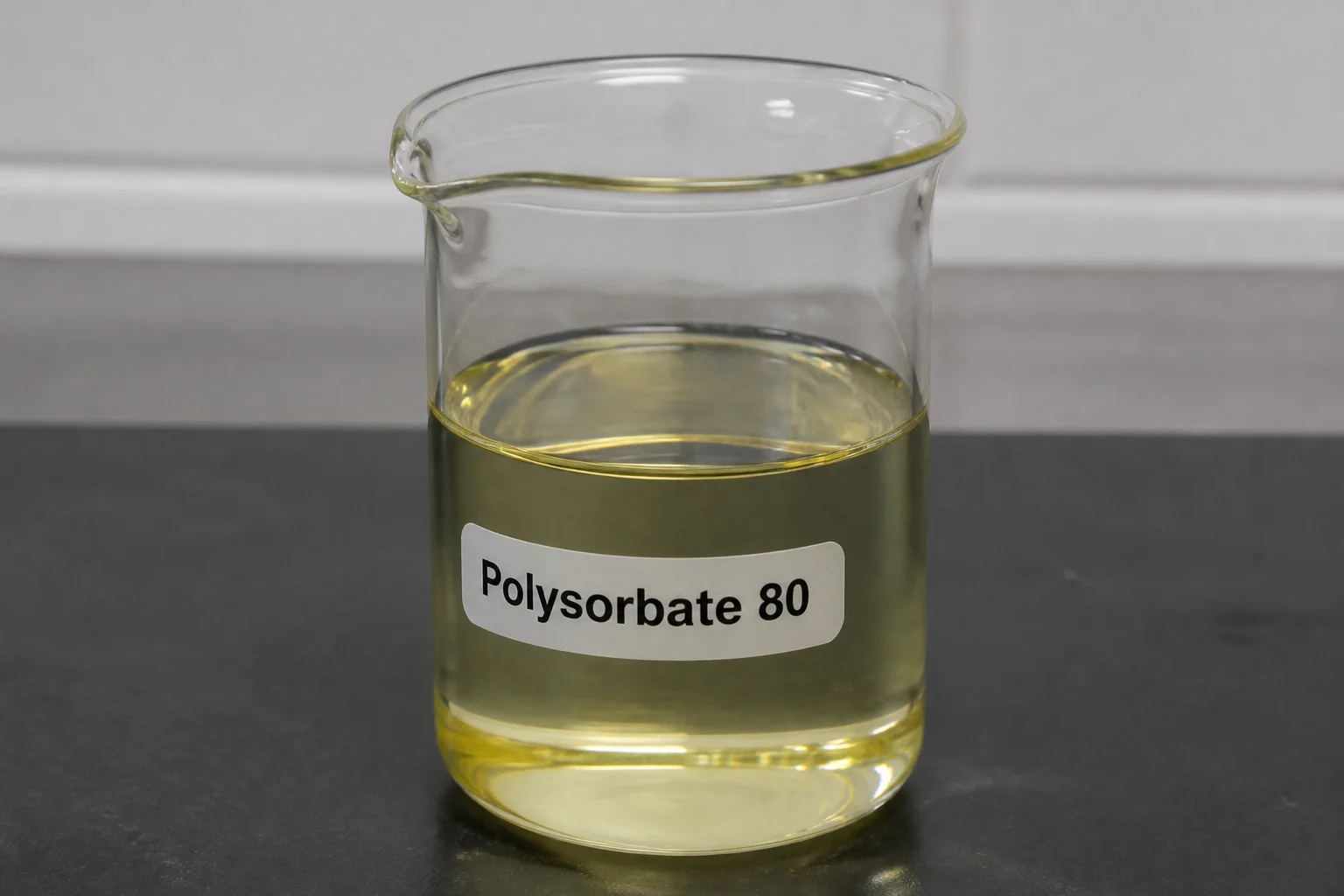
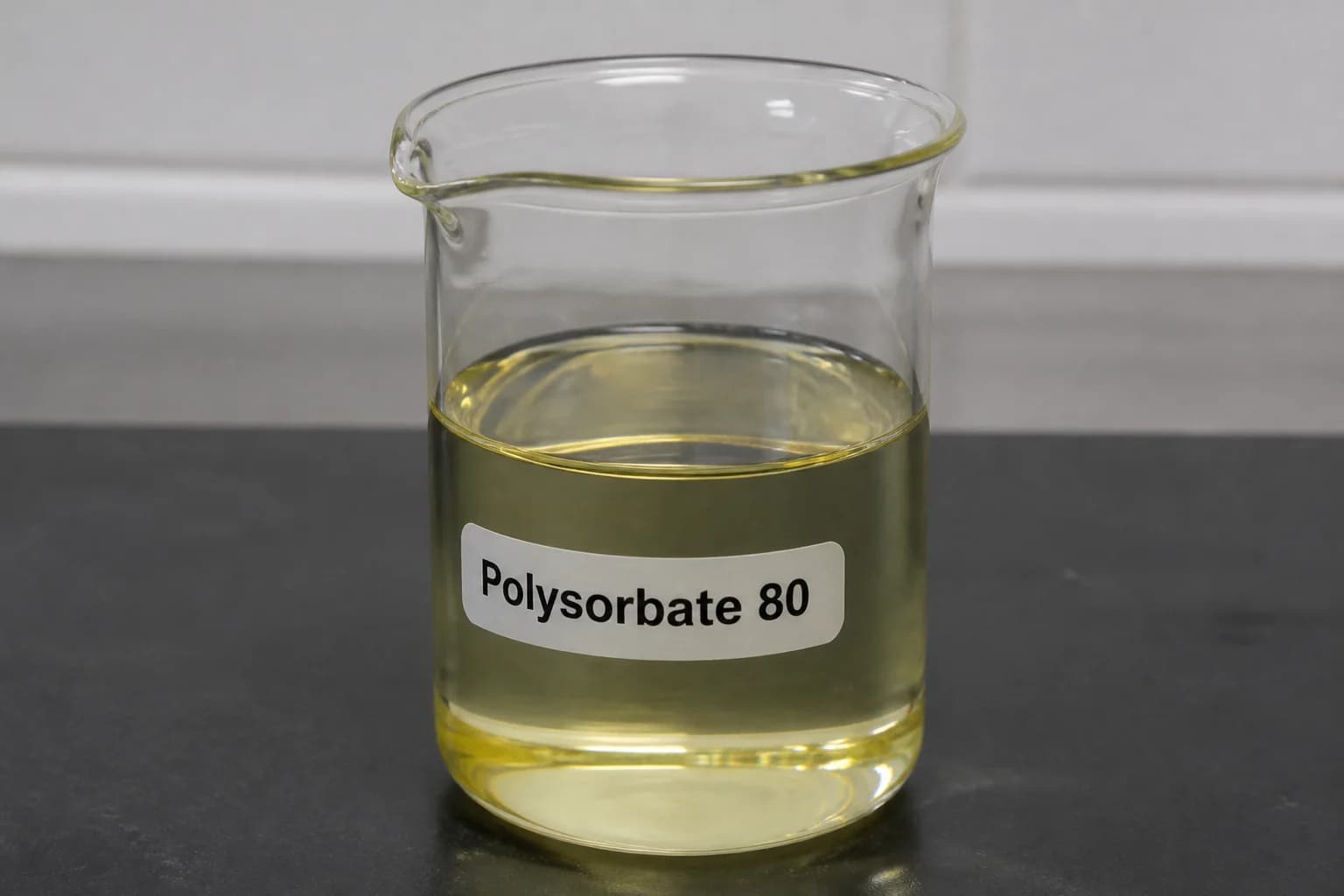
Polysorbate 80 (also called Tween 80 or polyoxyethylene sorbitan monooleate) is a nonionic surfactant synthesized from sorbitol and oleic acid. The “80” in its name indicates the oleic acid component, distinguishing it from polysorbate 20 (lauric acid) or polysorbate 60 (stearic acid). This amphipathic molecule has both water-loving (hydrophilic) and oil-loving (lipophilic) ends, letting it bridge ingredients that normally don’t mix.
Pharmaceutical scientists call polysorbate 80 an “excipient”—an inactive ingredient added to formulations for functional purposes rather than therapeutic effects. Don’t let the word “inactive” fool you though. Without excipients like polysorbate 80, many modern medications simply wouldn’t work. The active drug might be chemically perfect but unable to dissolve properly, too unstable for storage, or impossible to manufacture at commercial scale.
Primary pharmaceutical functions:
- Emulsifying oil-based drugs with aqueous solutions for uniform distribution
- Solubilizing hydrophobic (water-hating) compounds that won’t dissolve alone
- Stabilizing protein drugs against aggregation and denaturation
- Preventing surface adsorption that would reduce drug concentration
- Enhancing drug absorption across biological membranes
- Improving physical stability during manufacturing and storage
- Maintaining formulation integrity across temperature fluctuations
Injectable and Parenteral Formulations
Injectable medications present unique formulation challenges. Drugs going directly into bloodstream must be sterile, free from particles, stable in solution, and compatible with blood pH and osmolality. Polysorbate 80 addresses several of these challenges simultaneously, explaining why it appears in so many IV formulations.
The chemotherapy drug docetaxel (Taxotere) provides a classic example. Docetaxel doesn’t dissolve in water at all—it’s extremely hydrophobic. The original formulation mixed it 50/50 with polysorbate 80 and alcohol to create an injectable concentrate. When diluted with saline before infusion, polysorbate 80 keeps the drug molecules dispersed rather than precipitating into useless clumps.
Amiodarone, an antiarrhythmic medication, similarly depends on polysorbate 80 for IV formulation. The drug contains 2 mg of polysorbate 80 per mg of active ingredient, meaning a standard 5 mg/kg dose delivers 10 mg/kg of polysorbate 80. This high ratio reflects amiodarone’s poor water solubility—without aggressive solubilization, it simply can’t be given intravenously.
Key injectable applications:
- Cancer chemotherapy agents (docetaxel, paclitaxel formulations)
- Cardiac medications (IV amiodarone)
- Anesthetics and sedatives requiring solubilization
- Fat-soluble vitamins in parenteral nutrition (Vitamin E)
- Hormone treatments including estrogen formulations
- Antiemetics preventing chemotherapy-induced nausea
Protein Drug Stabilization
Biologics—drugs made from living cells—represent pharmaceutical’s fastest-growing sector. Monoclonal antibodies, therapeutic proteins, and enzyme replacement therapies all face a common problem: proteins are fragile. Physical stress from manufacturing, shipping, handling, or even just sitting in a vial can cause proteins to unfold (denature) or clump together (aggregate). Either outcome destroys therapeutic activity.
Polysorbate 80 protects proteins through multiple mechanisms. It forms a protective layer at liquid-air and liquid-container interfaces where proteins typically damage occurs. When vials get shaken during transport, polysorbate 80 prevents proteins from getting torn apart at these interfaces. Studies show polysorbate 80 dramatically reduces protein aggregation from mechanical stress.
However, polysorbate 80 in protein formulations comes with caveats. The compound undergoes degradation through auto-oxidation and hydrolysis, producing peroxides, fatty acids, and other breakdown products that can harm proteins. Managing this degradation through careful material selection, formulation pH optimization, and sometimes adding antioxidants represents an ongoing challenge in biologic drug development.
Vaccine Applications
Vaccines represent another critical polysorbate 80 application. Multiple vaccines approved in the United States contain polysorbate 80 as a stabilizing excipient, including influenza vaccines, hepatitis B vaccines, HPV vaccines, and more recently, the Janssen COVID-19 vaccine. Typical vaccine doses contain about 2.5 μg of polysorbate 80—an extremely small amount but functionally important.
In vaccines, polysorbate 80 serves multiple roles. It helps maintain antigen stability during manufacturing and storage. For vaccines using viral proteins or inactivated viruses, polysorbate 80 prevents these biological components from aggregating or adhering to container surfaces where they’d become ineffective. The compound also helps maintain uniform suspension in multidose vials where consistency matters for accurate dosing.
The safety track record for polysorbate 80 in vaccines is extensive. Billions of vaccine doses containing polysorbate 80 have been administered worldwide over decades. Severe allergic reactions specifically attributable to polysorbate 80 remain extremely rare—only isolated case reports exist despite massive population exposure. This safety profile contributed to regulatory comfort using polysorbate 80 in COVID-19 vaccine formulations developed under emergency timelines.
Polysorbate 80 Uses in Tablets and Oral Medications
Oral medications represent polysorbate 80’s largest application by product count. The compound appears in coated tablets, uncoated tablets, hard capsules, soft gel capsules, oral solutions, and suspensions. European data shows polysorbate 80 in over 3,000 authorized medicinal products, with oral formulations representing the majority.
In solid oral dosage forms, polysorbate 80 content varies dramatically—from as little as 0.02 mg per dose in some formulations to 66 mg per dose in others. This 3,000-fold range reflects different functional purposes and drug characteristics. Some formulations need just a trace to improve tablet coating, while others require substantial amounts to solubilize poorly water-soluble drugs.
| Oral Dosage Form | Polysorbate 80 Function | Typical Amount | Example Applications |
| Coated tablets | Coating uniformity and gloss | 0.1–2 mg/dose | Film-coated vitamin tablets |
| Soft gel capsules | Solubilizing fill material | 10–50 mg/dose | Vitamin E, CoQ10 supplements |
| Hard capsules | Improving powder flow | 0.02–5 mg/dose | Various drug capsules |
| Oral solutions | Solubilizing flavors/drugs | 5–30 mg/dose | Liquid medications |
| Oral suspensions | Wetting and dispersing agent | 2–15 mg/dose | Antibiotic suspensions |
Solubilizing Poorly Soluble Drugs
Many modern drugs suffer from terrible water solubility. The Biopharmaceutics Classification System (BCS) categorizes drugs partly by solubility, and a huge percentage of new chemical entities fall into Class II (low solubility, high permeability) or Class IV (low solubility, low permeability). Poor solubility creates a major problem—drugs that don’t dissolve in the gastrointestinal tract can’t get absorbed into bloodstream.
Polysorbate 80 improves bioavailability of poorly soluble drugs by forming micelles that solubilize drug molecules. When tablets containing polysorbate 80 dissolve in stomach or intestinal fluid, the polysorbate forms micelles that encapsulate hydrophobic drug molecules. This keeps the drug in solution long enough to reach absorptive surfaces in the intestines.
Research using Caco-2 cell models (simulating intestinal lining) showed polysorbate 80 increased permeability of digoxin, a cardiac medication. The mechanism involves polysorbate 80 interaction with cell membranes, transiently increasing permeability and allowing better drug absorption. This dual action—solubilizing the drug in intestinal fluid while enhancing membrane permeability—makes polysorbate 80 particularly effective for challenging formulations.
Softgel capsules for fat-soluble vitamins extensively use polysorbate 80. Vitamin E, CoQ10, omega-3 fatty acids, and similar supplements naturally resist water dissolution. Incorporating polysorbate 80 into the softgel fill creates self-emulsifying systems that disperse rapidly in the GI tract, significantly improving vitamin absorption compared to plain oil-based capsules.
Coating and Suspension Agents
Tablet coating represents a specialized polysorbate 80 application. Modern pharmaceutical tablets often receive thin polymer coatings that mask taste, protect active ingredients from moisture, enable controlled release, or simply make tablets easier to swallow. Polysorbate 80 in coating formulations helps achieve uniform coverage with smooth, glossy finishes.
During the coating process, liquid coating material sprays onto tumbling tablets. Polysorbate 80 reduces surface tension, allowing the coating to spread evenly rather than beading up. This prevents common coating defects like roughness, orange peel texture, or incomplete coverage. The surfactant also prevents adhesion between wet tablets during coating, reducing batch losses from tablets sticking together.
Oral suspension formulations use polysorbate 80 as a wetting and dispersing agent for powdered drugs. Many antibiotics and pediatric medications come as powders that pharmacists mix with water at dispensing. Without surfactants, hydrophobic drug particles clump together, float on surface, or settle into hard cakes. Polysorbate 80 ensures particles disperse uniformly throughout the liquid and stay suspended long enough for accurate dosing.
Safety Profile and Regulatory Status
Polysorbate 80 safety has been extensively evaluated by multiple regulatory agencies worldwide. The compound has been used in foods and pharmaceuticals for over 70 years, creating a massive database of exposure data. This long history enables confident safety assessments that newer excipients can’t match.
The European Food Safety Authority (EFSA) established an acceptable daily intake (ADI) of 25 mg per kg body weight per day for polysorbates as food additives. For a 70 kg adult, this translates to 1,750 mg daily—far higher than typical pharmaceutical exposures. The oral exposure from pharmaceutical products is estimated at about 1 mg/kg/day maximum, well below the ADI threshold.
Reproductive and developmental toxicity studies in rats and rabbits found no adverse effects on fertility, fetal development, or teratogenicity at doses up to 2,013 mg/kg body weight per day in drinking water. The no observed adverse effect level (NOAEL) supports safety even at exposures far exceeding what humans encounter from medications.
Safety considerations:
- Generally recognized as safe (GRAS) for food and pharmaceutical use
- Decades of human exposure data from foods, cosmetics, and medicines
- No evidence of carcinogenicity or genotoxicity in standard studies
- Rare hypersensitivity reactions possible in susceptible individuals
- Concerns exist about peroxide formation affecting protein stability
- High IV doses (>3 mg/kg) may enhance drug penetration into brain
- Premature infants showed sensitivity to IV vitamin E with polysorbate 80
Acceptable Daily Intake Limits
Regulatory limits for polysorbate 80 vary by route of administration and product type. For oral products, the 25 mg/kg/day ADI provides comfortable safety margins above typical exposures. Most oral medications deliver much less than 100 mg per day, well within safe limits even for daily, long-term use.
Injectable products face stricter scrutiny because polysorbates enter bloodstream directly, bypassing first-pass metabolism. The European Medicines Agency notes that while no specific maximum has been set for IV use, exposures should remain as low as reasonably achievable. Vaccine exposures of 2.5 μg per dose are so minimal that safety concerns don’t apply.
Pediatric safety receives special attention. The 38 infant deaths following IV administration of a high-polysorbate Vitamin E formulation in the 1980s raised serious concerns. Subsequent investigation identified that premature infants, particularly those under 1500g birth weight, showed increased sensitivity. This led to contraindications for high-dose polysorbate 80 IV products in neonates, though low-dose vaccine use remains approved.
Formulation Challenges and Solutions
Despite its widespread utility, polysorbate 80 presents formulation challenges that pharmaceutical scientists must address. The compound’s chemical instability—particularly oxidative degradation—represents the most significant ongoing issue affecting product development and shelf life.
| Degradation Pathway | Products Formed | Impact on Formulation | Mitigation Strategies |
| Auto-oxidation | Hydroperoxides, aldehydes | Protein oxidation, activity loss | Antioxidants, low-oxygen packaging |
| Hydrolysis | Free fatty acids (oleic acid) | pH changes, loss of micelles | pH optimization, cool storage |
| Light exposure | Peroxide radicals | Accelerated protein degradation | Amber vials, light protection |
| Metal catalysis | Various oxidation products | Unpredictable degradation | Chelating agents, high-purity materials |
Peroxide Formation and Protein Oxidation
Auto-oxidation of polysorbate 80 produces peroxides that pose serious risks to protein drugs. The polyoxyethylene chains in polysorbate 80 are susceptible to oxidation, particularly the ether linkages. Exposure to light, elevated temperatures, or trace metal contaminants accelerates this process, creating hydrogen peroxide and organic peroxides.
These peroxides attack susceptible amino acids in proteins—particularly methionine, cysteine, histidine, and tryptophan residues. Oxidation can alter protein structure, reduce therapeutic activity, and increase immunogenicity by creating neo-epitopes that the immune system recognizes as foreign. For monoclonal antibodies and other biologics where immunogenicity represents a major safety concern, polysorbate-mediated oxidation becomes a critical quality attribute.
The polysorbate “quality problem” reflects variability between different suppliers and even different batches from the same supplier. Polysorbate 80 is inherently heterogeneous—a complex mixture of different fatty acid esters, chain lengths, and structural variants. Residual peroxides and metal impurities vary unpredictably, making batch-to-batch consistency challenging.
Super Refined™ polysorbates represent one industry response to these challenges. Manufacturers like Croda Pharma use proprietary purification processes to reduce oxidative impurities including peroxides, aldehydes, and metal catalyst residues to exceptionally low levels. While more expensive than standard grades, super refined polysorbates provide superior stability for sensitive protein formulations and reduce shelf-life degradation.
Conclusion
Polysorbate 80 uses in pharmaceuticals extend across virtually every medication category, from simple oral tablets to complex protein biologics and lifesaving vaccines. This versatile excipient solves formulation challenges that would otherwise prevent many modern medicines from reaching patients. Its ability to emulsify, solubilize, stabilize, and enhance absorption makes it irreplaceable in pharmaceutical development despite the technical challenges it presents.
The safety profile built over 70+ years of human use provides confidence for continued application. Regulatory agencies worldwide have thoroughly evaluated polysorbate 80 and established it as acceptable for pharmaceutical use when properly formulated and dosed. While rare adverse reactions can occur and degradation chemistry requires careful management, the benefits clearly outweigh risks for the vast majority of applications.
For manufacturers requiring pharmaceutical-grade polysorbate 80, specialty surfactants, or other pharmaceutical excipients with complete quality documentation, Elchemy’s technology-driven platform connects buyers with verified suppliers across global markets. Founded by IIT Bombay engineer Hardik Seth and IIT Delhi engineer Shobhit Jain, Elchemy provides transparent access to USP/EP grade materials, certificates of analysis, MSDS documentation, and reliable supply chains supporting pharmaceutical manufacturing from generics through biologics and innovative drug development.