

At a Glance
- Equipment costs range from $300,000 to $1.5 million for industrial additive manufacturing systems
- Material expenses average $100-150 per kilogram with metal powders reaching $400-800 per kilogram
- Post-processing adds 30-50% to total production costs through labor, finishing, and quality control
- Skilled workforce shortage affects 71% of companies choosing traditional methods over AM
- Maintenance and downtime create hidden costs averaging 15-20% of operational budgets annually
- Pre-processing and support removal require specialized labor increasing per-part costs significantly
- Despite challenges, AM market projected to grow from $19.97 billion (2023) to $143.3 billion by 2033
- Aerospace applications see 80% time reduction and 30% cost savings when AM replaces traditional tooling
Additive manufacturing promised to revolutionize how we make things. The vision was clear—design a part on Monday, print it by Wednesday, and have it working by Friday. No expensive tooling, no minimum order quantities, just pure manufacturing freedom. Reality turned out more complicated.
Companies investing in 3D printing technology quickly discover that innovation comes with a price tag that goes way beyond the initial equipment purchase. Hidden costs lurk everywhere—in materials that cost more than expected, in skilled workers who are hard to find, in post-processing that takes longer than the actual printing. Understanding these cost challenges helps manufacturers make smarter decisions about when additive manufacturing makes sense and when traditional methods still win.
Understanding Additive Manufacturing Challenges
The additive manufacturing challenges facing companies today look very different from the technical problems engineers worried about a decade ago. Back then, the questions centered on whether the technology could produce parts with adequate strength or surface finish. Those technical issues are largely solved now—modern AM systems produce parts that meet or exceed traditional manufacturing standards in many applications.
Cost has become the new bottleneck. Survey data from Jabil shows that in 2021, pre- and post-processing costs topped the list of manufacturer concerns, replacing earlier worries about material selection. This shift signals maturity—the technology works, but making it economically viable for production volumes remains tricky.
The challenge isn’t just about sticker prices. It’s about total cost of ownership spread across equipment depreciation, material waste, labor for setup and finishing, maintenance, and the opportunity cost of tying up expensive machines for hours-long print jobs. A $500,000 machine sounds expensive until you realize traditional CNC mills cost similar amounts yet can’t create the complex geometries AM enables.
What makes this particularly frustrating is the inconsistency. AM proves incredibly cost-effective for some applications—custom medical implants, aerospace components with internal channels, tooling for injection molding. For others, it can’t compete with stamping, casting, or machining that’s been optimized over decades. Companies struggle to predict which category their products fall into without expensive testing and validation.
Equipment and Capital Investment Barriers
Walking into the AM market means confronting serious capital requirements. Industrial-grade metal printing systems from manufacturers like EOS, SLM Solutions, or 3D Systems start around $300,000 and climb past $1.5 million for production-scale machines. Polymer systems cost less—$50,000 to $500,000 depending on capabilities—but still represent major investments for most manufacturers.
Key equipment cost factors include:
- Base machine purchase price varying by technology (FDM, SLA, SLS, metal powder bed fusion)
- Installation requirements including specialized electrical, ventilation, and environmental controls
- Software licenses for CAD, slicing, simulation, and workflow management
- Safety equipment and containment systems especially for metal powder handling
- Spare parts inventory to minimize downtime from component failures
Initial Purchase Costs
The initial purchase decision involves more than just buying a printer. Companies need supporting infrastructure that often equals or exceeds the machine cost. Metal AM systems require inert gas atmosphere controls, powder handling equipment, and explosion-proof electrical systems. A $600,000 printer might need another $200,000 in facility modifications before it can run safely.
Multiple machines become necessary as production scales. Unlike traditional manufacturing where adding a second shift doubles capacity, AM machines run 24/7 already. Increasing output means buying another expensive system. This creates lumpy capacity increases that make financial planning difficult—you can’t buy half a printer to meet incremental demand growth.
Leasing options exist but come with their own complications. Monthly payments might ease cash flow, but lease terms typically run 3-5 years while AM technology evolves rapidly. Companies worry about being stuck with outdated equipment while competitors upgrade to faster, more capable systems. The technology hasn’t stabilized enough to make long-term equipment commitments comfortable.
Payback period calculations prove tricky. Traditional equipment justification relies on capacity utilization and volume projections. AM applications often involve low-volume, high-mix production where traditional ROI models don’t apply well. Finance departments struggle to approve investments that can’t show clear payback in 18-24 months.
Maintenance and Downtime Expenses
AM equipment requires regular maintenance that costs more than most manufacturers anticipate. Multi Jet Fusion printers need printhead and heating lamp maintenance running thousands of dollars annually. Stereolithography machines require resin tank replacement that can cost $2,000-5,000 depending on resin type. Powder bed fusion systems need regular calibration, optics cleaning, and atmospheric controls.
Downtime hurts more than direct maintenance costs. When a $750,000 machine sits idle waiting for parts, every hour represents lost production capacity that can’t be recovered. Supply chain disruptions that plagued 2020-2022 made this worse, with some replacement parts backordered for weeks. Companies learned painfully that having backup capacity means owning multiple machines.
Preventive maintenance schedules compete with production demands. Print jobs running 12-48 hours can’t easily be interrupted for routine service. This creates pressure to defer maintenance, which increases breakdown risk. Manufacturers walk a tightrope between maximizing utilization and preventing failures that cause longer outages.
The complexity of modern AM systems means in-house maintenance often isn’t feasible. Service contracts from equipment vendors provide support but add 10-15% to annual operating costs. Some companies pay $50,000-100,000 yearly for comprehensive service agreements on high-end systems. Trying to save money by skipping service contracts backfires when major repairs cost more than the contract would have.
Material Costs and Limited Options
Material expenses shock companies new to additive manufacturing. That $100-150 per kilogram for standard engineering plastics sounds reasonable until you calculate how many parts a kilogram produces. Metal powders hit $400-800 per kilogram for titanium or Inconel. Specialized materials like PEEK or biocompatible polymers reach similar levels.
Comparing material costs to traditional manufacturing proves complicated. A kilogram of steel costs $2-5 as raw stock but AM powder of the same alloy costs $80-150 per kilogram. The premium reflects the additional processing to create spherical particles with controlled size distribution, but it still means material represents 30-50% of part cost versus 10-20% in conventional manufacturing.
| Material Type | Cost per Kg | Typical Use | Reusability | |—|—|—| | Standard Plastics (PLA, ABS) | $20-50 | Prototyping, non-structural | Limited | | Engineering Polymers (Nylon, PC) | $80-150 | Functional parts, tooling | 50-70% recyclable | | High-Performance Polymers (PEEK, Ultem) | $300-600 | Aerospace, medical | 30-50% recyclable | | Aluminum Alloys | $80-120 | Automotive, consumer | 50-95% recyclable | | Stainless Steel | $80-150 | Industrial, medical | 50-95% recyclable | | Titanium Alloys | $400-800 | Aerospace, implants | 50-90% recyclable | | Nickel Superalloys | $600-1,200 | Turbines, extreme environments | 50-80% recyclable |
Powder and Resin Pricing
Material pricing varies wildly by supplier and purity requirements. Medical-grade materials command premiums of 30-100% over industrial grades for the same base chemistry. Aerospace applications requiring documented material certifications and traceability add another 20-50% to base costs.
Minimum order quantities create inventory challenges. Suppliers often require purchasing 20-50 kilogram lots when you might only need 5 kilograms for a specific job. This ties up capital in material inventory and creates waste if materials degrade before use. Polymer resins have shelf lives of 6-12 months, meaning unused material becomes scrap.
Proprietary material systems lock customers into specific suppliers. Some printer manufacturers only support their own materials or approved third-party options, limiting price competition. This vendor lock-in lets suppliers maintain high margins while users have limited negotiating power. Open systems exist but often void warranties if non-approved materials cause problems.
Material Waste and Reuse
Powder bed fusion processes generate significant unused powder after each build. While this powder can theoretically be reused, quality degrades with each cycle. Particles agglomerate, size distribution shifts, and contamination accumulates. Most operations mix 30-50% fresh powder with recycled powder to maintain quality, but this means 50-70% reuse at best.
Support structures in technologies like FDM and metal printing create pure waste. Parts might require support volume equal to 20-50% of the part volume itself. While some support structures can be recycled, they often can’t be reused as primary build material. For metal prints, support removal through machining generates chips that can’t easily be converted back to powder.
Chemical resins in SLA and DLP printing can’t be recycled at all currently. Failed prints, drained excess, and contaminated resin go straight to hazardous waste disposal at $2-5 per liter. A single large failed print might waste $200-500 in resin that has no recovery option.
Labor and Workforce Challenges
The skills gap in additive manufacturing represents one of the industry’s biggest long-term threats. Colleges and technical schools haven’t produced enough trained AM technicians, engineers, and operators to meet growing demand. Companies report that 71% have chosen traditional manufacturing over AM for specific projects simply because they lacked knowledgeable personnel.
Finding experienced AM professionals means competing with aerospace and medical device companies who can pay premium salaries. Entry-level AM technicians command $50,000-70,000 annually in many markets. Experienced engineers with 3-5 years AM background can demand $90,000-130,000. These salary levels exceed what many manufacturing companies budget for production positions.
Critical workforce skill requirements:
- Design for additive manufacturing (DFAM) understanding complex geometry optimization
- Software proficiency across CAD, simulation, slicing, and process monitoring tools
- Materials science knowledge for metal alloys, polymers, and composite behaviors
- Post-processing expertise in machining, heat treating, and surface finishing
- Quality control experience with CT scanning, coordinate measurement, and material testing
- Troubleshooting abilities for addressing print failures and process deviations
Training and Expertise Requirements
Building internal AM capability requires substantial training investment. Equipment vendors provide 3-5 days of basic operation training, but developing true expertise takes 6-12 months of hands-on experience. Companies must accept reduced productivity during this learning period while paying full salaries for staff still getting up to speed.
The complexity of AM processes means traditional manufacturing experience doesn’t translate directly. A skilled CNC machinist brings valuable knowledge but must unlearn assumptions about tool paths and material removal. The additive mindset—building up rather than cutting away—requires different thinking about part design, support strategies, and quality verification.
Cross-functional expertise becomes essential. Successful AM operations need people who understand mechanical design, materials science, computer programming, and quality control simultaneously. These renaissance technologists are rare and expensive. Most companies end up building teams where multiple people collectively provide needed skills rather than finding individuals with complete capability.
Ongoing education poses challenges as technology evolves rapidly. The processes that worked two years ago may be obsolete as new materials, software, and techniques emerge. Companies must budget for continuous training—conferences, webinars, equipment vendor updates—that keeps staff current. This represents 5-10% of labor costs on top of base salaries.
Additive Manufacturing Challenges Trends and Applications
Despite cost challenges, additive manufacturing adoption continues growing across specific application areas where the technology’s advantages justify premium pricing. The key to success lies in identifying applications where AM’s unique capabilities—geometric complexity, customization, lead time reduction—create enough value to overcome cost disadvantages.
Industry surveys show interesting shifts in where AM finds traction. Early adoption focused on prototyping where speed mattered more than unit cost. Current trends show movement toward production applications in aerospace components, medical implants, tooling, and custom industrial parts where traditional manufacturing fails or costs even more.
| Industry | Primary Applications | Key Drivers | Cost Justification || Aerospace & Defense | Engine components, brackets, ducting | Weight reduction, consolidation | Fuel savings exceed part premiums | | Medical & Dental | Implants, surgical guides, aligners | Patient customization, biocompatibility | Better outcomes justify costs | | Automotive | Tooling, fixtures, prototypes | Development speed, low-volume parts | Faster time-to-market value | | Industrial Equipment | Spare parts, custom tools, end-of-arm | On-demand production, obsolescence | Avoiding inventory and downtime | | Consumer Products | Eyewear, footwear, electronics | Mass customization, differentiation | Premium pricing for personalization |
Aerospace and Defense Adoption
Aerospace represents AM’s most mature production application. Companies like GE Aviation print fuel nozzles that consolidate 20 parts into one, saving assembly labor while improving performance through optimized internal geometries impossible to machine. The parts cost more per unit but deliver enough fuel savings over the engine’s lifetime to justify the premium.
Weight reduction drives aerospace AM adoption even when parts cost more. Aircraft operators will pay $300 more for a bracket that weighs 2 kilograms less than the machined version because fuel savings over the aircraft’s 25-year life exceed the initial premium. This calculation only works for aerospace—weight matters less in most applications where cheaper manufacturing wins.
Supply chain resilience emerged as an aerospace driver following pandemic disruptions. Printing critical spares on-demand at maintenance facilities beats waiting weeks for traditionally manufactured parts to arrive. The U.S. Navy demonstrated distributed printing between locations 8,000 miles apart, proving parts can be produced wherever needed from common digital files.
Defense applications increasingly leverage AM for low-volume specialized equipment where tooling costs kill traditional manufacturing economics. Producing 50 specialized radar components through AM might cost $800 each versus $400 each through machining—but machining requires $50,000 in tooling that pushes per-unit cost to $1,400. AM wins when volumes stay low.
Healthcare and Medical Devices

Medical device manufacturers found AM’s sweet spot in customization. Every person’s anatomy differs, making standardized implants compromise solutions. CT scans combined with AM enable perfectly fitted hip implants, dental crowns, and surgical cutting guides tailored to individual patients. Custom products command premium pricing that absorbs AM’s higher unit costs.
Dental applications represent AM’s highest-volume medical success. Clear aligners, crowns, bridges, and dentures production has shifted heavily to AM over the past five years. Companies like 3D Systems signed a $250 million, five-year contract for dental aligners—the industry’s largest AM production deal to date. Volume, automation, and premium pricing make economics work.
Bioprinting research continues despite remaining largely experimental. Printing living tissues for pharmaceutical testing exists today. Printing transplantable organs remains years away but could revolutionize medicine if costs can be controlled. Current bioprinting costs hundreds of thousands per small tissue sample, limiting applications to high-value research.
Surgical instrument companies use AM for complex devices that can’t be machined. Instruments with internal channels for fluid delivery, integrated sensors, or patient-specific geometries justify AM costs through improved surgical outcomes and reduced procedure times. A $3,000 custom surgical guide beats $50,000 in operating room time if it reduces surgery from four hours to two.
Post-Processing and Hidden Costs
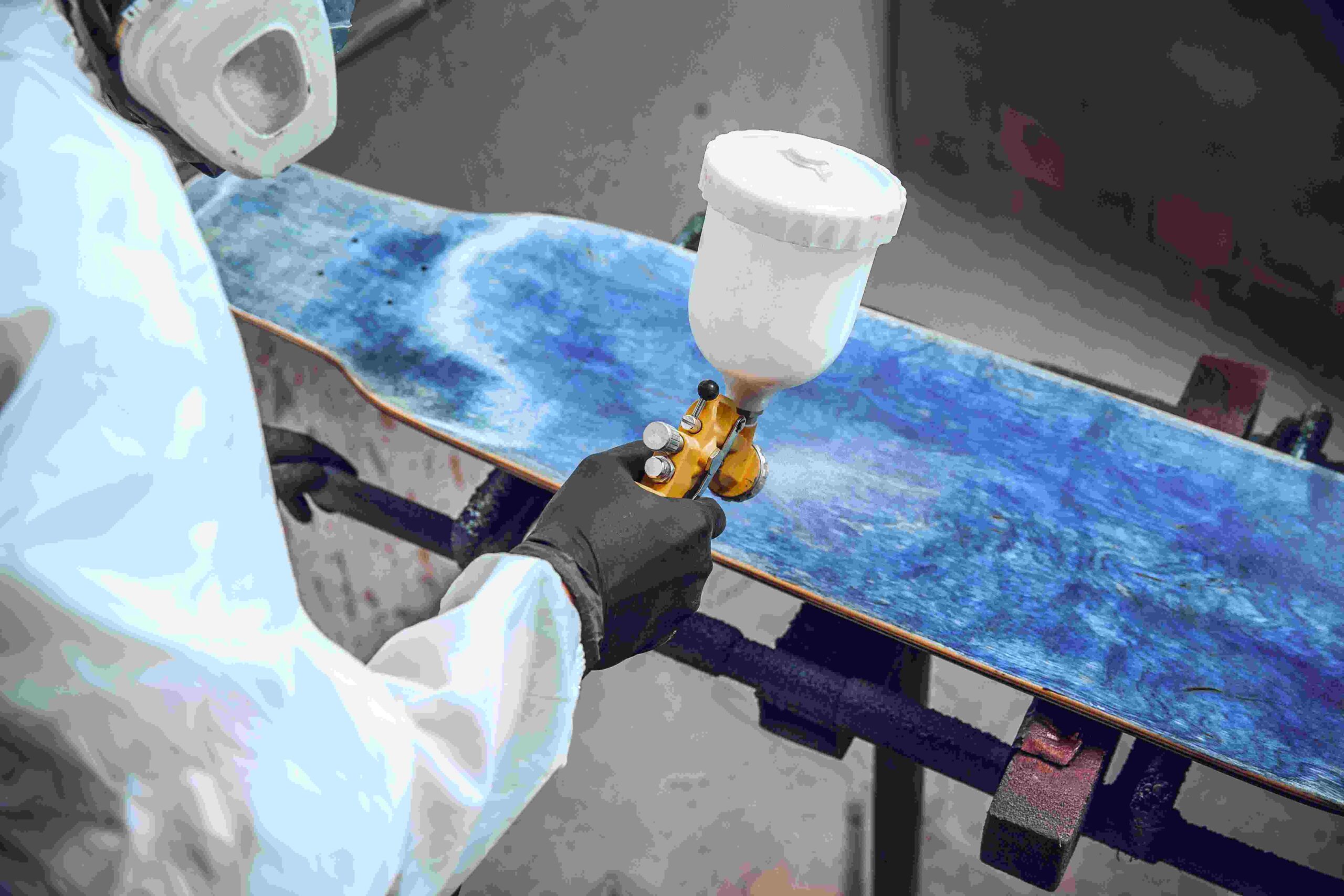
The time and cost after printing often surprises companies new to additive manufacturing. Marketing materials show parts coming off printers ready to use. Reality involves support removal, surface finishing, heat treatment, machining, inspection, and quality control that can take longer than the actual printing.
Common post-processing requirements:
- Support structure removal through manual tools, machining, or chemical dissolution
- Surface finishing via sanding, tumbling, vapor smoothing, or machining to meet tolerance and appearance specs
- Heat treatment for stress relief, property enhancement, or dimensional stability in metal parts
- Secondary machining for critical dimensions, threaded holes, or mating surfaces requiring precision
- Quality inspection including dimensional verification, material testing, and defect detection
- Cleaning and preparation for coating, painting, or assembly operations
Labor costs for post-processing add 30-50% to total part cost depending on complexity. A part requiring two hours of print time might need three hours of post-processing labor. At $40-80 per hour for skilled technicians, labor quickly exceeds material cost. This reality makes low-labor traditional processes more economical when they can achieve required results.
Automation of post-processing remains largely unsolved. Robot arms can remove some supports but lack the judgment humans apply to avoid damaging parts. Automated surface finishing works for simple geometries but struggles with complex shapes AM excels at creating. This automation gap means production scaling hits labor constraints even when printer capacity exists.
Quality control for AM parts costs more than traditionally manufactured equivalents. The layer-by-layer building process creates potential defects that don’t exist in machined or cast parts. Porosity, lack of fusion, residual stress, and dimensional variations require extensive inspection. CT scanning for internal defects costs $200-1,000 per part depending on size and resolution requirements.
Conclusion
Cost challenges in additive manufacturing aren’t disappearing anytime soon, but neither are the unique capabilities that make the technology valuable despite premium pricing. Success requires honest assessment of total costs—equipment, materials, labor, post-processing, and overhead—against the specific value AM delivers for each application. Companies that carefully match technology to need find AM economically viable. Those expecting it to simply replace traditional manufacturing at lower cost end up disappointed.
The industry is maturing past the hype cycle into pragmatic adoption based on business cases rather than technological excitement. Equipment costs will decline as competition increases and Chinese manufacturers enter markets. Materials will get cheaper as volumes grow and patents expire. Workforce development will improve as educational programs expand. But the fundamental economics—high capital intensity, material premiums, labor-intensive finishing—will remain AM’s defining cost characteristics.
Understanding these realities helps manufacturers make smarter decisions about when to embrace additive manufacturing and when traditional methods still make better sense. The technology won’t replace conventional manufacturing broadly, but it will continue capturing applications where its unique capabilities create enough value to justify the cost premium. That’s not the revolution originally promised, but it’s still a significant evolution in how we make things.
For manufacturers requiring specialty materials, processing aids, or chemical solutions supporting advanced manufacturing operations, Elchemy’s technology-driven platform connects buyers with verified suppliers across global markets. Founded by IIT Bombay engineer Hardik Seth and IIT Delhi engineer Shobhit Jain, Elchemy provides transparent access to technical specifications, quality documentation, and reliable supply chains supporting innovation from aerospace component production through medical device manufacturing and industrial applications requiring cutting-edge materials and processes.