

At a Glance
- Amphoteric surfactant derived from coconut or palm kernel oil
- Functions as foam booster, viscosity modifier, and co-surfactant
- Significantly milder than sulfates while enhancing their performance
- Biodegradable with favorable environmental profile
- Works effectively across wide pH range (3–12)
- Shows antimicrobial properties at higher concentrations
- Generally non-irritating but may sensitize some individuals
- Used at 1–5% concentration in most personal care formulations
Pick up nearly any sulfate-free shampoo these days and check the ingredient list. Chances are you’ll find lauryl amine oxide listed somewhere after the primary surfactant. This compound has quietly become one of personal care’s most valuable supporting players. It doesn’t grab headlines like sulfate-free cleansers or natural extracts, but formulators know it does something crucial: it makes gentler surfactants work better without compromising that luxurious lather people expect.
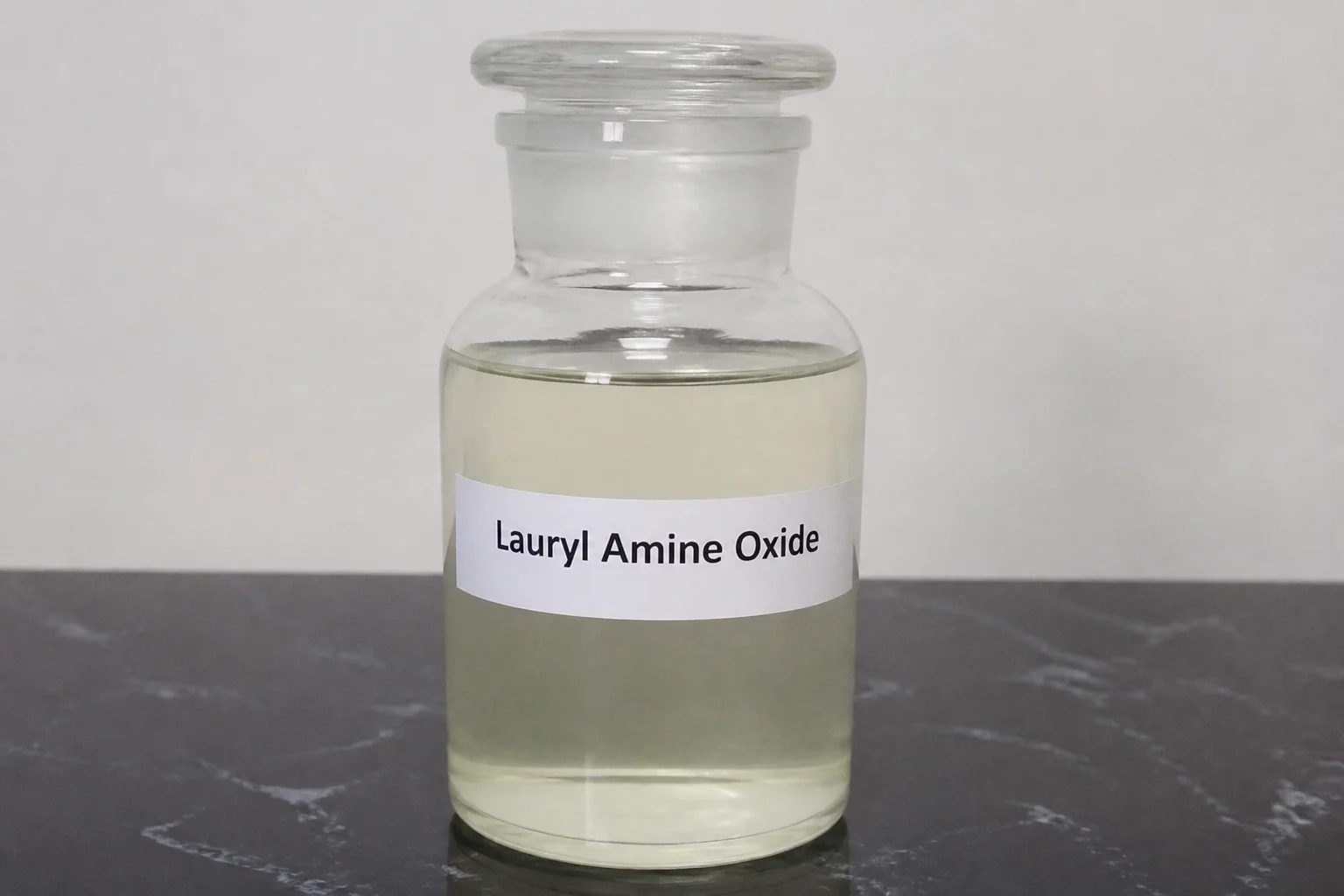
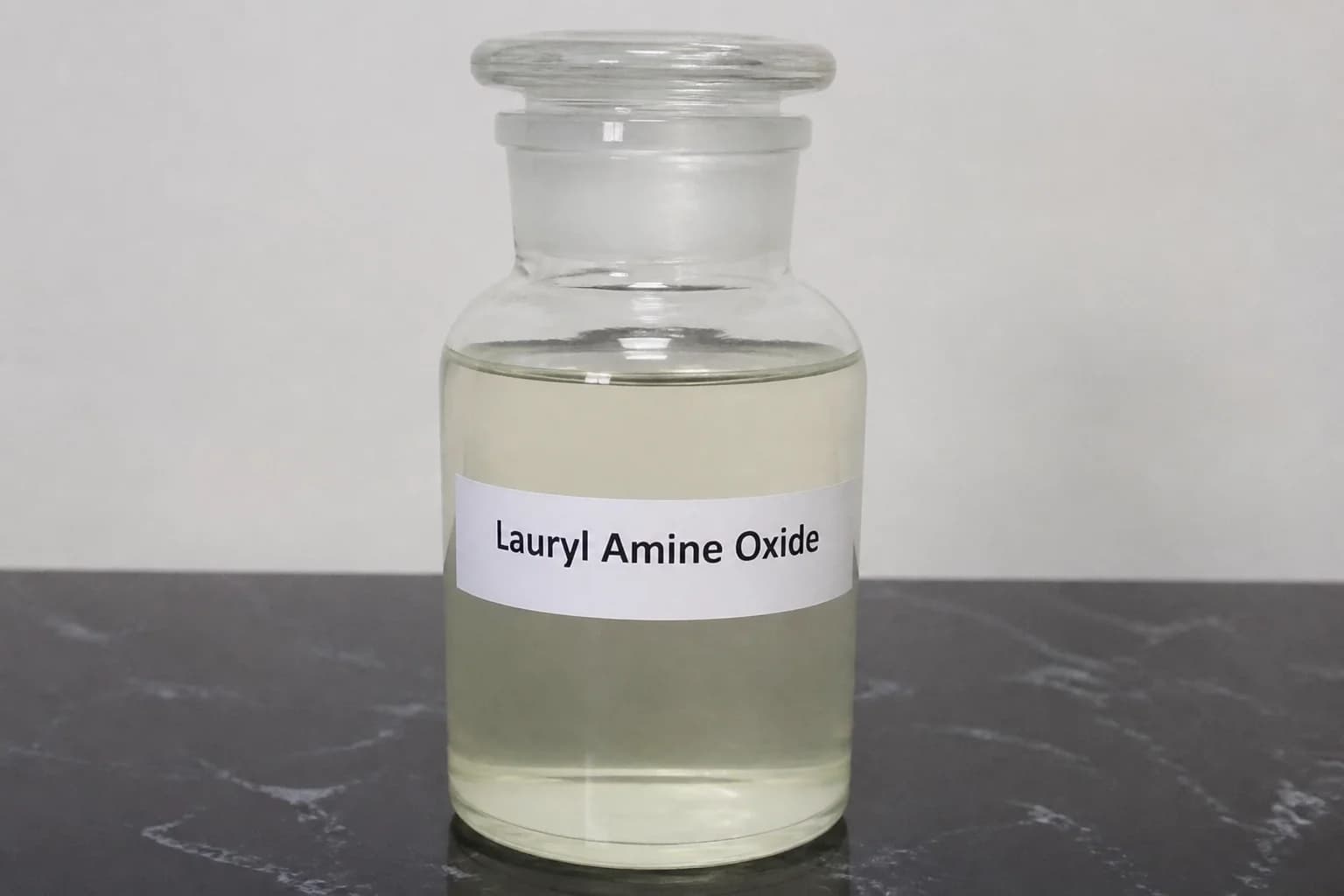
Lauramine oxide, also referred to as lauryl dimethylamine oxide or LDAO, is an amphoteric surfactant. It is typically a clear, pale yellow liquid with a subtle scent. The chemistry sounds technical, but the practical effects are straightforward. This ingredient turns thin, weak-foaming natural cleansers into products that feel as rich as conventional formulas. It helps oil and water mix properly. And it does all this while being genuinely mild on skin.
What Lauryl Amine Oxide Actually Does
The technical description calls it an amphoteric surfactant, which means it behaves differently depending on pH levels. Lauramine Oxide carries both a positive and a negative charge when dissolved in water. In acidic conditions, it acts more cationic. In alkaline formulations, it behaves like a non-ionic surfactant. This flexibility lets it work across nearly any formulation type.
As a surfactant, it effectively lowers the surface tension between different substances, facilitating efficient cleansing and foaming actions. Think of surface tension as an invisible barrier that keeps water and oil separate. Lauryl amine oxide weakens that barrier, letting water grab onto dirt and oils so they rinse away.
The molecule itself has two distinct ends. One end loves water, while the other prefers oils and greases. This dual nature allows Lauramine Oxide to gather at interfaces such as oil and water or liquid and air. At the oil-water boundary, it helps create stable emulsions. At the liquid-air interface, it forms bubbles that create foam.
The Foam Enhancement Effect
Foam doesn’t clean any better than a non-foaming cleanser, but people expect it. Products that don’t foam often feel ineffective, even when they are not.
Lauramine Oxide acts as a foam booster and stabilizer by strengthening bubble walls and improving foam longevity. In practical terms, adding 2–3% lauryl amine oxide to a mild surfactant like a glucoside transforms weak, short-lived foam into rich, stable lather that lasts through an entire wash cycle.
It also serves as a viscosity modifier in shampoos and shower gels. This slight thickening improves product handling, prevents runny textures, and helps maintain clear, visually appealing formulations.
Cleansing Performance Without Harshness

The real advantage of lauryl amine oxide is not aggressive cleansing, but improved performance of gentle surfactants without added irritation.
It helps cleanse hair without stripping natural oils, producing a mild, non-drying lather. Compared to traditional sulfates, it is less likely to bind strongly to skin and hair proteins, preserving the natural protective barrier and reducing dryness or irritation.
Lauryl amine oxide commonly appears alongside:
- Decyl glucoside
- Coco glucoside
- Sodium cocoyl isethionate
- Disodium laureth sulfosuccinate
It fills performance gaps in these gentle surfactants while maintaining a sulfate-free profile.
Lauryl Amine Oxide Uses Across Product Categories
Shampoos and Conditioners:
Used at 1–3% to enhance foam and improve cleansing feel. It also acts as an emulsifier in conditioning shampoos, helping blend oils, silicones, and water-based ingredients evenly.
Body Washes and Shower Gels:
Typically used at 2–4% to deliver rich lather and proper viscosity. Its emulsifying properties are essential in moisturizing body washes containing oils or butters.
Facial Cleansers:
Used at lower concentrations (0.5–2%) to ensure effective yet gentle cleansing without disrupting the skin’s acid mantle.
Household Cleaners:
Used at higher concentrations (3–5%) where grease removal and soil lifting are priorities. It functions mainly as a secondary surfactant supporting the primary cleaner.
The Antimicrobial Advantage
Lauryl amine oxide exhibits antimicrobial activity, allowing it to act as a co-preservative. While not strong enough to replace preservatives, it helps reduce microbial load and may allow lower preservative usage.
This activity is more pronounced at higher pH levels, where the molecule becomes more cationic and disrupts bacterial cell membranes.
Lauryl Amine Oxide Alternative Options
Cocamidopropyl Betaine:
Excellent foam and mildness but may cause sensitivity in some individuals.
Decyl Glucoside:
Extremely gentle and biodegradable but produces less foam and comes at a higher cost.
Lauryl Glucoside:
Better foaming than decyl glucoside but still less effective than lauryl amine oxide.
Cocamide DEA/MEA:
Highly effective foam boosters but face regulatory and safety concerns.
Comparison Table
| Alternative | Foam Boosting | Mildness | Viscosity Building | Environmental Profile | Common Concerns |
|---|---|---|---|---|---|
| Cocamidopropyl betaine | Excellent | Very good | Good | Biodegradable | Potential allergen |
| Decyl glucoside | Moderate | Excellent | Fair | Highly biodegradable | Expensive, less foam |
| Lauryl glucoside | Good | Excellent | Good | Highly biodegradable | Expensive |
| Cocamide DEA | Excellent | Good | Excellent | Moderate | Regulatory concerns |
| Lauryl amine oxide | Excellent | Very good | Very good | Biodegradable | Generally well-tolerated |
Environmental and Sustainability Considerations

Lauryl dimethyl amine oxide is readily biodegradable under both aerobic and anaerobic conditions and does not persist in waterways. Its plant-based origin supports sustainability goals, although responsible sourcing—particularly for palm-derived raw materials—is essential.
The shift from harsh surfactants toward lauryl amine oxide benefits both skin health and environmental impact.
Safety Profile and Regulatory Status
Amine oxides, including lauramine oxide, are considered safe for cosmetic use when formulated correctly. Most products use concentrations well below irritation thresholds.
Regulatory acceptance includes:
- Approved for cosmetic use
- Permitted in rinse-off and leave-on products
- No specific concentration limits beyond good manufacturing practices
Some individuals with sensitive skin may experience irritation at higher concentrations, though this is uncommon in standard formulations.
Conclusion
Lauryl amine oxide is a behind-the-scenes workhorse in modern personal care formulations. It enhances foam, improves texture, supports gentle cleansing, and aligns with sustainability goals. By bridging the gap between consumer expectations and skin-friendly performance, it plays a crucial role in the success of sulfate-free and mild personal care products.