

At a Glance:
- Xanthan gum prevents sauce separation and improves texture at low concentrations
- Works at any temperature without needing heat activation
- Typical dosage: 0.1-1% depending on desired thickness
- Extends shelf life by keeping ingredients suspended uniformly
- Proper mixing technique prevents clumping issues
Every sauce manufacturer faces the same problems. Ingredients separate during storage. Spices settle at the bottom. Oil floats to the top. Customers open bottles and see layered, unappetizing products. They shake vigorously before each use. Or worse—they don’t buy again.
Consistency matters just as much. Too thin and sauces run off food without clinging. Too thick and they won’t pour or spread properly. Getting texture right batch after batch is hard when you’re dealing with natural ingredients that vary.
Temperature makes things worse. A sauce that looks perfect at room temperature might turn watery when heated or gel when refrigerated. Shipping through different climates? Good luck maintaining quality.
This is where xanthan gum enters. It’s not new—food manufacturers have used it since the 1960s. But understanding how xanthan gum in sauces actually works helps explain why it became indispensable for shelf-stable products.
Why Xanthan Gum in Sauces Changed Everything
Before xanthan gum, manufacturers relied on starches, flour, or egg yolks to thicken sauces. These work but have limitations. Starches need cooking to activate. They break down under acid or enzymes. They don’t handle freeze-thaw cycles well. Some add flavor or cloudiness.
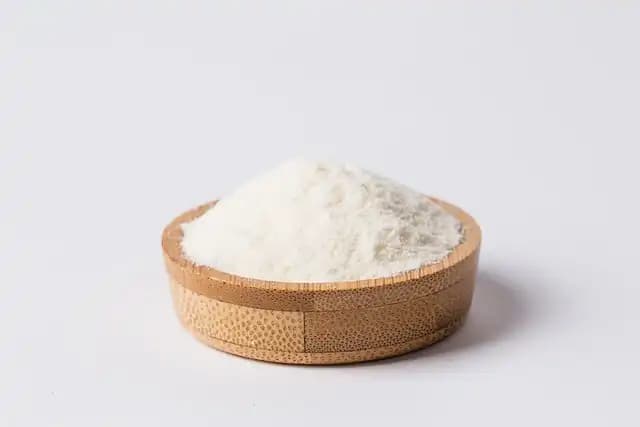
Xanthan gum solved multiple problems at once. It’s produced by fermenting simple sugars with Xanthomonas campestris bacteria. The result is a polysaccharide that creates viscosity at incredibly low concentrations—sometimes as little as 0.1%.
The compound shows unique rheological behavior called pseudoplasticity or shear-thinning. At rest, it’s thick. Apply force (stirring, shaking, pouring) and viscosity drops. The sauce flows easily. Stop the force and it thickens again. This is perfect for sauces that need to cling to food but still pour from bottles.
Plus xanthan gum works across extreme conditions. pH from 3 to 12. Temperatures from freezing to boiling. Salt concentrations up to 20%. Most thickeners fail under at least one of these stresses. Xanthan handles all of them.
The global market tells the story. Food-grade xanthan gum reached $431 million in 2024 and projects to hit $689 million by 2034. The thickening agent segment alone captured 44.8% of total xanthan gum applications. Manufacturers aren’t using it because it’s trendy. They’re using it because nothing else performs as well across so many variables.
How Xanthan Gum Sauce Thickener Actually Works
Understanding the mechanism helps manufacturers use xanthan gum more effectively and troubleshoot when things go wrong.
The Science of Thickening
At the molecular level, xanthan gum is a long-chain polysaccharide. When you add it to liquid, these chains hydrate—they grab water molecules and expand. The expanded chains tangle with each other, creating a network throughout the liquid. That network is what causes viscosity.
The beauty is you don’t need much. A 1% solution (1 gram per 100mL) creates significant thickness. Some applications use as little as 0.1% and still see noticeable effects. Compare that to cornstarch where you might need 3-5% for similar results.
The shear-thinning property comes from how those chains behave under force. When liquid sits still, the tangled network stays intact. Maximum viscosity. Apply shear force (stirring, pouring) and the chains temporarily align with the flow direction. Less tangling. Lower viscosity. The liquid flows. Remove the force and the chains return to random orientation. Viscosity rebounds.
This happens instantly. There’s no delay. That’s why xanthan gum doesn’t require resting time after mixing like some thickeners do.
Temperature and pH Stability Advantages
Most sauce manufacturers deal with varying storage conditions. Warehouse temperatures fluctuate. Shipping containers sit in hot sun. Customers refrigerate some products and leave others at room temperature.
Xanthan gum viscosity stays remarkably stable across temperatures. Heat it to boiling—no breakdown. Freeze it—no loss of function after thawing. This thermal stability is rare among food thickeners.
pH stability is just as impressive. Acidic sauces like vinaigrettes, BBQ sauce, and hot sauce all work fine. Alkaline applications too. The viscosity changes slightly across pH ranges but remains functional from pH 3 to pH 12. For comparison, starches start degrading below pH 4.5 and above pH 8.
Salt doesn’t bother it either. Traditional thickeners lose effectiveness in high-salt environments. Xanthan gum tested at 20% salt concentration stayed stable for months at elevated temperature. That’s critical for soy sauce, oyster sauce, and other Asian condiments where salt content exceeds 10%.
This stability means manufacturers can formulate once and know the product will perform consistently across distribution and storage.
Xanthan Gum Thicken Gravy and Other Sauce Applications
The versatility of xanthan gum means it shows up in almost every sauce category. But dosage and application method vary significantly.
| Sauce Type | Typical Dosage | Purpose | Key Benefit |
| Hot Sauce | 0.1-0.3% (1/8-1/4 tsp per cup) | Prevent separation, slight body | Keeps spices suspended |
| Salad Dressing | 0.3-0.5% | Stabilize emulsion, add body | Oil/vinegar stay mixed |
| BBQ Sauce | 0.4-0.6% | Viscosity, adhesion to meat | Clings to food, shiny appearance |
| Gravy | 0.3-0.8% | Thickening, smooth texture | Pour-able but coats food |
| Tomato Sauce | 0.2-0.5% | Prevent water separation | No watery liquid pooling |
| Soy/Oyster Sauce | 0.1-0.3% | Stability in high salt | Maintains viscosity over time |
| Cheese Sauce | 0.5-1.0% | Prevent oil separation, texture | Smooth, doesn’t break when heated |
| Curry Sauce | 0.3-0.7% | Uniform consistency | Spices don’t settle |
| Fruit Sauce/Coulis | 0.2-0.4% | Light thickening | Flows but coats desserts |
| Meat Glaze | 0.5-1.0% | High viscosity, adhesion | Sticks to meat surface |
Dosage Guidelines for Different Sauce Types
Getting the amount right matters more with xanthan gum than with traditional thickeners. Too little and you won’t notice any effect. Too much and texture turns unpleasantly slimy or mucus-like.
For thin sauces like hot sauce or light vinaigrettes, start at 0.1-0.3%. This adds subtle body without making the sauce noticeably thick. It’s enough to slow separation and keep particles suspended but won’t affect pourability.
Medium-bodied sauces like BBQ sauce, gravy, or pasta sauce work well at 0.3-0.7%. This range gives noticeable viscosity while maintaining flow. The sauce should coat a spoon but not cling heavily.
Thick sauces and glazes can go up to 1%, but beyond that you risk creating gel-like texture. Most applications don’t need more than 0.8% even for very thick products.
When manufacturers want to xanthan gum thicken gravy specifically, 0.5% is a good starting point. That’s roughly 1/2 teaspoon per 2 cups of liquid. Test and adjust from there. Some gravies need more body for meat dishes. Others should stay lighter for poultry.
The key is measuring accurately. Xanthan gum is powerful enough that small variations in dosage create noticeable differences in texture.
Common Application Mistakes and Solutions
The biggest complaint about xanthan gum is clumping. Someone dumps powder into liquid and ends up with white “seeds” or lumps floating around. The sauce looks terrible even though it thickened.
This happens because xanthan gum hydrates extremely fast. When powder hits liquid, the outside of each particle instantly absorbs water and swells. That creates a gel layer around the dry center. The gel prevents more water from reaching the core. You get a hydrated shell with dry powder trapped inside—that’s the clump.
Solution 1: Blend while adding. Use an immersion blender or regular blender running at high speed. Slowly sprinkle xanthan gum into the vortex. The shear force from blending breaks up particles before they can clump. This is the most reliable method for smooth results.
Solution 2: Pre-mix with dry ingredients. Combine xanthan gum with sugar, salt, or other dry ingredients before adding to liquid. The dry particles separate each other. When the mixture hits liquid, the spacing prevents individual xanthan particles from touching and forming clumps.
Solution 3: Make a slurry. Mix xanthan gum with a small amount of oil or glycerin first. The oil coats particles and slows hydration. Then stir this slurry into your sauce. It disperses more evenly.
Another mistake is adding xanthan gum to very hot liquid thinking it needs heat like cornstarch. It doesn’t. Heat won’t hurt it but isn’t necessary. Room temperature or even cold liquid works fine. Actually, adding to slightly cooled sauce sometimes prevents clumping because hydration happens more gradually.
Finally, people sometimes add too much trying to fix separation issues. If your sauce separates, the problem might not be viscosity. It might be emulsion failure or ingredient incompatibility. More xanthan gum won’t fix those issues and will make texture worse.
Shelf Life Benefits Beyond Just Thickness
Xanthan gum does more than make sauces thick. It fundamentally improves product stability during storage.
Separation Prevention
Sauces are often emulsions—oil suspended in water or water suspended in oil. Without stabilizers, these phases naturally want to separate. Gravity pulls denser ingredients down. Lighter oils float up. Give it time and you get distinct layers.
Xanthan gum’s viscosity slows this movement dramatically. In a thick network of hydrated xanthan chains, particles and droplets move much slower. What would separate in days without xanthan might take months with it. That extends shelf life from manufacturer to retailer to consumer.
This works even in extreme cases. Salad dressings with 75% oil stay mixed for months when 0.3-0.5% xanthan gum is added. Without it, they’d separate within hours.
Ingredient Suspension
Many sauces contain solid particles—spices, herbs, vegetable pieces, seeds. These want to settle. Heavy particles sink. Light particles might float. Either way, you end up with inconsistent product.
Xanthan gum creates what’s called “yield stress”—a minimum force needed before the sauce flows. Below that force, the sauce acts almost solid. Particles stay suspended because they can’t generate enough force to move through the gel network.
This is why hot sauces use xanthan gum even at very low concentrations. It’s not about making the sauce thick. It’s about keeping pepper particles and spices evenly distributed so every drop has consistent heat and flavor.
For manufacturers, this means:
- Less customer complaints about inconsistent product
- Longer shelf appearance quality
- Reduced settling during shipping
- Better presentation in clear bottles
All of this translates to better product performance and fewer returns.
Working With Xanthan Gum: Practical Manufacturing Guidance
Industrial-scale sauce production presents different challenges than home cooking. Volumes are larger. Mixing equipment varies. Quality control is tighter.
Mixing Techniques
High-shear mixers work best for dispersing xanthan gum in large batches. These create enough turbulence to hydrate particles quickly and evenly. Add xanthan gum slowly to the vortex while mixer runs at high speed. Most industrial kitchens already have equipment suitable for this.
For smaller pilot batches or specialty sauces, immersion blenders work well. The key is maintaining shear force while adding powder. Don’t dump it all at once.
Temperature during mixing doesn’t matter much. Room temperature is fine. Some manufacturers prefer slightly warm liquids (40-50°C) because viscosity develops more visibly, making it easier to judge when enough xanthan has been added.
Mixing time is short. Full hydration happens within 1-2 minutes of proper blending. Unlike starches that need extended heating and stirring, xanthan gum is ready immediately. This speeds up production cycles.
Quality Control
Batch-to-batch consistency requires measuring xanthan gum accurately. Industrial scales should measure to 0.1 gram precision at minimum. For large batches, this is straightforward. For small specialty runs, it requires more attention.
Viscosity testing should happen at consistent temperatures. Xanthan gum solutions show some temperature dependence. Test everything at the same temperature (usually 20-25°C) for comparable results.
Shelf stability testing should include temperature cycling. Store samples at different temps and check viscosity monthly. Good xanthan gum formulations should show minimal viscosity loss over 12+ months.
Some manufacturers pre-make concentrated xanthan gum solutions (2-5%) and add these to batches. This works but requires preservatives in the concentrate since hydrated xanthan gum can support microbial growth. Dry powder storage is simpler.
Conclusion
Xanthan gum in sauces delivers consistent viscosity, prevents separation, and extends shelf life at concentrations below 1%. Its temperature and pH stability make it suitable for almost any sauce formulation from acidic hot sauces to alkaline Asian condiments.
The key to successful use is proper dispersion technique and accurate dosage. Blend while adding to prevent clumping. Start with lower concentrations and adjust up. Test thoroughly before scaling production.
For manufacturers, xanthan gum remains one of the most cost-effective ways to improve sauce quality and shelf stability. The investment in product quality pays back through reduced returns, better shelf presentation, and increased customer satisfaction.
For businesses sourcing food-grade xanthan gum for sauce manufacturing, Elchemy connects you with certified suppliers providing high-purity xanthan gum meeting international food safety standards and specifications. Whether formulating hot sauces, gravies, dressings, or specialty condiments, explore sourcing options backed by quality documentation and reliable supply chains to support your production needs.