

At a Glance
- Five producers, six routes to market: of the glycerin manufacturers and suppliers below, ADM, Cargill, Emery, P&G Chemicals and Vantage refine it. The rest supply, distribute or source it.
- Glycerin is a co-product: most supply comes from biodiesel and oleochemical plants, so availability follows fat and oil processing.
- Certifications vary by lot and site: kosher, Kosher for Passover, halal, non-GMO, RSPO and organic options are not interchangeable.
- Test every lot for DEG and EG: FDA guidance followed fatal poisonings, so ask for the result on the certificate of analysis.
- This is a shortlist, not a ranking: the right route depends on grade, certification, pack and destination.
What you’ll learn: how to tell producers from distributors, match grade and certification to a route, and request quotes you can compare.
Introduction
A drum labeled glycerin can be a pharmaceutical excipient, a food ingredient or an industrial raw material. Buy the wrong grade, or an untested lot, and you risk a failed audit or a contaminated product.
Supply is global and tied to biodiesel. Market research puts glycerin volume at about 5 million tons in 2026, growing roughly 4.5% a year to 2031. It also says biodiesel supplies about 60% of glycerin and that North America stays structurally short, so imports persist.
This guide covers US industrial B2B sourcing. It shows who refines glycerin in the US, where distributors and sourcing partners fit, and which checks make quotes comparable. Start with your grade and certification, then pick the route.
Request a Quote with your grade, certification, volume and destination to start a documented review.
Who makes glycerin in the USA?
Five companies on this list refine glycerin in the US: ADM, Cargill, Emery Oleochemicals, P&G Chemicals and Vantage. Cargill refines at Iowa Falls, Iowa and Kansas City, Missouri. P&G Chemicals and Emery operate in Cincinnati, and Vantage in Chicago. Every other company here supplies or distributes.
How this list was selected
We screened glycerin suppliers against five gates: a first-party source, a stated commercial role, a US delivery route, a stated grade or pack, and a quote or documentation path. All eleven companies passed. Inclusion is a starting point. It is not a promise of stock, certification or coverage.
Role evidence last checked: 5 October 2026. Product ranges and certifications change, so confirm them on the day you issue an RFQ.
Why Elchemy is listed first. Elchemy publishes this guide, so weigh that. We list it first for one reason. With North America short of glycerin, imports and second sources are part of normal US supply, and that is the role Elchemy plays. It is a sourcing partner, not a US producer. The other ten companies follow in alphabetical order. The order is not a ranking by capacity, quality, price, availability or delivery speed.
Where US glycerin comes from
Glycerin is released when fats and oils are split into fatty acids, made into soap, or converted into biodiesel. Refiners then purify the crude. Read how glycerin is made for the chemistry.
| Producer | US site | Source or route | Documented grades |
| ADM | Confirm with supplier | Refines crude from edible vegetable oil | USP-NF for excipient and food use |
| Cargill | Iowa Falls, IA and Kansas City, MO | Vegetable oil; also supplies crude and technical | 99.7% USP, kosher USP, USP excipient |
| Emery Oleochemicals | Cincinnati, OH | Splits natural oils and fats | Refined USP 99.7%; technical 99.7% |
| P&G Chemicals | Cincinnati, OH (also Kuantan, Malaysia) | Oleochemical refining | USP, FCC and EP; kosher and RSPO mass balance options |
| Vantage | Chicago, IL | Transesterified vegetable oils, then distillation | USP vegetable, kosher USP, API-grade |
Who we left out, and why
Three kinds of names show up on lists of US glycerin producers but not here.
- Small-pack retail sellers. Marketplace and hobby-supply listings serve consumers, not industrial buyers.
- Non-US refiners on global rankings. Southeast Asian and Brazilian refiners supply US imports, but they fall outside this US shortlist.
- Names we could not verify. Some companies in older market reports have no current, first-party glycerin source, so we did not list them.
Grade, certification and delivery checks before an RFQ
Glycerin suppliers all quote CAS 56-81-5, so the label tells you little. Start with the end use, then request the grade and certifications that match it.
| Buyer requirement | What to request | Do not assume |
| Pharmaceutical and excipient | USP or EP monograph documents, a DEG and EG result, and site cGMP evidence | A food or technical lot meets pharmaceutical needs |
| Food and flavor | FCC and USP documents, plus kosher or halal certificates if required | A kosher certificate on one grade covers every grade |
| Personal care | USP or EP documents, the source oil, and RSPO or non-GMO paperwork if needed | “Vegetable” means palm-free or non-GMO |
| Industrial and technical | A technical specification with assay, water and color | Technical glycerin has USP certification |
| Organic use | OMRI or USDA organic documents for the exact grade | “Natural” means organic |
Kosher glycerin and halal options exist, but they attach to specific grades and sites. For uses in food and pharma, see refined glycerine uses.
If you are deciding between source types, glycerin versus vegetable glycerin explains the difference.
What does a typical glycerin specification look like?
Published specifications vary by grade, so treat these ranges as orientation only. Buy against the current TDS from your supplier.
| Parameter | Range seen in published specifications | Why it matters |
| Assay (glycerin content) | About 99.5% to 99.8% minimum for refined USP grades | Sets the grade tier and end-use fit |
| Water | About 0.2% to 0.8% maximum | Affects viscosity, stability and pharmaceutical suitability |
| Chlorides | About 10 ppm maximum | Matters for pharma and sensitive formulations |
| Sulfates | About 20 ppm maximum | A purity indicator for refined grades |
| Color | About 5 to 10 APHA or Pt-Co maximum | A quick quality check on receipt |
| DEG and EG | 0.10% maximum in the USP identity test | A safety limit, not a quality preference |
DEG and EG testing: the one check not to skip
Diethylene glycol (DEG) and ethylene glycol (EG) are toxic contaminants. FDA reports fatal poisonings from medicines made with contaminated components, and in May 2023 it issued FDA guidance on DEG and EG testing covering glycerin and other high-risk ingredients.
Three steps protect you:
- Ask for a lot-specific DEG and EG result on the certificate of analysis, not a general statement.
- Confirm the method matches the USP identity test.
- Ask about chain of custody for repackaged or traded material.
Pail, drum, tote or tanker: choosing a pack format
Glycerin is generally not regulated as hazardous for US transport, according to CORECHEM, so pack choice is mostly about volume and handling. Confirm net weight in writing, because drum sizes differ.
| Format | Size seen in supplier listings | Best for |
| Drum | About 550 to 570 lb (CORECHEM, Univar) | Small production runs and trials |
| IBC or tote | About 2,200 to 2,700 lb (Univar, CORECHEM) | Regular mid-size demand |
| Bulk tank truck, rail or isotank | Delivered on quote (Vantage, Altiras, CORECHEM) | Recurring volume |
Glycerin Manufacturers and Suppliers to Consider
This is a role-verified shortlist, not a ranking by capacity, quality, price, availability or delivery speed. Elchemy publishes this article and appears first. The other ten companies are in alphabetical order.
| Company | Verified commercial role | What buyers research it for | Ask before RFQ |
| Elchemy | Supplier / sourcing partner | Second source and documented imports | Which source, grade, certification and documents fit? |
| ADM | Producer | USP-NF for excipient and food use | Which refinery supplies my lane? |
| Alliance Chemical | Supplier | USP glycerin in smaller lots | Which pack sizes and lot documents apply? |
| Altiras Chemicals | Supplier / distributor | Certification options and bulk formats | Which certification and source oil apply? |
| Cargill | Producer | Vegetable USP, crude and technical grades | Which refinery and grade serve my lane? |
| CORECHEM | Supplier / distributor | Drums, totes and tankers in the Eastern US | What is freight outside its core area? |
| Emery Oleochemicals | Producer | Refined USP and organic-use technical grade | Which grade and documents apply? |
| Peter Cremer North America | Oleochemical supplier | Glycerin alongside fatty acids and esters | Who is the producer of record? |
| P&G Chemicals | Producer | Superol and MOON brands, kosher and RSPO options | Which refinery supplies the quoted grade? |
| Univar Solutions | Supplier / distributor | P&G-made USP glycerin in drums and IBCs | Who is the producer, and which bulk lanes apply? |
| Vantage Specialty Chemicals | Producer | USP vegetable, kosher and API-grade glycerin | Which grade, site and documents apply? |
Elchemy: glycerin supplier and sourcing partner
Role: supplier / sourcing partner. Elchemy does not run a US glycerin refinery. It works with manufacturers across more than one origin and quotes US buyers on the grade, certification and pack they specify. Its job is to make an imported or second-source purchase safer: compare sources, check documents and line up a backup. Elchemy publishes technical and safety data sheets for its glycerine and states that its USP and Ph.Eur. grade is tested for DEG and EG, with the limit confirmed on the certificate of analysis. Availability and commercial fit are confirmed case by case.
Best for: a second source, imported material with full documentation, or a sample to test before a volume order.
Not the best fit for: tanker volumes direct from a US refinery, or next-day pails in one region.
Request a Sample to test a grade against your current supplier before you commit to volume.
ADM: producer of USP-NF glycerin
Role: producer. ADM lists USP-NF glycerin for excipient and food use, refined from crude glycerin made from edible vegetable oil. Its specification shows 99.7% minimum glycerin, 0.3% maximum water and a color limit of 10. It lists FCC, GRAS, USP and USDA BioPreferred credentials. Ask which refinery supplies your lane, and request the certificate for the exact lot.
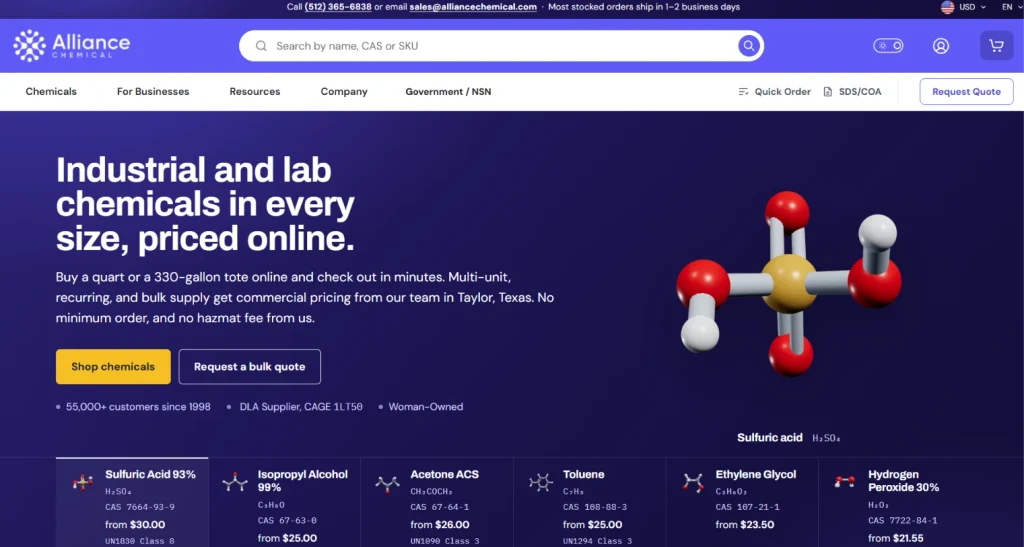
Alliance Chemical: supplier of USP glycerin
Role: supplier. Alliance Chemical, based in Taylor, Texas, publishes a USP-grade glycerin data sheet showing a 99.8% assay with low chloride and heavy-metal values. It suits smaller industrial and laboratory lots. Ask for the lot certificate, the pack sizes and the source of the material.
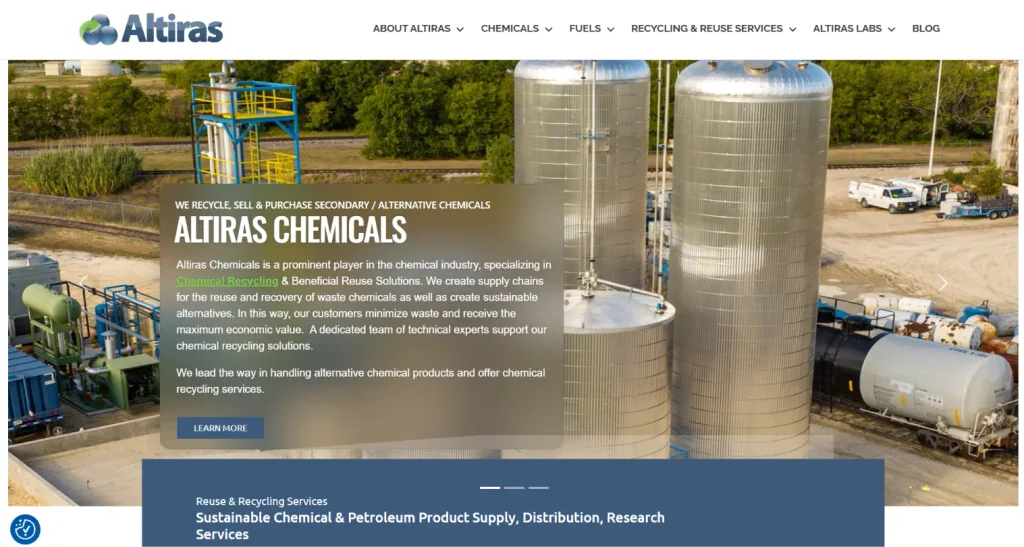
Altiras Chemicals: supplier and distributor
Role: supplier / distributor. Altiras supplies USP and technical glycerin and lists kosher, Kosher for Passover, non-GMO, RSPO mass balance, halal and organic options. It ships in bulk rail, truck, isotank, flexitank, IBC and drum, and it also offers surplus material. Ask which certification applies to your lot and which source oil it comes from.
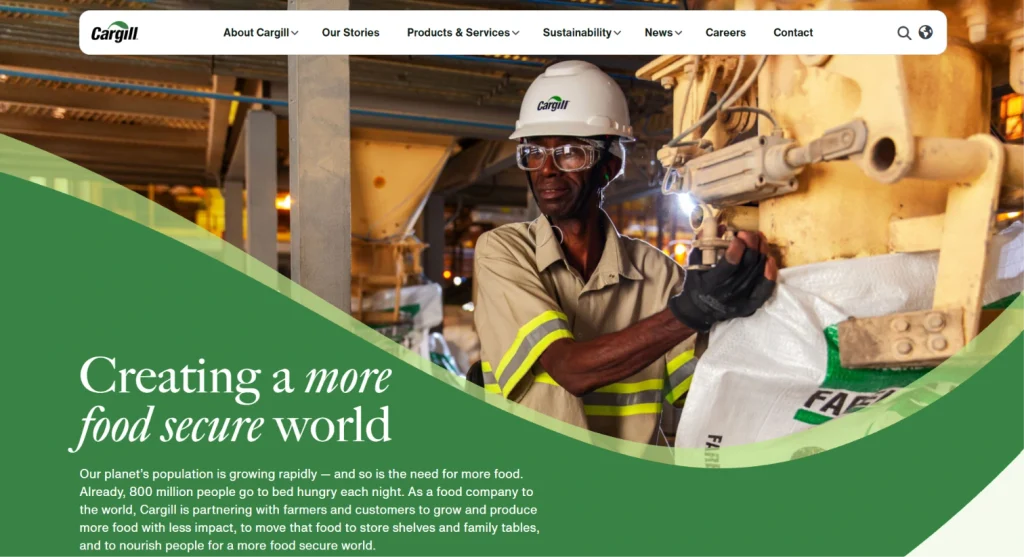
Cargill: glycerin manufacturer
Role: producer. Cargill states that it makes vegetable 99.7% USP glycerin at refineries in Iowa Falls, Iowa and Kansas City, Missouri. It also supplies crude and technical glycerin, and it publishes documents for USP kosher and USP excipient grades. It suits larger, recurring demand. Ask which refinery serves your lane and which grade documents apply.
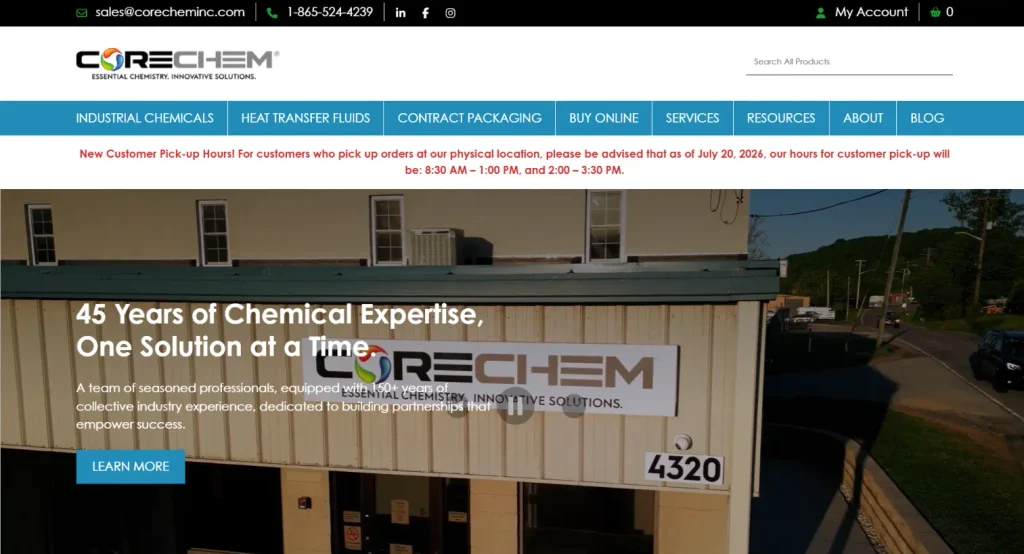
CORECHEM: regional supplier and distributor
Role: supplier / distributor. CORECHEM describes itself as a single-location distributor shipping primarily in the Eastern United States. It lists 99.5% USP glycerin in 550 lb drums, 2,700 lb totes and tankers, and a 48% glycerin in carboys and drums. Ask which grade ships and what freight applies outside its core area.

Emery Oleochemicals: producer of refined and technical glycerin
Role: producer. Emery Oleochemicals, based in Cincinnati, makes glycerin by splitting natural oils and fats. It offers refined USP and technical grades, both at 99.7%, and its technical grade is OMRI listed for organic use. It suits buyers who need a documented organic-use route. Ask which grade and documents apply to your application.

Peter Cremer North America: oleochemical supplier
Role: supplier. Peter Cremer North America, headquartered in Cincinnati, lists glycerin alongside fatty acids, fatty alcohols and methyl esters. It suits buyers who already source oleochemicals and want one supplier. Ask which grade it quotes and who the producer of record is.
P&G Chemicals: producer with kosher and RSPO options
Role: producer. P&G Chemicals lists USP, FCC and EP glycerin under its Superol and MOON brands and says its range includes kosher, GFSI and RSPO mass balance options. Univar’s listings name refineries in Cincinnati and Kuantan, Malaysia, so ask which refinery supplies the grade you are quoted. Confirm kosher glycerin status for the exact brand and lot.
Univar Solutions: supplier and distributor
Role: supplier / distributor. Univar lists P&G-made USP and FCC glycerin 99.7% for US buyers in a 570 lb drum and a 2,200 lb IBC. Pricing is by quote. It suits buyers who want producer-made material through a glycerin distributor. Ask for the producer of record, the bulk lanes and the SDS and technical data for each grade.
Vantage Specialty Chemicals: producer of USP vegetable glycerin
Role: producer. Vantage sells VYCERIN USP vegetable glycerin, including a kosher grade, made from transesterified vegetable oils at an FDA-registered Chicago site. It ships in bulk tank trucks, drums and totes. In 2025 it filed a drug master file for API-grade glycerin. Ask which grade and documents suit your application.
Producer or glycerin distributor: which route fits?
Neither route wins on every count. A producer controls the product and the plant. A distributor adds pack sizes, local delivery and grade breadth.
| Decision factor | Producer route may suit | Distributor route may suit | Buyer input |
| Producer of record | Direct line to plant specifications and change notices | Needs confirming for each grade | Required origin and site |
| Volume and cadence | Recurring tanker or large-lot demand | Drums, totes and mixed lots | Annual volume and order size |
| Certification | Documents tied to one site | Several certifications from one account | Kosher, halal, RSPO or organic needs |
| Continuity | Direct contract and allocation talks | Depends on the distributor’s producer sources | Backup supply plan |
| Region | Plant-to-site freight | Local stock points and regional delivery | Ship-to location |
For the wider trade-offs, see manufacturers versus distributors.
What a glycerin supplier needs in an RFQ
- Name the grade. State USP, EP, FCC, technical or crude, with assay and water limits.
- State the certifications. Kosher, Kosher for Passover, halal, non-GMO, RSPO or organic, for the exact lot.
- Name the source oil. Soy, palm, corn or tallow, if your claims depend on it.
- Request the DEG and EG result. Ask for it on the lot certificate of analysis.
- List the documents. Ask for the SDS, TDS and lot COA. Use the supplier-approval checklist for the full review.
- Define demand and delivery. Give first order, annual volume, pack format, ship-to location and receiving constraints.
- Fix the commercial basis. Request MOQ, Incoterm, freight responsibility, quote validity and lead-time basis.
Pair the RFQ with these supplier selection checkpoints so every quote is scored on the same evidence.
What changes a bulk glycerin quote
Glycerin is mostly a co-product, so supply and price follow biodiesel and oleochemical output and the cost of vegetable oils. Quotes also move with grade, certification, pack format, volume, destination and freight.
A lower number can reflect a different grade, certification or source. Ask each supplier to quote the same specification and delivery basis. Our bulk glycerine supplier guide covers the global buying channels.
If material is imported, also confirm TSCA compliance with the supplier.
Five sourcing mistakes to avoid
- Comparing quotes on different grades. A technical quote and a USP quote are not comparable.
- Skipping the DEG and EG result. A general purity claim does not replace a lot test.
- Assuming a kosher certificate covers every lot. Certification attaches to specific grades and sites.
- Treating “vegetable” as a full claim. Palm, soy, corn and tallow sources matter for vegan, RSPO and non-GMO claims.
- Relying on one source. Crude-price swings and plant outages can tighten supply, so qualify a backup early.
Choosing your route: a decision framework
- Choose a producer route (ADM, Cargill, Emery, P&G Chemicals or Vantage) if you run recurring volume of a defined grade and can meet account and delivery terms.
- Choose a distributor or supplier (Alliance, Altiras, CORECHEM, Peter Cremer or Univar) if you need drums, totes, mixed grades or regional delivery.
- Choose a sourcing partner like Elchemy if you want a second source, imported material with full documentation, and the producer of record confirmed.
Neither route is universally better. Approve the documented product and delivery route, not the label.
FAQs
Who manufactures glycerin in the USA?
ADM, Cargill, Emery Oleochemicals, P&G Chemicals and Vantage are the five producers on this list. Cargill refines in Iowa Falls and Kansas City, P&G Chemicals and Emery operate in Cincinnati, and Vantage in Chicago. Confirm the producer of record and supplying refinery before you order, because distributors often resell their material.
Is vegetable glycerin different from regular glycerin?
Chemically it is the same molecule. The difference is the source: vegetable glycerin comes from plant oils, while other glycerin can come from tallow or biodiesel. Source matters for vegan, kosher, halal and RSPO claims, so ask for the source oil and the certificate for the exact lot.
What is glycerin a byproduct of?
Glycerin is a byproduct of biodiesel production, fat splitting and soap making. Biodiesel supplies roughly 60% of global glycerin, according to Mordor Intelligence. Because it is a co-product, availability and price follow biodiesel and oleochemical output and vegetable oil costs rather than stand-alone glycerin demand.
Where can I buy glycerin in bulk?
You can buy glycerin in bulk from a refiner, an industrial distributor or a sourcing partner. Refiners fit recurring volume, distributors fit drums and totes, and a sourcing partner compares quotes and imports for you. Choose by grade, certification and destination, and confirm bulk availability in writing before you commit at scale.
What is DEG contamination, and how do I check for it?
DEG is diethylene glycol, a toxic contaminant that has caused fatal poisonings when it entered medicines. Ask for a lot-specific DEG and EG result on the certificate of analysis, confirm it follows the USP identity test, and ask about chain of custody for repackaged material. Do not accept a general purity statement.
What should a glycerin RFQ include?
A glycerin RFQ should state the grade, certifications, source oil, DEG and EG requirement, volume, cadence, destination, pack format and required documents. Add the Incoterm, quote validity and a request for the producer of record. This lets every supplier quote the same product on the same basis.
Can Elchemy source glycerin for US buyers?
Yes, for a defined requirement. Elchemy works with manufacturers and quotes on the grade, certification, pack and destination you specify, with data sheets and samples available. Share your grade, volume, destination, packaging and document needs, and the team confirms availability and commercial fit case by case. Elchemy is a sourcing partner, not a US producer.
Conclusion
The safest way to compare glycerin manufacturers and distributors is to fix the grade, certification and DEG and EG requirement first, then weigh pack size, delivery and a backup source. This eleven-company list is a role-verified starting point, not a ranking.
Request a Quote with your specification, volume and destination to begin a documented sourcing review.