

At a Glance
- dutch process cocoa and natural cocoa powder are both made from cocoa beans but processed completely differently
- the key difference is pH: natural cocoa is acidic (pH 5 to 6), dutch process is neutral to alkaline (pH 6 to 8+)
- this pH difference is what determines which leavening agent your recipe needs and what will happen if you swap them
- dutch process is darker, smoother, milder tasting and dissolves more easily in liquids
- natural cocoa is lighter, more acidic, fruity-bitter, and has significantly more antioxidants
- dutching destroys 60%+ of natural cocoa’s flavanol antioxidants, progressively more with heavier processing
- you cannot blindly substitute one for the other in baking without understanding the leavening chemistry
- both are GRAS approved, both are unsweetened, both are useful but for different things
Most kitchens have one bag of cocoa powder sitting in a cabinet somewhere. Grab it, flip it over, and check the ingredient list. If it says “processed with alkali” or “cocoa processed with alkali,” you’ve got dutch process. If it just says “cocoa” or “unsweetened cocoa,” it’s likely natural. Looks the same. Smells similar. But in a recipe that’s relying on leavening chemistry, these are genuinely different ingredients.
The dutch process cocoa vs cocoa powder question is one of the most consistently misunderstood things in home baking. Not because it’s complicated, but because most recipes don’t explain the why, and most packages don’t help either.
Dutch Process Cocoa vs Cocoa Powder: What Actually Differentiates Them
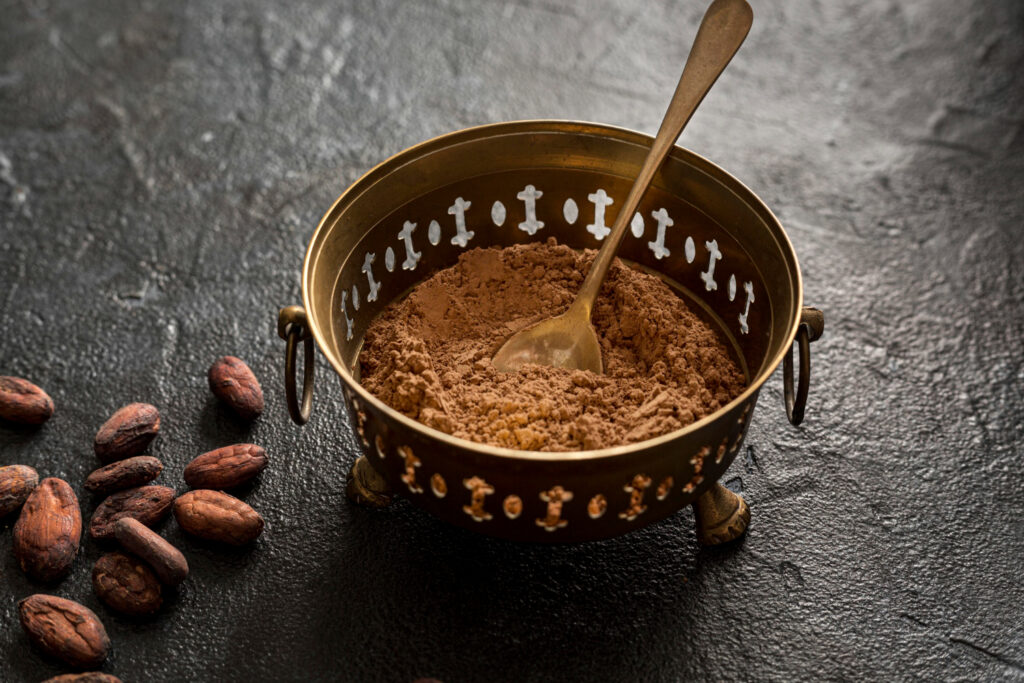
Both start in the same place. Cocoa beans get fermented, dried, roasted, and then ground into a paste called chocolate liquor. Most of the fat (cocoa butter) gets pressed out. What’s left is a dense cake of cocoa solids that gets ground into fine powder. That’s cocoa powder. At this point, both types are the same thing.
Then the paths diverge.
Natural cocoa powder stops there. No additional treatment. The natural acidity of the bean is retained, giving it a pH somewhere between 5.3 and 5.8. It’s lighter brown in color, has a sharp, fruity, slightly bitter chocolate flavor, and is the more acidic of the two.
Dutch process cocoa gets washed with an alkaline solution, usually potassium carbonate, before or after pressing. This process neutralizes the cocoa’s acidity, bringing the pH up to anywhere between 6.5 and 8 or higher depending on how heavily it’s processed. The result is darker in color, smoother and more mellow in flavor, and dissolves more easily in liquid.
The process was invented by Coenraad van Houten, a Dutch chemist, in the 1800s. That’s the “Dutch” in Dutch process. It became the dominant form used in European baking and hot chocolate traditions, while American recipes historically used natural cocoa more.
| Natural Cocoa Powder | Dutch Process Cocoa | |
| pH | 5.3 to 5.8 (acidic) | 6.5 to 8+ (neutral to alkaline) |
| Color | Medium to light brown | Dark brown to nearly black |
| Flavor | Sharp, fruity, slightly bitter | Smooth, mellow, earthy, toasted |
| Antioxidants (flavanols) | High, 34.6 mg/g average | Lower, 3.9 to 13.8 mg/g depending on degree |
| Dissolves in liquid | Somewhat clumpy | Easily, more soluble |
| Leavening partner | Baking soda | Baking powder |
| US label clue | “Cocoa” or “unsweetened cocoa” | “Processed with alkali” |
| Common brands | Hershey’s (classic), Nestlé, Ghirardelli | Hershey’s Special Dark, Droste, Rodelle |
The Leavening Chemistry, This Is the Part That Actually Matters for Baking
This is where swapping one for the other without thinking goes wrong. And it’s not complicated once you understand the basic chemistry.
Baking soda (sodium bicarbonate) is a base. It needs an acid to react and produce the carbon dioxide bubbles that make baked goods rise. On its own it does nothing useful and just sits there leaving a soapy metallic taste.
Baking powder already contains both a base (baking soda) and a dry acid, so it creates its own reaction when liquid is added, no external acid needed.
Natural cocoa powder is acidic enough to act as that external acid. When a recipe uses natural cocoa and baking soda, the cocoa’s acidity activates the soda, you get bubbles, you get rise, and the cocoa’s own acidity gets neutralized in the process giving a balanced flavor.
Dutch process cocoa has had its acidity neutralized. It can’t activate baking soda. If you use dutch process in a recipe written for natural cocoa and baking soda, the baking soda doesn’t fully react, you get less rise, a possibly flat or dense result, and sometimes that metallic soapy baking soda taste lingers because it wasn’t properly neutralized.
The rule:
- Recipe uses baking soda → use natural cocoa powder
- Recipe uses baking powder → use dutch process cocoa
- Recipe uses both → check which is dominant or what the original recipe specifies
What happens if you swap them:
| Scenario | What goes wrong |
| Use dutch process when recipe needs natural + baking soda | Flat baked goods, soapy or metallic taste, underrisen |
| Use natural when recipe needs dutch process + baking powder | Slightly tangier flavor, lighter color, may be denser |
| Swap in no-leavening recipes (sauces, hot cocoa, pudding, frosting) | No leavening issue, just flavor and color difference |
The practical takeaway: for recipes without any baking soda or baking powder, like hot chocolate, chocolate sauce, frosting, ice cream, or pudding, you can use either and it’s mostly a personal preference call on flavor and color. For anything that rises in the oven, follow what the recipe specifies.
Natural vs Dutch Cocoa Powder: Flavor and Color Differences
Even outside of leavening chemistry, these two taste noticeably different to most people, though opinions vary on which is better. A professional recipe developer writing for Forks Over Knives noted they personally couldn’t detect much difference in finished recipes, but that’s not most people’s experience.
Natural cocoa has more of a bright, fruity, slightly citrus-like chocolate note. Some people describe it as sharper or more intense. Classic American chocolate cake recipes like devil’s food traditionally use natural cocoa and that fruity brightness is intentional.
Dutch process is smoother, more mellow, described as earthier or more toasted. Less bright, less acidic, less sharp. European hot chocolate traditions favor it for this reason. The depth and roundness is why it’s also preferred in things like chocolate buttercream where you want a gentle, luxurious chocolate note without any tangy bite.
Color difference is significant: Natural cocoa is medium brown. Dutch process is noticeably darker, ranging from dark chocolate brown to nearly black depending on how heavily it’s processed. Black cocoa, the most heavily alkalized form, is what makes Oreo cookies that characteristic near-black color. If recipe photos show a very dark baked good and yours is coming out lighter and brownish, check whether you should be using dutch process.
The Health Angle: Antioxidants Take a Hit With Dutch Processing
This is where the comparison shifts beyond just baking mechanics. If you’re using cocoa for health benefits alongside flavor, the type genuinely matters.
Cocoa is one of the richest food sources of flavanol antioxidants, particularly epicatechin, catechin, and procyanidins. These compounds have well-documented cardiovascular benefits including improved endothelial function, reduced blood pressure, and reduced inflammatory markers.
A study published in the Journal of Agricultural and Food Chemistry analyzed natural and alkalized cocoa powders and found:
| Processing level | Average total flavanols (mg/g) | Retained vs natural |
| Natural (unprocessed) | 34.6 mg/g | 100% |
| Lightly dutched (pH 6.5 to 7.2) | 13.8 mg/g | ~40% |
| Medium dutched (pH 7.2 to 7.6) | 7.8 mg/g | ~25% |
| Heavily dutched (pH 7.6+) | 3.9 mg/g | ~10% |
The alkalization causes a progressive, linear decrease in flavanols. More alkaline equals fewer antioxidants. Heavily dutched cocoa like black cocoa has lost roughly 90% of the antioxidant content present in natural cocoa.
That said, a few nuances worth knowing:
- Even lightly dutched cocoas still rank in the top 10% of flavanol-containing foods compared to the broader food supply. The loss is real but the baseline is high.
- The health research on cocoa flavanols is based almost entirely on natural or minimally processed cocoa, not dutch process. Several studies explicitly found that dutch-processed cocoa did not replicate the cardiovascular benefits seen with natural cocoa.
- If health benefits are a priority alongside flavor, natural cocoa or cacao powder are the better choices. Dutch process is the flavor/texture choice.
What Black Cocoa Is and Where It Fits
Worth mentioning separately because it shows up on ingredient lists and confuses people.
Black cocoa is dutch process cocoa that has been alkalized much more heavily than standard dutch process. It’s the extreme end of the spectrum, very low in flavanols, nearly black in color, and has a distinctive dry, almost Oreo-like flavor. Not particularly chocolatey in the traditional sense, more like a very dark roasted note.
It’s used where color is the primary goal: very dark cakes, classic sandwich cookies, dramatic visual contrast in baked goods. It doesn’t taste like dark chocolate, it tastes like black cocoa, which is its own distinct thing. Most people baking at home won’t need it specifically, but if a recipe calls for it, you can’t just sub regular dutch process and expect the same result because the color will be significantly lighter.
Bottom Line
The natural vs dutch cocoa powder question doesn’t have a single winner. They’re different tools for different jobs.
Dutch process is the choice when you want a deeper, darker, smoother result and your recipe is built around baking powder leavening. It’s what gives European-style chocolates and baked goods their characteristic look and mellow flavor profile.
Natural cocoa is the choice when your recipe needs the acidity for baking soda activation, when you want more intense bright chocolate flavor, or when the antioxidant content of the cocoa matters to you. The flavanol research is pretty unambiguous that natural cocoa retains significantly more of the health-relevant compounds than anything that’s been heavily alkalized.
Keep both if you bake regularly and follow recipes from different traditions. If you’re only keeping one and your recipes are mostly American-style baked goods with baking soda, natural cocoa is the more versatile starting point. If your recipes tend toward European-style and use baking powder, go dutch.
The most expensive mistake you can make is grabbing whichever bag is closest and hoping for the best when a recipe is actually counting on the chemistry of a specific type.