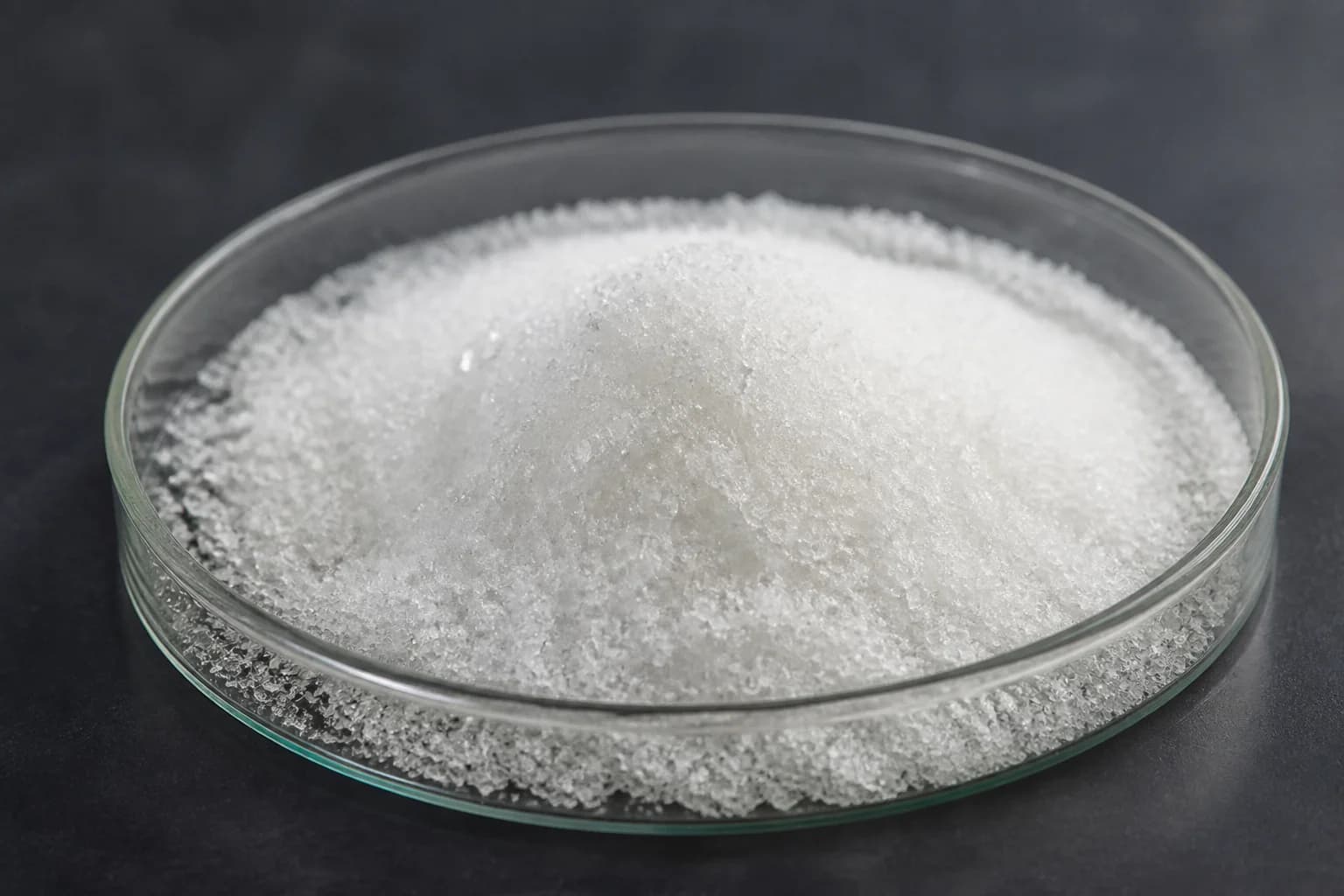
Phthalic Anhydride
ELRASA™TM – PTAn
Get Pricing For This Product
Skip the quote. Sign up now and see pricing instantly
Speed Up Your Sample Testing Process
Express Delivery in 24–48 Hours
Phthalic anhydride (PA; also called phthalic acid anhydride; C₈H₄O₃, CAS 85-44-9) is a versatile chemical intermediate supplied as white crystalline flakes or molten bulk. It is the primary dibasic…
CAS Number
85-44-9
HS Code
29.17.35.00
INCI Name
Phthalic Anhydride
Molecular Formula
C8H4O3
Phthalic Anhydride
ELRASA™TM – PTAn
Phthalic anhydride (PA; also called phthalic acid anhydride; C₈H₄O₃, CAS 85-44-9) is a versatile chemical intermediate supplied as white crystalline flakes or molten bulk. It is the primary dibasic building block for phthalate plasticizers, unsaturated polyester resins (UPR) and…
CAS Number
85-44-9
INCI Name
Phthalic Anhydride
HS Code
29.17.35.00
Molecular Formula
C8H4O3
Get Pricing For This Product
Skip the quote. Sign up now and see pricing instantly
Speed Up Your Sample Testing Process
We deliver domestic samples within 24 - 48 hours, helping you evaluate product without delays.
Product Specification
Physical Properties
| Property | Specification |
|---|---|
| Appearance | White, lustrous needles or flakes. |
| Odor | Mild, characteristic, acrid, choking odor. |
| Molecular Weight | 148.11 g/mol |
| Density | 1.53 g/cm³ |
| Specific Gravity | 1.53 |
| Viscosity (Molten) | 1.19 mPa·s at 132 °C |
| Refractive Index | 1.646 |
| Ph (Aqueous Solution) | Forms a corrosive solution; hydrolyzes to Phthalic acid. |
| Assay / Purity | ≥99% |
Chemical Properties
| Property | Specification |
|---|---|
| Pka | No reliable source found. |
| Ionic Nature | Non-ionic; behaves as a Lewis acid. |
| Incompatibilities | Strong oxidizers, strong acids, strong bases, alcohols, amines, water, copper oxide, and sodium nitrite. |
| Hazardous Reactions / Decomposition Products | Reacts exothermically with water to form Phthalic Acid. Reaction can be violent when heated with copper oxide or sodium nitrite. When heated to decomposition, may emit toxic fumes including carbon monoxide and carbon dioxide. |
Thermal Properties
| Property | Specification |
|---|---|
| Melting Point | 131 °C |
| Boiling Point | 284 °C (sublimes) |
| Flash Point | 152 °C (closed cup) |
| Autoignition Temperature | 570 °C |
| Decomposition Temperature | No decomposition reported below boiling point. |
| Thermal Stability | Stable under normal conditions of storage and handling. Heat contributes to instability. |
Dosing Guidelines
A. Dosing by Application
| Application | Recommended / Max Dosage |
|---|---|
| Alkyd Resins | Typically used as a primary dibasic acid component, with the amount determined by the desired oil length and performance characteristics of the resin. |
| Unsaturated Polyester Resins | A key component reacted with glycols and unsaturated dibasic acids/anhydrides. The ratio determines the resin's properties, such as rigidity and chemical resistance. |
| Phthalate Plasticizers | Used as the primary reactant with various alcohols (e.g., 2-ethylhexanol, butanol) to produce esters like DEHP and DBP. The dosage is based on a 1:2 molar ratio of anhydride to alcohol. |
About Phthalic Anhydride
Phthalic anhydride (PA; also called phthalic acid anhydride; C₈H₄O₃, CAS 85-44-9) is a versatile chemical intermediate supplied as white crystalline flakes or molten bulk. It is the primary dibasic building block for phthalate plasticizers, unsaturated polyester resins (UPR) and alkyd resins and coatings (CASE), as well as dyes and pigments. Elchemy supplies high-quality, technical-grade (≥99%) phthalic anhydride in bulk with full documentation; download the technical data sheet (TDS) for specifications.
Phthalic Anhydride Grades & Forms: Flakes & Molten
Phthalic anhydride is supplied as flakes (white crystalline, easy to weigh and handle for batch use) and as molten bulk (delivered hot in insulated tankers for large continuous plants). Standard material is high-quality technical grade at ≥99% purity, suitable for plasticizers, UPR and alkyd production. Tell us your process and volume and we will recommend flakes or molten supply and the right specification.
Phthalic Anhydride Supplier, Manufacturer & Distributor
Elchemy is a phthalic anhydride supplier, distributor and sourcing company serving plasticizer, resin, coatings and dye manufacturers across the US and worldwide. Working directly with producers, we provide consistent, high-quality technical-grade PA with full documentation (CoA, TDS, SDS) and dependable lead times. Whether you need flakes for batch use or a qualified phthalic anhydride manufacturer partner for molten bulk supply, our team handles specification, sampling and supply continuity so procurement stays predictable.
Buy Phthalic Anhydride in Bulk - Price Trend & Quotes
Looking to buy phthalic anhydride in bulk? Elchemy offers competitive pricing on flakes and molten PA, from bag and drum quantities to full loads. Because the phthalic anhydride price follows a market trend driven by o-xylene feedstock and order volume, we quote per requirement rather than list a fixed rate, and can advise on current price direction. Request a bulk quote for prices within 48 hours, or request a sample for evaluation. For buyers comparing phthalic anhydride suppliers with reliable delivery and documentation, start with a quote and we'll confirm grade, form, availability and shipping.
- Versatile Chemical Intermediate: Essential for producing plasticizers, resins, and coatings.
- Function: Chemical intermediate, monomer, plasticizer precursor, resin former.
- High Purity Standards: Ensures performance in critical applications like automotive and construction.
- Features: High reactivity, bifunctional nature, enhances flexibility and durability in polymers.
- Eco-Friendly Production: Focus on minimizing environmental impact through sustainable practices.
- Benefits: Improves adhesion, weather resistance, and toughness in coatings; provides flexibility to PVC products; enables the creation of strong, durable fiberglass-reinforced plastics.
- Enhances Material Performance: Improves flexibility, durability, and resistance in end products.
- Wide Industrial Use: Key component in dyes, pigments, and pharmaceuticals.
About Phthalic Anhydride
Phthalic anhydride (PA; also called phthalic acid anhydride; C₈H₄O₃, CAS 85-44-9) is a versatile chemical intermediate supplied as white crystalline flakes or molten bulk. It is the primary dibasic building block for phthalate plasticizers, unsaturated polyester resins (UPR) and alkyd resins and coatings (CASE), as well as dyes and pigments. Elchemy supplies high-quality, technical-grade (≥99%) phthalic anhydride in bulk with full documentation; download the technical data sheet (TDS) for specifications.
Phthalic Anhydride Grades & Forms: Flakes & Molten
Phthalic anhydride is supplied as flakes (white crystalline, easy to weigh and handle for batch use) and as molten bulk (delivered hot in insulated tankers for large continuous plants). Standard material is high-quality technical grade at ≥99% purity, suitable for plasticizers, UPR and alkyd production. Tell us your process and volume and we will recommend flakes or molten supply and the right specification.
Phthalic Anhydride Supplier, Manufacturer & Distributor
Elchemy is a phthalic anhydride supplier, distributor and sourcing company serving plasticizer, resin, coatings and dye manufacturers across the US and worldwide. Working directly with producers, we provide consistent, high-quality technical-grade PA with full documentation (CoA, TDS, SDS) and dependable lead times. Whether you need flakes for batch use or a qualified phthalic anhydride manufacturer partner for molten bulk supply, our team handles specification, sampling and supply continuity so procurement stays predictable.
Buy Phthalic Anhydride in Bulk - Price Trend & Quotes
Looking to buy phthalic anhydride in bulk? Elchemy offers competitive pricing on flakes and molten PA, from bag and drum quantities to full loads. Because the phthalic anhydride price follows a market trend driven by o-xylene feedstock and order volume, we quote per requirement rather than list a fixed rate, and can advise on current price direction. Request a bulk quote for prices within 48 hours, or request a sample for evaluation. For buyers comparing phthalic anhydride suppliers with reliable delivery and documentation, start with a quote and we'll confirm grade, form, availability and shipping.
- Versatile Chemical Intermediate: Essential for producing plasticizers, resins, and coatings.
- Function: Chemical intermediate, monomer, plasticizer precursor, resin former.
- High Purity Standards: Ensures performance in critical applications like automotive and construction.
- Features: High reactivity, bifunctional nature, enhances flexibility and durability in polymers.
- Eco-Friendly Production: Focus on minimizing environmental impact through sustainable practices.
- Benefits: Improves adhesion, weather resistance, and toughness in coatings; provides flexibility to PVC products; enables the creation of strong, durable fiberglass-reinforced plastics.
- Enhances Material Performance: Improves flexibility, durability, and resistance in end products.
- Wide Industrial Use: Key component in dyes, pigments, and pharmaceuticals.
Regulatory Compliance
| Region | Max Allowed Level | Notes | Certification Body |
|---|---|---|---|
| Republic of Korea | - | Subject to registration under K-REACH. | - |
| ASEAN | - | Not specifically restricted in the ASEAN Cosmetic Directive, as its primary uses are industrial, not cosmetic. | - |
| China | - | Listed on the Inventory of Existing Chemical Substances in China (IECSC). | - |
| United States | - | Regulated by the EPA under the Toxic Substances Control Act (TSCA) and by OSHA for workplace safety. EPA is conducting a risk evaluation, which preliminarily found unreasonable risks to workers and consumers for certain uses. It is listed on the TSCA Inventory. | TSCA compliance. |
| European Union | - | Registered under REACH. Harmonised classification and labelling (CLP) apply: Acute Tox. 4, Skin Irrit. 2, Eye Dam. 1, Resp. Sens. 1, Skin Sens. 1, STOT SE 3. | REACH Registration. |
| Canada | - | Not specifically restricted. Listed on the Domestic Substances List (DSL). | - |
| India | - | The Phthalic Anhydride (Quality Control) Order, 2020 mandates that the product must conform to Indian Standard IS 5158:1987 and bear the BIS Standard Mark (ISI Mark) for manufacturing, sale, or import. This does not apply to products intended for export. | BIS (ISI Mark) Certification per IS 5158:1987. |
| Japan | - | Listed on the Chemical Substance Control Law (CSCL) inventory. | - |
| Australia | - | Listed on the Australian Inventory of Industrial Chemicals (AIIC). | - |
FAQs - Phthalic Anhydride
Streamline
Your Chemical
Procurement
Get fast responses from real experts