

At a Glance
- Lotion or body butter: A conventional lotion is an emulsion with a water phase; shea butter whipped with oils alone makes an anhydrous body butter.
- Shea butter’s role: It is one oil-phase ingredient. Its effect on richness, spread, viscosity, and after-feel depends on the complete formula and process.
- Texture decisions: Define the target skin feel first, then compare controlled bench trials instead of assuming a universal use level or ingredient swap.
- Before scale-up: Appearance on day one does not establish emulsion stability, preservation, package compatibility, or shelf life.
- Ingredient evaluation: Confirm identity, grade, specification, current documentation, and commercial terms for the specific material and market.
What you’ll learn
Learn how shea butter fits into a water-based body-lotion emulsion, how to plan useful formulation trials, and what to verify before selecting the ingredient or scaling a product.
Introduction
A shea butter recipe can describe two different products: a whipped blend of fats and oils, or a water-based lotion. They need different formulation approaches. A lotion is an emulsion, so it needs a compatible emulsification system and a product-specific plan for stability and microbial protection. Whipping shea butter with oils does not create that emulsion.
For a cosmetic formulator, the practical question is how the butter fits the product brief, not whether it is universally “good” for skin. The target feel, rest of the oil phase, manufacturing process, package, and test results all matter. For ingredient context, see how shea butter is made. This guide focuses on decisions and checks for developing a body-lotion prototype; it is not a validated formula or manufacturing specification.
What is the difference between shea butter lotion and body butter?
A body lotion is generally a water-containing emulsion, while an oil-and-butter-only whipped product is an anhydrous body butter. The distinction affects ingredient selection, processing, testing, packaging, and how long the finished product can be supported for use.
An emulsion combines water and oil phases into a uniform product with the help of an emulsifier or emulsifier system. A formulator may also use humectants, emollients, thickeners, and other ingredients to meet the brief. The finished system must remain suitable through its intended storage and use.
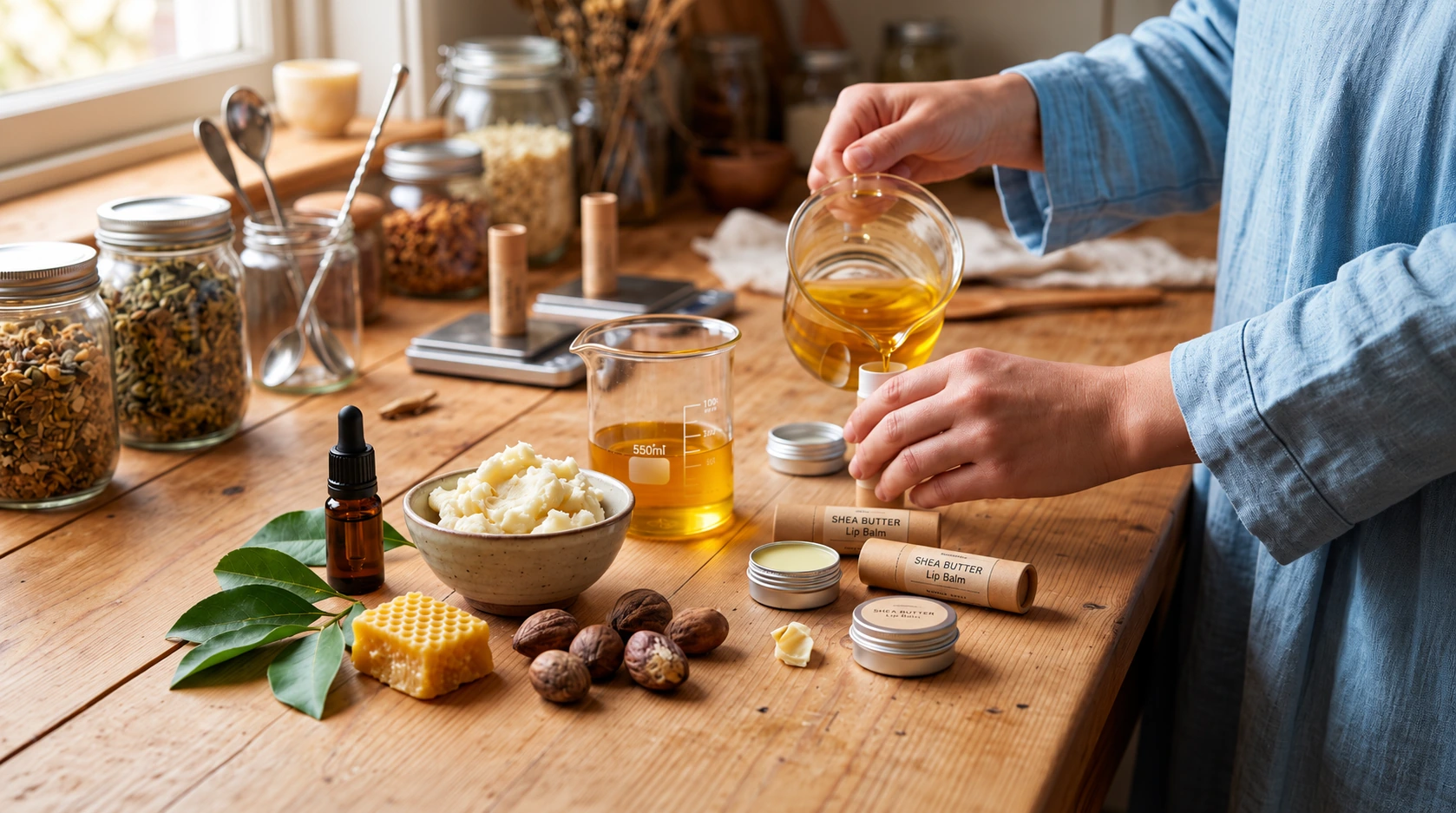
An anhydrous butter contains no intentional water phase. It may be simpler in structure, but that does not make it a lotion, nor does it prove a particular shelf life or safety profile. Do not apply an online whipped-body-butter method to a water-based emulsion.
What does shea butter contribute to a lotion?
Shea butter contributes a lipid to the oil phase, and its effect on texture and use experience depends on the whole formulation. Its presence alone does not establish a moisturizing benefit, a specific viscosity, or a stable product.
Formulators can assess whether it helps meet a target for richness, cushion, glide, or residual feel. Those are trial questions, not guaranteed ingredient outcomes. The butter’s grade and characteristics, its proportion of the oil phase, the other emollients and structuring ingredients, and the process may all affect the finished lotion.
Shea butter should also be assessed alongside the rest of the ingredient system. A humectant such as glycerine has a different formulation role from an oil-phase butter. An ingredient overview of glycerine can help teams distinguish ingredient categories, but it is not a complete lotion recommendation. Likewise, cocoa butter product information may be useful when comparing butter options, provided the comparison is based on current specifications and controlled formulation trials.
Avoid describing the ingredient as treating inflammation, repairing skin, preventing disease, or producing a medical result without relevant evidence and regulatory review. In the United States, the FDA explains that claims can affect whether a product is regulated as a cosmetic, a drug, or both. See its guidance on cosmetic labeling claims.
How should a formulator plan a shea butter lotion trial?
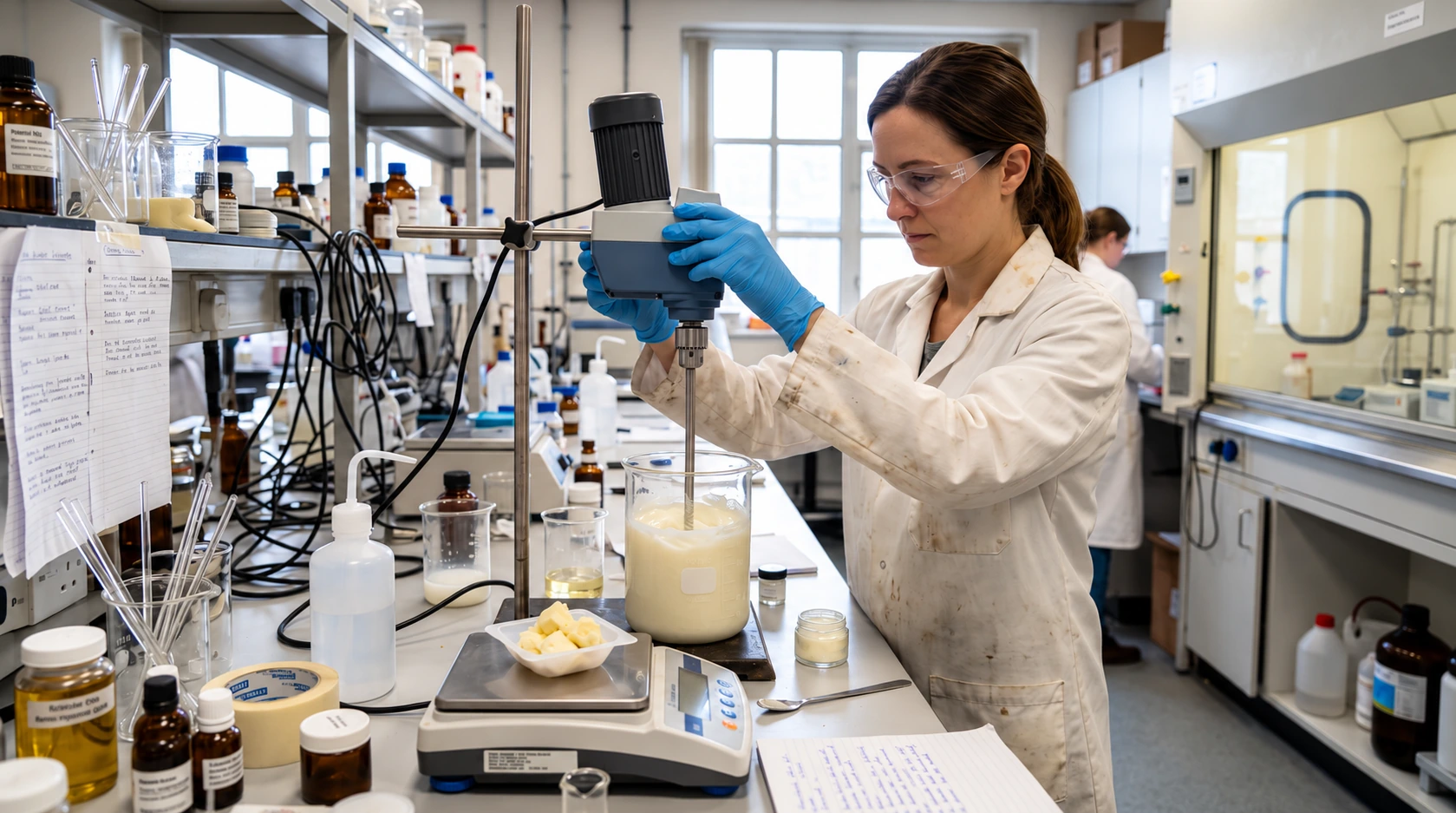
Start with the product brief, then change one controlled factor at a time in small, documented batches. This makes it easier to tell whether a change in skin feel or stability came from shea butter or from another formula or process change.
Define the target before choosing ingredients
Set the intended use, target feel, dispensing format, fragrance approach, and market before adjusting the formula. Describe success in observable terms, such as spread, absorption feel, residual richness, dispensing behavior, or a defined viscosity range approved by the technical team.
Record the intended claims separately. A claim such as “non-greasy” or “for sensitive skin” needs an appropriate basis for the finished product. Do not treat an ingredient’s marketing description as substantiation for a finished-lotion claim.
Treat shea butter as one part of the oil phase
Evaluate shea butter with the other oils, butters, emulsifiers, and structuring ingredients that make up the formula. If the butter level changes, the oil phase changes too, and the emulsion may need to be reassessed. A one-for-one swap between a liquid oil and a solid butter is not automatically equivalent.
Do not copy a percentage from a lip balm, sunscreen cream, conditioner, or home recipe. The product format, process, ingredients, and test methods differ. Set trial levels with a qualified cosmetic formulator using current supplier data and the project’s formulation constraints.
Compare controlled variants
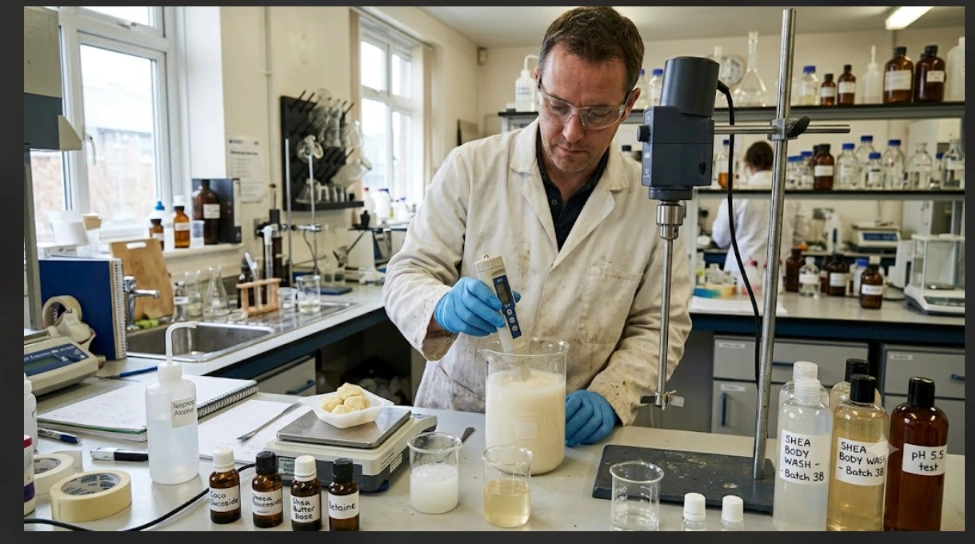
Use a matched base as a control and keep batch size, process, and other ingredients as consistent as practical. The trial matrix below is a planning framework, not a suggested recipe. A qualified formulator should set the trial levels and test conditions.
| Trial | Formulation change | Keep constant | What to record and compare |
| Control | Use the current base lotion without added shea butter. | Use the established batch size, process, package, and test conditions. | Record appearance, odor, viscosity, spread, after-feel, and results from the planned stability and preservation assessments. |
| Variant A | Add shea butter at a level selected by the formulator, replacing part of the existing oil phase. | Keep the emulsifier system, total oil phase, water phase, process, and package the same as the control where practical. | Compare the same sensory and physical measures with the control; note any separation, viscosity shift, or change in dispensing. |
| Variant B | Test a second formulator-selected shea butter level, adjusting the displaced oil to keep the total oil phase consistent. | Keep all other ingredients, process, batch size, package, and evaluation conditions the same as Variant A. | Compare whether the changed butter level moves the product toward its defined feel target and whether stability or dispensing changes. |
Record raw-material lot numbers, order of addition, temperatures, mixing conditions, and when any cool-down ingredients are added. These notes help make a promising prototype reproducible and make failures easier to investigate.
What should be tested before a lotion is scaled up?
A lotion that looks uniform immediately after mixing has not yet demonstrated stability, preservation, or package compatibility. Agree on a product-specific test plan with qualified technical and laboratory staff before scale-up or release.
- Physical stability: Monitor appearance, odor, color, viscosity, and separation under a documented protocol appropriate to the product.
- Microbiological protection: Assess the product’s microbial risk and preservation approach with qualified expertise. ISO 11930 describes evaluation of antimicrobial protection, including preservation efficacy testing and risk assessment. It does not certify a particular lotion or preservative by itself. See ISO 11930:2019.
- Package compatibility: Test the intended container and dispensing system with the finished formula, including relevant storage conditions.
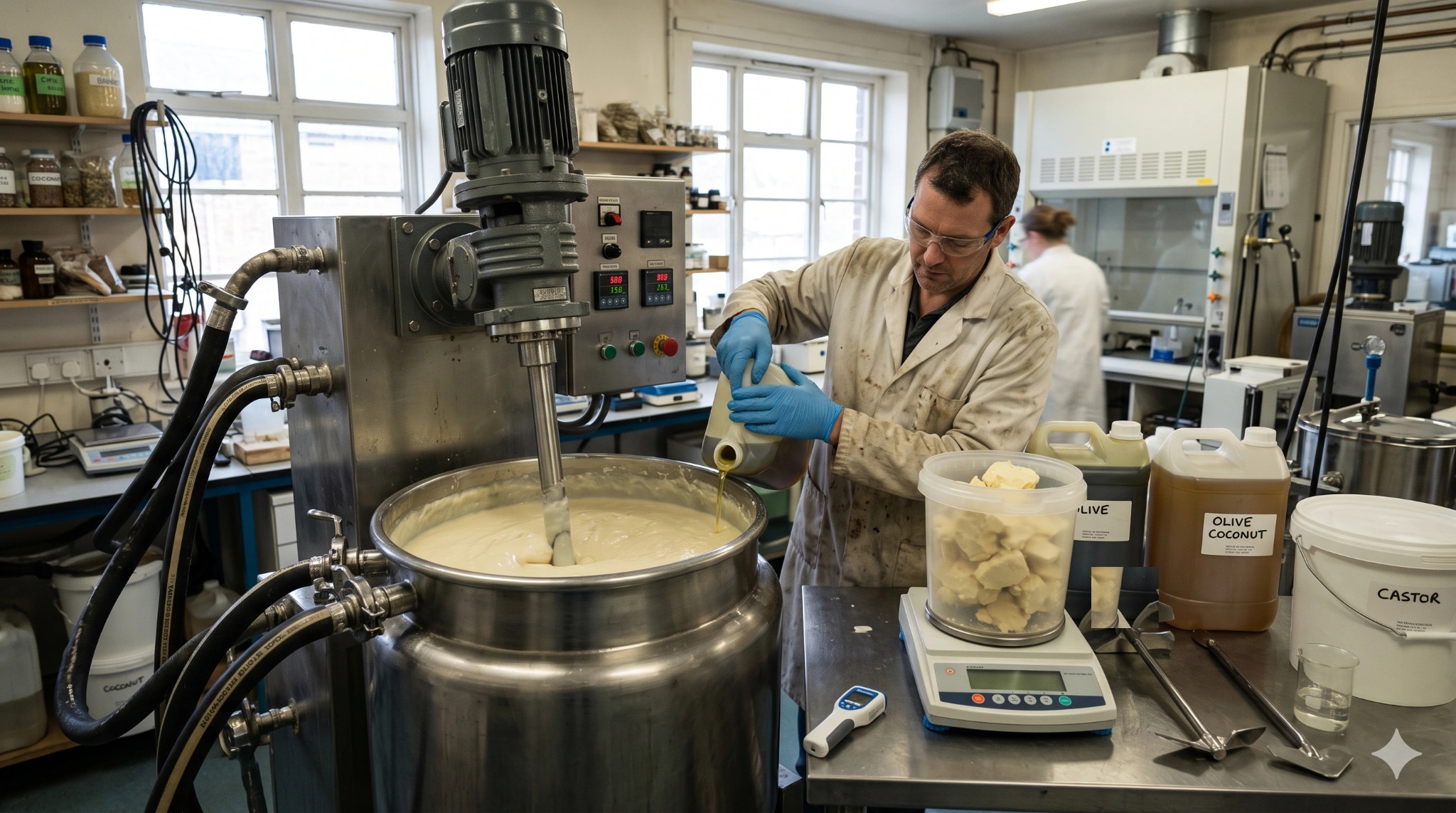
- Process reproducibility: Document critical manufacturing steps and confirm that scale-up produces material consistent with the approved prototype.
The FDA notes that preservatives may be used in cosmetics to help prevent harmful bacteria and mold, and that cosmetic firms remain responsible for product safety and proper labeling. That does not make any one preservative suitable for every lotion. Selection and validation depend on the formula and intended use. Review FDA information on preservatives in cosmetics for the general role of preservatives.
Do not publish a fixed shelf life based on a recipe or on a product’s appearance. Shelf-life statements should reflect the finished product, packaging, storage, and applicable evidence. A test plan should also identify who evaluates results and what criteria would lead the team to reformulate, retest, or stop development.
How should a buyer evaluate shea butter for formulation?
Match the raw material to the product brief and market using current supplier documentation and incoming-material controls. A product listing can start an evaluation, but it does not replace the specification review for the specific material and lot.
Before locking the formula, confirm:
- Identity: Verify the material name and applicable INCI identity against the supplier’s current documents.
- Grade and specification: Confirm which grade is offered and which specification values apply. Do not infer refined or unrefined availability from general descriptions.
- Documentation: Ask which current technical documents, safety documents, and lot-specific records are available for the product.
- Sample and testing: Confirm the sample is representative of the material under consideration, then assess it in the intended formula.
- Commercial fit: Verify packaging, minimum order, lead time, origin, traceability, and market documentation directly with the supplier before relying on them.
Elchemy’s Shea Butter product page is the specific product destination for reviewing its current listing and using the inquiry options displayed there. Confirm any grade, specification, document, sample, or supply detail with Elchemy before treating it as a project requirement. For broader category context, see Elchemy’s personal care ingredients.
Common formulation mistakes to avoid
The most common avoidable errors are confusing anhydrous body butter with lotion, changing several variables at once, and treating a good first impression as proof of a commercially ready product.
- Do not put an oil-only whipped recipe forward as a water-based lotion formula.
- Do not assume that more shea butter will always make a lotion richer, thicker, or more effective.
- Do not swap an oil for a butter without reassessing the full oil phase and emulsion.
- Do not assume a preservative guarantees microbial protection without product-specific assessment.
- Do not copy a shelf-life estimate from an online recipe or extrapolate from a different package.
- Do not make therapeutic or broad skin-suitability claims without the evidence and regulatory review required for the target market.
Shea butter lotion formulation FAQs
1. How do you add shea butter to body lotion?
In a water-based lotion, a formulator evaluates shea butter as part of the oil phase in a designed emulsion. The emulsifier system, process, and other ingredients must be suitable for the complete formula. A qualified formulator should define trial levels and validate the finished product rather than copying a percentage from another product type.
2. Can you make lotion with only shea butter and oil?
Shea butter and oil alone make an anhydrous butter or balm-like product, not a conventional water-containing lotion. A lotion emulsion includes an aqueous phase and needs a compatible emulsification approach. Product structure also affects preservation, packaging, and testing, so the two formats should not share an assumed shelf life.
3. What ingredients pair with shea butter in lotion?
The full system depends on the product brief. A lotion may include an aqueous phase, humectants, oil-phase emollients, an emulsifier system, viscosity modifiers, and a product-appropriate preservation system. These ingredients serve different functions, and the formulator must assess compatibility and performance in the finished product.
4. How do you make shea butter lotion less greasy?
First define what “less greasy” means for the target product, then compare controlled prototypes. A formulator may evaluate the balance of shea butter, other emollients, and structuring ingredients, but no single substitution guarantees a dry feel. Assess prototypes using the same method and intended application conditions.
5. Does shea butter make lotion thicker?
Not in a predictable way across all formulas. The outcome depends on the butter’s characteristics and level, the other oil-phase materials, the emulsifier and thickener system, and processing. Measure the finished lotion and assess stability rather than using shea butter alone to set the target viscosity.
6. Does shea butter lotion need a preservative?
A water-containing lotion needs a product-specific microbial risk and preservation assessment. The appropriate system depends on the complete formula, process, package, and intended use. A formulator should select and evaluate preservation with qualified technical support; an ingredient list or a visually stable sample cannot establish effectiveness.
7. How long does homemade shea butter lotion last?
There is no reliable universal shelf-life estimate for homemade shea butter lotion. The answer depends on its composition, manufacturing hygiene, packaging, storage, and testing. Do not rely on a recipe’s stated number of months as evidence for a different batch or a product intended for sale.
8. What should I ask a shea butter supplier for?
Ask for the current identity and specification, the grade being offered, relevant technical and safety documentation, lot-specific records where applicable, sample details, and verified commercial terms. Confirm that the documents correspond to the exact material being evaluated and that it meets the requirements for your product and target market.
Conclusion
Shea butter can be assessed as one oil-phase ingredient in a body-lotion emulsion, but the finished formula determines whether the product meets its target for feel, stability, and use. Start with a clear product brief, compare controlled trials, and establish the testing plan before scale-up. Do not treat a whipped oil blend as a lotion or rely on an online percentage or shelf-life claim.
For ingredient evaluation, review the current Elchemy Shea Butter product page and confirm the material’s specifications, documentation, and commercial terms through the inquiry options shown there.