

At a Glance
- Hematite (Fe₂O₃) is the world’s most important iron ore mineral, with iron content of up to 70%, making it the primary feedstock for global steel production
- It is the oldest known pigment used by humans, with evidence of use dating back 164,000 years to cave dwellings in what is now South Africa
- Beyond iron and steel, hematite has documented uses in radiation shielding, polishing compounds, coal separation, ship ballast, water treatment, and cosmetics
- Major production countries include Australia, Brazil, China, India, Russia, and South Africa, with Australia’s Hamersley Range among the world’s most significant deposits
- Hematite is also responsible for the red color of Mars, where NASA spacecraft have confirmed its widespread surface presence
Few minerals have shaped human civilization as directly as hematite. Its name comes from the Greek word for blood, reflecting the vivid red streak it leaves when powdered. That same iron-rich chemistry that makes the powder red also makes hematite the mineral the entire steel industry depends on.
But iron production is only the beginning of what hematite is used for. From the pigment on prehistoric cave walls to radiation shielding in modern medical facilities, this single mineral spans an extraordinary range of applications across industries and centuries.
What Hematite is?
Hematite is an iron oxide with the chemical formula Fe₂O₃, iron(III) oxide. It is the most abundant iron oxide mineral on Earth’s surface and in the shallow crust, found in sedimentary, metamorphic, and igneous rocks worldwide. Its iron content reaches up to 70% by weight in high-grade deposits, which is why it has always been the preferred feedstock for iron production over alternatives like magnetite.
Its physical appearance is deceptive. Hematite can look completely different depending on the form it takes. The same mineral can appear as shiny metallic silver blades, a dull reddish-brown earthy mass, or a botryoidal (grape-like) dark kidney-shaped growth. What never changes is its streak: powdered hematite is always reddish-brown, regardless of the specimen’s surface color. That reddish streak is the definitive identification test, and it is also what gave the mineral its ancient name and its first human use.
Key physical properties:
| Property | Value |
| Chemical formula | Fe₂O₃ |
| Iron content | Up to 70% by weight |
| Hardness (Mohs scale) | 5.5 to 6.5 |
| Density | 5.26 g/cm³ |
| Crystal system | Trigonal (rhombohedral) |
| Streak | Reddish-brown |
| Luster | Earthy to metallic |
What Hematite Is Used For?
1. Iron and Steel Production
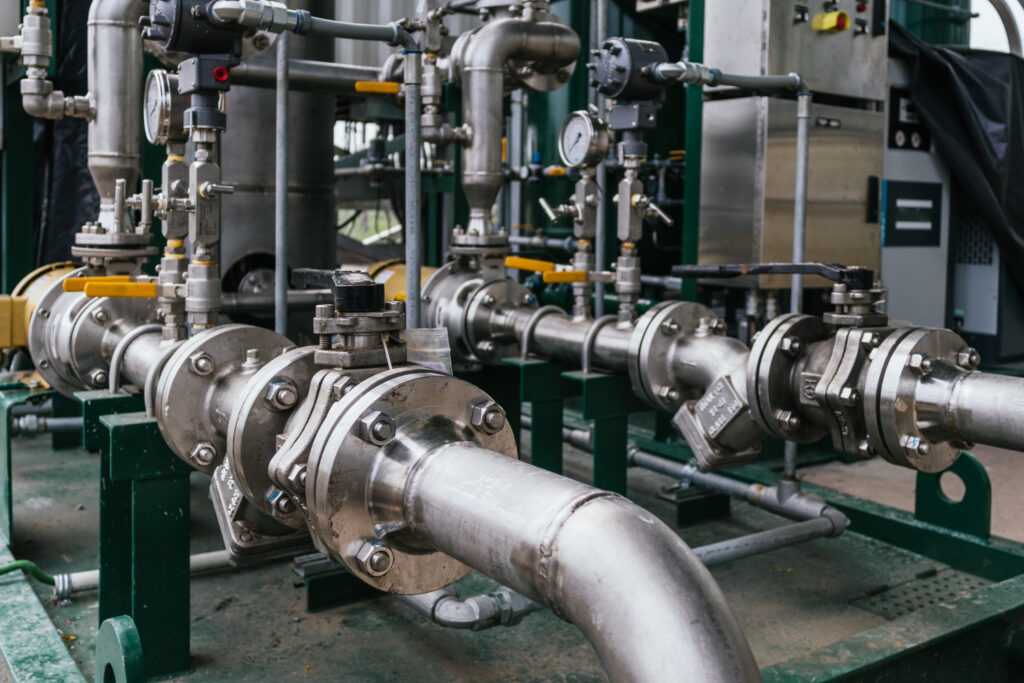
This is by far the most economically significant use, accounting for the vast majority of hematite mined globally each year. Hematite is called “direct-shipping ore” because high-grade deposits require only simple crushing, screening, and blending before being shipped to steel mills, unlike magnetite which needs more complex magnetic concentration processing.
In a blast furnace, hematite is reduced by coke (carbon) at high temperatures. Oxygen is stripped from the Fe₂O₃, releasing molten iron, which is then refined into steel. That steel goes into construction beams, automotive frames, appliances, ship hulls, railway tracks, machinery, and tools. Nearly every built environment humans inhabit depends on steel, and most of that steel originates from hematite.
Major production hotspots include:
- Australia: Hematite has been Australia’s primary iron ore since the early 1960s. The Hamersley Range in Western Australia, operated primarily by BHP and Rio Tinto, sits on some of the world’s largest banded iron formations
- Brazil: Major operations including those run by Vale in the Carajás region
- China: Both a major producer and by far the world’s largest consumer
- India: High-grade hematite reserves, though rapidly depleting, feeding one of the world’s largest steel industries
2. Pigments: The Oldest Known Use
164,000 years ago, people in what is now South Africa were grinding hematite to powder and using it for pigmentation, making it possibly the oldest documented human use of any mineral for a non-food purpose. Cave paintings dating back 40,000 years show hematite red ochre applied to rock walls. Hematite residues have been found in graves from 80,000 years ago. In ancient Egypt, it was ground for cosmetics including lipstick and blush.
Hematite forms the basis for red, purple, and brown iron oxide pigments, as well as being the primary coloring agent in ochre, sienna, and umber. Ochre is a clay colored by varying amounts of hematite, ranging from 20 to 70%. Red ochre contains unhydrated hematite; yellow ochre contains the hydrated form.
Today those same pigments appear in:
- Industrial paints and coatings, including anti-rust formulations
- Artist pigments for oil, watercolor, and acrylic painting
- Ceramic glazes and pottery colorants
- Traditional building paints — Falu red, the distinctive deep red of traditional Swedish farmhouses, is made from mine tailings of the Falun copper mine and is essentially a hematite pigment
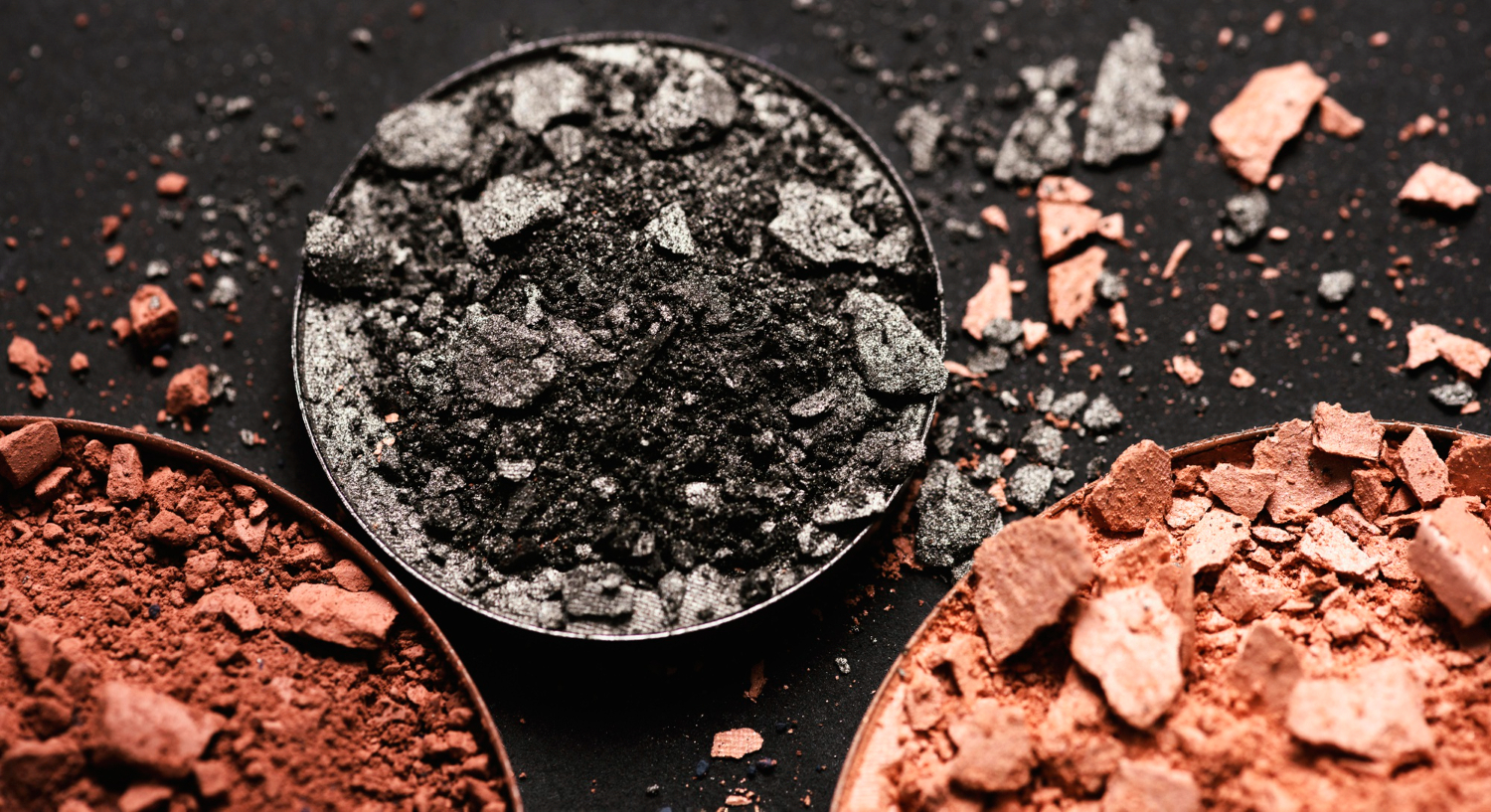
- Cosmetics including foundations, blushes, and eye shadows where iron oxide pigments are approved colorants
India is currently the world’s leading producer of hematite for the pigment industry.
3. Polishing Compounds
Hematite in powder form is the material behind two classic polishing products: red rouge and jeweler’s rouge.
Red rouge is a hematite powder used to polish brass and other soft metals. It is commonly added to tumbling media like crushed corn cob or walnut shell for polishing brass shell casings, musical instrument components, and decorative metalwork. The moderate hardness of hematite (5.5 to 6.5 on the Mohs scale) makes it effective at removing surface irregularities without scratching softer metals.
Jeweler’s rouge is a fine hematite paste applied on a soft cloth or buffing wheel to polish gold and silver jewelry. It removes tarnish and surface oxidation and brings a high shine to precious metals. The optical industry also uses fine hematite abrasive for polishing glass lenses.
4. Radiation Shielding
Hematite’s high density, 5.26 g/cm³, makes it an effective and economical shield against X-ray radiation. Dense materials absorb and block ionizing radiation more effectively than less dense ones, and hematite’s combination of high density and low cost makes it practical for applications where concrete alone provides insufficient protection.
It is incorporated into radiation shielding concrete for medical equipment rooms, nuclear facilities, and industrial X-ray installations. Hematite-loaded concrete achieves significantly higher density than standard concrete, providing better radiation attenuation per unit thickness. This allows thinner walls in medical imaging suites and radiotherapy rooms without compromising patient and staff safety.
5. Heavy Media Separation in Coal Processing
One of the more specialized industrial uses of hematite is in the coal cleaning industry. Ground hematite powder, when mixed with water, creates a liquid with a very high specific gravity, typically around 2.5 to 3.0 depending on concentration. This heavy liquid is used in “float-sink” processing.
Crushed coal, which has low specific gravity, floats on this dense hematite suspension. High-specific-gravity impurities like pyrite and shale sink. The process cleanly separates clean coal from mineral contaminants, improving the quality and combustion efficiency of the coal. After separation, the hematite suspension is recovered, cleaned, and recycled back into the process.
6. Ship Ballast
The same density that makes hematite useful in radiation shielding and heavy media separation also makes it practical as ship ballast. Hematite and other iron ores are loaded into ballast tanks to lower a vessel’s center of gravity and improve stability. Its combination of high density and relatively low cost compared to other dense materials makes it a practical choice for this application, particularly for bulk carriers already transporting iron ore who use unsold material as ballast on return voyages.
7. Water Treatment
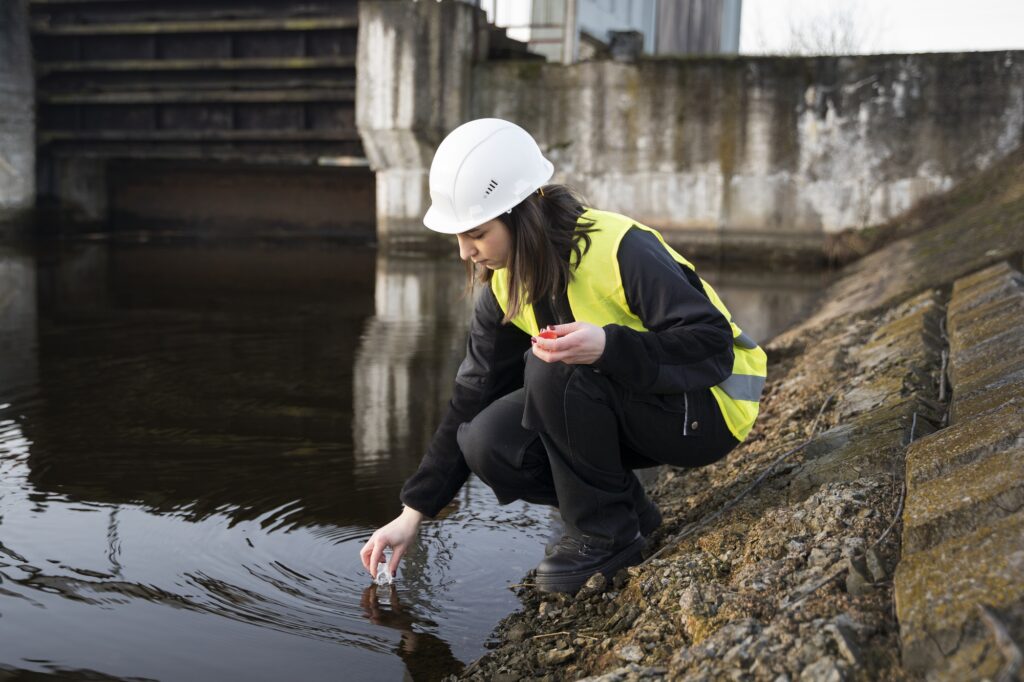
Hematite has emerging applications in water treatment through its ability to adsorb heavy metals and other contaminants from water. Its iron oxide surface chemistry allows it to bind arsenic, lead, cadmium, and chromium through surface adsorption mechanisms.
Finely ground hematite is used in filter media and treatment systems for industrial wastewater containing these contaminants. It is particularly relevant in mining-affected water systems where iron oxide naturally adsorbs metal pollutants, and engineered systems replicate and accelerate this mechanism. Research into optimized hematite-based filtration systems for arsenic removal is ongoing, given the scale of arsenic contamination in groundwater across parts of Asia and South America.
8. Jewelry and Decorative Applications
Polished hematite has been used in jewelry since ancient Egypt and Mesopotamia. Its metallic silver-gray luster when polished makes it visually distinct, and its density gives finished pieces a satisfying weight compared to plastic or glass imitations.
Common jewelry forms include:
- Tumbled stones and cabochons for pendants and rings
- Beads for bracelets and necklaces
- Carved intaglio seals, a use dating to ancient Mesopotamia
- Mourning jewelry, a Victorian-era application where its dark metallic appearance suited the period’s aesthetic
Specular hematite, which has a particularly brilliant metallic surface resembling a mosaic of silver flakes, is prized for decorative pieces. It is worth noting that most material sold as “magnetic hematite” in gift shops is not real hematite at all but a synthetic ceramic material. Real hematite is not strongly magnetic.
9. Cosmetics and Personal Care
Beyond historical use, iron oxide pigments derived from hematite and synthetic iron oxides remain FDA-approved colorants in cosmetics today. They appear in:
- Foundation and concealer (brown and red iron oxides for skin tone matching)
- Blush and bronzer (red and brown tones)
- Eye shadow (a full range from yellow through red to black iron oxides)
- Lipstick (red iron oxide)
- Nail polish colorants
Iron oxides are favored in cosmetics for their stability, non-toxicity, UV resistance, and the permanence of their color. They do not fade, bleed, or change tone with time on skin, which makes them more reliable than many synthetic organic dyes.
10. Construction and Specialty Applications
Hematite is added to concrete mixes where high density or specific color is required:
- Radiation-shielding concrete for medical and nuclear facilities uses hematite aggregate to achieve densities of 3,500 kg/m³ or higher versus 2,300 kg/m³ for normal concrete
- Decorative terrazzo flooring uses hematite aggregate to create reddish-brown tones
- Pigmented concrete for architectural applications uses iron oxide colorants derived from hematite
In civil engineering, hematite’s corrosion resistance and density also contribute to its use in specialty applications including weighted pipe coatings for underwater pipelines.
Final Thoughts
The question of what hematite is used for has a remarkably wide answer. At its core, it is the mineral that built the Iron Age and continues to underpin global steel production today. But its applications extend far beyond the blast furnace: into the red pigment on a 40,000-year-old cave wall, the polish on a jeweler’s gold ring, the radiation barrier in a hospital X-ray room, the ballast keeping a cargo ship stable, and the eye shadow worn by someone who has never heard of iron ore.
That range, from prehistoric pigment to modern industrial feedstock, makes hematite one of the most consequential minerals in both human history and contemporary industry.