

At a Glance
- SLES is produced at 70% concentration and typically diluted to 27-28% for manufacturing applications
- Concentrations above 27% form highly viscous gel that requires specialized handling equipment
- The compound demonstrates superior foaming compared to SLS while offering improved mildness
- Industrial applications span personal care, textile processing, leather treatment, and heavy-duty cleaning
- SLES gel surfactant formation occurs due to sphere-to-rod micellar transitions at specific concentrations
- Compatible with anionic, nonionic, and amphoteric surfactants but not cationic compounds
- Typical usage rates range from 5-20% depending on final product application
- Global market value exceeded $16.5 billion in 2019 with projected 4.6% annual growth
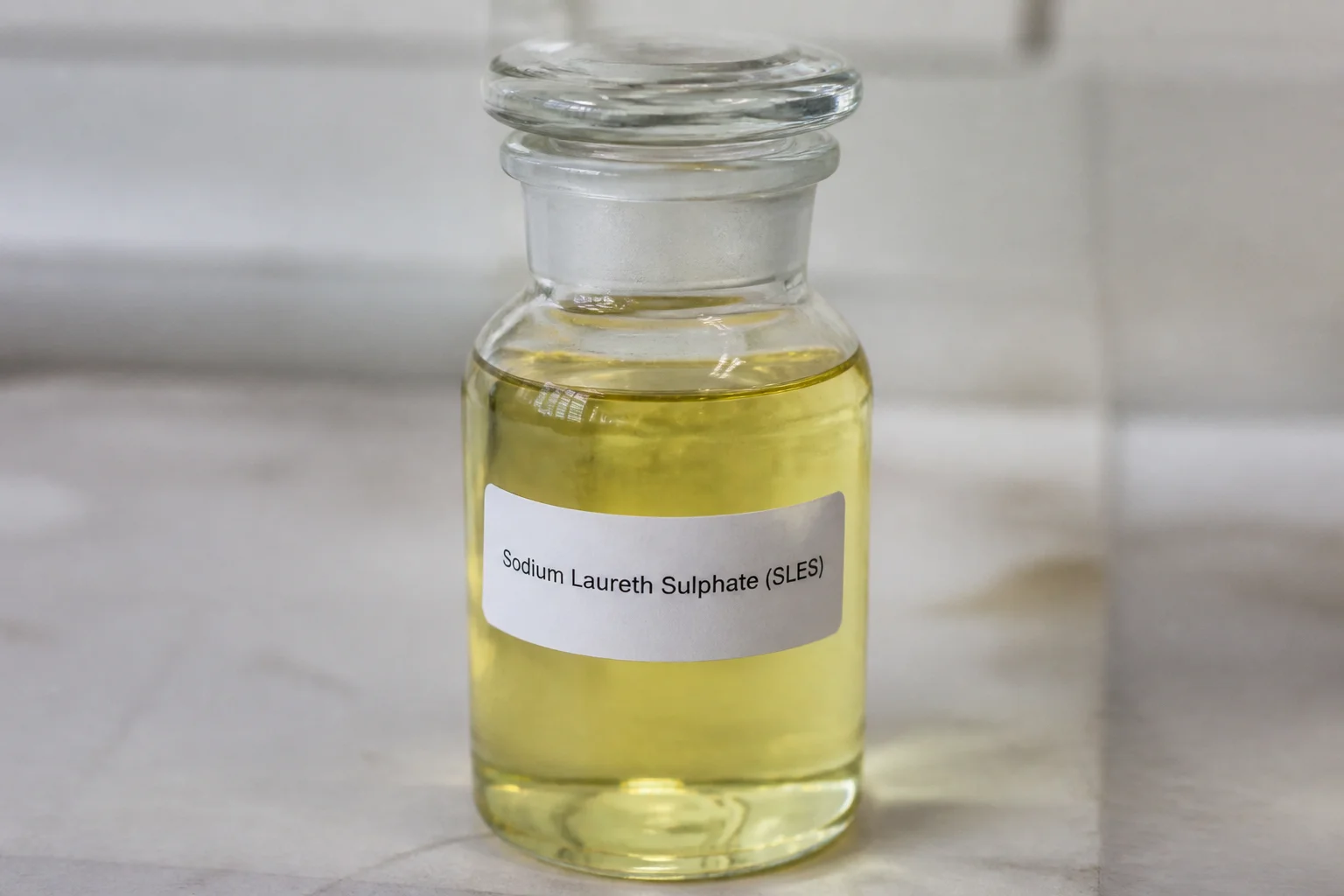
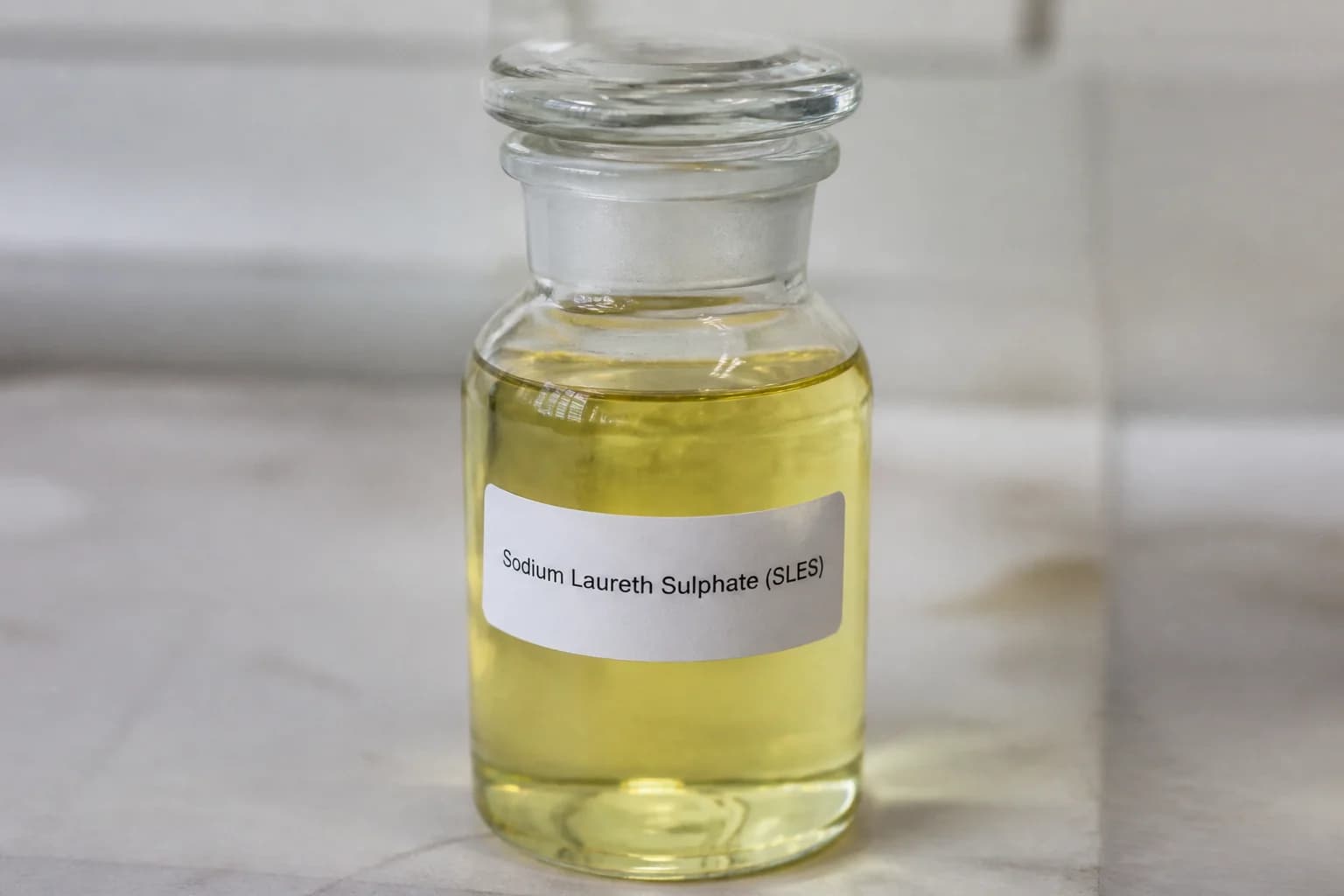
Sodium Lauryl Ether Sulfate, known throughout manufacturing circles as SLES surfactant, serves as the backbone of modern cleaning and personal care formulations. This anionic surfactant powers everything from industrial degreasers to luxury shampoos, processing roughly 7 million tonnes annually across global markets. Its unique molecular structure, combining hydrophobic and hydrophilic portions, enables manufacturers to create products that effectively remove oils, produce stable foam, and maintain gentle contact with skin.
The chemical’s versatility stems from its ethoxylation process, where dodecyl alcohol undergoes modification to create a compound that outperforms traditional sodium lauryl sulfate while reducing irritation concerns. For manufacturers navigating complex formulation requirements, understanding how SLES surfactant behaves at different concentrations, temperatures, and in combination with other ingredients determines product success and production efficiency.
What Makes SLES Surfactant Effective
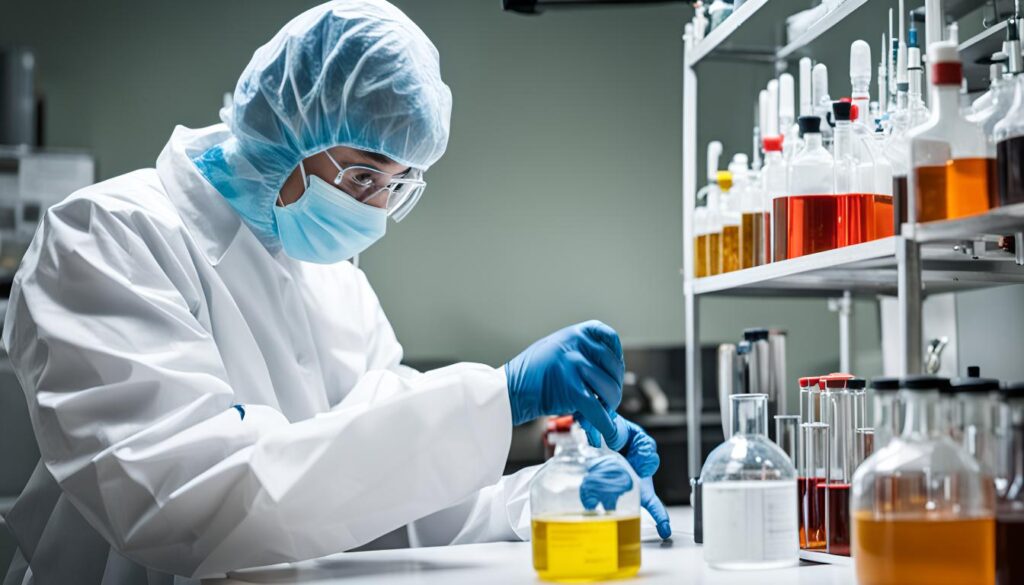
The molecular architecture of SLES surfactant explains its widespread adoption across manufacturing sectors. Each molecule contains a lauryl group (hydrophobic tail) connected to ethylene oxide units and a sulfate head group (hydrophilic). This structure allows SLES to arrange itself at interfaces between water and oils, dramatically reducing surface tension. When sufficient SLES molecules accumulate in solution, they spontaneously form micelles with oil-attracting tails facing inward and water-attracting heads facing outward, creating tiny pockets that trap and remove grease, dirt, and contaminants.
The ethoxylation step that distinguishes SLES from its predecessor sodium lauryl sulfate creates larger molecules with enhanced properties. These additional ethylene oxide groups provide a cushioning effect, making SLES gentler on skin and mucous membranes. Testing shows SLES at concentrations below 2% causes minimal irritation, while SLS produces noticeable discomfort at similar levels. This mildness advantage allows formulators to create high-performance products suitable for daily use and sensitive applications without sacrificing cleaning power or foam production.
| Property | SLES | SLS |
| Molecular Structure | Contains ethylene oxide groups | Direct sulfate attachment |
| Skin Irritation | Minimal at typical use levels | Notable irritation potential |
| Water Solubility | Excellent in hard and soft water | Good but more limited |
| Foaming Ability | Superior, stable foam | High but less stable |
| Cost | Slightly higher | Lower |
| Biodegradability | High | High |
Manufacturing Process and Concentrations
Industrial production begins with lauryl ethoxylate reacting with chlorosulfonic acid in glass-lined, jacketed reactors at 25-30°C under vacuum conditions. The sulfation reaction runs for approximately 2.5 hours, producing an intermediate compound. Neutralization with sodium hydroxide converts this intermediate to SLES at 70% active concentration, with hydrochloric acid generated as a co-product. This 70% concentrate offers manufacturers significant advantages in transportation costs, storage space, and resistance to microbial contamination compared to pre-diluted alternatives.
Converting 70% SLES to usable concentrations presents unique challenges due to dramatic viscosity changes. Manufacturers must add concentrate to water, never water to concentrate, to prevent localized gel formation that conventional mixers cannot handle. The concentration threshold of 27% represents a critical boundary where SLES transitions from gel to liquid behavior, requiring careful process control.
The Gel Phase Challenge
SLES gel surfactant behavior emerges from the compound’s tendency to form elongated micellar structures at specific concentrations. Below 27%, SLES molecules arrange themselves into small spherical micelles that flow easily. As concentration increases beyond this point, these spheres elongate into rod-like structures that intertwine, creating a highly viscous gel with viscosities exceeding 1000 centipoise. This gel phase, while challenging for processing, proves useful in certain formulations where thick texture benefits performance or consumer perception.
Temperature significantly affects gel formation and viscosity. The graph of SLES viscosity versus concentration shows that raising temperature from 20°C to 60°C can reduce viscosity by 40-50%, providing another control parameter for manufacturers. However, introducing air during processing dramatically increases viscosity at any temperature, making closed-system processing essential for consistent results.
High-shear in-line mixers have become the industry standard for diluting 70% SLES. These systems pump water through a recirculation loop while gradually introducing SLES concentrate immediately before the mixer. The high-shear forces instantly break down gel structures, producing homogeneous dilutions in minutes rather than the hours required for conventional tank mixing. Progressive cavity pumps handle the viscous 70% feed, while centrifugal pumps manage the flowing diluted product, with the entire system configured to eliminate aeration.
Industrial Applications Across Sectors
The surfactant properties of SLES enable its use across diverse manufacturing sectors, each leveraging specific aspects of its performance profile. Annual global production supports applications in personal care, household cleaning, industrial processing, and specialized chemical formulations.
| Industry Sector | Primary Applications | Typical SLES Concentration |
| Personal Care | Shampoos, body washes, facial cleansers | 10-15% |
| Household Cleaning | Dishwashing liquids, laundry detergents | 5-15% |
| Industrial Cleaning | Degreasers, floor cleaners, equipment wash | 8-20% |
| Textile Processing | Dyeing aids, wetting agents, scouring | 3-8% |
| Leather Treatment | Finishing agents, fat liquoring | 2-5% |
| Agricultural Chemicals | Herbicide surfactants, spray adjuvants | 1-3% |
Personal Care Manufacturing
Personal care formulations consume approximately 40% of global SLES production. Shampoo manufacturers typically use SLES at 10-15% active concentration, often combining it with cocamidopropyl betaine in a 70:30 ratio to enhance mildness and foam stability. The surfactant creates the luxurious lather consumers expect while effectively removing sebum, styling product residue, and environmental contaminants from hair. Body wash formulations use similar concentrations but may incorporate additional moisturizers and conditioners to compensate for SLES’s slight drying tendency.
Toothpaste manufacturers appreciate SLES for its ability to be easily diluted with salts while maintaining good foaming character. Concentrations of 1-3% provide sufficient foam for consumer satisfaction without excessive sudsing that complicates rinsing. The compound’s compatibility with fluoride, whitening agents, and abrasives makes it a versatile choice for diverse oral care formulations.
Industrial Cleaning Products
Heavy-duty cleaning applications leverage SLES’s superior grease-cutting abilities. Industrial floor cleaners containing 10-18% SLES effectively lift petroleum-based oils from concrete and ceramic surfaces in manufacturing facilities, automotive shops, and food processing plants. The surfactant’s stable foam provides visual feedback about application coverage and allows extended dwell time on vertical surfaces, improving cleaning efficiency.
Metalworking operations use SLES-based cleaners to remove cutting fluids and machining lubricants from parts and equipment. These formulations often combine SLES with chelating agents to address both organic oils and mineral scale. Pressure washer detergents incorporate 5-12% SLES to create high-foaming solutions that improve visibility and ensure even distribution across cleaned surfaces.
Textile and Leather Processing
Textile manufacturers employ SLES as a wetting agent during fabric scouring, where it helps water penetrate fibers more effectively to remove natural oils, waxes, and processing aids. During dyeing operations, SLES at 3-6% concentration promotes even dye distribution and prevents spotting. Its emulsifying properties assist in spinning and knitting processes where fibers require lubrication.
Leather processing operations add SLES to fat-liquoring formulations, where it helps distribute oils and waxes evenly throughout leather thickness. This ensures uniform softness and water resistance in finished products. The compound’s mildness prevents damage to delicate leather structures while achieving necessary processing outcomes.
SLES Gel Surfactant Formation and Viscosity Control
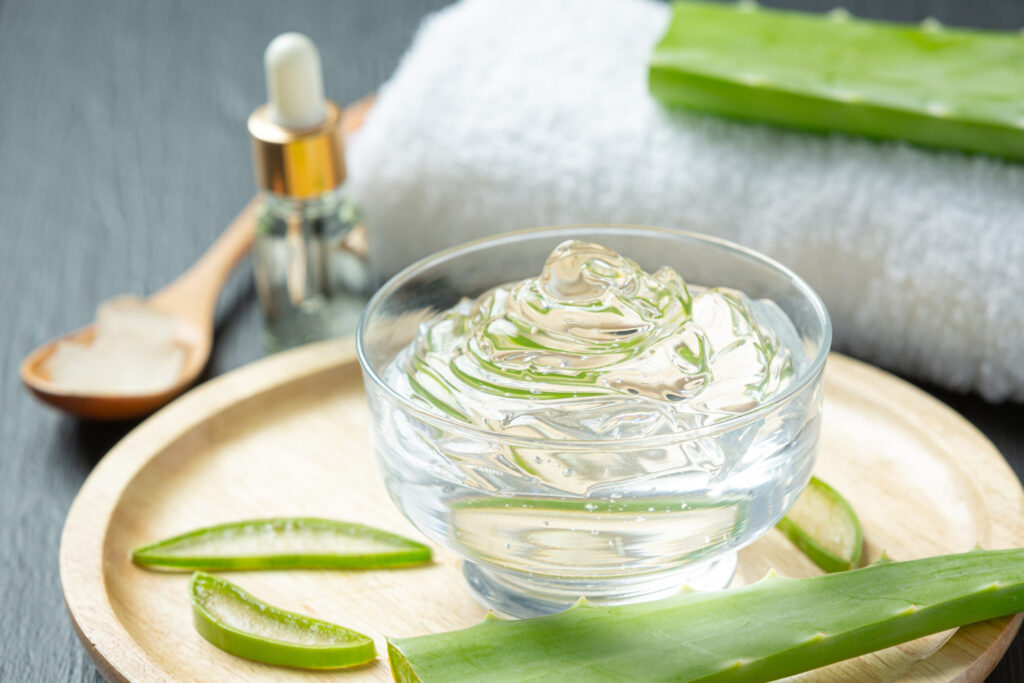
Understanding SLES gel surfactant behavior enables formulators to intentionally manipulate product texture and performance. The sphere-to-rod micellar transition responsible for gel formation depends on surfactant concentration, electrolyte content, temperature, and the presence of co-surfactants or additives. This knowledge allows precise control over formulation viscosity without relying exclusively on traditional thickeners.
Adding sodium chloride to SLES solutions demonstrates dramatic effects on viscosity. In pure SLES at 5-10% concentration, salt triggers formation of intertwined worm-like micelles, increasing viscosity from under 100 centipoise to over 1000 centipoise. This salt-curve relationship follows a predictable pattern: viscosity rises to a maximum as salt concentration increases, then decreases as additional salt compresses the electrical double layer surrounding micelles. Formulators exploit this behavior to achieve target viscosities without polymeric thickeners.
Hydrophobic additives including fragrances and essential oils profoundly impact SLES gel structure. Medium-chain hydrocarbons (C8-C10) insert into the cylindrical regions of rod-like micelles, stabilizing elongated structures and further increasing viscosity. Short-chain molecules and co-solvents tend to reduce maximum viscosity by favoring spherical micelles. Long-chain hydrocarbons shift the salt curve toward higher electrolyte requirements, providing another formulation variable.
Multi-arm nonionic associative thickeners offer alternatives for building viscosity without salt. These molecules, such as PEG-150 pentaerythrityl tetrastearate, possess multiple hydrophobic chains that insert into SLES micelles, creating a network structure. Four-arm and six-arm thickeners prove particularly effective, building substantial viscosity at low addition rates while maintaining formulation clarity even with high fragrance levels.
Formulation Benefits and Co-Surfactants
Manufacturers choose SLES for specific performance advantages that streamline formulation development:
- Excellent cleaning efficiency: Removes both organic contaminants and inorganic residues across a wide pH range
- Superior foaming properties: Generates high, stable foam in both hard and soft water conditions
- Broad compatibility: Works with anionic, nonionic, and amphoteric surfactants to create synergistic blends
- Cost-effectiveness: Delivers professional cleaning performance at lower cost than many alternatives
- Viscosity building: Contributes to product thickness when combined with salt or co-surfactants
- Temperature stability: Maintains performance across typical storage and use temperature ranges
- Easy formulation: Straightforward to incorporate into both simple and complex formulations
Co-surfactant selection significantly influences final product performance. Cocamidopropyl betaine represents the most common pairing, improving foam quality, reducing irritation, and enhancing viscosity response. Typical SLES:CAPB ratios range from 70:30 to 80:20 depending on desired mildness and cost constraints. Alcohol ethoxylates such as C12-15 with 7 ethylene oxide units boost grease removal and improve performance in hard water without compromising biodegradability.
| Co-Surfactant | Ratio with SLES | Primary Benefit | Typical Applications | |—|—|—| | Cocamidopropyl Betaine | 70:30 | Mildness, foam stability | Shampoos, body washes | | Cocamide DEA | 95:5 | Viscosity, foam boost | Dishwashing liquids | | Alcohol Ethoxylates | 80:20 | Hard water performance | Industrial cleaners | | Sodium Cocoyl Isethionate | 60:40 | Reduced irritation | Sensitive skin products |
Conclusion
SLES surfactant continues evolving as a cornerstone ingredient across manufacturing sectors, balancing effective performance with economic efficiency and acceptable safety profiles. Its unique position between harsh traditional surfactants and expensive specialty alternatives makes it indispensable for formulators developing everything from everyday shampoos to specialized industrial cleaners. Understanding SLES gel surfactant behavior, concentration management, and co-surfactant interactions enables manufacturers to optimize formulations for specific performance targets while controlling production costs.
The compound’s proven track record, extensive safety database, and compatibility with sustainable sourcing practices position it for continued dominance despite growing interest in alternative surfactants. Successful manufacturers recognize that proper handling of 70% concentrate, strategic dilution processes, and thoughtful formulation with complementary ingredients unlock SLES’s full potential across diverse applications.
For manufacturers requiring SLES, specialty surfactants, or complementary formulation ingredients, Elchemy’s technology-driven sourcing platform connects buyers with verified chemical suppliers across global markets. Founded by IIT/IIM engineers, Elchemy provides transparent access to quality documentation, competitive pricing, and reliable supply chains that support efficient formulation development and consistent production operations.