

At a Glance
- MEK is produced at approximately 700 million kilograms annually, second only to acetone among ketones
- Used as primary solvent in paints, coatings, adhesives, printing inks, and degreasing operations
- Evaporation rate of 3.8× butyl acetate provides ideal working time for coating applications
- Boiling point of 79.6°C offers sweet spot between acetone (too fast) and toluene (too slow)
- Dissolves resins, gums, cellulose acetate, nitrocellulose, and wide range of polymers
- Classified as flammable liquid requiring proper ventilation and PPE during handling
Walk into any automotive paint shop or industrial manufacturing facility and methyl ethyl ketone (MEK) is probably hard at work. This colorless liquid with its sharp, sweet odor serves as one of industry’s most versatile solvents. From thinning automotive coatings to cleaning precision machinery, MEK delivers fast evaporation and exceptional dissolving power that make it indispensable across dozens of applications.
Understanding the uses of methyl ethyl ketone helps manufacturers select the right solvent for specific needs. MEK isn’t just another cleaning agent—its unique combination of evaporation rate, solvency strength, and chemical compatibility make it the preferred choice when acetone evaporates too quickly or toluene works too slowly. For industrial formulators and maintenance professionals, knowing where MEK excels prevents costly trial-and-error while ensuring optimal results.
Understanding Methyl Ethyl Ketone Uses
Methyl ethyl ketone (C₄H₈O), also called 2-butanone or butanone, belongs to the ketone family of organic solvents. Structurally similar to acetone but with a slightly higher molecular weight, MEK contains a carbonyl group bonded to two hydrocarbon groups. This structure provides powerful dissolving capabilities while maintaining moderate evaporation rates that give workers adequate application time.
The compound appears as a colorless liquid with a smell reminiscent of mint mixed with acetone. Partially soluble in water yet miscible with most organic solvents, MEK demonstrates the versatility industrial applications demand. Production occurs primarily through dehydrogenation of 2-butanol using copper, zinc, or bronze catalysts, creating approximately 700 million kilograms annually for global use.
| Property | Value | Significance |
| Molecular Formula | C₄H₈O | Simple ketone structure |
| Boiling Point | 79.6°C (175°F) | Slower than acetone (56°C), faster than toluene (111°C) |
| Evaporation Rate | 3.8 (butyl acetate = 1) | Ideal working time for coatings |
| Flash Point | -9°C (16°F) | Highly flammable, requires precautions |
| Density | 0.805 g/cm³ | Lighter than water |
| Water Solubility | 27.5 g/100 mL | Partially miscible |
Top Uses of Methyl Ethyl Ketone Across Industries
The primary use of methyl ethyl ketone is as an industrial solvent, making it one of the most commercially important ketones produced worldwide. Its ability to dissolve a wide range of substances while evaporating at controlled rates explains why manufacturers across diverse sectors rely on MEK daily.
| Industry | Primary Application | Concentration | Why MEK Works |
| Automotive | Paint and coating solvent | 10-30% in formulations | Fast dry, excellent flow |
| Aerospace | Adhesive solvent, surface prep | Varies by application | Strong solvency, clean evaporation |
| Printing | Gravure and flexographic inks | 20-40% in inks | Viscosity control, no residue |
| Plastics | PVC production, resin catalyst | Processing solvent | Dissolves polymers effectively |
| Construction | Adhesives, sealants | 5-20% in products | Bonds plastic pipes (PVC cement) |
| Marine | Gelcoat and fiberglass | Resin catalyst | Controls curing speed |
Paints and Coatings
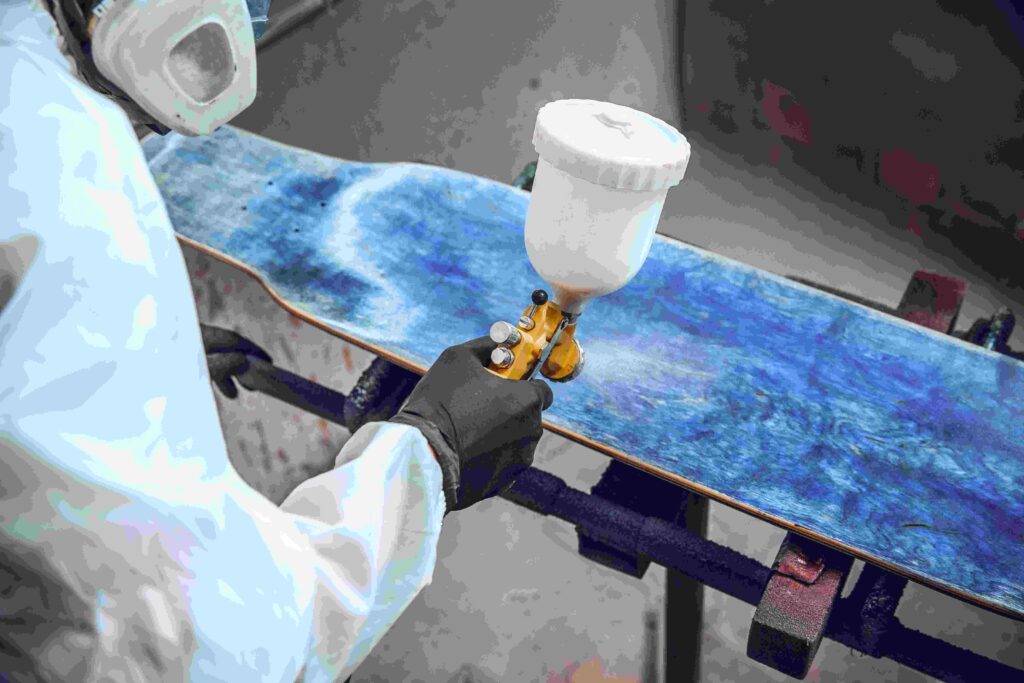
Paints, coatings, and varnishes represent MEK’s largest single application area. The solvent excels at dissolving resins used in automotive finishes, industrial coatings, and protective paints. When formulators need to thin nitrocellulose, acrylic, vinyl, or polyurethane-based coatings, MEK’s evaporation rate of 3.8 provides that sweet spot—fast enough for rapid production cycles yet slow enough to prevent orange peel texture defects.
Automotive refinishing shops depend on MEK-based reducers for achieving professional-quality finishes. The solvent’s ability to dissolve paint resins while maintaining proper viscosity enables even application through spray guns. As MEK evaporates, it leaves behind smooth, glossy finishes free from trapped solvent bubbles or uneven flow marks. High-solids coatings particularly benefit from MEK’s strong dissolving power combined with moderate evaporation.
Industrial coating operations use MEK to prepare surfaces before painting. The solvent removes oils, greases, and residual contaminants that would prevent proper adhesion. Unlike slower solvents that require extended drying time, MEK’s fast evaporation means painted surfaces can proceed to coating stages quickly, improving production throughput without compromising quality.
Adhesives and Sealants
MEK acts as a solvent for rubber-based industrial cements and adhesives, ensuring proper viscosity and curing characteristics. When manufacturers formulate contact adhesives, polyurethane adhesives, or rubber cements, MEK dissolves the base polymers while controlling application consistency. The solvent’s evaporation triggers initial tack development, allowing adhesives to bond when surfaces come together.
The construction industry uses MEK extensively in PVC pipe cement. This application isn’t technically adhesive bonding—it’s solvent welding. MEK dissolves the surface layers of PVC pipes and fittings, creating a molten interface that fuses together as solvent evaporates. The resulting joint is as strong as the original pipe material because the plastic actually merges rather than being stuck together with separate adhesive.
Model makers and hobbyists recognize MEK as “plastic cement” for scale model assembly. Though sold as adhesive, MEK functions as welding agent dissolving polystyrene and similar plastics. Parts pressed together while MEK-softened fuse into permanent bonds stronger than most glues would provide. This unique property makes MEK invaluable for applications requiring structural bonds between compatible plastics.
Plastics Manufacturing
Methyl ethyl ketone serves multiple roles in plastics production. During PVC manufacturing, MEK acts as processing solvent facilitating resin dissolution and handling. The compound helps disperse additives like stabilizers, plasticizers, and colorants uniformly throughout polymer matrices. This even distribution ensures consistent material properties in finished plastic products from pipes to profiles.
Fiberglass and composite manufacturing depends on MEK as catalyst for polyester and vinyl resins. Boat builders understand this application well—fiberglass hull construction requires precise control over resin curing speed. MEK-based catalysts (actually methyl ethyl ketone peroxide, MEKP) initiate cross-linking reactions that transform liquid resin into solid composite structures. The reaction proceeds at controlled rates allowing workers adequate time for proper layup before hardening begins.
3D printing technology increasingly uses MEK-based formulations for certain material systems. The solvent smooths printed surfaces through vapor treatment, eliminating visible layer lines that detract from finished appearance. Printers working with ABS and similar materials can expose completed prints to MEK vapor, which slightly melts outer surfaces allowing them to flow smooth before resolidifying with glossy, professional finish.
Industrial Cleaning and Degreasing
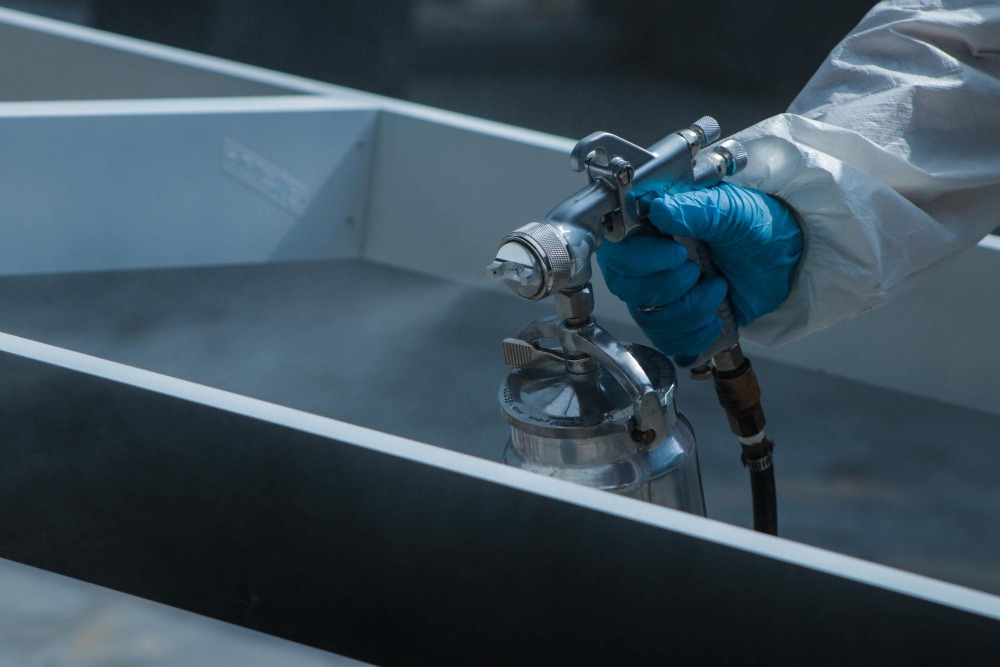
Beyond formulation uses, methyl ethyl ketone excels as heavy-duty cleaning solvent for industrial maintenance. The compound’s corrosive properties (in the chemical sense of dissolving ability) make it effective at removing stubborn deposits conventional cleaners can’t handle. Manufacturing facilities use MEK to degrease machinery, clean equipment between production runs, and prepare surfaces requiring contamination-free conditions.
Electronics manufacturing employs MEK for precision cleaning applications. The solvent removes flux residues, oils, and contaminants from circuit boards without leaving residue that would interfere with subsequent processes. Complete evaporation ensures no traces remain to compromise electronic assemblies. Pharmaceutical and aerospace operations demand this level of cleanliness, making MEK valuable despite handling challenges.
Paint removal represents another key cleaning application. MEK-based strippers soften and dissolve dried paint films, enabling mechanical removal from metal, wood, or concrete substrates. Unlike harsh caustic strippers that can damage substrates, MEK works through dissolution rather than chemical attack. This gentler approach preserves underlying materials while effectively removing multiple paint layers during restoration or refinishing projects.
Metal Surface Preparation
Automotive assembly lines, aerospace manufacturing, and metal fabrication operations use MEK to prepare surfaces before painting or bonding. The solvent removes machining oils, fingerprint residues, and light oxidation that would prevent proper coating adhesion. MEK’s fast evaporation means parts dry quickly, maintaining production flow without creating bottlenecks waiting for solvent to dissipate.
Precision cleaning in aerospace demands absolute contamination control. Parts destined for critical applications must be completely free from oils, greases, or particulates. MEK provides this level of cleanliness reliably, meeting strict industry specifications for surface preparation. The solvent’s complete evaporation leaves no residue that could compromise structural bonds or coating performance.
Safety Considerations
While MEK delivers excellent performance, its hazards require serious respect and proper handling. The compound is highly flammable with a flash point of -9°C (16°F), meaning vapors can ignite from static electricity, hot surfaces, or sparks well below room temperature. Fire safety protocols including explosion-proof electrical equipment and proper ventilation become mandatory in areas where MEK is used or stored.
Primary health and safety hazards:
- Flammable vapors creating fire and explosion risks in enclosed spaces
- Respiratory irritation from inhalation of vapors or mists
- Eye and skin irritation from direct contact with liquid
- Central nervous system depression at high exposure levels
- Potential long-term health effects from chronic exposure
- Environmental contamination if spilled or improperly disposed
Personal protective equipment must include chemical-resistant gloves, safety glasses or face shields, and in poorly ventilated areas, organic vapor respirators. Skin contact with MEK causes irritation and defatting that can lead to dermatitis with repeated exposure. Eyes are particularly vulnerable—contact can cause severe irritation requiring immediate irrigation with water and medical attention.
Ventilation represents the most critical control measure. Local exhaust ventilation at points of use captures vapors before workers breathe them. General dilution ventilation maintains safe atmospheric concentrations below OSHA’s permissible exposure limit of 200 ppm time-weighted average. Facilities using large MEK volumes should implement continuous air monitoring ensuring worker safety.
Conclusion
Methyl ethyl ketone remains essential to modern industry despite its hazards, delivering solvency power and evaporation characteristics that few alternatives match. From automotive paint shops to electronics manufacturing, MEK enables processes requiring powerful yet controlled dissolution. Understanding the diverse uses of methyl ethyl ketone helps manufacturers select appropriate applications while implementing necessary safety measures for worker protection.
As industries seek greener alternatives, bio-based MEK substitutes are emerging. However, traditional petroleum-derived MEK continues dominating due to established performance, competitive cost, and proven results across decades of use. For applications demanding fast evaporation, strong solvency, and clean residue-free drying, MEK maintains its position as industrial workhorse.
For manufacturers requiring methyl ethyl ketone, industrial solvents, or specialty chemicals with complete safety documentation, Elchemy’s technology-driven platform connects buyers with verified suppliers across global markets. Founded by IIT Bombay engineer Hardik Seth and IIT Delhi engineer Shobhit Jain, Elchemy provides transparent access to technical specifications, MSDS sheets, and reliable supply chains supporting industrial operations from automotive manufacturing through aerospace applications and precision cleaning requirements.