

At a Glance
- Polysorbate 80 mixes oil and water together in foods, preventing them from separating
- Added to ice cream at 0.5% concentration to make it smoother and prevent ice crystals
- Found in over 2,300 food products including salad dressings, baked goods, and sauces
- Keeps whipped cream stable and helps chocolate stay smooth without white spots
- The FDA allows its use in food products with specific limits for different applications
- Works by having one water-loving end and one oil-loving end that bridges both ingredients
- Alternative names include Tween 80 and E433 on ingredient labels
- Safe daily intake is set at 25 mg per kg of body weight by food safety regulators
Ever wondered why store-bought ice cream stays creamy even after sitting in your freezer for weeks? Or how salad dressings keep oil and vinegar mixed together in one bottle? The secret ingredient behind these everyday food miracles is polysorbate 80. This ingredient works quietly in thousands of products, making sure your food looks good, tastes consistent, and has that perfect texture you expect.
Polysorbate 80 belongs to a group of ingredients called emulsifiers. Think of it as a food matchmaker—it helps ingredients that normally don’t like each other (like oil and water) stay together nicely. Food manufacturers have been using it for decades because it solves real problems in making quality products that last longer on shelves and taste better when you eat them.
What is Polysorbate 80 and Why Use It in Foods
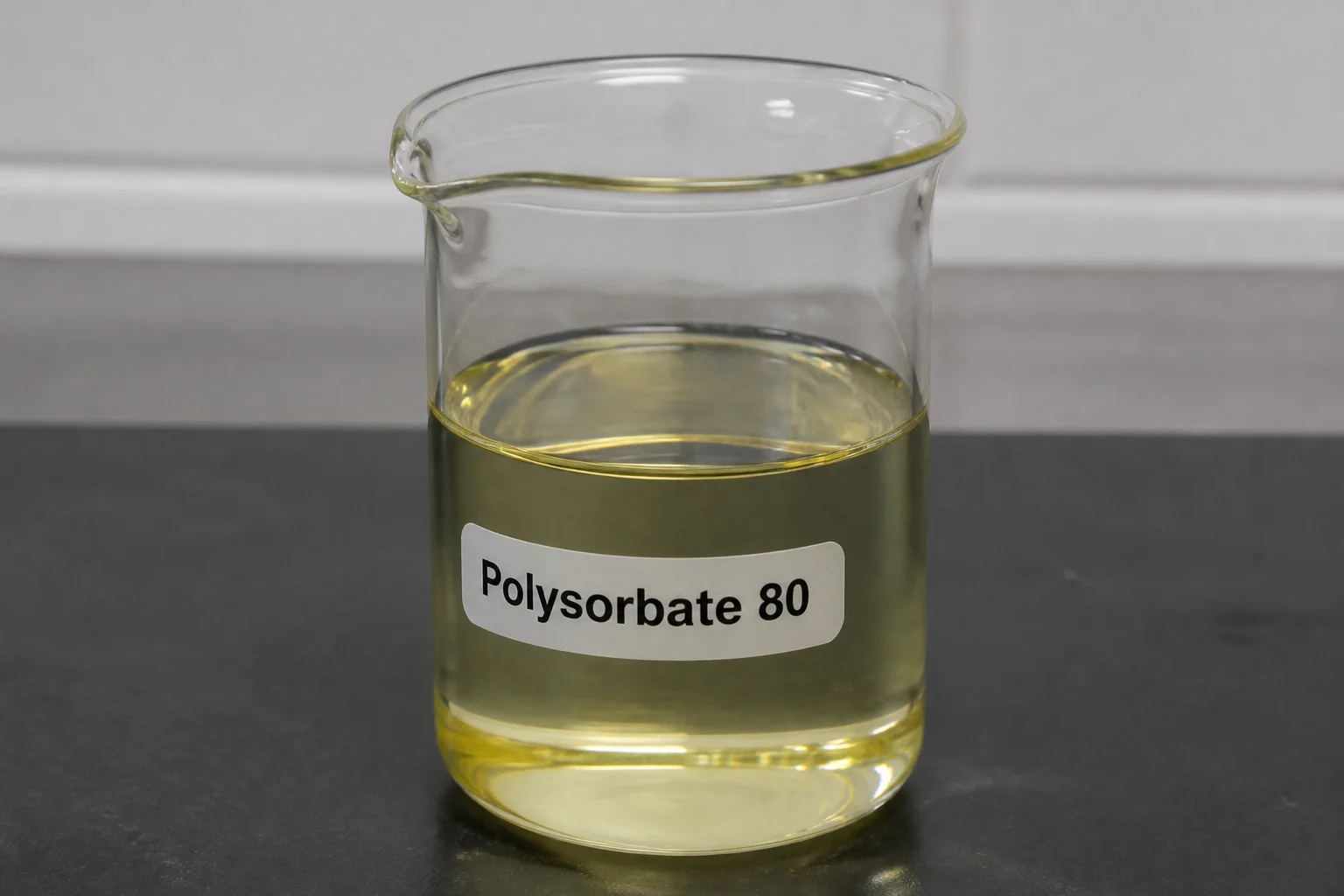
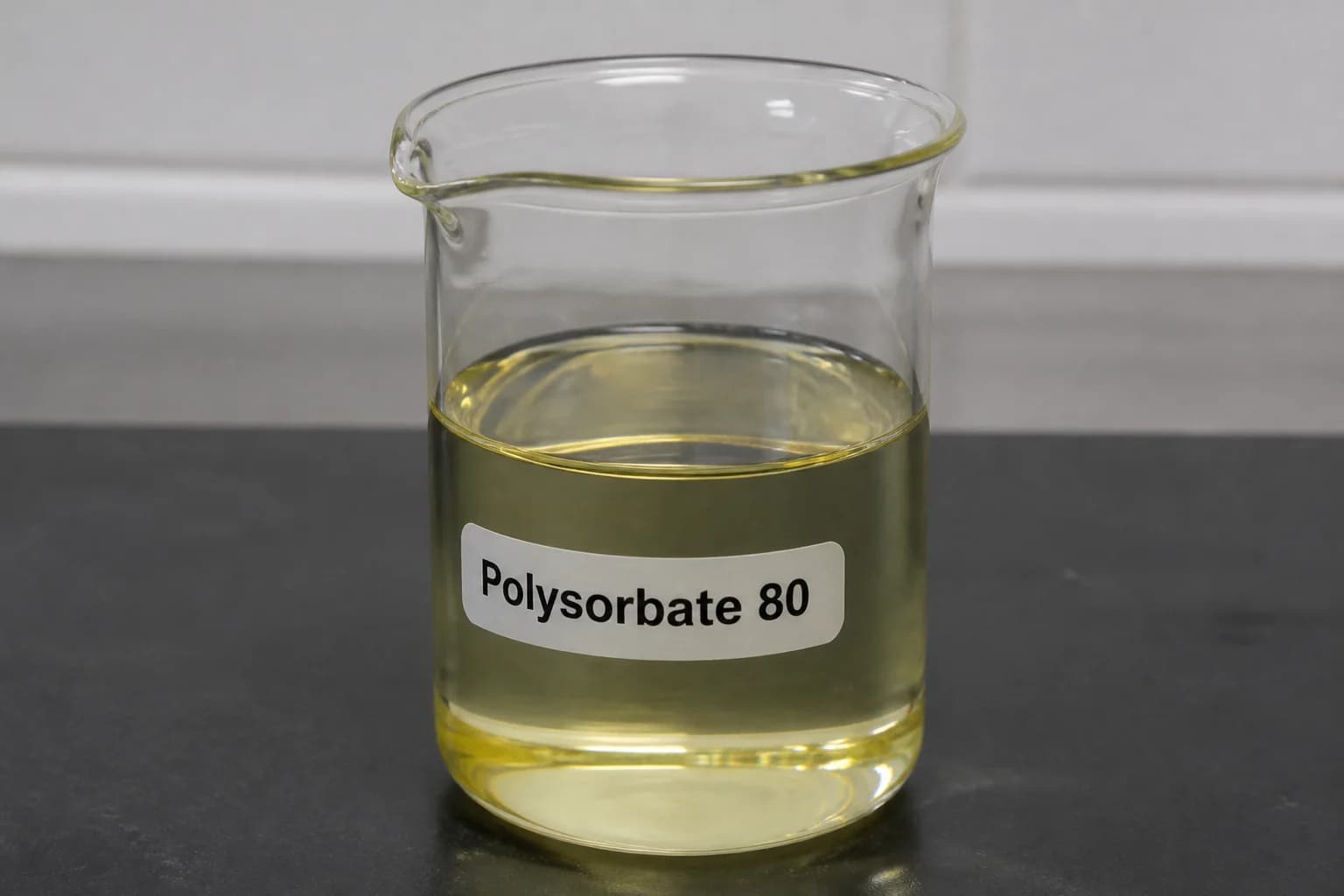
Polysorbate 80 is made from natural substances, sorbitol (which comes from sugar) and oleic acid (found in vegetable oils). Scientists combine these with ethylene oxide through a chemical process to create this useful ingredient. It appears as a thick, yellowish liquid that dissolves easily in water. You might also see it called Tween 80 or E433 on ingredient labels.
Food companies started using emulsifiers because they faced practical challenges. When you mix oil and water naturally, they separate quickly—just try shaking oil and vinegar together and watch what happens. Without something to hold them together, products would look unappealing and customers wouldn’t buy them. Polysorbate 80 solved this problem effectively.
The ingredient has a special molecular structure. One end loves water (hydrophilic), while the other end loves oil (hydrophobic). This dual personality lets it sit right at the boundary between oil and water, holding them together like tiny bridges throughout the food. This simple but clever design makes it incredibly useful for food manufacturing.
Why manufacturers choose polysorbate 80:
- Prevents ingredient separation during storage and transport
- Extends shelf life by keeping products stable
- Improves texture and makes food feel better in your mouth
- Works at very low concentrations (usually less than 0.5%)
- Costs less than many natural alternatives
- Approved by food safety authorities worldwide
How Polysorbate 80 Foods Get Better Texture
The real magic happens when polysorbate 80 changes how food feels and tastes. Different products use it in different ways, but the goal is always the same—making food that people actually want to eat.
Making Ice Cream Smooth and Creamy
Ice cream is probably where polysorbate 80 shines brightest. When you make ice cream, you’re essentially freezing a mixture of milk fat, water, sugar, and air. Without help, this creates problems. Large ice crystals form, making the ice cream grainy instead of smooth. Fat globules clump together wrong, creating an icy mess instead of creamy goodness.
Polysorbate 80 changes this completely. It prevents milk proteins from coating fat droplets entirely, which sounds bad but is actually brilliant. This partial coating lets fat droplets connect in specific ways—forming chains and networks that trap air bubbles perfectly. The result? Ice cream that’s smooth, scoops easily even when frozen solid, and doesn’t turn into an icy brick.
Premium ice cream brands often use the maximum allowed amount (0.5%) because it makes such a big difference. The ice cream holds its shape better when melting, doesn’t develop that weird grainy texture if it partially melts and refreezes, and keeps that rich, creamy mouthfeel that makes good ice cream worth the price.
Keeping Salad Dressings Mixed
Anyone who’s bought a bottle of salad dressing knows the problem—oil floats on top, and you need to shake it before every use. Some dressings stay mixed perfectly from first use to last drop. That’s polysorbate 80 doing its job.
In dressings like ranch or Caesar, polysorbate 80 creates tiny droplets of oil suspended throughout the water-based ingredients. These droplets are so small and so stable that they don’t separate even after months on a shelf. The dressing pours evenly every time, tastes consistent from beginning to end, and looks appetizing instead of separated.
This matters more than you might think. When oil and vinegar separate, you can’t control how much of each you’re getting. One spoonful might be mostly oil, the next mostly vinegar. With polysorbate 80 keeping everything mixed, every portion has the exact same flavor balance the manufacturer intended.
Improving Baked Goods
Baking involves some tricky chemistry. Fats need to spread evenly through dough or batter, air needs to stay trapped in specific patterns, and everything needs to stay moist without becoming soggy. Polysorbate 80 helps with all of this.
In cakes and pastries, it improves what bakers call “crumb structure”—how the inside of the cake looks and feels. It helps distribute fat droplets evenly, creating a tender, uniform texture. Cakes stay moist longer because the emulsifier helps lock in moisture. Bread dough becomes easier to work with and produces more consistent results.
The ingredient also helps baked goods last longer. By controlling how moisture moves through the product, it prevents that stale, dried-out feeling that happens to bread after a few days. This is why commercial baked goods often stay soft much longer than homemade versions.
Polysorbate 80 Food List – Common Products
Walking through a supermarket, you’ll find polysorbate 80 in surprising places. It’s not just in obvious processed foods—it shows up in products you might consider fairly natural or minimally processed.
| Food Category | Common Products | Why It’s Used |
| Frozen Desserts | Ice cream, frozen yogurt, sorbets, popsicles | Prevents ice crystals, improves texture |
| Dairy Products | Cottage cheese, whipped cream, cream cheese spreads | Stops separation, maintains consistency |
| Dressings & Sauces | Ranch, Caesar, vinaigrettes, mayonnaise | Keeps oil and water mixed |
| Baked Goods | Cakes, cookies, bread, pastries | Improves texture and shelf life |
| Chocolate Products | Chocolate milk, chocolate bars, cocoa mixes | Prevents fat bloom (white spots) |
| Beverages | Some coffee creamers, powdered drink mixes | Helps dissolve and stay mixed |
The Environmental Working Group’s database lists over 2,300 products containing polysorbate 80. That’s a lot of food! Everything from pickle brands to cottage cheese to hummus might include it. Even some products labeled as “natural” contain it, though organic products usually don’t since most organic certifications prohibit synthetic emulsifiers.
Reading ingredient labels carefully becomes important if you’re trying to avoid polysorbate 80. Remember it has several names—Tween 80, E433, or polyoxyethylene sorbitan monooleate (the fancy chemical name). Sometimes manufacturers use different polysorbates like polysorbate 20 or 60, which work similarly but with slightly different properties.
Why Polysorbate 80 Food Additive Works So Well

The science behind polysorbate 80 is actually pretty interesting, even if chemistry wasn’t your favorite subject in school. Understanding why it works helps explain why food manufacturers find it so useful despite ongoing debates about processed food ingredients.
Think about polysorbate 80 molecules like tiny magnets with two different ends. One end sticks to water molecules, while the other end sticks to oil molecules. When you add these molecules to a mixture of oil and water, they automatically arrange themselves at the boundary between the two. The water-loving ends point into the water, and the oil-loving ends point into the oil.
This creates a stable barrier around tiny oil droplets floating in water (or tiny water droplets floating in oil, depending on the product). The droplets can’t merge back together easily because they’re surrounded by these molecular guards. This is called an “emulsion,” and it’s remarkably stable once formed properly.
Key benefits for food manufacturers:
- Works at low concentrations (0.02% to 0.5% in most foods)
- Remains stable across temperature changes
- Doesn’t affect taste or smell significantly
- Compatible with many other food ingredients
- Helps other ingredients work better too
- Reduces waste from product separation
- Improves customer satisfaction with product quality
The ingredient also has what scientists call a “low critical micelle concentration.” This means it starts working at very low amounts—you don’t need much to get good results. For manufacturers, this means cost savings. For consumers, it means less additive per serving compared to alternatives that might need higher concentrations.
Another advantage is stability. Polysorbate 80 doesn’t break down easily when heated, cooled, or stored for long periods. Products made with it can survive the journey from factory to warehouse to store shelf to your home without separating or developing texture problems. This reliability matters in an industry where product recalls cost millions and damage brand reputation.
Safety and Health Concerns
No discussion about food additives is complete without addressing safety. Polysorbate 80 has FDA approval for use in foods, but that doesn’t mean everyone agrees it’s perfectly safe or that research is entirely settled.
The FDA has set specific limits for how much polysorbate 80 can be used in different foods. For ice cream and frozen desserts, the limit is 0.5% of the total product. For shortenings and edible oils, it’s 1%. These limits exist because regulators studied how much people typically consume and what amounts showed no harmful effects in testing.
The acceptable daily intake (ADI) is 25 mg per kilogram of body weight. For someone weighing 70 kg (about 154 pounds), that works out to 1,750 mg per day. Actual consumption is usually way below this—most people consume only a tiny fraction of this amount even if they eat several products containing polysorbate 80.
Recent research has raised some questions, though. Studies suggest that emulsifiers like polysorbate 80 might affect gut bacteria and the intestinal lining. Some research shows it could promote inflammation in the gut, particularly in people prone to inflammatory bowel disease. A 2020 international organization studying IBD advised that patients “may be prudent to limit intake” of polysorbate 80 and similar emulsifiers.
However, most of these concerning studies were done in labs or with animals, using amounts much higher than what people normally eat. Whether eating small amounts in everyday foods actually causes problems in real people remains unclear. More research is needed, especially long-term studies following people over many years.
What to consider:
- Regulatory agencies currently classify it as safe when used within limits
- Most people consume it regularly without obvious problems
- Individual sensitivity varies—some people may react to it
- Concerns exist about gut health impacts from regular consumption
- Natural alternatives exist but often cost more and work differently
- Avoiding it completely means limiting many processed foods
If you want to reduce polysorbate 80 intake, focus on eating more whole foods—fresh fruits, vegetables, meats, and grains that don’t need emulsifiers. When buying packaged foods, check ingredient lists. Making salad dressings at home is easy and avoids the additive entirely. Many recipes exist for homemade ice cream without added emulsifiers, though the texture differs from commercial products.
Conclusion
Polysorbate 80 represents a practical solution to real challenges in food manufacturing. It keeps ice cream smooth, salad dressings mixed, and baked goods fresh. Food companies rely on it because it works well at low concentrations and costs less than many alternatives. From a purely functional standpoint, it’s an effective ingredient that helps deliver the consistent quality consumers expect.
The health debate continues. While approved as safe by regulators and generally recognized as harmless in the amounts people typically consume, emerging research suggests we should stay informed as new studies appear. The key is making informed choices based on your own health priorities and comfort level with processed ingredients.
Whether you choose products with or without polysorbate 80, understanding what it does helps you make better decisions. Reading labels, knowing alternative names, and recognizing which products typically contain it gives you control over what goes into your body. That knowledge matters more than any single ingredient debate.
For manufacturers sourcing polysorbate 80 and other food-grade emulsifiers, Elchemy’s platform connects buyers with verified suppliers across global markets. Founded by IIT Bombay engineer Hardik Seth and IIT Delhi engineer Shobhit Jain, Elchemy provides transparent access to quality documentation including certificates of analysis, ensuring that food manufacturers get reliable ingredients for consistent product quality from ice cream to baked goods.