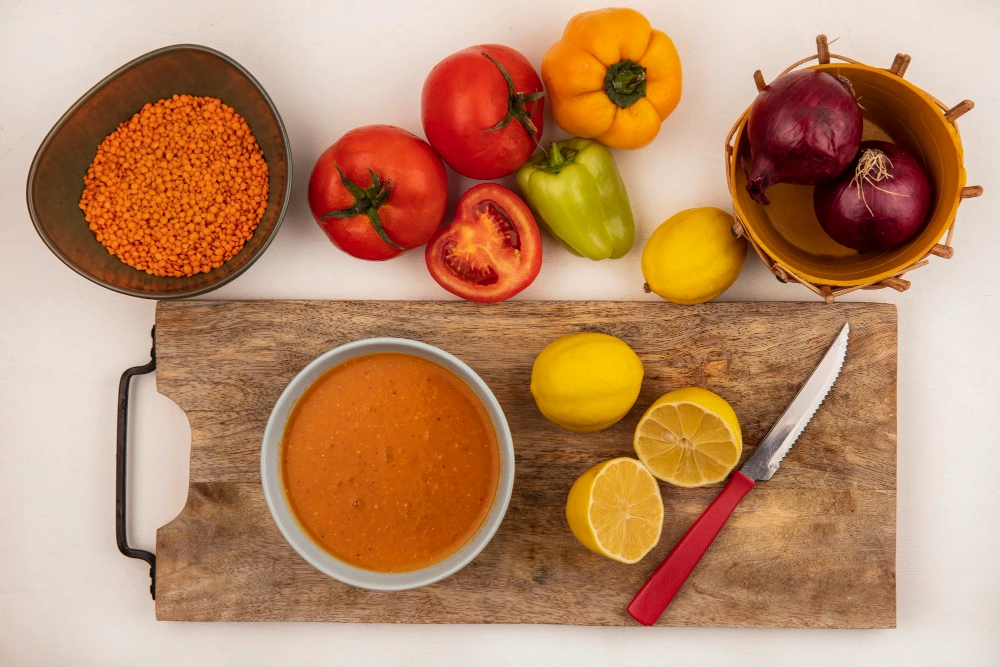


For decades, the food industry’s color decisions were straightforward. Synthetic dyes delivered consistent, bright, shelf-stable color at low cost across virtually any application. Natural alternatives existed but commanded price premiums, faced stability challenges, and rarely matched the visual punch of synthetic options. The choice between the two was essentially an economic and performance calculation, with synthetic dyes winning the majority of mainstream food applications by default.
That calculation has fundamentally shifted. The U.S. food color landscape is undergoing the most dramatic regulatory transformation in decades, with the FDA’s January 2025 revocation of Red No. 3 representing only the opening move in a broader phase-out of petroleum-based synthetic dyes. Combined with intensifying state-level legislation, voluntary industry pledges, and consumer demand for cleaner labels, the natural color category has moved from niche premium positioning into mainstream necessity.
This piece walks through what’s actually driving the shift, what the compliance timeline looks like for food manufacturers, what natural color options exist and where each fits, the technical and sourcing realities formulators are navigating, and how the supplier landscape is responding to one of the largest reformulation waves the U.S. food industry has ever faced.
The regulatory shift: more aggressive than most realize
The pace of regulatory change since early 2025 has been unprecedented for the food color category. The cumulative effect of federal and state actions creates a compliance environment that no manufacturer using synthetic dyes can ignore.
| Date | Action | Impact |
| January 2025 | FDA revokes authorization for FD&C Red No. 3 in food and ingested drugs | Cited Delaney Clause; reformulation required by January 2027 (food) and January 2028 (drugs) |
| April 2025 | HHS and FDA announce phase-out of six remaining petroleum-based synthetic dyes | Voluntary phase-out targeting end of 2026 for Red 40, Yellow 5, Yellow 6, Blue 1, Blue 2, Green 3 |
| 2025 | West Virginia enacts comprehensive food dye ban | First state with broad ban on multiple synthetic dyes |
| 2025 | Utah enacts school-focused food dye legislation | School meal restrictions on multiple synthetic dyes |
| 2025-2026 | 37+ states introduce food dye legislation | Patchwork of state requirements emerging |
| September 2025 | FDA proposes revoking Orange B authorization | Use already largely abandoned by industry |
| February 2026 | FDA issues enforcement discretion for “no artificial colors” claims | Allows the claim on products using only naturally-derived colors |
Several aspects of this timeline deserve attention. The Red No. 3 revocation was a formal regulatory action grounded in the Delaney Clause, which mandates zero tolerance for additives shown to cause cancer in laboratory animals. This is different from the broader phase-out of the other six dyes, which is currently a voluntary framework rather than a formal ban.
The voluntary nature of the broader phase-out has drawn criticism from food safety advocates who argue it lacks enforcement teeth. However, the combination of state-level legislation, retailer pressure, brand commitments, and consumer demand has effectively made compliance non-optional even without formal federal mandate.
For manufacturers, the practical implication is that reformulation around synthetic dyes is no longer a future planning question; it’s an active compliance and competitive necessity through 2026 and 2027.
That compliance reality has driven explosive growth in natural color sourcing, but the technical realities of natural colors are different from what synthetic dye users may expect.
Also Read: Monk Fruit vs Sugar: Why Millions of Americans Are Making the Switch
What “natural color” actually means in food regulation
Before evaluating natural color options, it’s worth understanding the regulatory framework. The FDA classifies color additives into two categories: certified colors (the synthetic petroleum-based dyes now being phased out) and colors exempt from certification (most naturally-derived colors and some non-petroleum synthetic options).
Colors exempt from certification don’t go through the FDA’s batch certification process, but they still require listing in 21 CFR Part 73, comply with identity and purity specifications, and meet good manufacturing practice requirements. The “natural” label terminology is regulated separately from the color additive framework, with the FDA generally allowing “no artificial colors” or “naturally-derived colors” claims when products use only exempt-from-certification colors.
Several practical implications come from this framework:
- Not every plant-derived ingredient qualifies for use as a color additive. The specific identity, source, and manufacturing process must align with the FDA’s listed exempt colors.
- Colors require declaration on ingredient labels even when natural, typically by their specific name (annatto extract, beet juice, beta-carotene, paprika oleoresin, etc.) rather than as a generic “natural color” descriptor.
- Certification programs including USDA Organic, non-GMO Project, and others may apply additional requirements beyond FDA color additive compliance for premium-positioned products.
- The “natural” designation carries no formal FDA definition for foods broadly, though the agency’s enforcement discretion guidance has clarified expectations around “no artificial colors” claims specifically.
This regulatory framework affects how manufacturers approach reformulation and how suppliers position their natural color offerings.
The natural color toolkit: what’s actually available
The natural color category contains a broader range of options than many manufacturers initially appreciate. Each option has specific application strengths, stability profiles, and cost positions:
| Color Need | Natural Source Options | Key Characteristics |
| Red/Pink | Beet juice, anthocyanins (purple carrot, red cabbage, grape skin), lycopene, cochineal/carmine, paprika oleoresin | Beet for cool red, anthocyanins for pH-dependent reds, carmine for stable cool red (insect-derived) |
| Orange | Annatto, paprika oleoresin, beta-carotene, turmeric blends, carrot extracts | Annatto traditional and reliable; beta-carotene versatile |
| Yellow | Turmeric, beta-carotene, lutein, saffron, annatto (lighter shades), riboflavin | Turmeric inexpensive but with flavor; beta-carotene flavor-neutral |
| Green | Chlorophyll, chlorophyllin (copper-stabilized), spirulina-turmeric blends, spinach extracts | Chlorophyll instability is the main challenge; copper chlorophyllin more stable |
| Blue | Spirulina extract, butterfly pea flower, indigo (limited applications) | Spirulina expanded into many applications; butterfly pea pH-dependent |
| Purple | Anthocyanins (purple carrot, red cabbage, blueberry, grape), beet | pH-dependent color shifts; processing sensitivity |
| Brown | Caramel color, cocoa, malt extracts, annatto-turmeric blends | Caramel widely accepted and stable |
| Black | Vegetable carbon, squid ink (limited), dark malt extracts | Vegetable carbon EU-restricted but US-acceptable |
This range covers most application needs, but several technical realities affect which natural color fits which application:
Stability challenges vary significantly across natural color sources. Anthocyanins shift color based on pH and degrade with heat and light. Chlorophyll loses its green character through processing and storage. Beet color fades with heat and prolonged storage. Turmeric is light-sensitive. These stability issues require formulators to match the color source to the specific processing and storage conditions of each product.
Flavor contribution can be a real issue with certain natural colors. Turmeric carries earthy notes. Beet contributes earthiness. Paprika adds slight pepper character. Spirulina has marine notes. Successful reformulation often requires masking or balancing these flavor contributions.
Cost premiums over synthetic dyes are significant. Natural colors typically run 5 to 15 times the cost of equivalent synthetic dyes on a use-level basis, though the gap is narrowing as production scales and supply chains mature.
Use-level requirements vary, with most natural colors requiring 10 to 50 times higher use levels than synthetic dyes to achieve equivalent color intensity. This affects formulation, packaging weight, and finished product cost.
Understanding these realities is critical for product development teams managing the reformulation transition.
Sourcing considerations for natural food colors suppliers
Choosing the right natural food colors suppliers has become a strategic procurement decision rather than a routine purchasing function. Several factors distinguish credible suppliers in the current market environment:
Sourcing transparency and supply chain traceability matter more than ever as consumer scrutiny of ingredient origins has intensified. Suppliers should document source country, growing conditions for botanical sources, harvest methods, and processing protocols.
Stability and application data for specific product categories. Generic technical data sheets are insufficient for serious reformulation projects. Suppliers should provide application-specific guidance covering pH ranges, heat stability, light exposure, and shelf-life expectations for products similar to the customer’s intended use.
Certifications and verification programs including organic certification, non-GMO Project verification, kosher, halal, vegan certification, and any specific religious or dietary certifications required for end markets.
Allergen control protocols for botanical sources where cross-contamination with major allergens is a real concern in agricultural operations.
Regulatory compliance support including documentation for FDA color additive compliance, state-level requirements, and international market expansion where relevant.
Innovation pipeline in extraction technology, color stability improvements, blended color systems, and new natural color sources. The category is evolving rapidly and suppliers investing in innovation deliver more long-term value than those offering standard commodity ingredients.
Production capacity and scalability to support customer growth without supply disruption. Natural color demand has grown faster than many suppliers’ capacity expansion, creating supply tightness in certain color categories.
Technical support depth including formulation chemists who can support customer application development beyond standard product sales. The reformulation work required across the industry has stretched many suppliers’ technical support capabilities.
The combination of these factors determines whether a supplier relationship will work for the long-term transition out of synthetic dyes that most US food manufacturers are now undertaking.
What’s emerging in the natural color space
Several developments in natural color technology are reshaping what’s possible for formulators:
Precision fermentation is producing yeast-derived pigments and other microbial-source colors that combine sustainability positioning with cost competitiveness against traditional botanical extraction. Several pigments now produced through fermentation deliver consistency and supply chain advantages that agricultural sources can’t match.
Stabilization technology including microencapsulation, complexation with proteins or starches, and modified extraction methods is extending the stability of historically challenging colors like anthocyanins and chlorophyll. These technologies are narrowing the performance gap between natural and synthetic colors.
Blended color systems combining multiple natural sources to achieve specific target shades that single-source colors can’t deliver alone. This blending approach is particularly important for matching the specific shades that consumers associate with traditional products colored by synthetic dyes.
New botanical sources continue to enter commercial use. Plants traditionally used in regional cuisines or traditional medicine but not previously commercialized as food colors are being characterized, validated, and brought to market.
Vertical integration by major natural color suppliers is becoming more common, with companies controlling everything from agricultural production through extraction and finished color manufacturing. This integration provides cost advantages and supply chain stability that pure intermediary positions cannot match.
These developments collectively are making the transition from synthetic to natural colors more practical than it would have been five years ago.
The supplier landscape and what it means for buyers
The natural food colors manufacturers serving the U.S. market range from large global ingredient companies to specialty natural color producers to emerging biotechnology firms in precision fermentation. The category has consolidated meaningfully through acquisitions over the past several years, with major food ingredient companies expanding natural color capabilities through both internal investment and M&A activity.
For food manufacturers navigating reformulation, this supplier landscape creates several practical considerations. Working with a single large supplier provides supply chain integration and broad color coverage but limits negotiating leverage. Working with multiple specialty suppliers requires more management overhead but provides access to differentiated capabilities and competitive pricing.
The most sophisticated procurement approaches typically combine relationships with one or two large supply partners for core color needs with specialty supplier relationships for differentiated colors, sustainability-positioned options, or innovative new color technologies.
What this means going forward
The U.S. natural food colors transition is genuinely underway and will accelerate through the 2026 and 2027 compliance deadlines. Manufacturers that have already invested in reformulation work are positioned more strongly than those still planning their approach. The competitive separation between proactive and reactive responses will become more visible as deadlines approach and consumer attention to ingredient panels intensifies.
For procurement teams, the practical path forward involves identifying credible supplier partners across the natural color spectrum, investing in technical evaluation of multiple color options for each affected application, building reformulation capabilities through R&D investment or supplier partnership, and treating the transition as an opportunity for brand positioning improvement rather than just compliance burden.
For brand managers, the reformulation creates real consumer trust opportunities. Brands that lead on clean color transitions communicate the change effectively to consumers and use the reformulation as evidence of broader commitment to ingredient quality build positioning that defensive late movers cannot match.
The natural food colors category will continue maturing through 2026 and 2027 as the regulatory phase-out accelerates demand and as supplier investment in capacity, technology, and innovation responds to that demand. The category is not going back to its pre-2025 position. Manufacturers, formulators, and procurement teams that recognize this and respond strategically will be the ones positioned to benefit from the transformation that’s underway right now across one of the most fundamental input categories in U.S. food manufacturing.