

At a Glance
- Few producers, many routes: among the sodium citrate manufacturers and suppliers below, Cargill and Jungbunzlauer make it. The rest distribute, supply or source it.
- Dihydrate is the standard form: most food and pharma buyers request sodium citrate dihydrate, which holds about 10% to 13% water.
- Sodium citrate follows citric acid: it is made from citric acid, so citric acid supply and cost flow into quotes.
- Origin changes the cost: anti-dumping and countervailing duty orders cover citric acid and sodium citrate from China, and anti-dumping orders cover Thailand and Colombia.
- This is a shortlist, not a ranking: the right route depends on form, grade, certification, origin, pack and destination.
What you’ll learn:
You’ll learn how to tell producers from distributors and check origin and duty exposure for sodium citrate.
You’ll also get the form, grade and RFQ checks that make quotes comparable.
Introduction
A sodium citrate quote can hide three differences: the form, the grade and the origin. Miss one and you can fail an audit or pay duties you did not plan for.
Sodium citrate is made by neutralizing citric acid, so its supply follows citric acid. EPA’s profile says domestic citric acid manufacturing has declined and imports increasingly meet demand.
This guide helps buyers compare sodium citrate manufacturers and suppliers in the US. It shows who makes the product, where distributors fit and which checks make quotes comparable. Start with your form and grade, then choose a route.
Request a Quote with your form, grade, volume and destination to start a documented review.
Who makes sodium citrate in the USA?
Cargill and Jungbunzlauer are the two sodium citrate manufacturers on this list. Cargill lists sodium citrate and potassium citrate alongside its citric acid. Jungbunzlauer Inc serves the US from Newton, Massachusetts, and its trisodium citrate is made in Port Colborne, Ontario. Every other company here distributes, supplies or sources it.
How this list was selected
We screened each company against five gates: a first-party source, a stated commercial role, a US delivery route, a stated form or pack, and a quote or documentation path. All six companies passed. Inclusion is a starting point. It is not a promise of stock, certification or price.
Role evidence last checked: 5 October 2026. Ranges and certifications change, so confirm them when you issue an RFQ.
Why Elchemy is listed first. Elchemy publishes this guide, so weigh that. We list it first for one reason. With few producers and citric acid supply leaning on imports, second sources and origin checks matter, and that is the role Elchemy plays. It is a sourcing partner, not a US producer. The other five companies follow in alphabetical order. The order is not a ranking by capacity, quality, price, availability or delivery speed.
Dihydrate or anhydrous: which form to request?
Most buyers request the dihydrate. The anhydrous form is less common, so confirm the form on every quote. The dihydrate is CAS 6132-04-3, and the anhydrous form is CAS 68-04-2.
| Form | Water content | Where it tends to fit | Ask |
| Dihydrate | About 10% to 13% | Food, beverage, pharmaceutical and detergent uses | Granulation and grade documents |
| Anhydrous | Much lower, set by the supplier | Uses that need the lowest water content | The CAS number and the water limit |
Sodium citrate is made by neutralizing citric acid with an alkali. Read about citric acid production for the upstream process.
Origin and duties: what to ask before you buy
Origin affects landed cost. Commerce continued the China orders in May 2026. Their scope includes citric acid and sodium citrate.
Anti-dumping orders on Thailand and Colombia were continued in 2023 after sunset reviews. Distributor listings often name the producer per item, so check each item’s origin. For example, Univar lists a sodium citrate grade from Sucroal, a producer in Palmira, Colombia.
Duty depends on origin, producer and entry details, so confirm it with your customs broker. This guide is not legal advice. Ask each supplier for:
- The producer of record, not only the seller.
- The country of origin, in writing.
- The HTS code used for entry.
- The current duty status, and whether the quote is duty-paid or duty-excluded.
Who we left out, and why
Three kinds of names appear in search results for sodium citrate suppliers but not here.
- Small-pack retail and lab-supply sellers. They serve consumers and laboratories, not industrial buyers.
- Producers with no US route. Directories list many firms outside the US that do not serve US buyers directly.
- Names we could not verify. They may be added after review.
Grade, certification and document checks before an RFQ
Start with the end use, then request the grade and documents that match it.
| Buyer requirement | What to request | Do not assume |
| Food and beverage | FCC documents, a lot COA, and kosher or halal certificates if required | A food grade sodium citrate lot carries every certification |
| Pharmaceutical and supplements | Sodium citrate USP documents and producer site details | A food-grade lot meets USP |
| Dairy and processed foods | The grade the producer states for emulsifying use, plus FCC documents | Any food-grade lot suits every process |
| Technical and detergent | A technical specification with assay and water | Technical grade is safe for food use |
If you are weighing the two additives, read citrate versus citric acid.
For application detail, see sodium citrate food uses.
What does a typical sodium citrate specification look like?
Ranges below are drawn from published pharmacopeial-grade supplier data sheets for the dihydrate. Buy against your supplier’s current TDS and COA.
| Parameter | Range in published specifications | Why it matters |
| Assay | 99.0% to 100.5% | Sets the grade tier |
| Water | About 10% to 13% | Confirms the correct hydrate |
| pH, 5% solution | 7.5 to 9.0 | Checks buffering behavior |
| Chlorides | 50 ppm maximum | A purity indicator |
| Sulfates | 150 ppm maximum | A purity indicator |
| Heavy metals | 10 ppm maximum | Matters for pharma and sensitive uses |
Pack formats: bag or supersack
Most bulk sodium citrate in the listings we reviewed ships as bags or supersacks. CORECHEM states that its sodium citrate is not regulated as a hazardous material for DOT transport. Confirm transport status and net weight on the SDS and in writing.
| Format | Size seen in supplier listings | Best for |
| Bag | 50 lb or 55 lb (25 kg) (CORECHEM, Univar) | Trials and small runs |
| Supersack | 2,000 lb (Univar) | Larger recurring runs |
Sodium Citrate Manufacturers and Suppliers to Consider
This is a role-verified shortlist, not a ranking by capacity, quality, price, availability or delivery speed. Elchemy publishes this article and appears first. The other five companies are in alphabetical order.
| Company | Verified commercial role | What buyers research it for | Ask before RFQ |
| Elchemy | Supplier / sourcing partner | Second source and documented imports | Which producer and origin apply? |
| Cargill | Producer | Sodium citrate and potassium citrate within its citric acid range | Which plant, form and grade serve my lane? |
| CORECHEM | Supplier / distributor | Dihydrate in 50 lb and 55 lb bags, Eastern US | What freight applies outside the East? |
| Hawkins | Supplier / distributor | Dihydrate in USP and FCC grades | Which grade and pack suit my batch? |
| Jungbunzlauer | Producer | Citrates made in Canada, sold by Jungbunzlauer Inc | Which grade, and what duty status applies? |
| Univar Solutions | Distributor | Multi-producer listings with kosher and halal options | Who is the producer, and where is it made? |
Elchemy: sodium citrate supplier and sourcing partner
Role: supplier / sourcing partner. Elchemy does not run a US sodium citrate plant. It works with manufacturers across more than one origin and quotes US buyers on the form, grade, pack and destination they specify. It can confirm the producer and country of origin in writing for each quote, so you can check duty exposure before you commit. Technical and safety documents are available on request, and availability is confirmed case by case.
Best for: a second source, imported material with documented origin, or a sample to test before a volume order.
Not the best fit for: next-day bags in one region, or direct plant loads.
Request a Sample to test a grade against your current supplier before you commit to volume.
Cargill: sodium citrate manufacturer
Role: producer. Cargill lists sodium citrate and potassium citrate with its citric acid, and says its citric acid is produced commercially by fermentation. It suits larger buyers with defined specifications. Ask which plant supplies your lane, which form and grade are available, and which certificates apply to the lot.
CORECHEM: regional supplier and distributor
Role: supplier / distributor. CORECHEM describes itself as a single-location distributor shipping primarily in the Eastern United States. It lists sodium citrate dihydrate in 55 lb (25 kg) and 50 lb bags, with an SDS and a quote by form or phone. Ask what freight applies outside the East and which producer made the lot.
Hawkins: supplier of USP and FCC sodium citrate
Role: supplier / distributor. The Hawkins Pharmaceutical Group lists sodium citrate dihydrate that meets USP and FCC monographs, in bulk and multiple packages. It suits pharmaceutical and food buyers who need monograph-grade material. Its product copy mixes the words manufacturer and distributor, so ask who produces the grade you are quoted.
Jungbunzlauer: producer serving the US from Canada
Role: producer. Jungbunzlauer Inc serves US buyers from Newton, Massachusetts. The company makes citric acid and trisodium citrate in Port Colborne, Ontario, so the material is Canadian-made, not US-made. Univar lists a Jungbunzlauer sodium citrate dihydrate in a 25 kg bag, graded USP, FCC and EP, with kosher and halal certification. Ask for the grade, the lot certificate and the current duty status for your entry.
Univar Solutions: sodium citrate distributor with multi-producer listings
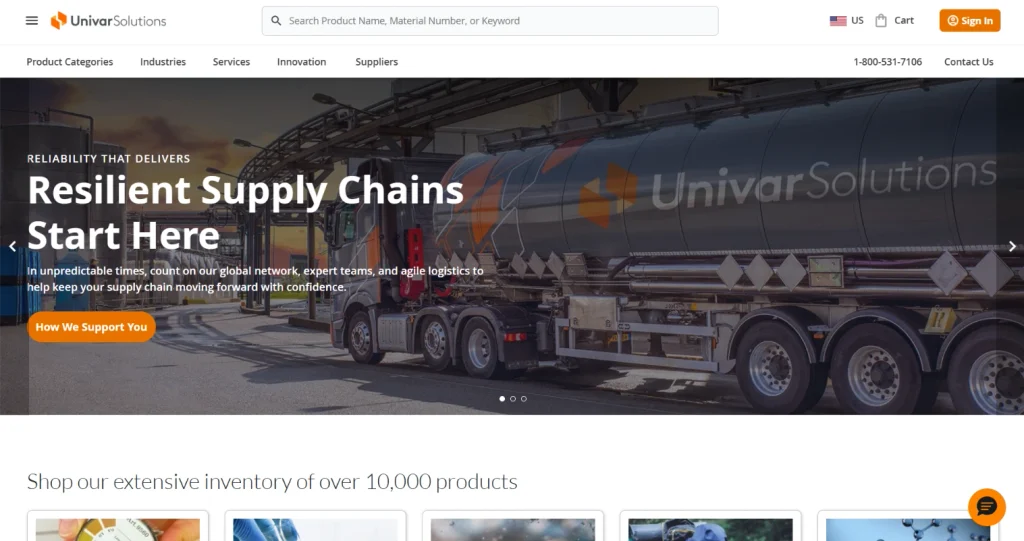
Role: distributor. Univar lists sodium citrate dihydrate from more than one producer, including Jungbunzlauer and Sucroal, in 50 lb and 25 kg bags, plus a food-grade supersack of trisodium citrate dihydrate. Listings show USP and FCC grades, with kosher, halal and non-GMO options on some. Quotes run through a request form, and some items show account pricing. Because the producer is named per item, ask each item’s country of origin before you compare quotes.
Producer or sodium citrate distributor: which route fits?
Sodium citrate suppliers fall into two groups. A producer controls the product and the plant. A distributor adds pack sizes, local delivery and grade breadth.
| Decision factor | Producer route may suit | Distributor route may suit | Buyer input |
| Producer of record | Direct plant specifications and change notices | Needs confirming per item | Required producer or origin |
| Volume | Recurring large lots | Bags, supersacks and mixed orders | Annual volume and order size |
| Documents | Plant-specific certificates | Several producers’ documents under one account | Kosher, halal, FCC or USP needs |
| Duty exposure | Set by the producer’s origin | Varies by item, so ask per quote | Duty-paid or duty-excluded terms |
| Region | Plant-to-site freight | Local stock and regional delivery | Ship-to location |
For the wider trade-offs, see manufacturers versus distributors.
What a sodium citrate supplier needs in an RFQ
- Name the form. State dihydrate or anhydrous, with the CAS number and granulation.
- State the grade. FCC, USP or technical, and the specification you buy against.
- List certifications. Kosher, halal or non-GMO, for the exact lot.
- Ask for origin. Request the producer of record and country of origin in writing.
- Confirm duty status. Ask whether the price is duty-paid or duty-excluded, and which HTS code applies.
- List the documents. Request the SDS, TDS and lot COA. Use the supplier-approval checklist for the full review.
- Define demand and delivery. Give first order, annual volume, pack, ship-to location and receiving limits.
Pair the RFQ with these supplier selection checkpoints so every quote is scored on the same evidence.
What changes a bulk sodium citrate quote
Sodium citrate is made from citric acid, so citric acid supply and cost flow into quotes. Origin and duty status can change the landed cost. So can grade, certification, pack, volume and freight.
A lower quote can reflect a different grade, origin or duty basis. Ask whether a wholesale sodium citrate quote includes duty, and ask each supplier to quote the same specification and delivery terms. For price context, see buying sodium citrate.
Five sourcing mistakes to avoid
- Comparing quotes on different forms. A dihydrate quote and an anhydrous quote are not comparable.
- Ignoring origin. Duty status can change the landed cost after you approve a quote.
- Trusting the word “manufacturer.” Confirm the producer of record in writing.
- Skipping the COA. Read SDS in procurement for what to check, then request the lot COA.
- Relying on one source. Plant outages and import delays can tighten supply, so qualify a backup early.
Choosing your route: a decision framework
- Choose a producer route (Cargill or Jungbunzlauer) if you run recurring volume of a defined grade and can meet account and delivery terms.
- Choose a distributor or supplier (CORECHEM, Hawkins or Univar) if you need bags, supersacks, mixed grades or regional delivery.
- Choose a sourcing partner like Elchemy if you want a second source, documented imports and the producer of record confirmed.
Neither route is universally better. Approve the documented product, origin and delivery route, not the label.
FAQs
Who makes sodium citrate in the USA?
Cargill and Jungbunzlauer are the two producers on this list. Cargill lists sodium citrate with its citric acid range, and Jungbunzlauer makes trisodium citrate in Port Colborne, Ontario and sells in the US through Jungbunzlauer Inc. Confirm the producer of record and country of origin on every quote you receive.
What is the difference between sodium citrate dihydrate and anhydrous?
Dihydrate holds about 10% to 13% water and is the form most buyers request, under CAS 6132-04-3. The anhydrous form is CAS 68-04-2 and has a much lower water content. Confirm the form, CAS number and water limit on every quote, because they change dosing.
Does sodium citrate carry anti-dumping duties?
It can. Commerce’s orders on China cover citric acid and sodium citrate, and anti-dumping orders cover Thailand and Colombia. Duty depends on origin and producer, so ask for country of origin and duty status on every quote and confirm both with a customs broker.
How do I choose between a manufacturer and a distributor?
Choose a producer for recurring large lots of a defined grade. Choose a distributor for bags, supersacks, mixed grades or regional delivery. In both cases, confirm the producer of record, the certificates for your lot and the duty basis of the quote, so offers can be compared fairly.
Where can I buy sodium citrate in bulk?
You can buy sodium citrate in bulk from a producer, an industrial distributor or a sourcing partner. Producers fit recurring large lots, distributors fit bags and supersacks, and a sourcing partner compares quotes and imports. Choose by form, grade, origin and destination, and confirm availability in writing.
What should a sodium citrate RFQ include?
A sodium citrate RFQ should state the form, grade, certifications, volume, pack and destination. Add a request for the producer of record, country of origin, duty status and the documents you need, including the SDS, TDS and lot COA. This lets every supplier quote the same product on the same basis.
Can Elchemy supply sodium citrate to US buyers?
Yes, for a defined requirement. Elchemy works with manufacturers and quotes on the form, grade, pack and destination you specify, with documents and samples available on request. Share your volume, destination and document needs, and the team confirms availability and commercial fit case by case. Elchemy is a sourcing partner, not a US producer.
Conclusion
The safest way to compare sodium citrate manufacturers and suppliers is to fix the form, grade and origin first, then weigh pack, delivery and a backup source. This six-company list is a role-verified starting point, not a ranking.
Request a Quote with your specification, volume and destination to begin a documented sourcing review.