

At a Glance
- Grade sets the price floor. Food/USP/FCC-grade dihydrate always costs more than technical-grade anhydrous, and a Kosher, Halal, or Non-GMO certification stack adds further cost on top.
- Bulk pricing is tiered, not flat. Price per kg drops meaningfully as you move from 25kg bags to bulk bags, totes, and full container loads.
- Particle size is a hidden cost driver. Granular, fine granular, X-fine granular, and powder forms each require different processing, and that shows up in the quote.
- Supplier, distributor, and manufacturer are not interchangeable. Each sits at a different point in the supply chain, with different pricing leverage, lead times, and MOQ flexibility.
- Dihydrate is the default for food and beverage buyers; anhydrous serves narrower technical and industrial use cases.
- The real number that matters is landed cost, not sticker price. Freight, packaging format, and certification requirements can turn the cheapest quote into the most expensive delivery.
What You’ll Learn
How sodium citrate grade, form, and certification shape price, how supplier, distributor, and manufacturer sourcing routes differ, and what to verify before placing a bulk order.
Introduction
A buyer who orders the wrong grade of sodium citrate does not usually find out from a lab result. They find out when a cheese-melt batch grains, a beverage buffer drifts out of spec, or customs holds a shipment because the COA doesn’t match the declared use. Sodium citrate looks like a commodity on a spec sheet, but the wrong grade, form, or certification stack turns a routine reorder into a production stoppage. That’s why choosing the right sodium citrate supplier matters more than chasing the lowest quoted number.
Demand has been climbing steadily. Industry estimates put the global sodium citrate market in the range of USD 0.8 to 1.4 billion in 2025, growing at roughly a 4.8% CAGR through the mid-2030s, with food and beverage applications, particularly dairy and processed cheese, driving the largest share of that growth. That demand is exactly why pricing has gotten harder to pin down: more grades, more certification requests, and more regional supply variation than a simple “price per kg” search suggests.
This guide is written for procurement buyers, formulators sourcing at scale, and importers who need to move from “what is sodium citrate” to “what should I actually pay, and who should I buy it from.” If you’re looking for formulation guidance instead, our sodium citrate uses in food & beverage guide covers application-level detail; this one stays focused on sourcing and cost.
Ready to compare pricing against your own volume and grade requirements? Request a Sample to validate fit before you commit to a bulk order.
What Is Sodium Citrate? (E331 Primer)
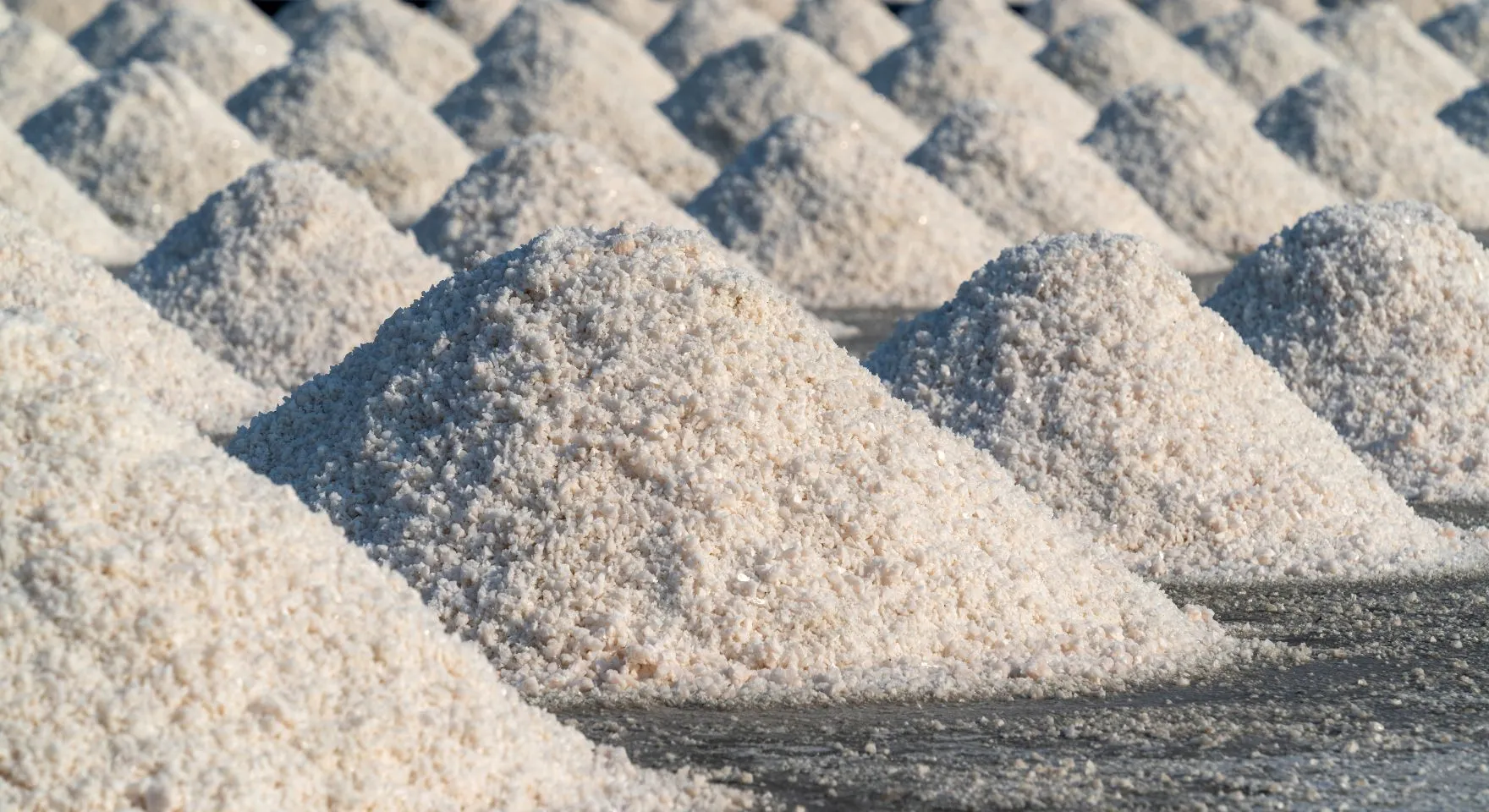
Sodium citrate is the sodium salt of citric acid, produced by neutralizing citric acid with sodium hydroxide or sodium carbonate. It exists in two forms buyers need to distinguish immediately: anhydrous (CAS 68-04-2) and dihydrate (CAS 6132-04-3), which carries two water molecules per molecule of salt. In the EU, sodium citrates are classified under the food additive number E331, authorized for use across a wide range of food categories. In the US, sodium citrate is affirmed as GRAS under 21 CFR 184.1751, where it’s used in food with no limitation other than current good manufacturing practice.
Buyers search under several overlapping names: trisodium citrate, citric acid trisodium salt, and simply sodium citrate, most commonly referring to the fully neutralized (trisodium) form. Whether your PO reads “sodium citrate” or “trisodium citrate,” you’re specifying the same molecule; the ambiguity only matters once you get to mono- and disodium variants, which are far less common in food use.
Technical Specifications
| Property | Value |
| Appearance | White crystalline powder or colorless crystals |
| Molecular Formula | C6H5Na3O7 (anhydrous) / C6H5Na3O7·2H2O (dihydrate) |
| Molecular Weight | ~258.07 g/mol (anhydrous) / ~294.10 g/mol (dihydrate) |
| CAS Number | 68-04-2 (anhydrous) / 6132-04-3 (dihydrate) |
| Melting/Decomposition Point | Dihydrate loses water of crystallization around 150°C; decomposes at higher temperatures |
| Bulk Density | Approximately 800 to 1,000 kg/m³, varies by particle size |
| Solubility | Highly soluble in water, roughly 70 to 92 g/100 mL depending on temperature |
| pH (1% solution) | 7.5 to 9.0 (alkaline) |
| Odor | Odorless |
Grades: Which One Do You Actually Need?
Dihydrate vs. anhydrous is the first fork in the road. Most food and beverage buyers default to dihydrate because it dissolves predictably and is the form most widely stocked at food grade sodium citrate quality. Anhydrous serves specific technical and industrial applications where moisture content needs to be tightly controlled, such as certain detergent or plating formulations. If you’re unsure which form your process needs, our anhydrous vs dihydrate – which to buy comparison breaks down the decision in more depth.
Particle size is the second variable, and it’s often overlooked until a batch runs slow or clumps in a hopper. Granular grades dissolve steadily and handle well in automated dosing. Fine granular and X-fine granular dissolve faster, useful for beverage applications where dissolution speed matters. Powder grades suit dry-mix blending and tableting, including effervescent and nutraceutical formats. Each step up in fineness typically adds a processing cost, which is one reason two “food grade” quotes for the same tonnage can differ by more than the certification stack alone would explain.
Compliance tier is the third variable. USP, FCC, Ph. Eur, and JECFA designations each set slightly different purity and heavy-metal thresholds, and pharmaceutical or nutraceutical buyers usually need to specify one explicitly rather than accepting generic “food grade.” Technical grade sits below all of these and is priced accordingly.
| Grade/Form | Typical Use Case | Compliance | Notes |
| Dihydrate, granular | General food & beverage | Food Grade, FCC | Most common default for F&B buyers |
| Dihydrate, fine granular | Beverages, quick-dissolve applications | Food Grade, USP | Faster dissolution, modest price premium |
| Dihydrate, powder | Dry mixes, effervescent tablets, nutraceuticals | USP, Ph. Eur | Higher processing cost than granular |
| Anhydrous, granular | Detergent builders, industrial blends | Technical Grade | Lower cost, not food-suitable |
| Anhydrous, powder | Pharma buffering, blood collection tubes | USP | Tight moisture and purity specs required |
Pricing: What Bulk Sodium Citrate Costs
If you searched “sodium citrate price per kg” hoping for a single number, here’s the honest answer: there isn’t one. Price depends on grade, particle size, certification stack, order quantity, and freight origin, and any distributor quoting a flat number without asking those questions is either guessing or quoting their cheapest technical-grade stock. What follows is range framing based on typical market positioning, not a promise of exact pricing, since raw material costs and freight shift with the citric acid market and container availability.
| Pack Size / MOQ | Grade | Indicative Price Range (per kg) | Notes |
| 25kg bags | Food Grade, standard granular | Highest per-kg rate | Suited to small-batch buyers, samples, trial runs |
| Bulk bags (500–1000kg) | Food Grade, granular or fine granular | Mid-range, meaningful drop from bag pricing | Common tier for mid-volume manufacturers |
| Tote (1,000kg+) | Food Grade or USP | Lower per-kg rate, freight-dependent | Best value for regular reorder cycles |
| FCL / bulk rail | Food Grade, USP, or Technical | Lowest per-kg rate at volume | Requires storage capacity and consistent offtake |
As a rule of thumb, moving from bag to tote pricing typically cuts per-kg cost by a meaningful double-digit percentage, though the exact break depends on your supplier’s own inbound freight terms. To buy sodium citrate in bulk at a quantity-specific rate, it’s worth requesting a tiered quote rather than a single price point, whether you’re placing a first-time sodium citrate purchase or negotiating a standing order.
What Actually Moves the Price
- Certifications: Kosher, Halal, Non-GMO, and USP each add cost over base technical grade, and stacking multiple certifications compounds that.
- Particle size and processing: X-fine granular and powder forms cost more than standard granular because of the extra milling or sizing step.
- Pharma and nutraceutical specs: tighter pH range and heavy-metal limits mean tighter quality control, which shows up in price.
- Packaging format: small bags carry the highest per-kg packaging overhead; bulk totes and FCL/rail spread that cost thinner.
- Freight and origin: domestic vs. imported material, current container availability, and origin-specific duties all shift landed cost, sometimes more than the base product price does.
Have a target volume and grade in mind? Request a Quote for a tiered price breakdown against your specific requirements.
Applications and How They Affect Price
Food and beverage is the largest application category by volume, covering dairy (anti-caking, emulsification), beverage buffering and electrolyte formulation, confectionery, and jams and preserves. Emulsifying-salt use in processed cheese in particular drives steady demand for food-grade dihydrate; if that’s your use case, our guide to sodium citrate for cheese applications goes deeper on the grade and dosing considerations specific to melt control.
Pharmaceutical applications, including buffering agents and anticoagulant use in blood collection tubes, generally require USP-grade material with tighter purity and heavy-metal specs, which pushes pricing above standard food grade. Personal care formulations use sodium citrate as a pH adjuster in a similar purity band. For a closer look at sourcing considerations across both, see pharma & cosmetic sodium citrate.
Industrial and technical applications, including detergent builders, metal plating and surface treatment, and coatings, typically run on technical-grade anhydrous material at a materially lower price point, since food-safety certification isn’t required.
If you’re formulating rather than sourcing, deeper application and dosing guidance lives in our sodium citrate uses in food & beverage post; this guide stays focused on which application implies which grade and certification, since that’s what actually determines your quote.
Supplier vs. Distributor vs. Manufacturer: What’s the Difference?
These three terms get used interchangeably in search, but they describe different points in the supply chain, and the difference affects your price and lead time.
A manufacturer produces sodium citrate from raw material, typically via fermentation-based citric acid production, and sets the base market price. Sodium citrate manufacturers usually require higher MOQs and longer lead times, since they’re producing to schedule rather than holding flexible inventory.
A sodium citrate distributor holds inventory and breaks bulk, which means faster fulfillment and more flexible order sizes, at the cost of a markup over manufacturer pricing.
A supplier, as most buyers search the term, is often used to mean either, or a hybrid of the two. It’s worth clarifying directly with any vendor whether you’re buying from held inventory or against a production run, since that changes your lead time expectations.
Elchemy operates as a distributor and exporter, sourcing from qualified manufacturers and holding inventory positioned for faster turnaround into food, beverage, and industrial buyers, without the MOQ and lead-time constraints of going direct to a manufacturer for smaller or mid-volume orders.
MOQ & Ordering: How Bulk Sodium Citrate Is Packaged
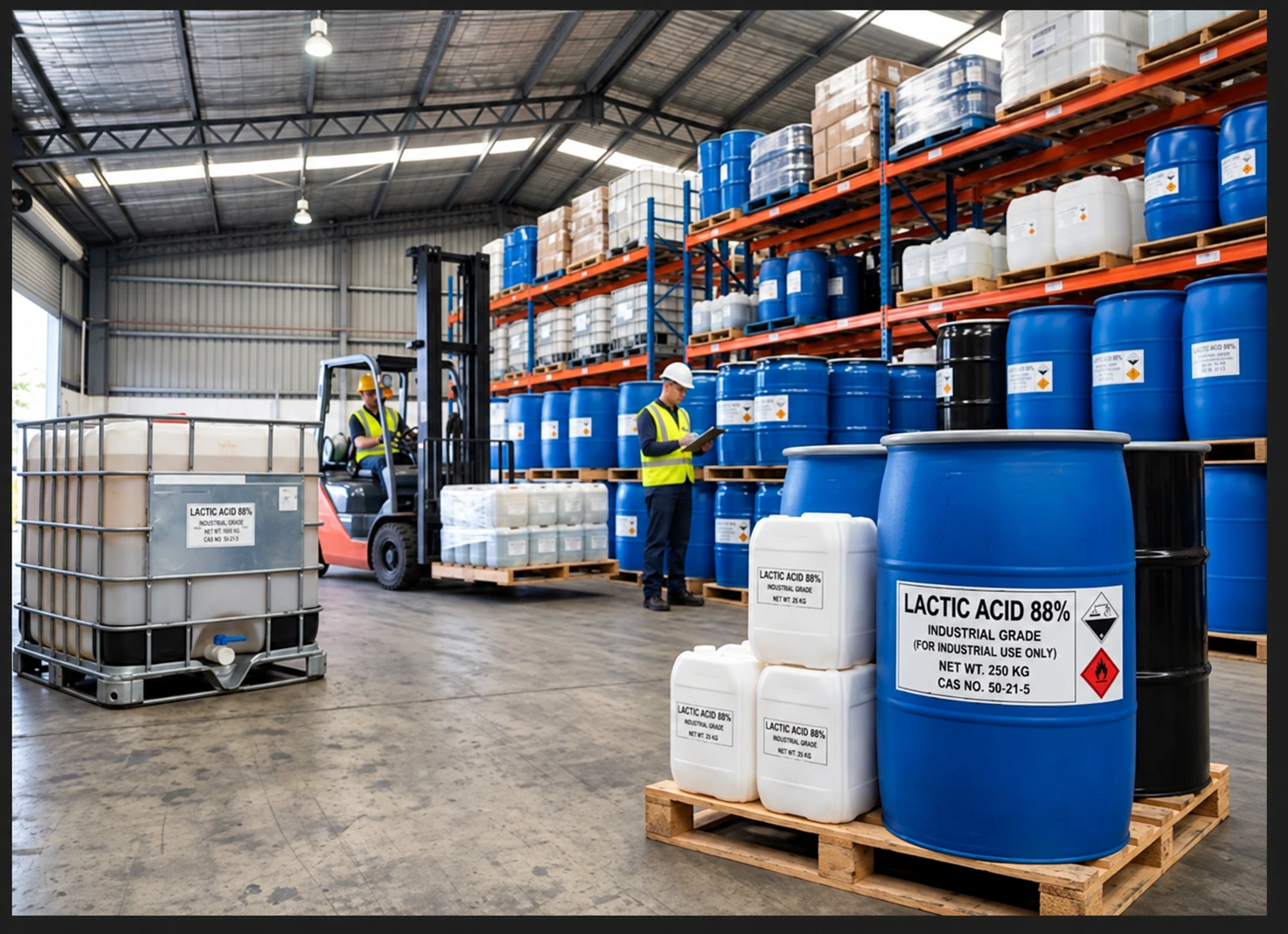
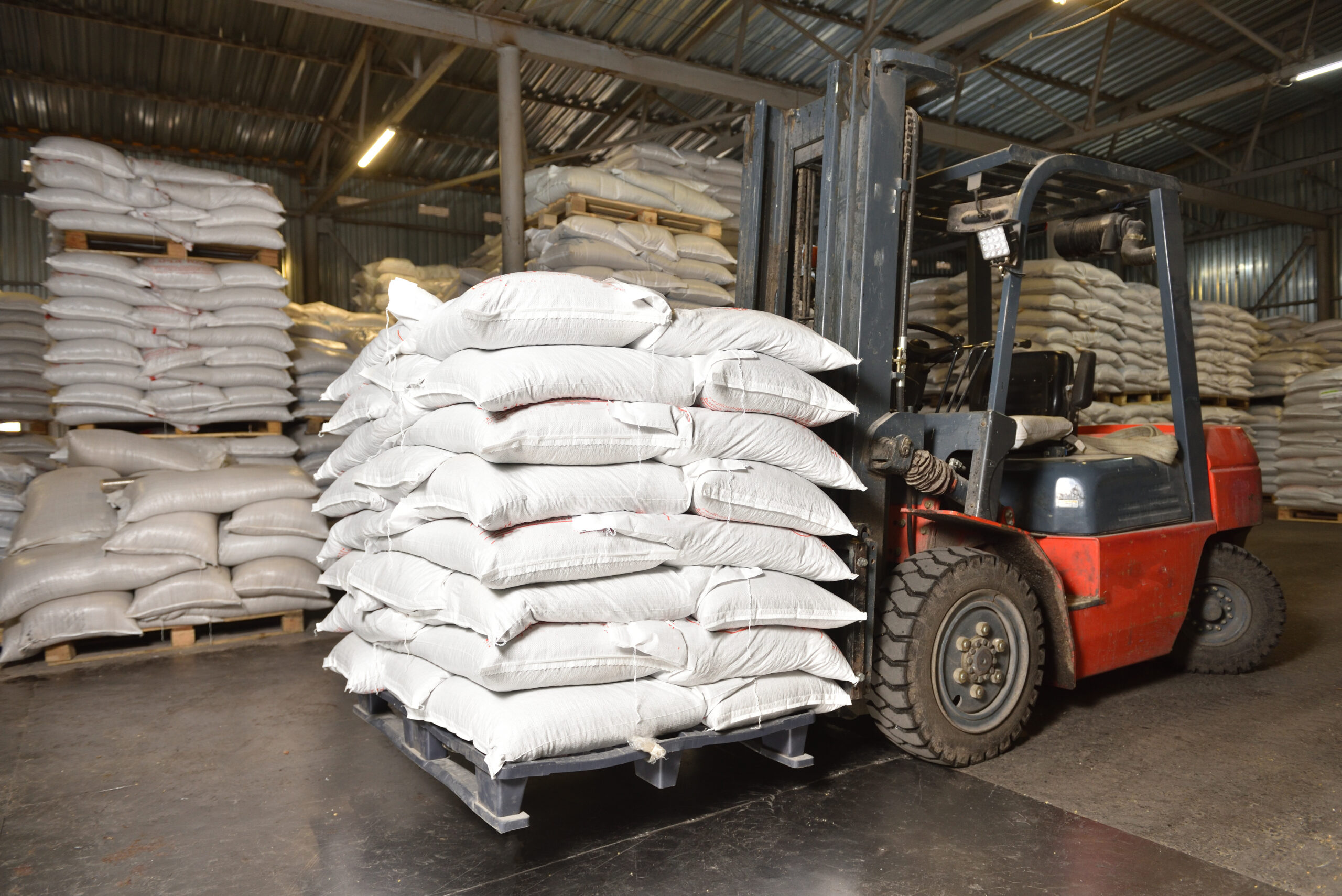
Packaging typically follows a ladder: 25kg bags for sample and small-batch orders, bulk bags (500 to 1,000kg) for mid-volume manufacturers, totes for regular reorder cycles, and FCL or bulk rail for industrial-scale consumption.
MOQ expectations shift accordingly. Sample and small-business buyers can usually start at bag-level quantities. Mid-volume manufacturers typically settle into bulk-bag or tote ordering once consumption is predictable. Industrial buyers negotiate FCL terms directly, often with standing purchase agreements. Lead time generally lengthens as order size grows, particularly for USP or certified-grade material that isn’t held in standard inventory.
Buyer Checklist: Sodium Citrate Supplier
- Confirm the required grade — food, USP, FCC, or technical — before requesting quotes, since mismatched grade requests are the most common source of inflated pricing.
- Confirm certification needs — Kosher, Halal, Non-GMO, allergen statement — up front rather than after a quote is issued.
- Confirm particle size and form your process actually needs, not just “granular” by default.
- Request a COA and SDS before placing a first order, and verify they match the grade you ordered, not just the product name.
- Clarify Incoterms and freight responsibility early, since this is where landed cost surprises usually originate.
- Match MOQ to your consumption rate rather than defaulting to the lowest per-kg tier if it means overstocking.
- Verify origin and traceability if your own downstream customers require it.
Compliance, Storage & Trust
A legitimate sodium citrate supplier should be able to produce a Certificate of Analysis (COA) and Safety Data Sheet (SDS) for every batch, along with a Technical Data Sheet (TDS) on request, before you place a first order, not after. Certification stacks worth confirming depending on your market include Kosher, Halal, Non-GMO, GMP+ for feed safety, and ISO 9001/14001/22000 or FSSC 22000 for quality and food-safety management systems.
Storage is straightforward but not trivial: sodium citrate should be kept dry and sealed, since dihydrate material exposed to excess humidity or heat can lose water of crystallization and shift particle behavior over time. Ask any prospective supplier for documented shelf-life data rather than assuming indefinite stability.
Documentation in hand and specs confirmed? Request a Quote to move your order forward.
Decision Framework: Which Grade & Supplier Fits Your Order
Choose dihydrate, food grade, granular if you’re formulating for dairy, beverage, or general food and beverage use at moderate volume. This covers the large majority of F&B buyer needs.
Choose USP or FCC-grade powder or fine granular if you’re formulating pharmaceutical, nutraceutical, or personal care products where purity specs and dissolution speed matter more than base cost.
Technical-grade anhydrous is the better fit if you’re sourcing for detergent, plating, or other industrial applications where food-safety certification isn’t required and cost efficiency matters most.
A distributor relationship makes more sense than going direct to a manufacturer if your order volume doesn’t yet justify a manufacturer’s MOQ, or if lead time flexibility matters more than shaving the last few cents per kg off base price.
FAQs
What is the current price of sodium citrate per kg?
There’s no single answer. Price depends on grade, particle size, certification stack, order quantity, and freight origin, ranging from bag-tier pricing at the high end down to FCL-tier pricing at volume. Request a quote against your specific spec for an accurate number.
What’s the difference between food-grade and technical-grade sodium citrate?
Food grade sodium citrate is produced and certified to meet purity and heavy-metal thresholds set by standards like FCC or USP for human consumption, while technical grade meets a lower purity bar suited to industrial applications and costs less.
Is sodium citrate the same as trisodium citrate?
Trisodium citrate is the fully neutralized, most common form of sodium citrate, and the two terms are generally used interchangeably in the market. If you plan to buy trisodium citrate specifically, you’re describing the same product most food and beverage buyers already mean by “sodium citrate.”
What’s the MOQ for bulk sodium citrate?
MOQ varies by supplier type and packaging format, from small 25kg bag quantities for sample orders up to full container loads for industrial buyers. Distributors typically offer more flexible MOQs than manufacturers.
Do I need Kosher or Halal certification for food applications?
Only if your own downstream product or customer base requires it. Not all food-grade sodium citrate carries these certifications by default, so confirm this explicitly with your supplier rather than assuming.
Dihydrate vs. anhydrous: which should I buy?
Dihydrate is the default for food and beverage formulation. Anhydrous is reserved for specific technical and industrial applications where moisture content needs tight control.
Can I request a sample before placing a bulk order?
Yes, and it’s worth doing before committing to a bulk sodium citrate sale, particularly if you’re validating dissolution speed or a new grade against your existing process.
Conclusion
Grade, certification, and order volume are the real levers behind sodium citrate pricing, not a fixed per-kg number you can search your way to. Get those three right before you request a quote, and the pricing conversation becomes straightforward rather than a guessing game. Ready to move forward? Request a bulk quote from Elchemy and get pricing tiered to your actual volume and grade requirements.