

At a Glance:
- HF penetrates skin silently and causes systemic fluoride poisoning — HCl burns are immediately painful and localized
- Hydrochloric acid (HCl) is classified as a strong acid; hydrofluoric acid (HF) is weak in terms of dissociation but far more systemically dangerous
- HCl dominates steel pickling, pH control, and food-grade applications at $150–300 per metric ton
- HF is indispensable for semiconductor etching, glass frosting, and petroleum alkylation at $800–1,400 per metric ton
- Both are regulated under OSHA 29 CFR 1910.1000 with OSHA PELs of 5 ppm (HF) and 5 ppm ceiling (HCl)
- Emergency treatment diverges sharply — HF exposures require calcium gluconate neutralization, HCl exposures require water irrigation
- Storage compatibility differs: HF requires HDPE or Teflon containers; HCl can use rubber-lined steel or PVC
- Global HCl market exceeds $3.4 billion annually; HF market reaches $2.1 billion with tighter supply chains
A process engineer at a semiconductor fab in Austin walked into an incident investigation meeting after a near-miss in the wet bench area. The technician had confused two similarly labelled acid carboys. One was hydrochloric acid. The other was hydrofluoric acid. The burns were caught early. The outcome could have been fatal.
Same acid family. Completely different consequences.
The comparison hydrochloric vs hydrofluoric acid matters far beyond labelling. These two industrial acids share surface-level similarities — both are colorless liquids, both release hydrogen halide gases, both find broad industrial use. But their chemistry, toxicity mechanisms, applications, and handling requirements diverge so sharply that treating them as interchangeable is genuinely dangerous. For anyone sourcing, formulating, or working near either compound, understanding those differences is non-negotiable.
Hydrochloric vs Hydrofluoric Acid: Chemical Fundamentals
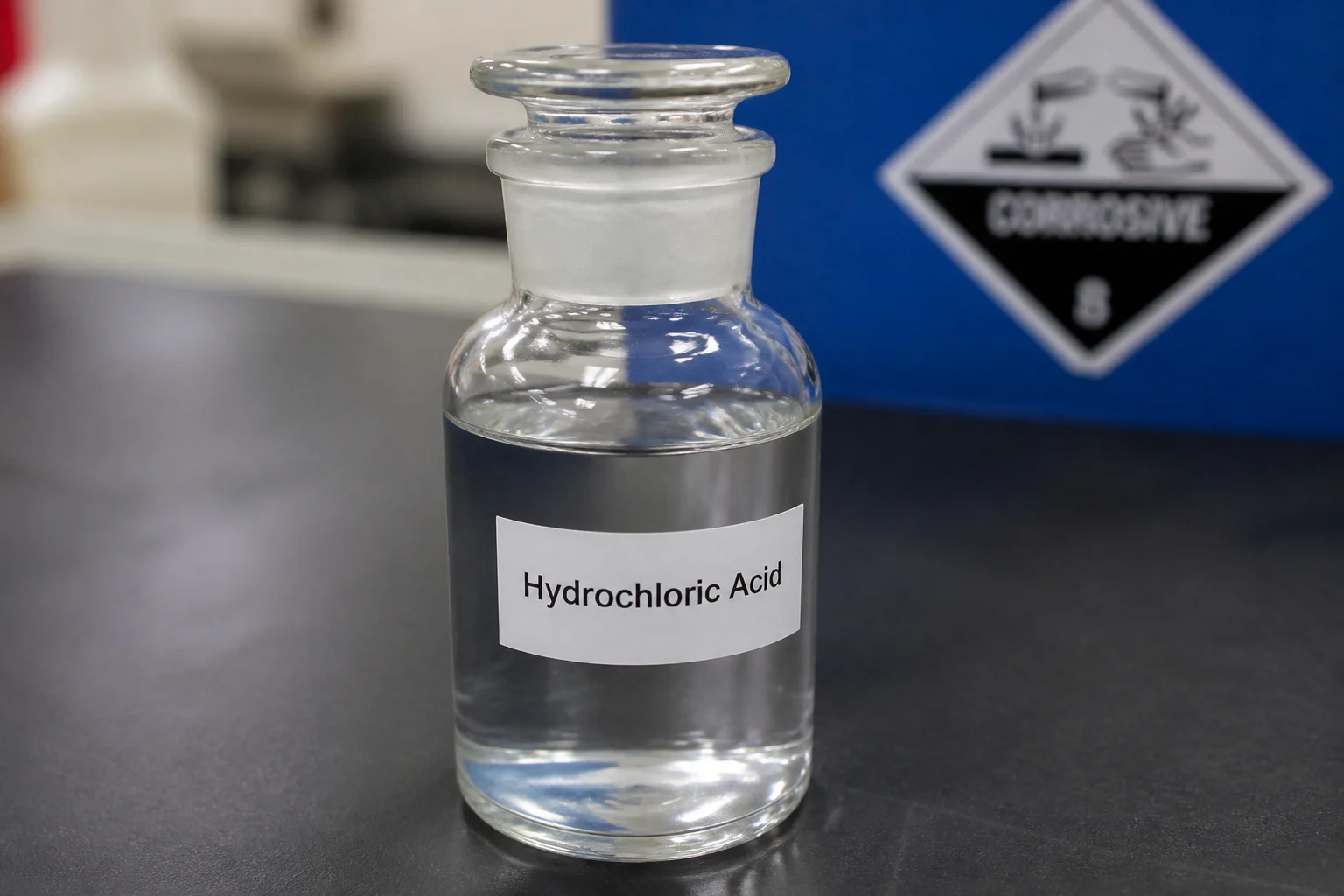
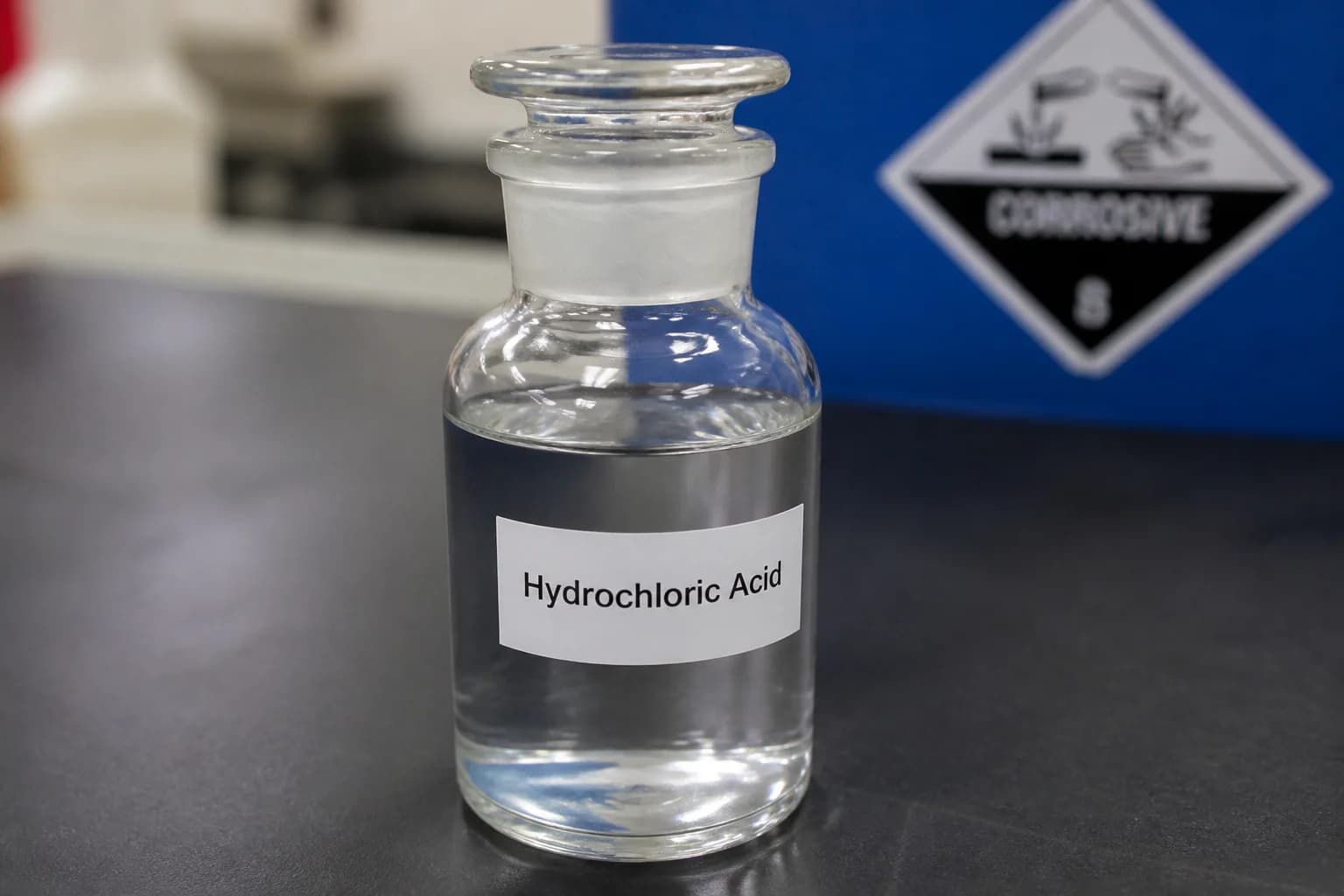
HCl is a strong acid. In water it dissociates completely, releasing H⁺ and Cl⁻ ions with near-100% efficiency. Concentrated solutions reach 37–38% by weight (known as fuming hydrochloric acid). The resulting acidity is powerful but chemically predictable.
HF is structurally similar but behaviorally opposite. It’s a weak acid — only partially dissociating in aqueous solution. At concentrations below 50%, most HF molecules remain intact rather than releasing free fluoride ions. This sounds less dangerous. It isn’t.
The undissociated HF molecule penetrates biological membranes far more easily than fully ionized acids. Once inside tissue, it releases fluoride ions that bind calcium and magnesium, disrupting nerve signaling and cardiac function. That’s why a small skin exposure to concentrated HF can kill.
| Property | Hydrochloric Acid (HCl) | Hydrofluoric Acid (HF) |
| Chemical formula | HCl | HF |
| Acid strength | Strong (pKa −7) | Weak (pKa 3.17) |
| Typical concentration | 28–37% | 40–70% industrial |
| Boiling point (conc.) | −85°C (gas), 110°C (37%) | 19.5°C (anhydrous) |
| Odour threshold | ~1–5 ppm | ~0.04 ppm |
| Corrosive to metals? | Yes — iron, zinc, most alloys | Yes — glass, concrete, many metals |
Industrial Applications: Where Each Acid Belongs
Hydrochloric Acid — The Industrial Workhorse
HCl is one of the most consumed industrial chemicals globally, with annual production exceeding 20 million metric tons. Its applications are diverse precisely because it’s aggressive, cheap, and leaves no persistent residue after rinsing.
Primary HCl applications:
- Steel pickling: removes iron oxide scale before galvanizing or coating at 15–20% concentration
- pH regulation in water treatment, food processing, and chemical synthesis
- PVC production — HCl is a direct feedstock for vinyl chloride monomer
- Oil well acidizing: dissolves carbonate rock to improve hydrocarbon flow
- Food-grade applications including corn syrup production and gelatin manufacture
- Mineral processing and ore leaching in mining operations
Hydrofluoric Acid — Precision and Reactivity
HF’s unique ability to attack silicon dioxide makes it irreplaceable in industries where glass or silica processing is central. No cost-effective substitute exists for several of these applications.
Primary HF applications:
- Semiconductor fabrication: oxide layer etching at 0.5–49% concentration in silicon wafer production
- Glass frosting and etching for architectural, optical, and decorative purposes
- Petroleum alkylation: producing high-octane alkylate fuel components
- Fluorine chemical synthesis — HF is the primary precursor to fluoropolymers (PTFE, PVDF) and refrigerants
- Uranium hexafluoride production for nuclear fuel processing
- Metal surface treatment for stainless steel passivation and titanium cleaning
| Industry | Uses HCl | Uses HF |
| Semiconductors | Cleaning, pH adjust | Primary oxide etchant |
| Steel/metals | Pickling, descaling | Stainless passivation |
| Petrochemicals | Catalysis, well acidizing | Alkylation catalyst |
| Glass/optics | Cleaning | Etching, frosting |
| Fluorochemicals | Not applicable | Precursor to all fluorine chemistry |
| Food/pharma | pH control, GRAS applications | Not approved for food use |
Hazard Profiles: Why These Acids Demand Different Respect
HCl — Corrosive and Irritating
Hydrochloric acid causes immediate, obvious harm on contact. Skin and eye burns are painful within seconds, which means exposures are caught fast. Inhalation of HCl vapour above 5 ppm irritates the respiratory tract — workers know immediately something is wrong.
That immediate feedback is actually a safety advantage. The harm is localized. Wash with water, get away from the source, treat the surface exposure. Systemic toxicity from skin contact alone is rare at industrial concentrations.
HF — The Silent Threat
Here’s the catch with hydrochloric and hydrofluoric acid hazard comparison: HF at lower concentrations (below 50%) causes little immediate pain. A worker exposed to dilute HF on their hand may feel nothing for 1–8 hours. By the time pain begins, fluoride has already penetrated deep tissue.
Systemic fluoride poisoning disrupts calcium and magnesium metabolism. Even exposures covering less than 2.5% of body surface area with concentrated HF (70%+) have caused fatalities through cardiac arrhythmia. This isn’t a threshold effect most industrial chemicals share.
HF-specific health effects:
- Delayed hypocalcemia causing fatal cardiac arrhythmia
- Hypomagnesemia disrupting nerve and muscle function
- Pulmonary edema from inhalation exposure above 10 ppm
- Bone demineralization from chronic low-level fluoride exposure
- Fluoride binding to enzymes disrupting cellular metabolism
| Hazard Parameter | HCl | HF |
| OSHA PEL | 5 ppm (ceiling) | 3 ppm TWA (ACGIH TLV) |
| IDLH | 50 ppm | 30 ppm |
| Skin absorption risk | Low systemic risk | High — systemic fluoride poisoning |
| Pain on contact (dilute) | Immediate | Delayed 1–8 hours |
| Antidote available? | No specific antidote; water rinse | Yes — calcium gluconate gel/IV |
| Lethal exposure area | No defined threshold | 2.5% BSA at 70%+ HF |
Storage, Handling, and PPE Requirements
Container Compatibility
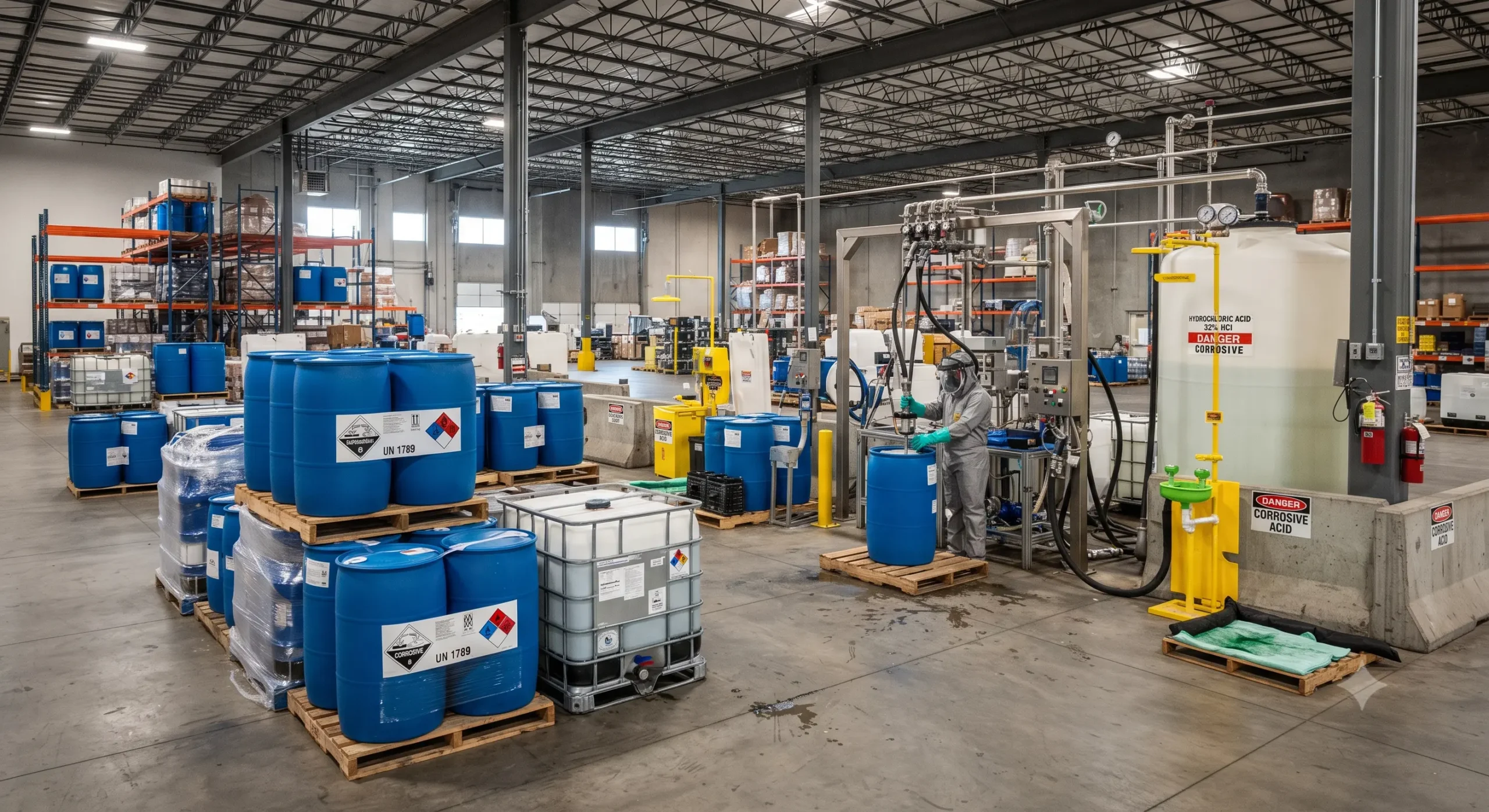
HCl attacks most metals. Suitable storage includes rubber-lined steel, fiberglass-reinforced plastic, PVC, and HDPE. Glass is acceptable for lab quantities but impractical at scale. Stainless steel corrodes rapidly in concentrated HCl.
HF attacks glass outright and also degrades many metals and polymers. Suitable materials are limited: HDPE, Teflon (PTFE/FEP), and certain grades of monel alloy. This restricted materials compatibility makes HF storage infrastructure significantly more expensive to build and maintain.
PPE: Not the Same List
HCl PPE requirements:
- Chemical-resistant gloves: PVC, neoprene, or butyl rubber
- Face shield plus chemical splash goggles
- Acid-resistant apron or coveralls
- Respiratory protection above 5 ppm (half-face respirator with acid gas cartridge)
HF PPE requirements — stricter standard:
- Butyl rubber gloves specifically rated for HF — nitrile provides inadequate protection
- Full-face shield, not just goggles
- Chemical-resistant suit covering all skin — no exposed areas acceptable
- Calcium gluconate antidote gel on-person at all times during handling
- Supplied-air respirator for concentrations above 10 ppm or spill response
- Buddy system mandatory — no solo HF handling under any circumstances
| Handling Factor | HCl | HF |
| Container material | HDPE, PVC, rubber-lined steel | HDPE, PTFE, Teflon-lined only |
| Glove material | PVC, neoprene, butyl | Butyl rubber (HF-rated) |
| Antidote on-site | Not required | Calcium gluconate 2.5% gel — mandatory |
| Solo handling | Permitted with protocols | Prohibited |
| First aid — skin | Copious water, 15–20 min | Water rinse + calcium gluconate immediately |
Regulatory Framework and Compliance
Both acids fall under multiple overlapping regulatory regimes in the US and globally. Compliance isn’t optional and non-compliance carries significant penalties.
Key regulatory touchpoints:
- OSHA 29 CFR 1910.1000: sets PELs for both acids; HF also covered under Process Safety Management if held above threshold quantities
- EPA RMP (Risk Management Program): HF releases above 1,000 lbs trigger reporting; HCl threshold is 5,000 lbs
- DOT 49 CFR: both classified as corrosive materials requiring proper labeling, placarding, and emergency response documentation
- REACH (EU): both substances require registration and exposure scenario documentation for European supply chains
- TSCA: both listed on the chemical substance inventory with reporting requirements above production thresholds
Facilities using HF in quantities exceeding 1,000 lbs must submit Risk Management Plans to the EPA, conduct hazard assessments, and maintain emergency response procedures. HCl triggers the same at 5,000 lbs — a threshold many smaller operations stay below.
Choosing the Right Acid for Your Process
The hydrochloric and hydrofluoric acid comparison ultimately comes down to application chemistry and risk tolerance. HCl is the default choice for pH control, metal cleaning, and high-volume commodity applications where cost and availability drive decisions. HF is non-negotiable where silicon chemistry, fluorination, or glass etching is involved — no substitute delivers equivalent results.
Turns out, the bigger decision isn’t which acid performs better chemically. It’s whether your facility has the infrastructure, training, and emergency response capability to handle HF safely. The gap between HCl and HF safety requirements is substantial — in cost, in procedures, and in consequences when things go wrong.
Both acids have earned their place in industrial chemistry. Respect for their distinct hazard profiles, not just their chemistry, determines whether that place remains productive.
Elchemy Connection:
For businesses requiring quality hydrochloric acid or hydrofluoric acid, Elchemy connects you with verified suppliers offering technical, industrial, and electronic-grade concentrations in bulk quantities — complete with SDS documentation, regulatory compliance support, and application-specific technical guidance to help you meet OSHA, EPA, and DOT requirements for your specific manufacturing or processing operations.