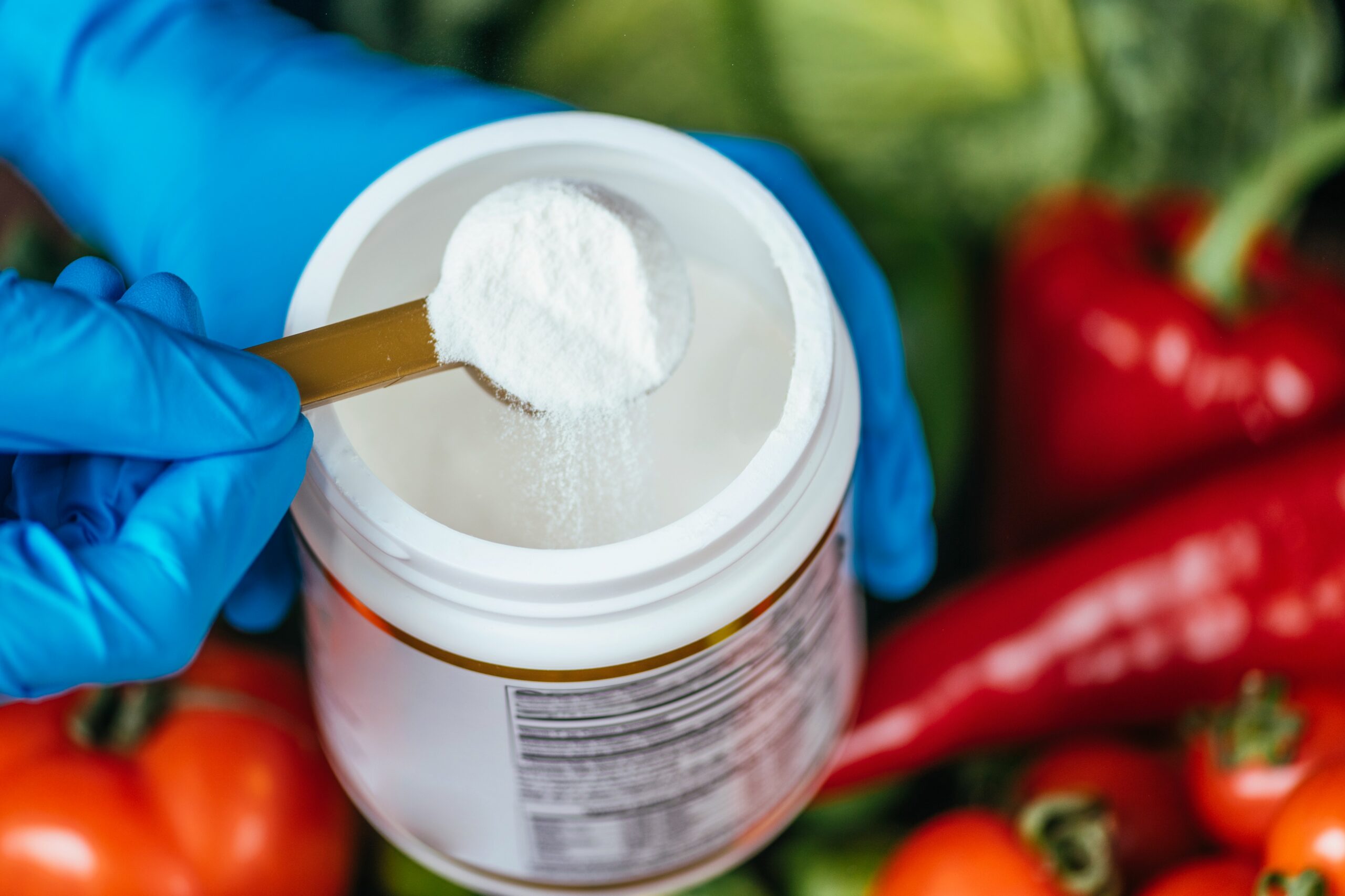


Walk into any supplement store, open any fitness app’s recommended products list, or scroll the protein powder section on any major retailer’s website. The ingredient “sucralose” appears in the majority of flavored protein powders you will encounter. It is so common that most buyers assume it is simply part of what protein powder is.
It is not. It is a choice made by manufacturers for specific reasons. And given how much more nuanced the science has become in recent years, it is a choice worth understanding before you commit to a product.
This is not an anti-sweetener piece. It is an honest look at what sucralose protein powder actually is, what the current evidence says about safety, whether the sweetener affects what you are trying to accomplish in the gym, and how to decide whether it belongs in your supplement stack.
What Sucralose Is and Why It Ends Up in Protein Powder?
Sucralose is a synthetic non-caloric sweetener created by replacing three hydroxyl groups in sucrose with chlorine atoms. The modification makes the molecule approximately 600 times sweeter than table sugar and prevents the body from metabolizing it as an energy source. The FDA approved sucralose in April 1998. It now appears in over 80 countries’ food supply under GRAS status (Generally Recognized as Safe, 21 CFR 182.60).
Quick facts at a glance:
| Property | Detail |
| Chemical modification | Three hydroxyl groups replaced with chlorine |
| Sweetness vs. sugar | Approximately 600 times sweeter |
| Calories | Zero |
| FDA status | GRAS, approved April 1998 |
| Acceptable Daily Intake (ADI) | 5 mg per kg body weight per day |
| ADI for 70 kg adult | ~350 mg per day |
| Typical protein powder serving | 30 to 50 mg per scoop |
Most protein powders sit well below the ADI ceiling per serving. The complication arises when consumers use multiple sucralose-containing products daily: pre-workout, protein powder, flavored BCAAs, diet beverages. Cumulative intake can then approach or enter the 50 to 200 mg range where several newer studies have found metabolic effects.
Why Manufacturers Choose It?
Protein powder has a naturally difficult flavor profile. Whey carries a mild dairy funk from processing. Plant proteins like pea have earthy, bitter, grassy undertones. Sucralose solves several formulation problems at once:
- Masks the inherent bitterness and chalkiness of protein concentrates
- Adds sweetness without calories, keeping macronutrient profiles clean on labels
- Heat stable, surviving processing, mixing, and most cooking applications without breaking down
- Longer shelf life than natural sweeteners that degrade over time
- Extremely cost-effective because only tiny quantities are needed per serving
The result is a protein powder that tastes like a milkshake at roughly 120 calories and 25 grams of protein per scoop. From a formulation standpoint, sucralose is genuinely useful. The question is whether that utility comes with trade-offs that matter to the people consuming it.
Is Sucralose in Protein Powder Bad? What the Research Now Shows
This is the question the secondary keyword asks directly, and it deserves a layered answer. The science on sucralose has evolved significantly since its initial approval, and the most recent peer-reviewed literature presents a picture more complex than either the industry position or the fearmongering alternatives suggest.
Regulatory Status: Unchanged, But Now Under Scrutiny
The FDA and EFSA (European Food Safety Authority) both still consider sucralose safe. Those positions have not shifted. What has shifted is the volume and quality of research examining sucralose’s effects at typical dietary exposure levels, particularly on two systems: the gut microbiome and insulin metabolism.
In 2023, the World Health Organization issued a global advisory raising concerns about the potential health implications of non-nutritive sweeteners including sucralose. Not a ban, not a safety reversal, but a formal signal that existing research warranted serious attention.
Gut Microbiome Effects: The Clearest Signal
The most consistent finding across multiple human clinical trials is that sucralose alters gut microbiome composition. Key findings from peer-reviewed human trials include:
- A landmark 2022 Cell study examining four non-nutritive sweeteners found all four, including sucralose, significantly and distinctly altered the human intestinal and oral microbiome. No such changes were seen in control groups.
- A ten-week randomized clinical trial (2022) found 48 mg sucralose daily, roughly one protein powder scoop, decreased Lactobacillus acidophilus while increasing Blautia coccoides in healthy young adults. Both shifts are associated with less favorable gut health profiles.
- A 2025 study published in Clinical Nutrition ESPEN found 30 days of sucralose at 30% of the ADI caused a 20.3% decrease in insulin sensitivity in healthy lean individuals, potentially mediated through gut microbiome disruption.
The critical nuance: individual variability is a recurring theme across all microbiome studies. Baseline gut composition appears to determine how strongly any given person responds to sucralose. Some participants show measurable dysbiosis; others show none. Population-level warnings are therefore premature, but the signal is real enough to be relevant for individuals who are already metabolically vulnerable.
Insulin Sensitivity: Mixed Evidence, Real Concern
A 2025 integrative review published in ScienceDirect synthesized 16 human studies on sucralose and insulin response. Here is what they found:
| Outcome Measured | Studies Finding Adverse Effect | Studies Finding No Effect | Studies Finding Benefit |
| Insulin response | 8 of 16 | 7 of 16 | 1 of 16 |
| Insulin sensitivity | 6 of 8 | 1 of 8 | 1 of 8 |
The reviewers concluded that sucralose at typical usage doses in the 48 to 200 mg per day range does appear to increase insulin response and decrease insulin sensitivity, though inconsistently across populations.
The proposed mechanism: sucralose interacts with sweet taste receptors (T1R2/T1R3) in the gastrointestinal tract even though it is not metabolized. These receptors can stimulate SGLT1 upregulation, potentially affecting glucose absorption and downstream insulin dynamics. The mechanism is biologically plausible and documented at the molecular level, though its clinical significance at real-world doses remains actively debated.
The Chlorine Argument: What Is True and What Is Not
A claim circulating in clean-eating communities is that sucralose is “essentially bleach” because it contains chlorine. This is inaccurate:
- The chlorine in sucralose is covalently bonded in a stable structure, not free chlorine
- Sodium chloride (table salt) also contains chlorine; the structure matters as much as the element
- About 2% of ingested sucralose is metabolized into compounds of negligible toxicity
- The remaining 98% passes through the GI tract unchanged and is excreted in feces
What is fair to note is that sucralose belongs to a class of organochlorine compounds that are highly persistent in the environment. A 2025 PMC review drew comparisons to PFAS compounds regarding aquatic system accumulation. This is primarily an environmental concern, not a direct human health argument at current dietary exposure levels.
Heating Sucralose: A Documented Issue for Bakers
Research published in 2020 confirmed that heating sucralose-containing foods can generate potentially toxic chlorinated compounds. This finding is specifically relevant in the protein powder context for anyone who bakes with their powder:
- Protein pancakes, muffins, and brownies routinely reach temperatures above 160°C
- At these temperatures, sucralose undergoes chemical transformation that standard room-temperature safety assessments did not account for
- This is the clearest practical case for choosing unsweetened or naturally sweetened protein powder as a baking base
If you only mix your protein powder into cold water or a shake, this concern does not apply. If you cook with it regularly, it does.
Does Sucralose Affect the Protein Powder’s Effectiveness?
This is a question most buyers never think to ask, and the answer has two distinct parts.
For the protein content itself, sucralose at concentrations used in protein powders does not meaningfully affect protein quality, amino acid bioavailability, or muscle protein synthesis. A 25g protein serving delivers 25g of protein regardless of how it is sweetened. Research has found sucralose can theoretically destabilize protein native structures at high concentrations or under thermal stress, but at standard serving concentrations at room temperature this effect is negligible.
The more relevant question is whether sucralose affects your goals indirectly. Consider:
- If you are following a low-carb or ketogenic protocol and carefully managing insulin response, the sucralose-driven insulin signaling research is worth factoring in
- If you are stacking multiple sweetened products and your total daily sucralose intake exceeds 100 mg, you are entering the range where multiple studies have observed changes
- If your gut health is already a concern, adding a daily compound with documented microbiome effects is worth weighing against alternatives
For the majority of users who are healthy, who consume one serving per day, and who do not stack multiple sucralose products, the indirect effects on outcomes are likely negligible.
Who Should Reconsider Sucralose Protein Powder
Not everyone who buys sucralose protein powder should switch. But several groups have legitimate, research-backed reasons to choose alternatives:
People with pre-diabetes or insulin resistance The insulin sensitivity research is most clinically meaningful in populations already at metabolic risk. For this group, reducing every unnecessary variable affecting insulin signaling makes practical sense. Stevia- or monk fruit-sweetened proteins are widely available at comparable protein quality.
Daily stackers of multiple sucralose products One protein powder scoop at 40 mg, plus a sucralose pre-workout at 30 mg, plus a diet soda at 70 mg adds up to 140 mg per day. Multiple clinical studies have observed microbiome and insulin effects in the 48 to 200 mg range. This is a materially different exposure profile than a single daily shake.
People with IBS or known gut dysbiosis The microbiome alteration data is most likely to manifest as real symptoms in people whose gut bacteria are already compromised. Sucralose is not the only or primary cause of gut dysbiosis, but adding a compound with documented microbiome effects to an already disrupted system is an unnecessary risk.
Pregnant or breastfeeding women Some research has found sucralose present in breast milk and colostrum, though other studies suggest limited placental crossing. This remains an area of active research. Given the FDA’s general principle of limiting unnecessary additives during pregnancy, naturally sweetened or unsweetened protein powder is a reasonable precaution.
Regular bakers using protein powder As covered above, high-heat cooking with sucralose-containing products is the one application where documented chemical transformation occurs. Unsweetened or stevia-sweetened bases are better choices for baking applications.
Who Sucralose Protein Powder Is Fine For
The evidence does not support blanket alarm. For a large portion of the protein powder-buying population, sucralose at one daily serving presents no documented clinical risk.
| Profile | Sucralose Risk Level | Recommendation |
| Healthy adult, single daily serving, no stacking | Low | Fine to continue |
| Metabolically healthy, occasional user | Very low | No concern |
| Pre-diabetic or insulin resistant | Moderate | Consider switching |
| IBS or known gut dysbiosis | Moderate | Consider switching |
| Daily stacker of multiple sucralose products | Moderate to high | Assess total intake |
| Pregnant or breastfeeding | Precautionary concern | Switch as precaution |
| Regular baker using protein powder | Documented concern | Use unsweetened for baking |
Taste compliance matters here too. If the realistic choice is between a sucralose-sweetened protein powder someone uses consistently and a naturally sweetened alternative that gets abandoned because it tastes like chalk, the sucralose version delivers more actual nutrition. Consistency of protein intake matters more than sweetener chemistry for most fitness goals.
Worth Your Money? Breaking Down the Value Question
Protein powders sweetened with stevia, monk fruit, or coconut sugar typically cost more than sucralose-containing equivalents. Whether that premium is worth paying comes down to a simple framework:
What you are NOT paying for when choosing naturally sweetened:
- Better protein content (amino acid profiles are identical)
- Superior muscle building outcomes (the research shows no difference)
- Higher digestibility or bioavailability (same protein, different sweetener)
What you ARE paying for:
- A different sweetener chemistry with a cleaner emerging safety picture
- Potentially lower cumulative artificial sweetener load across your daily diet
- Label transparency and clean-product positioning if that matters to your brand choices
For ingredient buyers and supplement manufacturers formulating protein products, the sweetener decision directly affects cost of goods. Sucralose requires far smaller quantities per batch than natural alternatives, making it substantially cheaper per unit of sweetness. Stevia and monk fruit at high purity grades carry meaningfully higher raw material costs. Platforms like Elchemy connect manufacturers with verified suppliers for both synthetic and natural sweetener options, with purity documentation and regulatory compliance records for each sourcing decision.
For consumers, the question ultimately is this: does the additional cost of a naturally sweetened alternative address a real, documented risk for your specific situation? If yes, it is worth it. If no, you are buying peace of mind rather than a demonstrable health benefit at one serving per day.
The Honest Bottom Line
Is sucralose in protein powder bad? The evidence in 2026 says it is more complicated than it was ten years ago, but still not clearly harmful at one serving per day for most healthy adults.
What the evidence firmly supports:
- FDA and EFSA safety approvals remain in place
- At one scoop per day, most healthy adults remain below dose ranges where human trials have observed effects
- Protein quality and muscle building outcomes are unaffected by the sweetener used
What the emerging evidence raises flags about:
- Multiple controlled human trials show microbiome disruption at doses achievable through daily supplement stacking
- Approximately half of human studies on sucralose and insulin sensitivity show reductions at typical dietary doses
- The WHO issued formal cautions in 2023 specifically citing these concerns
- High-heat cooking with sucralose-containing products generates documented chemical byproducts
Sucralose protein powder is not a health risk disguised as a supplement. It is also not as inert as the industry assumed when it became the default sweetener choice two decades ago. The nuanced position between those two extremes is where the current science actually sits, and it is the honest foundation for a smart buying decision.