

Open your bathroom cabinet right now. Pick up your shampoo bottle, body wash, or toothpaste. Check the ingredient list. Chances are you’ll find either “Sodium Lauryl Sulfate” or “Sodium Laureth Sulfate” listed within the first five ingredients. These two chemicals create the foam, bubbles, and cleansing action you’ve come to expect from personal care products.
But here’s what most people don’t realize: sodium lauryl sulfate and sodium laureth sulfate are not the same ingredient despite their nearly identical names. Understanding the difference between these two surfactants matters for your skin health, product choices, and shopping decisions.
Quick Reference: SLS vs SLES
| Aspect | Sodium Lauryl Sulfate (SLS) | Sodium Laureth Sulfate (SLES) |
| Chemical relationship | Parent compound | Derived from SLS through ethoxylation |
| Molecule size | Smaller | Larger |
| Skin penetration | More likely to penetrate skin | Less likely due to larger size |
| Irritation level | Higher potential | Lower potential |
| Foaming ability | Excellent | Excellent |
| Cleansing power | Very strong | Strong but gentler |
| Common uses | Deep-cleansing shampoos, toothpaste | Gentle shampoos, body washes |
| 1,4-dioxane risk | None | Possible if not properly purified |
The Chemistry: What Makes Them Different
SLS and SLES may look like near-identical names on a label, but their chemistry tells a very different story. A small change in how these molecules are built decides how deeply they penetrate skin, how harsh they feel, and why one is far more irritating than the other. To see why, it helps to look at how each compound is structured at the molecular level.
Read More : Comprehensive SLES market analysis reveals growing demand from sulfate-containing formulations despite the sulfate-free trend, with Asia-Pacific dominating production.
Sodium Lauryl Sulfate (SLS)
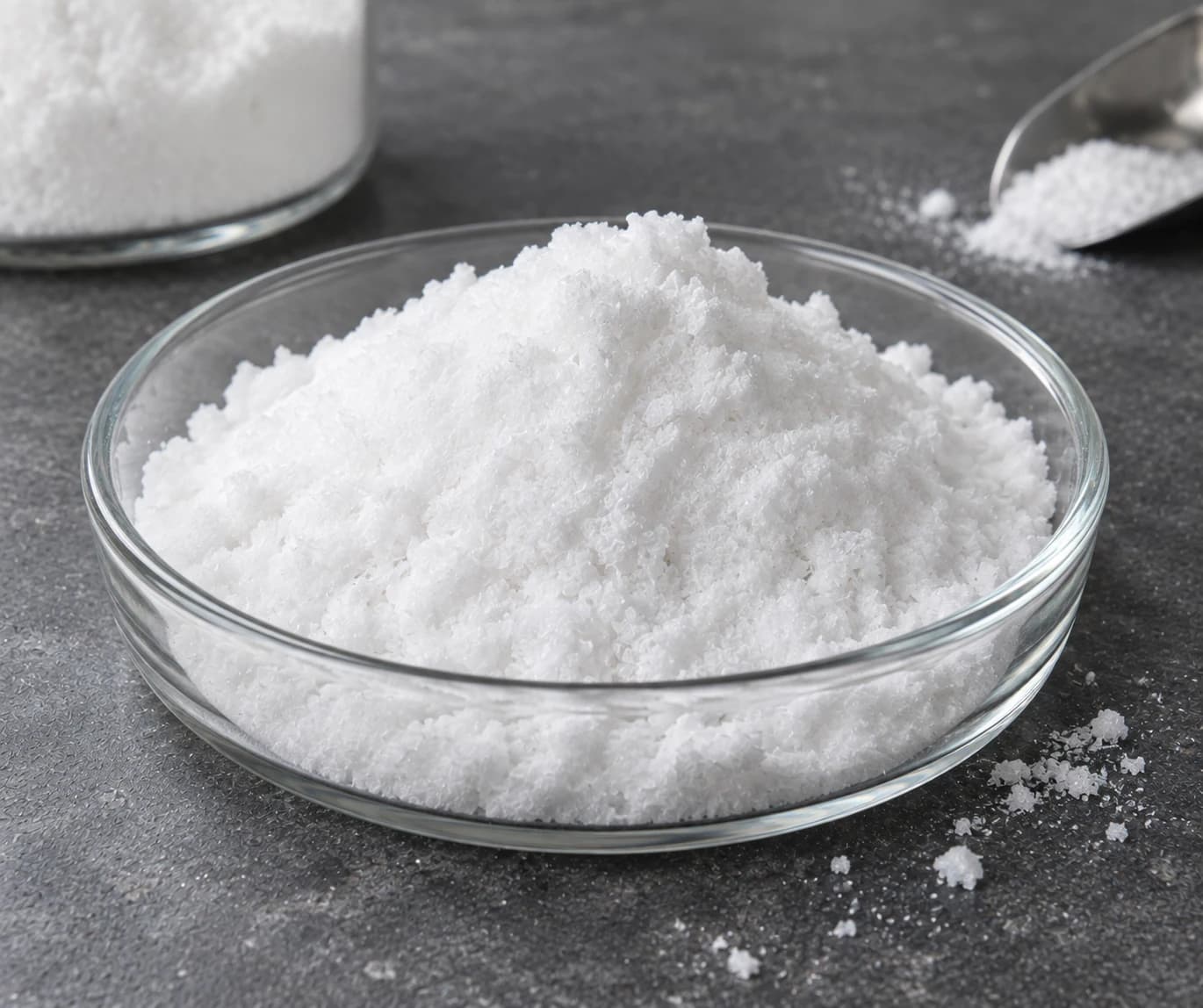
SLS is the parent chemical in this relationship. It’s created by reacting lauryl alcohol with petroleum, coconut oil, or palm oil. The molecule consists of:
- A 12-carbon lauryl chain (hydrophobic tail)
- A sulfate head group (hydrophilic)
- Relatively small molecular structure
This structure makes SLS highly effective at:
- Breaking down oils and greases
- Creating abundant foam
- Removing dirt and debris
- Penetrating into pores and hair follicles
Sodium Laureth Sulfate (SLES)
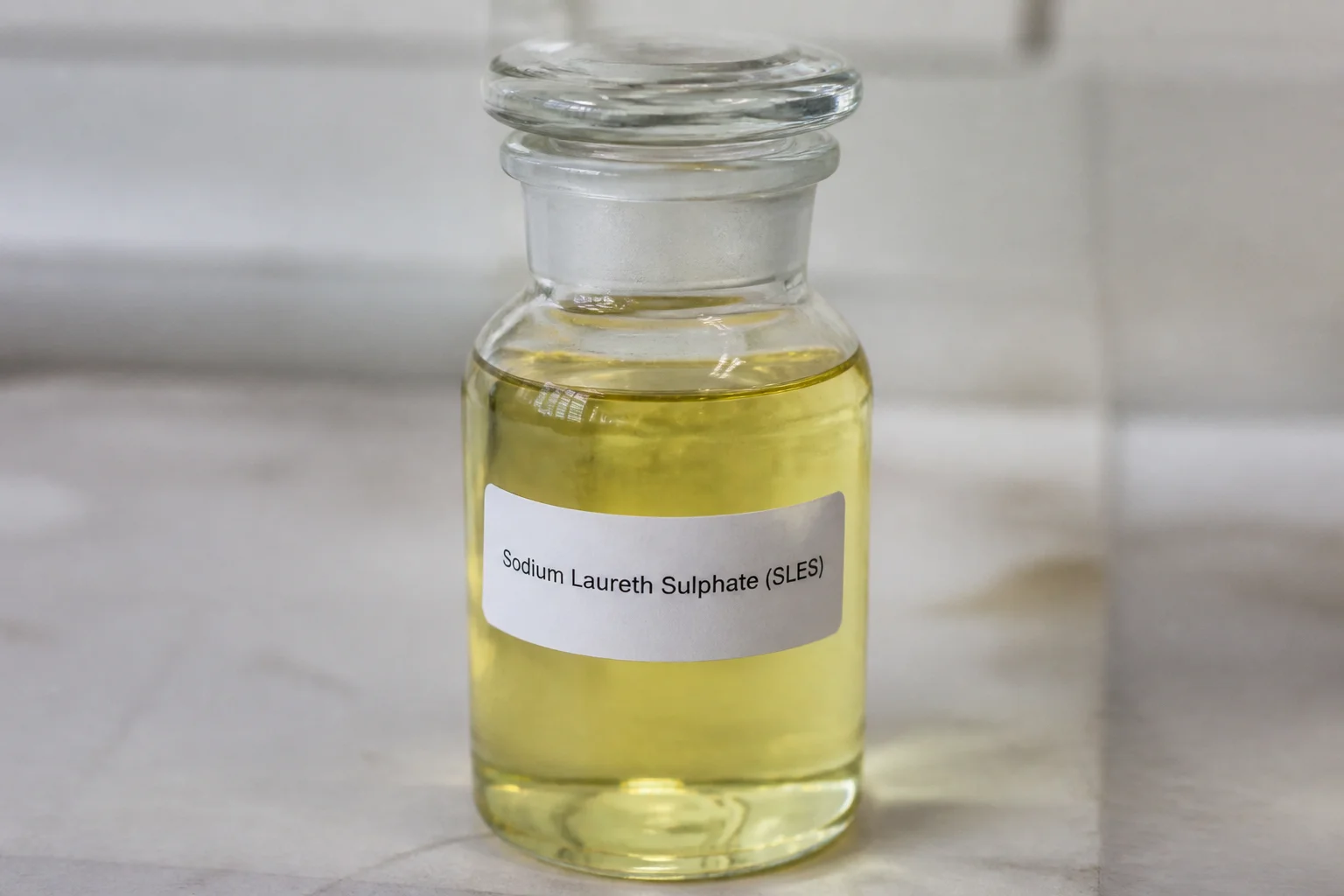
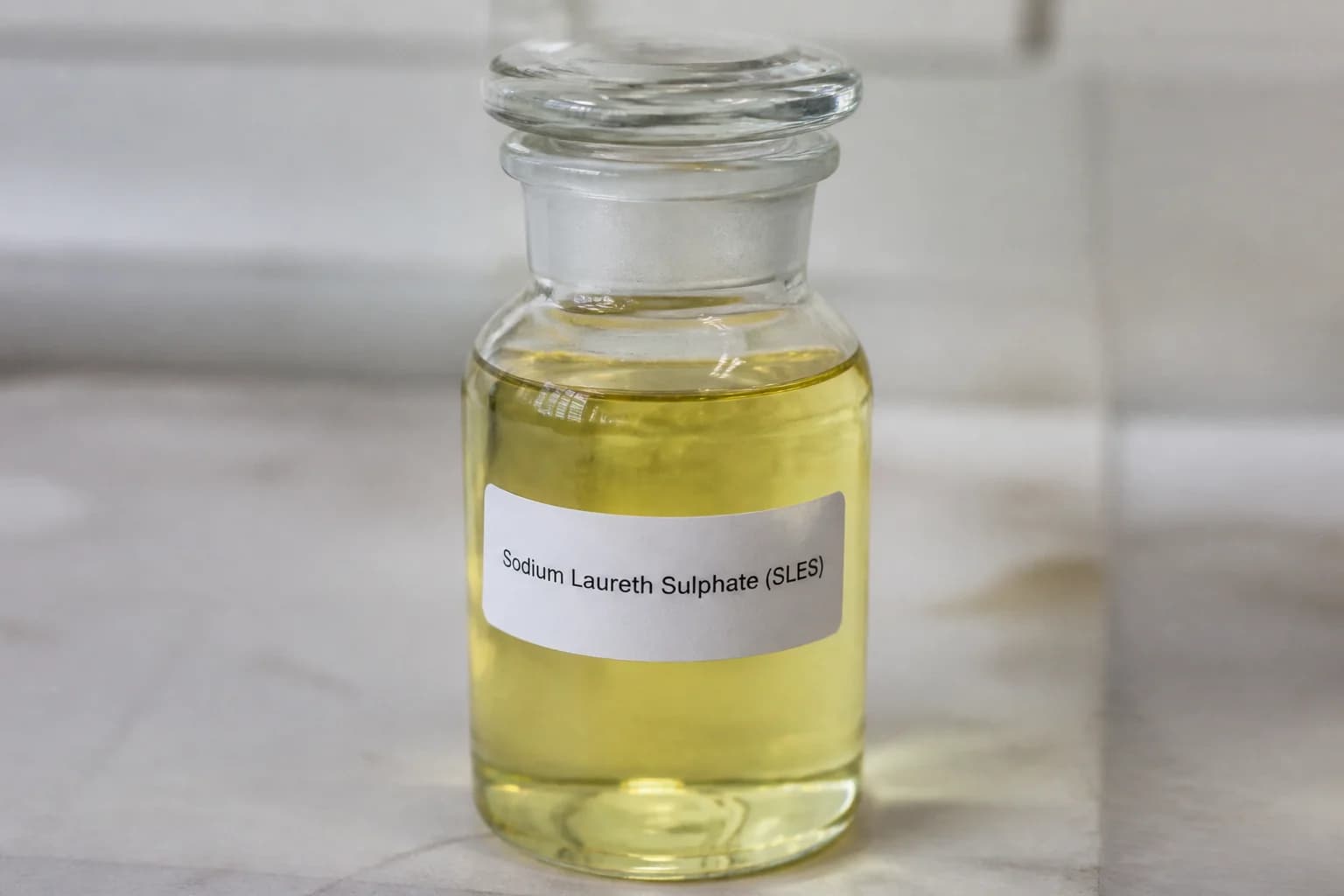
SLES starts as SLS but undergoes a transformation process called ethoxylation. This process introduces ethylene oxide molecules, which:
- Increases the molecular size
- Adds ether groups to the structure
- Creates a “softer” surfactant
- Reduces skin penetration capability
And the results come to a gentler chemical that still cleans effectively but with less aggressive action on skin and hair.
The Manufacturing Process: From SLS to SLES
Step 1: Creating SLS
- Start with lauryl alcohol (from coconut, palm, or petroleum)
- React with sulfuric acid or sulfur trioxide
- Neutralize with sodium hydroxide or sodium carbonate
- Result: Sodium Lauryl Sulfate
Step 2: Converting to SLES (Ethoxylation)
- Take the SLS produced in step 1
- Introduce ethylene oxide under controlled conditions
- Add 1-4 ethylene oxide units to each molecule
- The number of units added is denoted as “2EO” or “3EO” in technical specifications
- Result: Sodium Laureth Sulfate
This additional processing step is why SLES typically costs more to produce than SLS, though the price difference is minimal in final product formulations.
Irritation Potential: The Main Difference
The biggest reason people notice a difference between SLS and SLES is how their skin and scalp react after regular use. In this section, you will see exactly how these two surfactants interact with the skin barrier, why one is far more likely to trigger irritation, and what scientific comparisons reveal about their long-term effects.
Why SLS Causes More Irritation
SLS is known for its strong cleaning power, but that strength comes at a cost to the skin barrier. Instead of sitting on the surface and rinsing away easily, it interacts deeply with the outer layers of skin and hair, which is why people often feel dryness or irritation after regular use. The points below explain how this reaction begins at a cellular level and how it eventually shows up as visible discomfort.
Mechanism of irritation:
- Small molecule size penetrates skin barrier more easily
- Disrupts skin lipid layers
- Denatures proteins in skin cells
- Removes natural protective oils
- Can remain in hair follicles after rinsing
Common symptoms of SLS sensitivity:
- Dry, flaky scalp
- Skin tightness after washing
- Itching or tingling sensation
- Redness or inflammation
- Exacerbation of eczema or dermatitis
- Increased hair breakage
- Scalp tenderness
Why SLES Is Milder
The larger molecular structure of SLES creates a gentler interaction with skin:
- Less penetration into skin layers
- Reduced disruption of natural lipid barrier
- Less protein denaturation
- Still effective cleaning but with lower aggression
- Better suited for sensitive skin
Clinical evidence: Studies comparing SLS and SLES irritation found that even after just three washes:
- SLES caused less visible redness
- Subclinical irritation markers were lower with SLES
- Skin surface damage was measurably less with SLES
- Both forearm and hand skin showed these differences
The 1,4-Dioxane Controversy
Here’s where things get complicated. While SLES is gentler on skin, the ethoxylation process introduces a potential contamination risk.
What Is 1,4-Dioxane?
1,4-dioxane is a byproduct that can form during the ethoxylation process used to produce sodium laureth sulfate. It is not intentionally added to personal care products but can appear as an unintended residue during manufacturing.
Regulatory bodies classify 1,4-dioxane as a probable human carcinogen, which raises safety concerns when purification is inadequate. If manufacturers do not properly remove it during processing, trace amounts can remain in SLES-based formulations.
The Purification Issue
How it should be handled: SLES manufacturers should use vacuum stripping to remove 1,4-dioxane, reducing levels to negligible amounts (typically <10 ppm). However:
- Not all manufacturers perform adequate purification
- No way for consumers to verify purification on product labels
- Testing shows varying levels in different products
- Quality varies significantly between suppliers
SLS advantage: SLS doesn’t undergo ethoxylation, so it has zero risk of 1,4-dioxane contamination. This creates an ironic situation where the harsher surfactant is cleaner chemically while the gentler one carries contamination risk.
Where You’ll Find Each Surfactant
Even though SLS and SLES often appear side by side on ingredient lists, brands use them for very different product goals. The choice depends on how strong the cleansing needs to be, how much foam the user expects, and how much irritation the brand is willing to trade for performance. This is why SLS still dominates certain categories today.
Products Typically Using SLS
Shampoos:
- Clarifying shampoos for removing product buildup
- Anti-dandruff formulations
- Men’s 2-in-1 products
- Budget-friendly options
- Deep-cleansing treatments
Toothpaste:
- Most mainstream brands
- Products emphasizing strong foaming
- Whitening formulas
- Tartar control varieties
Other products:
- Dish soap and kitchen detergents
- Laundry detergents
- Industrial cleaning products
- Car wash solutions
- Garage floor cleaners
Products Typically Using SLES
Shampoos:
- “Gentle” or “moisturizing” formulas
- Baby shampoos
- Products for dry or damaged hair
- Color-treated hair formulas
- Salon brands emphasizing mildness
Body Care:
- Body washes and shower gels
- Facial cleansers
- Hand soaps
- Bubble bath products
- Shaving creams
Specialized formulations:
- Products for sensitive skin
- Eczema-friendly lines
- Hypoallergenic products
- Natural/organic brands (if they use sulfates at all)
Impact on Hair and Scalp
What SLS Does to Your Hair
Short-term effects:
- Strips away excess oil effectively
- Removes styling product buildup
- Creates squeaky-clean feel
- Produces abundant foam
- Gives sensation of deep cleaning
Long-term effects:
- Weakens hair follicles over time
- Remains in follicles even after rinsing
- Contributes to hair thinning in susceptible individuals
- Strips color from dyed hair faster
- Removes natural protective sebum
- Can lead to dry, brittle hair texture
What SLES Does to Your Hair
The gentler approach:
- Cleans effectively without over-stripping
- Maintains more natural oil balance
- Less color fading for dyed hair
- Reduced breakage and split ends
- Better moisture retention
- Softer, smoother hair texture
Trade-offs:
- May not remove heavy styling products as effectively
- Less suitable for very oily scalps
- Might require longer or more thorough washing
- Some people feel it doesn’t clean “enough”
Environmental Considerations

Biodegradability
Sodium Laureth Sulfate:
- Biodegrades more readily when exposed to sunlight and oxygen
- Breaks down in wastewater treatment
- Considered more environmentally friendly
- Shorter environmental persistence
Sodium Lauryl Sulfate:
- Slower biodegradation process
- Can persist in waterways longer
- May accumulate in aquatic environments
- Takes more time to break down completely
Sourcing Concerns
Both surfactants can be derived from:
Petroleum sources:
- Cheaper production costs
- Non-renewable resource
- Greater environmental impact from extraction
Plant sources (coconut/palm oil):
- Renewable but with caveats
- Palm oil raises deforestation concerns
- Look for RSPO-certified sustainable sources
- Coconut-derived options generally more sustainable
Sodium Laureth Sulfate vs SLS: Making the Choice
| Your Need or Situation | Best Choice |
| Very oily hair or scalp | SLS-based products |
| Heavy use of styling products | SLS-based products |
| Need strong or clarifying cleansing | SLS-based products |
| No history of skin sensitivity | SLS-based products |
| Prefer rich foam while washing | SLS-based products |
| Want zero risk of 1,4-dioxane contamination | SLS-based products |
| Sensitive or easily irritated skin | SLES-based products |
| Regular dryness or scalp flaking | SLES-based products |
| Color-treated or chemically treated hair | SLES-based products |
| Prefer gentle daily cleansing | SLES-based products |
| Have eczema or dermatitis | SLES-based products |
| Want milder surfactant action | SLES-based products |
| Can verify supplier purification standards | SLES-based products |
| React badly to both SLS and SLES |
Reading Product Labels
Let’s take a look at how you can understand about each type by reading the product labels:
SLS appears as:
- Sodium Lauryl Sulfate
- Sodium Dodecyl Sulfate
- SDS (chemical abbreviation)
- Sulfuric acid monododecyl ester sodium salt
SLES appears as:
- Sodium Laureth Sulfate
- Sodium Lauryl Ether Sulfate
- SLES
- Sodium Polyoxyethylene Lauryl Ether Sulfate
Other sulfates to know:
| Sulfate | Gentleness Level | Common Use |
| Sodium Coco Sulfate | Moderate | Natural product lines |
| Ammonium Lauryl Sulfate | Similar to SLS | Shampoos |
| Sodium Myreth Sulfate | Gentler | Baby products |
| TEA Lauryl Sulfate | Moderate | Body washes |
Myths vs Reality
Myth 1: “SLES is just as irritating as SLS”
- Reality: Clinical studies consistently show SLES causes less irritation, though individual experiences vary.
Myth 2: “SLS causes cancer”
- Reality: SLS itself is not carcinogenic. The 1,4-dioxane concern applies to SLES, not SLS.
Myth 3: “Natural products never contain these sulfates”
- Reality: Both can be derived from coconut oil. “Natural” doesn’t mean sulfate-free.
Myth 4: “You need sulfates for clean hair”
- Reality: Sulfate-free surfactants clean effectively; they just foam less.
Myth 5: “Both are essentially the same chemical”
- Reality: The ethoxylation process creates meaningful chemical differences affecting performance and irritation.
Sourcing Quality Surfactants
For manufacturers formulating personal care products, sourcing high-quality SLS or SLES with proper purity standards and documentation matters significantly. Elchemy’s technology-driven platform connects beauty and personal care brands with verified suppliers of surfactants meeting cosmetic-grade specifications globally.
Founded by engineers from IIT Bombay, IIT Delhi, and IIM Ahmedabad, Elchemy transforms chemical distribution through customer-centric technology. Whether you need pharmaceutical-grade SLES with certified 1,4-dioxane levels, coconut-derived SLS for natural formulations, or alternative surfactants for clean beauty products, our platform provides transparent sourcing from vetted Indian and global suppliers with complete technical documentation and quality assurance.
The Bottom Line
Sodium lauryl sulfate and sodium laureth sulfate are related but distinct chemicals with different properties, benefits, and concerns. SLES offers gentler cleansing at the cost of potential 1,4-dioxane contamination. SLS provides stronger cleaning action but with higher irritation potential.
Neither is “bad” or “dangerous” when used in properly formulated products at appropriate concentrations. The choice between them—or choosing sulfate-free alternatives entirely depends on your individual skin sensitivity, hair type, cleaning needs, and personal priorities regarding ingredient safety and environmental impact.
What matters most is finding products that work for your unique biology, budget, and values. Pay attention to how your skin and hair respond. If you experience persistent irritation, dryness, or other issues with sulfate-containing products, exploring gentler alternatives makes sense regardless of which specific sulfate your current products contain.