

At a Glance:
- Muriatic acid IS hydrochloric acid — just a different name for the commercial, lower-purity grade
- Technical-grade hydrochloric acid is 31–38% concentration with 99%+ purity of the HCl component
- Muriatic acid runs 28–32% concentration with slightly more impurities but costs 30–50% less
- Both contain the same chemical (HCl) dissolved in water — the difference is purity level and intended use
- Swimming pools and concrete cleaning use muriatic acid — lab work and food processing need technical-grade HCl
- Steel pickling and industrial pH control accept muriatic acid for most applications
- Reagent-grade and ACS-grade hydrochloric acid meet strict specifications for analytical chemistry
- Yellow color in muriatic acid comes from iron impurities — doesn’t affect most non-food applications
The question muriatic acid or hydrochloric acid makes people think they’re choosing between two different chemicals. They’re not. They’re the same acid at different purity levels. Understanding what that means in practice prevents you from either overpaying for purity you don’t need or using substandard material for applications that require certified grades.
Most sourcing mistakes come from not understanding that is muriatic acid the same as hydrochloric acid really means asking about purity grades, not different chemicals. A pool maintenance operation buying technical-grade when muriatic acid works fine wastes money. A food processor considering muriatic acid to cut costs faces FDA violations. Both errors stem from treating this as a product choice rather than a purity grade decision.
Is Muriatic Acid the Same as Hydrochloric Acid?
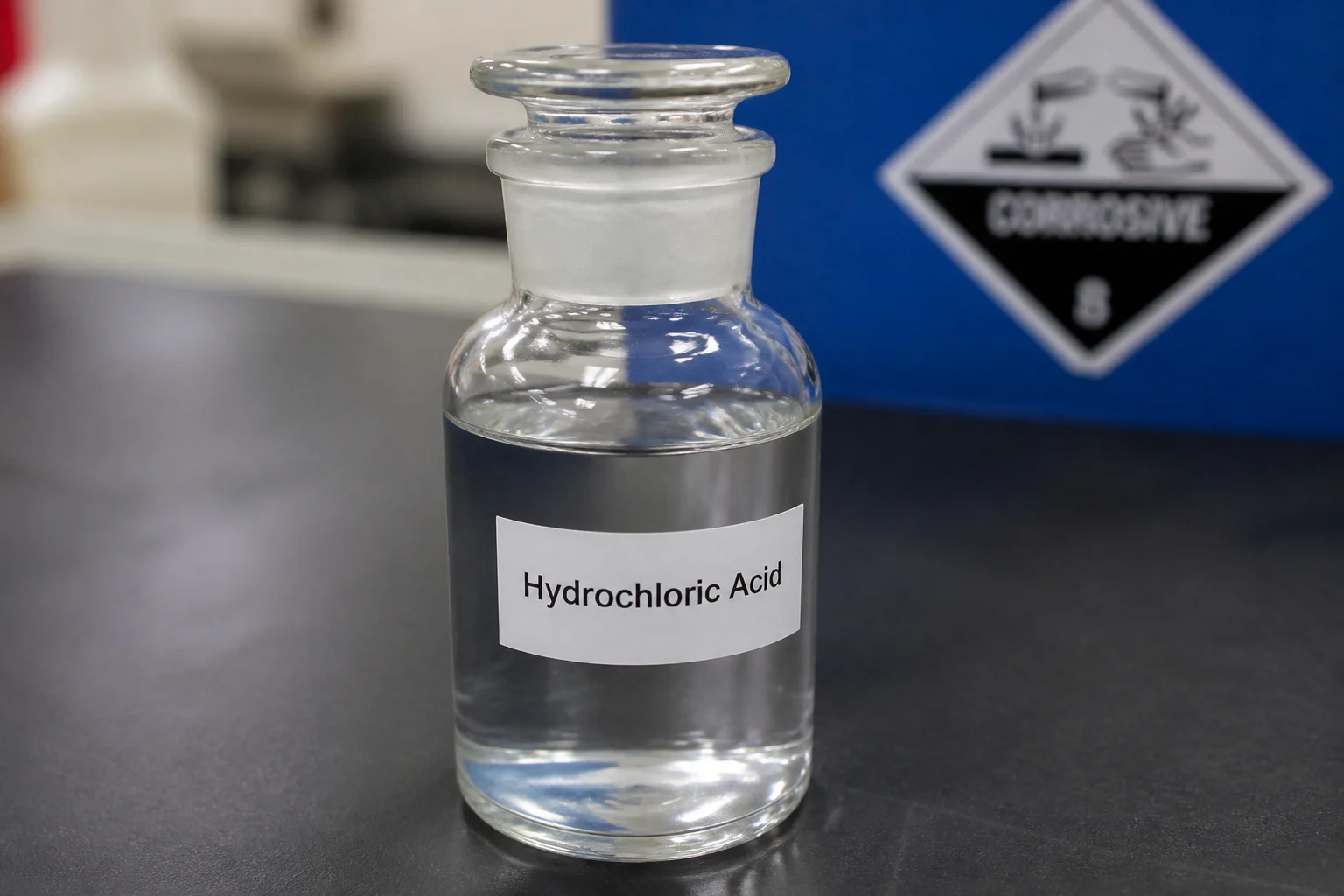
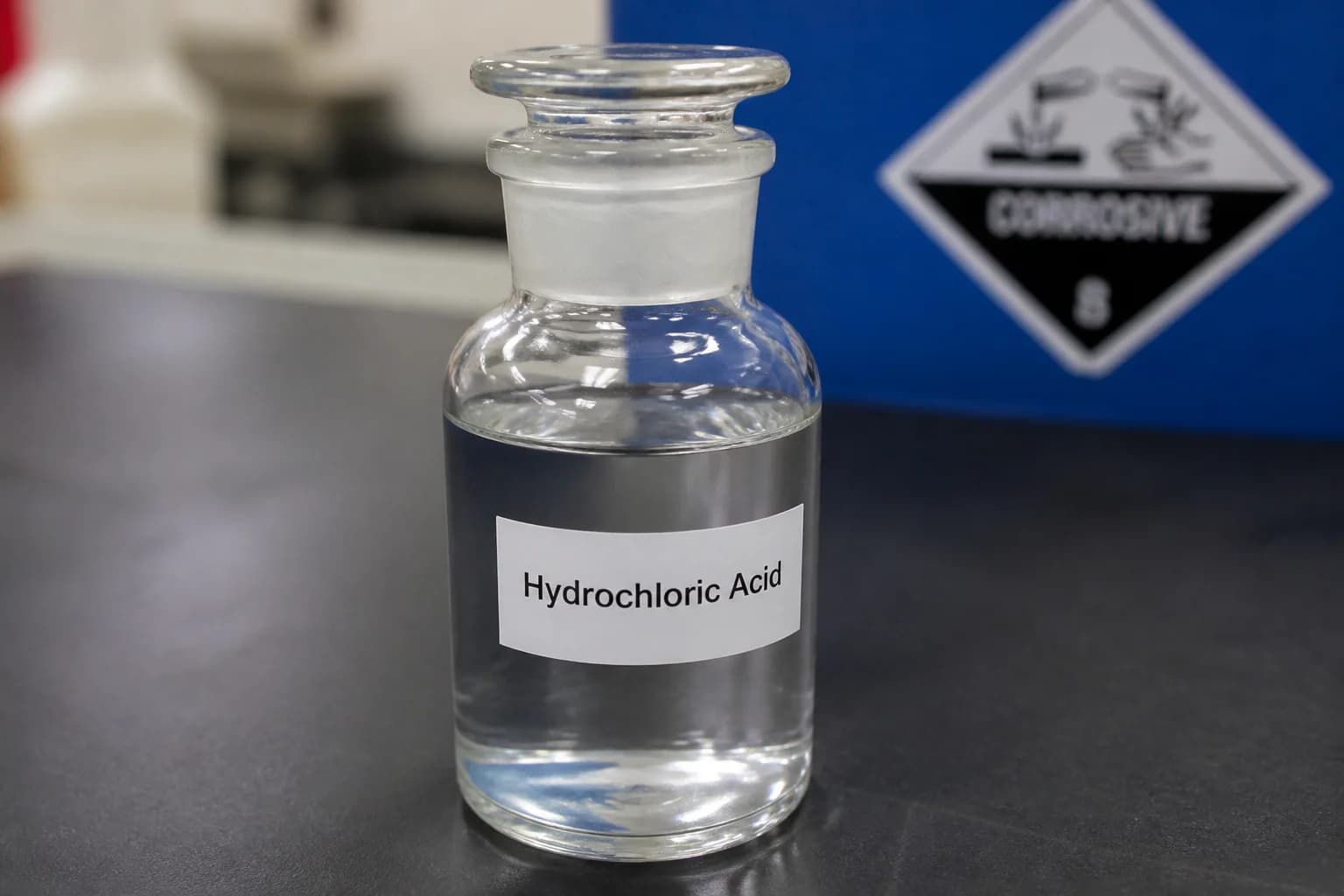
Yes. Chemically, they’re identical — both are hydrogen chloride gas (HCl) dissolved in water. The name “muriatic” comes from the Latin word for brine. It’s an old term that stuck around in hardware stores and commercial applications.
The difference isn’t the chemical. It’s the purity and intended market. “Hydrochloric acid” usually refers to higher-purity grades sold for industrial, laboratory, or food applications. “Muriatic acid” typically means commercial-grade material sold through hardware stores and pool supply shops.
What the Grade Difference Actually Means
Muriatic acid typically contains 28-32% HCl by weight. The rest is water, which is the standard solvent for HCl products. It also contains small amounts of iron (up to 100 ppm), sulfates (up to 200 ppm), and trace heavy metals from the manufacturing process. These impurities don’t affect performance for most applications.
Technical-grade hydrochloric acid is 31-38% HCl with tighter control on impurities. Iron stays below 10 ppm. Sulfates below 50 ppm. Heavy metals barely register. This matters when surface cleanliness is critical or when the product contacts food or pharmaceuticals.
Higher grades exist for applications with even stricter requirements. Reagent-grade maintains 36-38% HCl and impurity levels below 1 ppm. ACS-grade meets American Chemical Society analytical standards. Food-grade meets FDA requirements for products destined for human consumption. Electronic-grade exists for semiconductor manufacturing where any contamination ruins results.
The yellow color sometimes seen in muriatic acid comes from iron impurities. This doesn’t affect most applications but matters in food processing or lab work where appearance and purity are part of quality assurance.
Muriatic Acid vs Hydrochloric Acid: Where Each Works
The muriatic acid vs hydrochloric acid decision comes down to what you’re actually using it for.
- Muriatic acid works fine for:
- Swimming pool pH adjustment and alkalinity control. The small iron content doesn’t affect water chemistry or pool equipment. You’re adjusting pH, and muriatic acid does that perfectly at a lower price.
- Concrete surface etching and cleaning before coating or staining. The acid removes surface contaminants and creates tooth for adhesion. A few ppm of iron impurities don’t change the outcome.
- Masonry and brick cleaning. Removing mortar stains, efflorescence, and mineral deposits from concrete and stone all work with muriatic acid without performance loss.
- Toilet bowl cleaning and hard water stain removal in residential and light commercial settings. The yellow tint doesn’t matter because the product isn’t visible in the finished application.
- General metal cleaning where surface appearance isn’t critical. Removing light rust or oxide before painting is fine with muriatic acid.
- Neutralizing alkaline wastewater before discharge. The impurities don’t affect the neutralization reaction.
- You need technical-grade or higher for:
- Food and beverage processing. FDA regulations prohibit iron and heavy metal contamination in products people eat or drink. Food-grade certification is non-negotiable.
- Pharmaceutical manufacturing. GMP (Good Manufacturing Practice) compliance requires reagent-grade or USP (United States Pharmacopeia) certified material with documented purity.
- Stainless steel pickling for medical devices, aerospace components, or critical industrial equipment. Iron impurities from muriatic acid can contaminate the steel surface and cause corrosion or rejection by downstream processes.
- Laboratory analytical work. Test results depend on reagent purity. Using muriatic acid in analytical chemistry introduces contamination that skews results.
- Electronics and semiconductor manufacturing. Electronic-grade HCl is required because any metal contamination ruins the ultra-pure environment needed for chip production.
- Water treatment systems where iron content causes problems. Some water quality applications can’t tolerate additional iron in the feed stream.
The Chemistry is Identical
Both products contain HCl molecules surrounded by water molecules. When you test them, they both release hydrogen ions (H⁺) and chloride ions (Cl⁻). They have the same acidic properties, same corrosive behavior, same chemical reactions.
If you took 32% muriatic acid and 32% technical-grade hydrochloric acid and measured their pH, it would be virtually identical. The acid strength comes from the HCl concentration, not which name is on the label.
What both products have in common:
- Same chemical formula: HCl dissolved in H₂O
- Same corrosive properties on metals, concrete, and skin
- Same acidic reactions — neutralizes bases, dissolves carbonates
- Same safety precautions needed — PPE, ventilation, careful handling
- Same storage requirements — cool, dry, away from incompatible materials
- Same disposal regulations — classified as corrosive waste
| Aspect | Muriatic Acid | Hydrochloric Acid |
| Chemical identity | HCl in water | HCl in water |
| Primary market | Consumer/commercial | Industrial/laboratory |
| Where sold | Hardware stores, pool supply | Chemical distributors |
| Typical packaging | 1-gallon jugs, 5-gallon pails | Drums, totes, bulk |
| Price point | Lower (commodity) | Higher (purity premium) |
| Documentation | Basic SDS | SDS + CoA + specs |
Muriatic Acid vs Hydrochloric Acid: Purity and Grade Differences
What Purity Actually Means
When someone talks about purity in acids, they mean how much of the product is actually the chemical you want (HCl) versus impurities. Even water counts as a component, not an impurity, since HCl is sold as an aqueous solution.
Muriatic acid typically runs 28–32% HCl by weight. The rest is water. But it also contains small amounts of iron, sulfates, and other impurities from the manufacturing process. These don’t usually affect home or basic industrial uses.
Technical-grade hydrochloric acid is 31–38% HCl with tighter control on impurities. Iron content stays below 10 ppm. Sulfates below 50 ppm. Heavy metals are barely detectable. This matters when you’re doing steel pickling for aerospace parts or food-grade applications.
Grade Classifications
The chemical industry uses standard grade classifications. Each grade has specifications for concentration and maximum impurity levels.
Common grades and their uses:
- Commercial/Muriatic (28–32%): pools, concrete, basic cleaning — allows higher impurities
- Technical (31–37%): industrial processes, steel pickling — moderate purity
- Reagent (36–38%): laboratory analytical work — high purity, low metals
- ACS Grade: meets American Chemical Society specs — analytical chemistry
- Food Grade: meets FDA requirements — food processing, pH adjustment
- Electronic Grade: ultra-pure for semiconductor manufacturing
| Specification | Muriatic | Technical | Reagent |
| HCl concentration | 28–32% | 31–37% | 36–38% |
| Iron (Fe) max | 100 ppm | 10 ppm | 1 ppm |
| Sulfates max | 200 ppm | 50 ppm | 5 ppm |
| Heavy metals max | 50 ppm | 10 ppm | 1 ppm |
| Appearance | Pale yellow | Clear to pale yellow | Water-clear |
| Price ($/gallon) | $3–6 | $8–15 | $25–45 |
Application-Based Selection
When Muriatic Acid Works Fine
Most people asking about muriatic acid vs hydrochloric acid are trying to figure out which to buy for a specific job. For many applications, the cheaper muriatic acid does everything you need.
Swimming pool pH control doesn’t care about a few ppm of iron impurities. Concrete etching before coating or staining works just as well with muriatic acid as with technical-grade. Cleaning rust stains, removing mineral deposits, or neutralizing alkaline waste streams — muriatic acid handles these fine.
The yellow tint from iron doesn’t affect performance in these applications. You’re not creating a product for human consumption. Surface appearance doesn’t matter. You just need acid that works at the right price.
Best uses for muriatic acid:
- Swimming pool pH adjustment and alkalinity control
- Concrete surface etching and cleaning before coatings
- Masonry cleaning — removing mortar stains, efflorescence
- Toilet bowl and hard water stain removal
- Pool tile calcium deposit removal
- Neutralizing alkaline wastewater before discharge
- General metal cleaning where appearance isn’t critical
When You Need Technical-Grade or Better
Some applications can’t tolerate impurities. Food processing is obvious — you can’t have iron contamination in products people eat. Laboratory work needs consistent, pure reagents or test results won’t be reliable.
Steel pickling for critical applications matters too. If you’re pickling stainless steel for medical devices or aerospace components, iron impurities from muriatic acid could cause surface contamination. You need the cleaner technical-grade or reagent-grade material.
Pharmaceutical manufacturing, electronics, anything with tight specifications — these need properly graded hydrochloric acid with certificates of analysis proving purity.
Applications requiring higher purity:
- Food and beverage processing — FDA requires food-grade certification
- Pharmaceutical manufacturing — GMP compliance demands reagent-grade
- Stainless steel pickling for medical/aerospace — prevents contamination
- Laboratory analytical work — reagent or ACS-grade ensures accuracy
- Electronics manufacturing — ultra-pure for semiconductor processing
- Water treatment where iron causes problems — technical-grade minimum
| Application | Minimum Grade | Why |
| Swimming pool maintenance | Muriatic | Impurities don’t matter |
| Concrete etching/cleaning | Muriatic | Performance unaffected |
| Steel pickling (general) | Muriatic/Technical | Depends on end use |
| Stainless steel (critical) | Technical/Reagent | Prevents contamination |
| Food processing | Food-grade | FDA requirement |
| Laboratory analysis | Reagent/ACS | Accurate results need purity |
| Pharmaceutical production | Reagent/USP | GMP compliance |
Safety Considerations — Same for Both
Whether you call it muriatic acid or hydrochloric acid, the safety requirements don’t change. Both are corrosive. Both release fumes. Both require the same protective equipment and handling procedures.
Personal Protection
Always wear chemical-resistant gloves — nitrile or butyl rubber work well. Safety glasses aren’t enough — you need a face shield for splash protection. Long sleeves and pants, closed-toe shoes. Work in ventilated areas or outdoors when possible.
The fumes are the sneaky danger. Hydrochloric acid releases hydrogen chloride gas, especially at higher temperatures. This gas irritates your nose, throat, and lungs immediately. Don’t work over open containers without ventilation.
Storage and Spill Response
Store both products in cool, dry areas away from bases like lye or ammonia. Keep away from metals unless in proper lined containers. HDPE or PVC containers work well. Glass is fine for small amounts but risky for large volumes.
For spills, neutralize with baking soda or lime before wiping up. Don’t just flush with water — you’re diluting acid and spreading it. Neutralize first, then clean the area with water.
Safety rules for both products:
- PPE required: chemical gloves, face shield, protective clothing
- Ventilation essential — never work in enclosed spaces without airflow
- Add acid to water, never water to acid — prevents violent reaction
- Store in original container or approved chemical-resistant containers
- Keep away from incompatible materials — bases, metals, oxidizers
- Have neutralizing agent (baking soda) available for spills
- Wash skin immediately if exposed — don’t wait even a few seconds
| Safety Parameter | Value | Notes |
| OSHA PEL | 5 ppm ceiling | Never exceed this exposure |
| NIOSH REL | 5 ppm ceiling | 15-minute maximum |
| IDLH | 50 ppm | Immediately dangerous level |
| pH | <1 (highly acidic) | Both grades equally corrosive |
| Flash point | Non-flammable | Won’t catch fire |
| DOT classification | Corrosive, Class 8 | Both grades |
Cost Considerations and Buying Smart
Price Differences
Muriatic acid costs substantially less than technical-grade hydrochloric acid. You’ll pay $3–6 per gallon for muriatic acid at hardware stores. Technical-grade runs $8–15 per gallon from chemical distributors. Reagent-grade jumps to $25–45 per gallon.
For bulk purchases, the gap widens. A 55-gallon drum of muriatic acid might cost $180–250. Technical-grade in the same drum costs $400–600. That’s a significant difference if you’re using hundreds of gallons annually.
When Saving Money Makes Sense
Don’t overpay for purity you don’t need. If you’re running a pool service business, buying technical-grade hydrochloric acid instead of muriatic acid wastes money with zero performance benefit. Your pools won’t be cleaner. The pH adjustment works the same.
But don’t underbuy either. Using muriatic acid for food processing because it’s cheaper will fail inspections. The small savings aren’t worth the regulatory problems. Buy the grade your application actually requires.
Cost-saving tips:
- Match grade to application — don’t buy reagent-grade for pool maintenance
- Buy in bulk if you use volume — drums cheaper per gallon than jugs
- Check local suppliers — prices vary significantly by region
- Consider generic vs branded — chemical is chemical if specs match
- Verify concentration — 32% costs more per unit acid than 28%
- Factor in transportation — local muriatic acid may beat cheap distant technical-grade
The Difference Between Muriatic Acid and Hydrochloric Acid in Practice
At the bench or in the field, the difference between muriatic acid and hydrochloric acid matters for one reason: can you afford impurities in your application?
If you’re neutralizing wastewater or etching concrete, the answer is yes. Iron and sulfates don’t affect the outcome. Muriatic acid saves money with zero functional downside.
If you’re processing food, manufacturing pharmaceuticals, or doing analytical chemistry, the answer is no. Impurities corrupt your product or your results. You need certified, tested, documented material that meets regulatory requirements.
The chemical is identical. The decision is about whether the application tolerates impurities.
Conclusion
The comparison muriatic acid vs hydrochloric acid isn’t about different chemicals — it’s about different grades of the same chemical suited for different uses. Muriatic acid is hydrochloric acid sold at commercial purity for applications that don’t need ultra-clean material. Technical, reagent, and food-grade hydrochloric acid are the same chemical refined to higher purity standards for applications where impurities cause problems.
Choose based on what you’re actually doing. Pools and concrete cleaning? Muriatic acid saves money. Food processing or lab work? You need the proper certified grade. When you understand that both products are HCl and the difference is purity level, you can make smarter purchasing decisions that balance cost with application requirements. For businesses requiring hydrochloric acid across purity grades, Elchemy connects you with reliable suppliers offering muriatic acid, technical-grade HCl, reagent-grade, and food-grade formulations with complete certificates of analysis, safety documentation, and technical support to help match the right grade to your specific industrial, commercial, or processing applications.