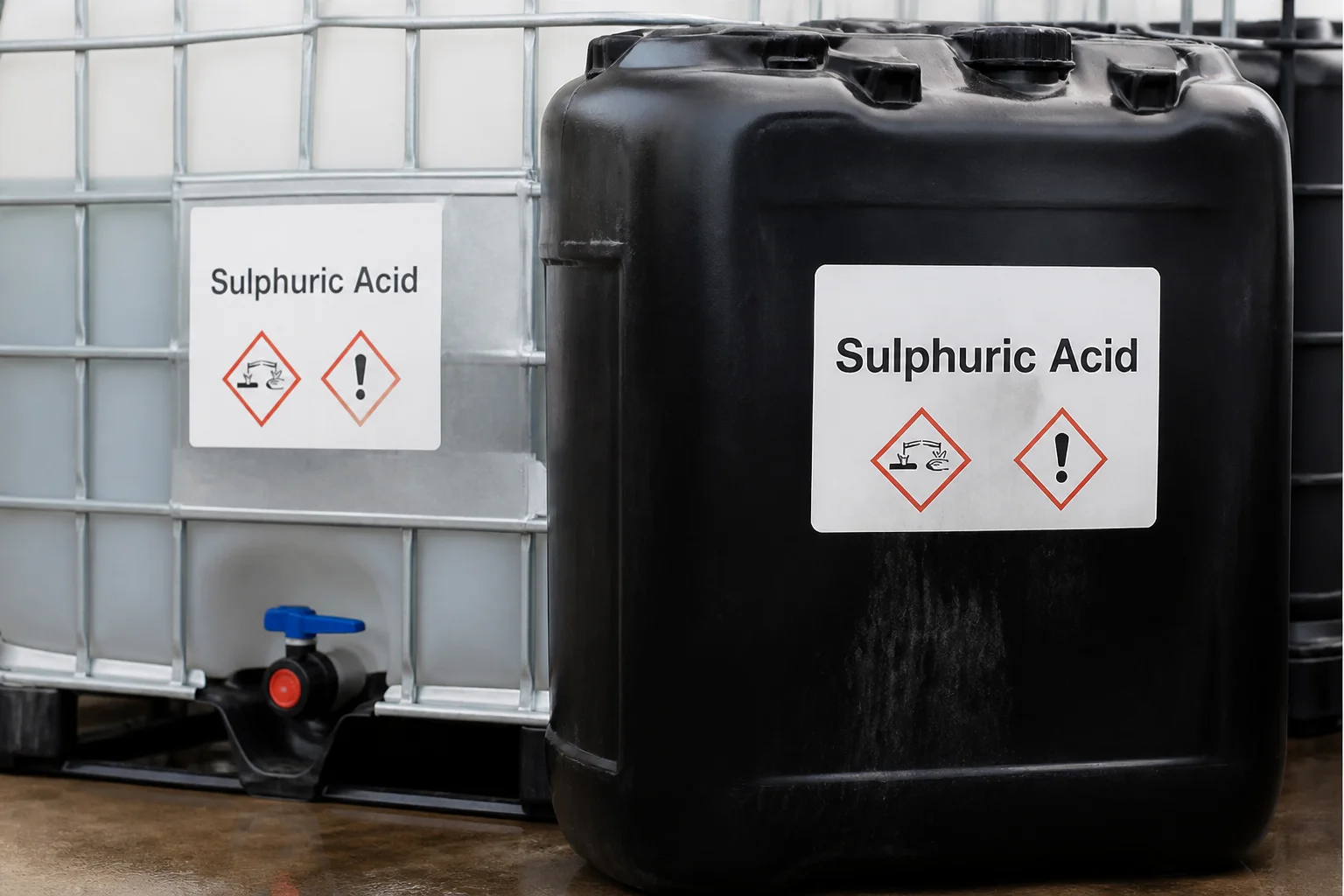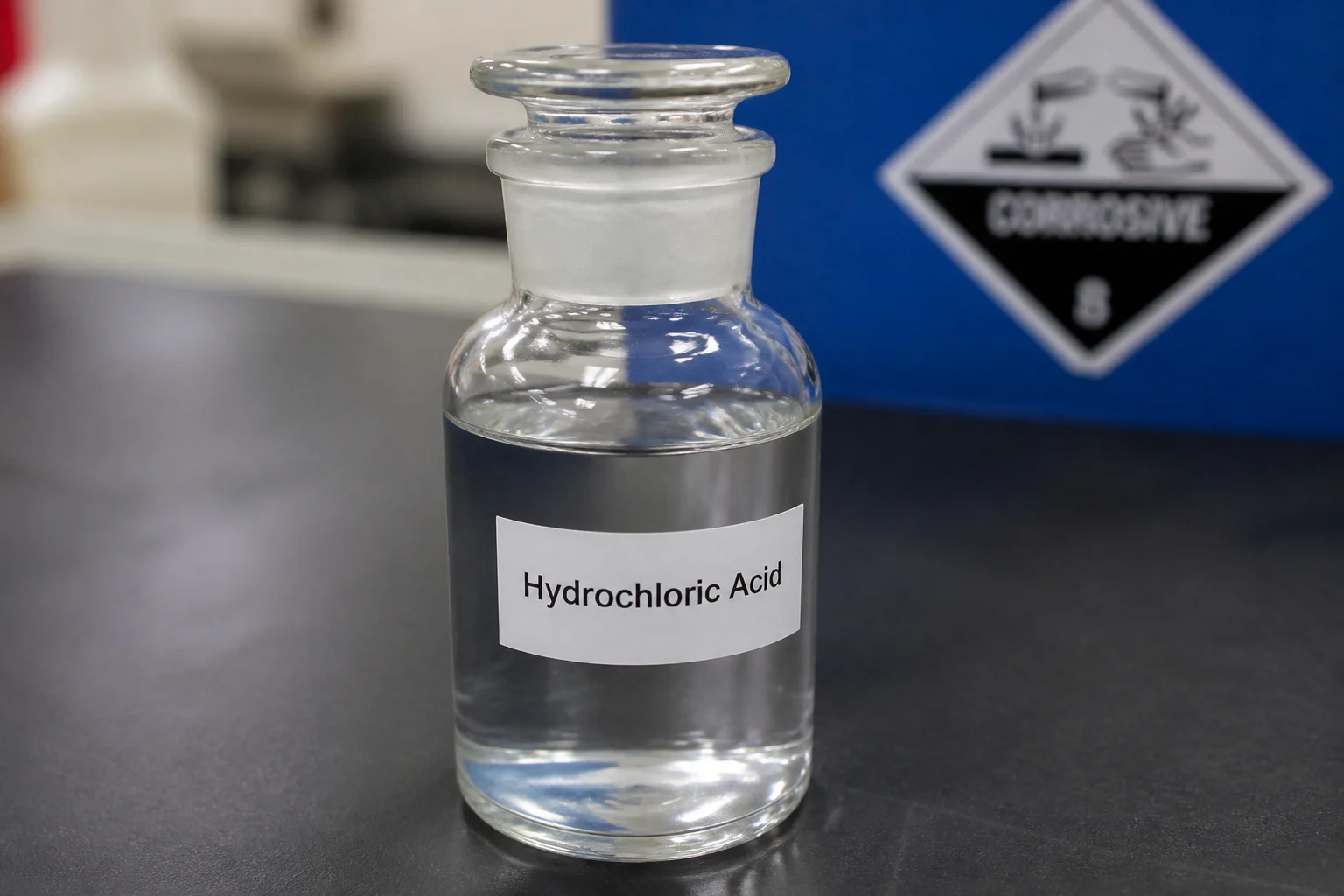


At a Glance
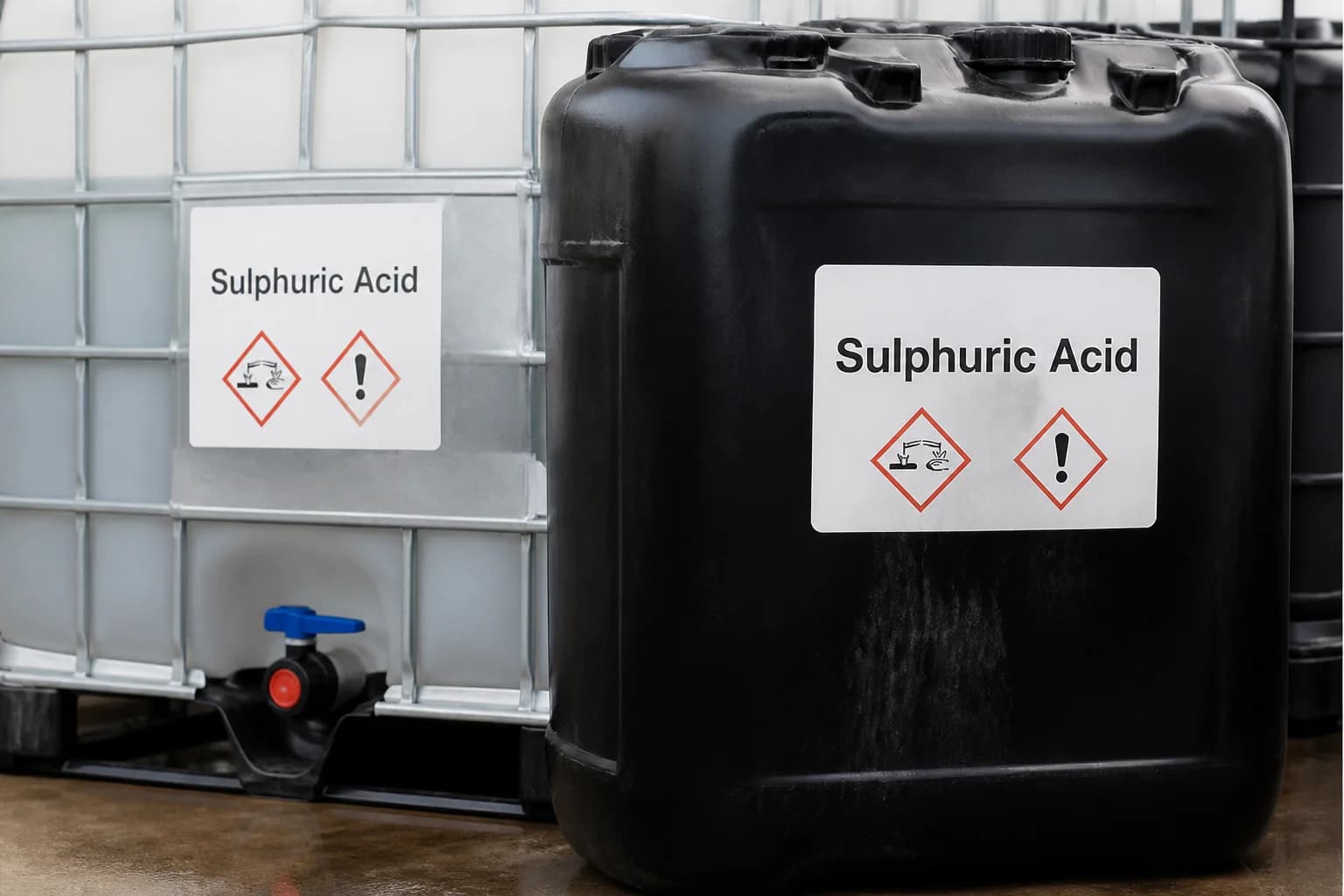
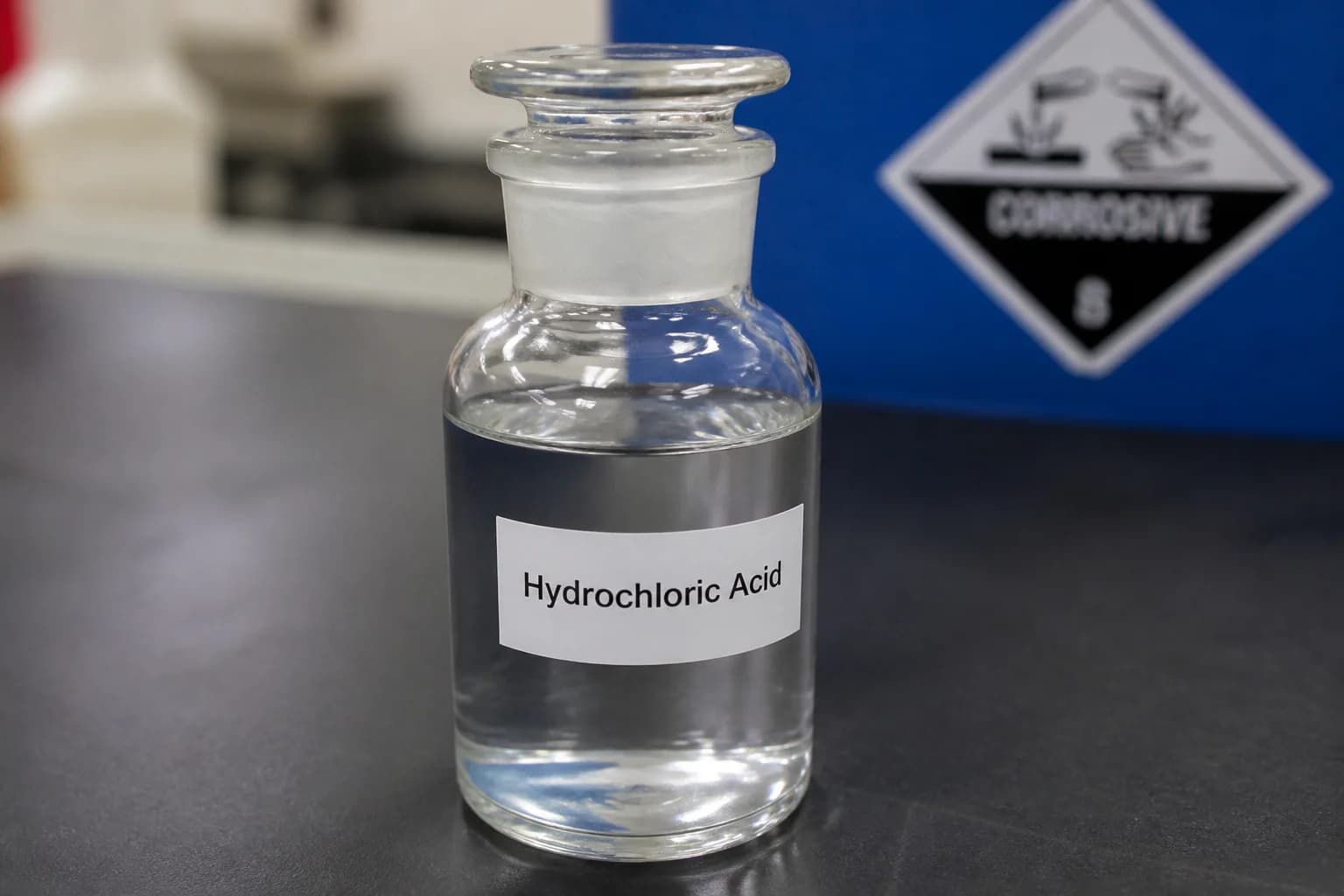
• Both are strong acids but sulfuric acid (H₂SO₄) is diprotic with two acidic protons while hydrochloric acid (HCl) is monoprotic
• Sulfuric acid costs $100-200 per tonne versus hydrochloric acid at $150-300 per tonne in bulk
• HCl produces soluble chloride salts; H₂SO₄ produces sulfate salts that can precipitate causing scaling issues
• Corrosivity patterns differ — concentrated sulfuric is a powerful dehydrating agent, HCl fumes corrode more aggressively
• Industrial scale favors sulfuric: 270 million tonnes annually versus 20 million tonnes HCl globally
• Battery acid uses 30-40% sulfuric; metal pickling prefers 15-20% hydrochloric depending on metal type
• Sulfuric acid at high concentration is oxidizing; hydrochloric acid is non-oxidizing at all concentrations
• Environmental impact differs — sulfate discharge has higher BOD; chloride affects aquatic life differently
An electroplating facility in Michigan faced a problem. Their nickel plating line produced inconsistent results. Some parts came out perfect, others showed dark streaks and poor adhesion. After investigation, the issue traced to their cleaning bath. They’d switched from hydrochloric acid to sulfuric acid when prices spiked, thinking both strong acids would work the same. They didn’t. Sulfuric formed calcium sulfate scale on heating coils, reducing bath temperature. The inconsistent temperature caused plating defects.
Choosing between sulfuric acid vs hydrochloric acid requires understanding more than just acid strength. Both donate protons readily, making them “strong” acids. But their different anions (sulfate vs chloride), oxidizing properties, solubility patterns, and corrosion behaviors create distinct application profiles. What works for one process often fails in another despite similar pH and acidity.
Fundamental Chemical Differences
Molecular Structure and Acidity
Sulfuric acid (H₂SO₄) has a sulfur atom bonded to four oxygen atoms in a tetrahedral geometry. Two of those oxygens carry hydrogen atoms that can dissociate as protons. This makes sulfuric acid diprotic — it can donate two H⁺ ions per molecule.
The first proton comes off completely in water (pKa₁ ≈ -3). This makes sulfuric a strong acid for the first dissociation. The second proton comes off less completely (pKa₂ ≈ 2), making the hydrogen sulfate ion (HSO₄⁻) a weak acid.
Hydrochloric acid (HCl) has simpler structure — one hydrogen bonded to one chlorine. In water, this bond breaks completely releasing H⁺ and Cl⁻. Since only one proton exists per molecule, it’s monoprotic. Full dissociation occurs immediately making it completely strong.
This proton count affects stoichiometry. Neutralizing one mole of sulfuric acid requires two moles of base. Neutralizing one mole of hydrochloric acid needs just one mole of base. Cost calculations must account for this difference.
Concentration and Commercial Forms
Concentrated sulfuric acid comes as 93-98% H₂SO₄ by weight. This viscous, oily liquid is extremely hygroscopic, absorbing water from air aggressively. The dilution process generates tremendous heat — adding water to concentrated sulfuric can boil violently. Always add acid to water, never reverse.
Concentrated hydrochloric acid tops out at 37-38% HCl. Higher concentrations are unstable because HCl gas escapes readily. The fuming liquid has a sharp, choking odor. Unlike sulfuric, diluting hydrochloric generates less heat though still requires caution.
Battery applications use 30-40% sulfuric specifically because higher concentrations increase capacity but reduce longevity. Lower concentrations reduce performance. Lead-acid batteries operate in this sweet spot balancing power and lifespan.
Table 1: Physical Properties Comparison
| Property | Sulfuric Acid (conc.) | Hydrochloric Acid (conc.) | Practical Impact |
| Concentration (commercial) | 93-98% | 31-38% | Sulfuric delivers more acid per volume |
| Density | 1.84 g/mL | 1.18 g/mL | Sulfuric much heavier |
| Boiling point | 337°C (decomposes) | -85°C (azeotrope at 110°C) | Sulfuric more heat-stable |
| Freezing point | 10°C (for 98%) | -30°C (for 37%) | HCl resists freezing better |
| Heat of dilution | Very high (exothermic) | Moderate | Sulfuric dilution more dangerous |
| Viscosity | High (thick, oily) | Low (watery) | Affects pumping and mixing |
| Vapor pressure | Very low | High (releases HCl gas) | HCl creates more fumes |
Industrial Production and Economics
Manufacturing Scale and Cost
Sulfuric acid is the world’s most-produced chemical by volume. Global production exceeds 270 million metric tonnes annually. The massive scale comes from fertilizer manufacturing — about 60% of sulfuric acid goes into phosphate and ammonium sulfate fertilizers.
Production uses the contact process: burning sulfur (or roasting sulfide ores) produces SO₂, which oxidizes to SO₃ over vanadium catalyst, then absorbs into water forming H₂SO₄. The process is efficient and well-optimized after 100+ years of refinement.
Hydrochloric acid production is much smaller — roughly 20 million tonnes annually. Most arises as byproduct from chlorination reactions in chemical manufacturing. When companies make vinyl chloride, chlorinated solvents, or fluorocarbons, HCl often forms as unwanted product. This “byproduct acid” enters the market at low cost.
Sulfuric acid has robust supply chains with production capacity distributed globally. Almost every industrial region has sulfuric acid plants because fertilizer demand exists everywhere. Transportation as commodity chemical is straightforward though the high density and corrosivity require specialized equipment.
Hydrochloric acid availability varies more. Regions with heavy chlor-alkali or organochlorine chemical industries have abundant byproduct HCl. Areas without these industries might face tighter supply and higher transport costs. The fuming nature of concentrated HCl adds shipping complexity.
Table 2: Production and Market Comparison
| Factor | Sulfuric Acid | Hydrochloric Acid | Implication |
| Global production | 270 million tonnes/year | 20 million tonnes/year | Sulfuric vastly larger scale |
| Primary production | Intentional (contact process) | Often byproduct | HCl supply less predictable |
| Main driver | Fertilizer industry (60%) | Chlorination byproduct | Different demand patterns |
| Price stability | Very stable | More variable | Easier budgeting for sulfuric |
| Availability | Universal | Regional variation | Sulfuric easier to source everywhere |
| Cost per tonne | $100-200 | $150-300 | Sulfuric cheaper per tonne |
Sulfuric Acid vs Hydrochloric Acid: Application Profiles
Metal Pickling and Surface Treatment
Metal pickling removes oxide scale and rust before plating, coating, or further processing. The choice between sulfuric acid and hydrochloric acid depends on the metal and desired surface finish.
Steel pickling commonly uses hydrochloric acid at 10-18% concentration and 60-80°C. The pickling is fast — 2-5 minutes for most hot-rolled steel. HCl dissolves iron oxide rapidly without attacking the base metal excessively when inhibitors are added. The chloride salts formed stay soluble.
Sulfuric acid at 5-15% concentration works for steel pickling too but operates at higher temperatures (70-90°C) and takes longer (5-15 minutes). It’s cheaper per tonne but may require more acid due to longer processing. Some facilities choose sulfuric for cost reasons despite slower throughput.
For stainless steel, hydrochloric acid mixtures (often with nitric acid) are standard. These remove chromium oxide layers without leaving embedded iron that causes corrosion. Sulfuric acid on stainless can cause pitting and doesn’t achieve the bright finish required.
Copper alloys typically get pickled with sulfuric acid. Aluminum requires specialized solutions — neither pure HCl nor H₂SO₄ alone works well without specific formulation.
pH Control and Neutralization
Both acids control pH in water treatment, chemical processing, and wastewater management. The choice often comes down to what anion you can tolerate in the system.
Hydrochloric acid produces chloride ions. At normal treatment levels, chloride stays soluble and doesn’t precipitate. But high chloride can corrode stainless steel and increases conductivity in water systems. For boiler feedwater treatment, chloride is often restricted to prevent stress corrosion cracking.
Sulfuric acid produces sulfate ions. Moderate sulfate levels are fine, but high concentrations (>250 mg/L) can cause scaling when calcium, barium, or strontium are present. Calcium sulfate (gypsum) has limited solubility and precipitates as scale on pipes and heat exchangers.
Many water treatment operations use sulfuric acid because it’s cheaper and sulfate rarely causes problems at dilute concentrations used for pH adjustment. But systems prone to scaling or using stainless piping may specify hydrochloric despite higher cost.
Chemical Synthesis and Processing
Chemical manufacturing uses both acids extensively. The choice depends on whether the acid acts as reactant (becoming part of the product) or catalyst (recovered afterward).
Sulfuric acid serves as catalyst in alkylation (petroleum refining), esterification reactions, nitration processes, and many organic syntheses. Its two protons and low volatility make it ideal for reactions requiring sustained acidity at elevated temperature.
Hydrochloric acid often acts as reactant producing chloride salts. Pharmaceutical manufacturing uses HCl to form hydrochloride salts of drug molecules, improving solubility and stability. These salts are designed to contain chloride — it’s part of the desired product.
Table 3: Application Comparison
| Application | Preferred Acid | Concentration | Why Preferred |
| Steel pickling (carbon) | HCl or H₂SO₄ | HCl 10-18%, H₂SO₄ 5-15% | HCl faster; H₂SO₄ cheaper |
| Stainless pickling | HCl (+ HNO₃) | 10-15% HCl | Bright finish, no iron embedding |
| pH control (general) | H₂SO₄ | 5-30% | Lower cost |
| pH control (high hardness) | HCl | 5-20% | Avoids sulfate scaling |
| Battery electrolyte | H₂SO₄ only | 30-40% | Required chemistry |
| Pharmaceutical salts | HCl only | 20-37% | Creates desired product |
| Petroleum alkylation | H₂SO₄ only | 93-98% | Catalyst function |
| Fertilizer production | H₂SO₄ only | 93-98% | Phosphate dissolution |
Corrosion Behavior and Material Compatibility
How Each Acid Attacks Materials
Concentrated sulfuric acid’s corrosivity is complex. Below 80% concentration at room temperature, it attacks most metals aggressively. But concentrated sulfuric (>90%) forms a passive oxide layer on some metals like iron and steel, actually slowing corrosion. Carbon steel tankers safely transport 98% sulfuric because this passivation layer protects the metal.
Heating breaks this passivation. Hot concentrated sulfuric corrodes steel rapidly. The acid also dehydrates organic materials — it will char paper, wood, and flesh by removing water molecules. This makes concentrated sulfuric acid burns particularly severe.
Hydrochloric acid corrodes metals consistently across all concentrations. No passivation occurs. The corrosion rate increases with concentration and temperature but remains aggressive even at low levels. Fuming HCl (>37%) releases gas that corrodes anything nearby including steel, copper, and aluminum.
For hydrochloric acid, rubber-lined steel works well at all concentrations and moderate temperatures. PVC, CPVC, and PTFE (Teflon) resist HCl excellently. Stainless steels (304, 316) corrode rapidly in HCl unless concentrations are extremely low (<0.5%). Specialized alloys like Hastelloy C resist HCl but cost far more.
For sulfuric acid, carbon steel surprisingly works for concentrated acid (>80%) due to passivation. Below 70% concentration, steel corrodes too fast. Stainless steels resist dilute sulfuric better than they resist hydrochloric. Lead, glass, and certain plastics (PP, PTFE) resist sulfuric at various concentrations.
Table 4: Material Compatibility
| Material | HCl Resistance | H₂SO₄ Resistance | Cost Factor | Best Use |
| Carbon steel | Poor | Excellent (>80% conc.) | Low | H₂SO₄ storage tanks |
| Stainless 316 | Very poor | Moderate (dilute) | Medium | Dilute H₂SO₄ only |
| Rubber-lined steel | Excellent | Good (<60%) | Medium | HCl processing |
| PVC | Excellent | Fair (<50%) | Low | HCl piping |
| PTFE | Excellent | Excellent | High | Critical applications |
| Glass | Good | Good | Medium | Lab equipment |
| Hastelloy C | Excellent | Excellent | Very high | Severe service |
Environmental and Safety Considerations
Occupational Exposure Hazards
Both acids pose serious health risks but through different mechanisms. Hydrochloric acid releases HCl gas that irritates eyes, nose, throat, and lungs immediately at low concentrations (>5 ppm). Workers smell the sharp odor well before reaching dangerous levels, providing warning.
Sulfuric acid mist (formed when hot acid contacts water or air) damages lungs and can cause chronic respiratory disease with repeated exposure. Concentrated sulfuric’s dehydrating property makes skin contact extremely damaging — the acid removes water from tissue causing deep burns.
Both require similar PPE but different engineering controls. HCl needs excellent ventilation to remove fugitive fumes. Sulfuric needs controls preventing mist formation and splash protection during dilution.
Environmental Discharge and Waste
Both acids require neutralization before environmental discharge. The neutralization products differ and affect wastewater treatment differently.
Neutralizing hydrochloric acid produces chloride salts. Sodium chloride (table salt) is the usual product if using sodium hydroxide for neutralization. Moderate chloride levels in wastewater are acceptable but high concentrations harm aquatic life and increase water salinity.
Neutralizing sulfuric acid produces sulfate salts. These contribute to biological oxygen demand (BOD) in receiving waters. Sulfate-reducing bacteria consume sulfates creating hydrogen sulfide gas (rotten egg smell) in anaerobic conditions. Many regions limit sulfate discharge to prevent this.
Facilities generating large volumes of spent acid often distill and reuse rather than disposing. Sulfuric acid recovery is more common because the high boiling point makes distillation practical. Hydrochloric acid recovery is harder due to gas formation but chemical regeneration processes exist.
Specialized Applications Requiring Specific Acid
Lead-Acid Batteries (Sulfuric Only)
Lead-acid batteries use 30-40% sulfuric acid as electrolyte. The electrochemistry specifically requires sulfate ions. Hydrochloric acid cannot substitute — the chloride ion doesn’t support the lead/lead dioxide/sulfate reaction that stores and releases energy.
Battery acid concentration affects performance. Higher concentration (35-40%) increases battery capacity and power but accelerates electrode corrosion. Lower concentration (30-35%) extends battery life but reduces capacity. Manufacturers balance these factors based on application.
The global lead-acid battery industry consumes roughly 40 million tonnes of sulfuric acid annually. This represents about 15% of global sulfuric acid production and creates massive demand independent of fertilizer markets.
Pharmaceutical Hydrochloride Salts (Hydrochloric Only)
Many drug molecules exist as free bases that dissolve poorly in water. Converting them to hydrochloride salts dramatically improves solubility, enabling formulation into tablets, capsules, and injections.
This requires hydrochloric acid specifically. The chloride counterion is well-tolerated, highly soluble, and stable. Sulfate salts sometimes work but many drugs form poorly soluble sulfate salts. Chloride is the preferred option for most pharmaceutical salt formation.
Examples include diphenhydramine HCl (Benadryl), ranitidine HCl (Zantac), metformin HCl (diabetes drug), and hundreds of others. This pharmaceutical application consumes relatively small volumes but demands high-purity reagent-grade hydrochloric acid.
Table 5: Application-Specific Requirements
| Application | Required Acid | Why No Substitute | Annual Volume |
| Lead-acid batteries | H₂SO₄ 30-40% | Electrochemistry requires sulfate | 40 million tonnes |
| Phosphate fertilizers | H₂SO₄ 93-98% | Dissolves phosphate rock | 160 million tonnes |
| Pharmaceutical salts | HCl 31-37% | Creates desired chloride salts | 50,000-100,000 tonnes |
| Vinyl chloride synthesis | HCl byproduct | Part of chlorination chemistry | 10 million tonnes |
| Petroleum alkylation | H₂SO₄ 93-98% | Catalyst for specific reaction | l5 million tonnes |
Decision Framework for Selection
Cost-Benefit Analysis
Choosing between sulfuric acid vs hydrochloric acid requires calculating true cost including purchase price, handling equipment, waste disposal, and process efficiency.
Start with acid cost per equivalent: sulfuric provides two protons per molecule (diprotic) while hydrochloric provides one (monoprotic). At $150/tonne sulfuric versus $225/tonne hydrochloric, the cost per mole of H⁺ favors sulfuric significantly.
Factor in handling costs: hydrochloric requires better ventilation systems to handle fumes. Sulfuric needs specialized dilution equipment for safe water addition. Material compatibility affects equipment costs — stainless works for dilute sulfuric but not for HCl at any concentration.
Consider waste treatment: neutralizing and disposing spent acid adds cost. If the anion (sulfate or chloride) causes downstream problems, waste treatment becomes expensive. Scaling from sulfate or corrosion from chloride can drive equipment replacement costs higher than raw acid savings.
Performance Requirements
Technical performance often dictates choice regardless of cost. If the application requires chloride ions (like making pharmaceutical salts), sulfuric acid fails no matter how cheap. If passivation matters (like 98% sulfuric storage), hydrochloric can’t substitute.
Most applications work with either acid but favor one for practical reasons. Steel pickling works with both but HCl finishes faster. pH control works with both but sulfuric costs less. Material compatibility and byproduct management often tip the decision.
Conclusion
The choice between sulfuric acid and hydrochloric acid extends beyond acid strength to encompass anion behavior, corrosion patterns, oxidizing properties, and economic factors. Sulfuric acid’s diprotic nature provides two equivalents of acidity per molecule, creating cost advantages in bulk applications despite similar per-tonne pricing ($100-200 vs $150-300 per tonne). Its dominant position in fertilizer production and battery manufacturing drives annual global output to 270 million tonnes compared to hydrochloric’s 20 million tonnes. Sulfuric acid vs hydrochloric acid differences appear clearly in material compatibility — concentrated sulfuric passivates carbon steel enabling cost-effective storage while HCl requires rubber-lined or plastic equipment at all concentrations.
Application requirements often dictate selection: lead-acid batteries demand sulfuric’s sulfate chemistry, pharmaceutical hydrochloride salts require hydrochloric acid specifically, and metal pickling favors either acid based on metal type and desired finish. The sulfate versus chloride anion impacts downstream processing — sulfate can precipitate causing scale with calcium or barium, while chloride increases corrosion risk in stainless steel systems and affects aquatic life differently in wastewater discharge.
For industrial operations requiring strong acid across applications, Elchemy connects you with reliable suppliers offering both sulfuric acid (93-98% concentrated, 10-30% dilute, battery-grade) and hydrochloric acid (31-38% technical, 28-32% commercial, reagent-grade) with complete safety documentation, material compatibility guidance, and technical support helping match acid selection to your specific metal treatment, pH control, synthesis, or processing requirements while optimizing performance and cost.