

At a Glance
- Bulk maltodextrin pricing drops sharply past the 1 MT threshold. Retail per-kg pricing and industrial per-MT pricing simply aren’t comparable numbers.
- DE grade is the single biggest price and performance lever. Low DE trades for higher viscosity and film-forming strength, while high DE trades for sweetness and fast solubility.
- Source matters for compliance, not just cost. Wheat-derived maltodextrin needs a gluten disclosure, and corn-derived needs a non-GMO answer ready for US/EU buyers.
- MOQ is negotiable once you have a working relationship. Blended shipments and private-label runs both loosen the standard bag/pallet/FCL tiers.
- A distributor with dual India/China sourcing typically beats a single-origin manufacturer on lead time and price stability, even when the manufacturer’s unit price looks lower on paper.
What you’ll learn: how bulk maltodextrin is priced, which DE grade and source fit your application, what MOQ and documentation to expect, and how to choose between a manufacturer, distributor, and trading supplier.
Introduction
Bulk maltodextrin is one of those ingredients where, in short, a small sourcing mistake shows up at the worst possible moment. Get the DE grade wrong, and you don’t find out until the batch is already in your reactor or mixer.
By then, you’re reformulating a texture problem or a solubility failure at commercial scale.
The stakes are real: the global maltodextrin market was valued at USD 4.1 billion in 2025 and is projected to grow at a 4.3% CAGR through 2035, and most of that volume moves through industrial bulk contracts rather than retail bags.
This guide breaks down exactly what bulk maltodextrin costs at different volume tiers. It also covers how DE grade and source material change price and performance, what MOQ to expect from different supplier types, and the documentation to request before you commit to a shipment.
Request a Quote for current bulk pricing on Elchemy’s ELVISC – MDX G1 maltodextrin.
What Is Maltodextrin?
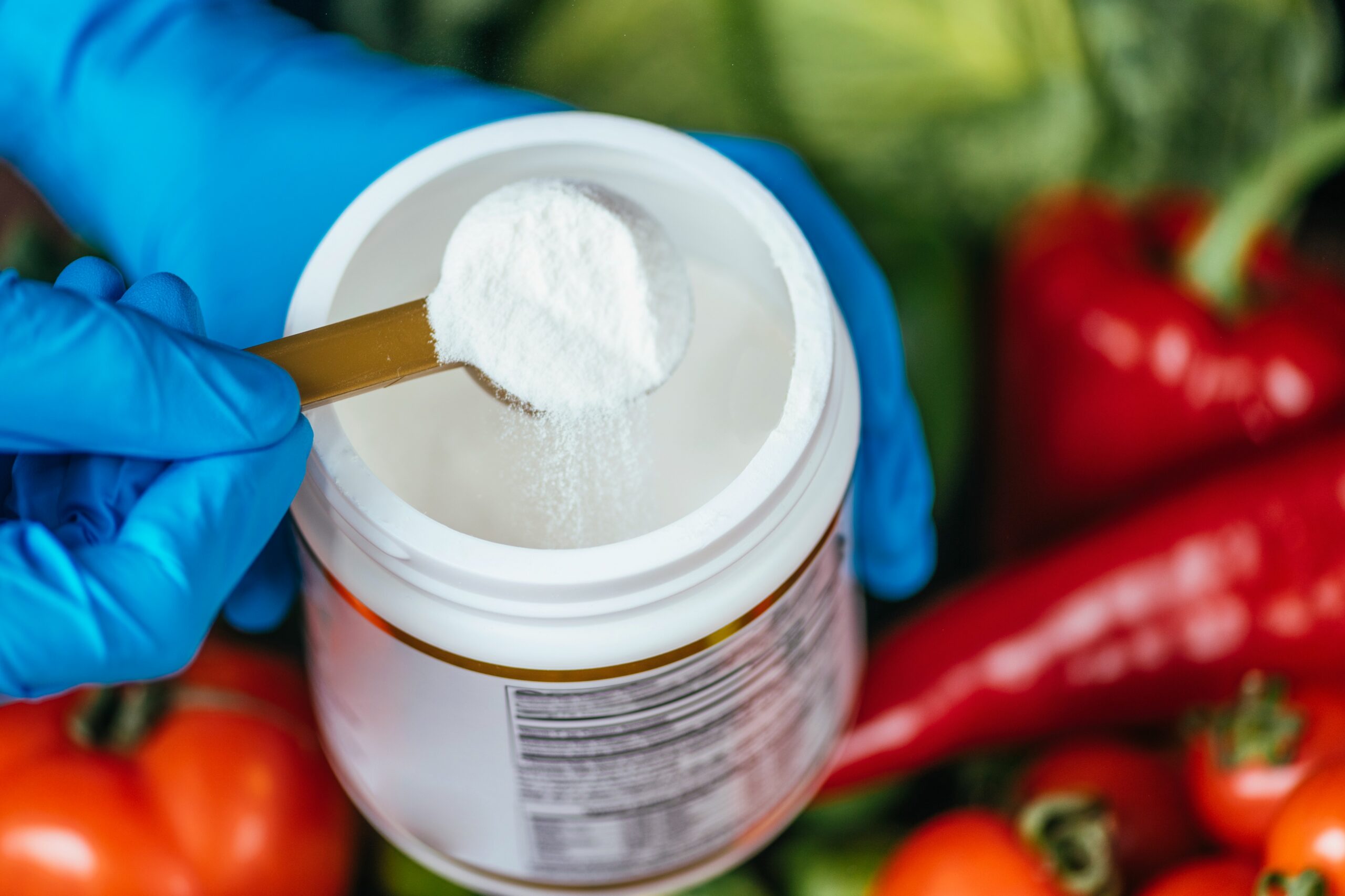
Maltodextrin is a white, spray-dried carbohydrate powder produced by the partial hydrolysis of starch. It’s most commonly derived from corn, but rice, tapioca, wheat, and potato starches are also used.
During production, acids or enzymes break long starch chains into shorter glucose polymer chains, without fully converting them to glucose or crystalline sugar. In other words, the process stops partway through.
The degree of that breakdown is measured as dextrose equivalent (DE), a scale from 0 to 100 that tells you how far the hydrolysis went. Low DE means longer chains, mild sweetness, and strong film-forming ability. High DE, on the other hand, means shorter chains, more sweetness, and faster solubility. By regulatory definition, maltodextrin sits below DE 20; anything higher is technically classified as glucose syrup solids.
Source material changes performance too, not just origin. Corn-based maltodextrin is the industry default for cost and consistency. Tapioca and rice-based grades run allergen-clean, which is why they’re preferred for clean-label and infant-nutrition formulations. Meanwhile, wheat-derived maltodextrin requires a gluten disclosure on any finished product label, even though the maltodextrin molecule itself is gluten-free after processing.
Maltodextrin Solubility and Handling
Standard maltodextrin powder is hygroscopic, so it can clump when added directly to cold water. This happens because the fine particles form a gel layer around themselves before the core dissolves.
For example, agglomerated (instantized) maltodextrin solves this problem by binding fine particles into larger, porous granules that wet out instantly, at a modest price premium.
For standard powder, a simple fix works: pre-mix into warm water (30–40°C) before adding it to the main batch, and disperse under moderate agitation rather than dumping it in all at once. As a result, this single step eliminates most reported clumping complaints on bulk orders.
Bulk Maltodextrin Price per Kg
Retail vs. Industrial Bulk Pricing
A retail per-kg price and an industrial bulk per-kg price are not the same number. In fact, comparing them directly is the most common sourcing mistake buyers make.
Retail pricing bakes in small-pack packaging, e-commerce fulfillment, and single-unit margin. Bulk industrial pricing, by contrast, reflects raw feedstock cost, freight, and volume-tiered margin, and it drops meaningfully as order size increases.
Tiered Price Table by Volume
| Volume Tier | Price per Kg (indicative) |
| 25 kg bag (retail/sample) | Highest per-kg rate |
| 1 MT | 30 to 40% lower than 25 kg rate |
| 3 MT | Additional 5 to 10% reduction |
| 4+ MT / FCL | Lowest per-kg rate, freight-optimized |
These are directional ranges, not quoted prices, since feedstock and freight shift week to week. Therefore, buyers who want to buy maltodextrin in bulk should request a quote for current landed pricing at their target volume and destination port.
Price Drivers
In particular, three factors move bulk pricing the most:
- Corn/feedstock cost: corn is the dominant global feedstock, so corn futures pricing affects maltodextrin cost even for non-corn grades.
- Freight and logistics: ocean freight rates and container availability can move landed cost more than the ex-works price does.
- Regional supply conditions: India and China production capacity, harvest disruptions, and export policy all affect availability and price.
How DE Grade Affects Price
For a full walkthrough beyond this summary, see DE grades explained.
| DE Range | Typical Use Case | Price Differential | Why |
| Low DE (below 10) | Film coatings, fat replacement, encapsulation | Premium over mid-range | Longer processing time, more specialized run |
| Mid DE (10–20) | General food/beverage bulking, texturizing | Baseline / most competitive | Highest-volume, most standardized grade |
| High DE (above 20, technically glucose syrup solids) | Sports nutrition, quick-energy applications | Comparable to or slightly below mid-DE | Shorter hydrolysis cycle, higher-volume output |
In practice, mid-DE maltodextrin (DE 10-20) is where most bulk buyers land. That’s because it’s the highest-volume grade in the market, and therefore the most price-competitive to source.
Technical Specification Table (ELVISC – MDX G1)
| Property | Specification |
| Appearance | White powder |
| Odor | Odorless |
| Molecular Weight | 162.1 g/mol |
| Density | 1.81 g/cm³ |
| Melting Point | 240°C |
| Molecular Formula | (C₆H₁₀O₅)ₙ, n = 3-20+ |
| CAS Number | 9050-36-6 |
| HS Code | 1702.90.90 |
For a full COA-matched spec sheet including moisture, pH, sulphated ash, and heavy metals, request the TDS on the product page.
Which Grade & Type to Buy
| Application | Recommended DE Range | Recommended Source | Notes |
| Food & Beverage | Mid DE (10-20) | Corn or tapioca | Balances mouthfeel and shelf stability |
| Sports Nutrition | High DE (20+) | Corn (waxy corn for viscosity control) | Fast-digesting energy source |
| Pharmaceutical Excipient | Low to mid DE | Corn, high-purity grade | Binding/filler function, tighter heavy-metal specs |
| Personal Care | Low DE | Corn or tapioca | Used at 5-30% in creams, shampoos, conditioners |
Before finalizing a grade, confirm gluten status if it’s wheat-derived, and confirm non-GMO documentation if your end market requires it. Additionally, ask for waxy corn maltodextrin specifically if your formulation is viscosity-sensitive, since it behaves differently than dent-corn maltodextrin at the same DE.
Buyers weighing sweetness and digestibility against a straight sugar often ask for a maltodextrin vs dextrose / sugar comparison before finalizing a grade.
Other Industrial Verticals
Beyond food and personal care, maltodextrin also shows up in two other verticals worth knowing:
- Brewing, where it supports body and head retention without adding fermentable sugar.
- Animal feed, where it functions as a palatable, digestible energy source.
Premium & Organic Grades
Organic-certified, non-GMO, and waxy corn maltodextrin grades typically carry a 15 to 30% cost premium over standard food-grade material. Organic certification verifies the growing and processing chain meets a recognized organic standard. Non-GMO verification, on the other hand, confirms the source crop isn’t genetically modified. Waxy corn sourcing simply verifies a specific starch composition, not a purity claim.
These premiums are worth paying when your finished product carries a label claim your customers will check, or when a formulation is genuinely viscosity-sensitive. However, they’re not worth paying for a standard bulking application where the claim doesn’t apply.
For allergen-clean options, organic tapioca maltodextrin sourcing is covered in more detail in a dedicated resource.
Premium Carbohydrate Alternatives
Choose maltodextrin when you need a neutral-tasting bulking agent, filler, or carrier with flexible DE options and the lowest cost per kg among starch derivatives.
By comparison, choose glucose syrup solids when you need more sweetness and higher solubility. They sit above DE 20 and are functionally the next step up the same hydrolysis scale.
Similarly, choose tapioca dextrin when you need an allergen-clean, grain-free carbohydrate for clean-label or infant-nutrition formulations. See cluster dextrin vs maltodextrin (premium alternative) for the full comparison.
Choose cyclodextrin when your application needs molecular encapsulation, flavor masking, or controlled release. Its ring structure does something maltodextrin’s linear chain simply can’t.
Sports-Nutrition Applications
In sports nutrition specifically, formulators generally prefer higher-DE maltodextrin for faster gastric emptying and glycogen replenishment during endurance activity.
A peer-reviewed study in the American Journal of Physiology found that fructose-maltodextrin blends at ratios of 0.8:1 and above meaningfully improved endurance performance and carbohydrate oxidation, compared with lower-ratio or single-carbohydrate solutions. That’s largely why this segment prioritizes glycemic profile over sweetness. The goal, after all, is sustained energy delivery, not flavor.
See maltodextrin vs glucose in sports formulations for a full breakdown.
A common formulation pattern is a maltodextrin-to-fructose ratio of roughly 1:0.8 or 2:1, which improves total carbohydrate absorption compared to using either carbohydrate alone.
MOQ & Order Formats
| Format | Typical MOQ |
| Bag (25 kg) | Sample/small-batch, a handful of bags |
| Pallet | Roughly 1 MT equivalent |
| FCL (container) | 20-24 MT depending on container type |
What Drives MOQ Flexibility
Specifically, three things typically loosen these standard tiers:
- Existing relationship: repeat buyers get more flexibility than a first-time inquiry.
- Private label orders: custom packaging usually requires a higher MOQ to justify the changeover.
- Blended shipments: combining maltodextrin with other products in the same container can lower the effective MOQ significantly.
Supplier vs. Distributor vs. Manufacturer
| Feature | Manufacturer | Distributor (Elchemy) | Trading Supplier |
| Pricing | Lowest at very high volume | Competitive across volume tiers | Variable, margin stacked |
| Lead Time | Longest, single-origin dependent | Shorter, multi-origin (India + China) | Unpredictable |
| MOQ Flexibility | Low, factory-run minimums | High, blended/partial-container options | Moderate |
| QC Accountability | Strong on-paper specs, limited recourse | Direct, COA/TDS/SDS per shipment | Weakest, often resells without independent QC |
How to Source Bulk Maltodextrin: Buyer Checklist
Overall, use this checklist before committing to any bulk order:
- Confirm DE grade and source material against your formulation’s technical requirement, not just cost.
- Request the COA, TDS, and SDS before placing any bulk order.
- Verify the certification your end market requires.
- Confirm MOQ and lead time in writing, including whether it’s ex-works or landed.
- Request a sample before committing to bulk volume.
- Confirm the QC and traceability process, including batch testing and retained samples.
Request a Sample (unconfirmed URL — inferred from site nav) before your first bulk commitment.
Where to Buy Bulk Maltodextrin
If you’re wondering where to buy maltodextrin at scale, the short answer is straightforward: from a supplier that can prove documentation, lead time, and QC consistency, not just the lowest quoted rate. A distributor with dual-origin sourcing, like Elchemy, is generally the fastest path to a tested, compliant bulk order without committing to a single factory’s minimum run.
Trust, Compliance & Storage
First, every bulk shipment should come with a COA, TDS, and SDS matched to that specific batch, not a generic spec sheet.
Maltodextrin is listed by the FDA as Generally Recognized as Safe (GRAS) for food use in the United States. Additionally, depending on your end market, you should also confirm REACH registration (EU) or NSF certification where relevant.
Next, maltodextrin’s shelf life runs roughly 24 months from production when stored sealed in a cool, dry environment, away from moisture and strong odors, since it’s hygroscopic. For more on managing documentation and supply risk, see Elchemy’s guide on chemical supply chain challenges.
Decision Framework Close
Choose a manufacturer if you’re buying multiple FCLs per year at a single, stable DE grade and can absorb longer lead times for the lowest unit price.
Choose a distributor like Elchemy if you need flexible MOQ, faster turnaround through multi-origin sourcing, batch-level QC accountability, and the ability to test a grade before scaling to bulk volume.
FAQs
What is the difference between retail and bulk maltodextrin pricing?
Retail pricing includes small-pack packaging and e-commerce margin, while bulk pricing reflects volume-tiered rates that drop 30% or more once you move from 25 kg bags to metric-ton volumes.
How does DE grade affect maltodextrin price?
Specifically, low-DE grades cost more due to longer, more specialized hydrolysis runs. Mid-DE (10-20) is the most price-competitive grade, and high-DE tracks close to or slightly below mid-DE.
Why does maltodextrin clump in cold water, and how is that prevented?
Standard powder is hygroscopic and forms a gel layer around each particle in cold water. Pre-mixing into warm water, or choosing an agglomerated grade, prevents it.
What is the minimum order quantity for bulk maltodextrin?
MOQ typically starts around pallet-level (roughly 1 MT) and scales to full-container (20-24 MT) volumes. However, it can flex lower for repeat buyers or blended shipments.
What documentation should I request before buying bulk maltodextrin?
At minimum, always request a COA, TDS, and SDS matched to the specific batch, plus any certification your end market requires.
Is it better to buy from a manufacturer or a distributor?
Manufacturers generally win on unit price at very high, stable volumes. Distributors, meanwhile, generally win on lead time, MOQ flexibility, and QC accountability.
Conclusion
Bulk maltodextrin pricing ultimately comes down to volume tier, DE grade, and how much sourcing flexibility you need. Getting all three right the first time avoids an expensive reformulation later. Request a bulk quote to get current pricing and DE grade options for your application.