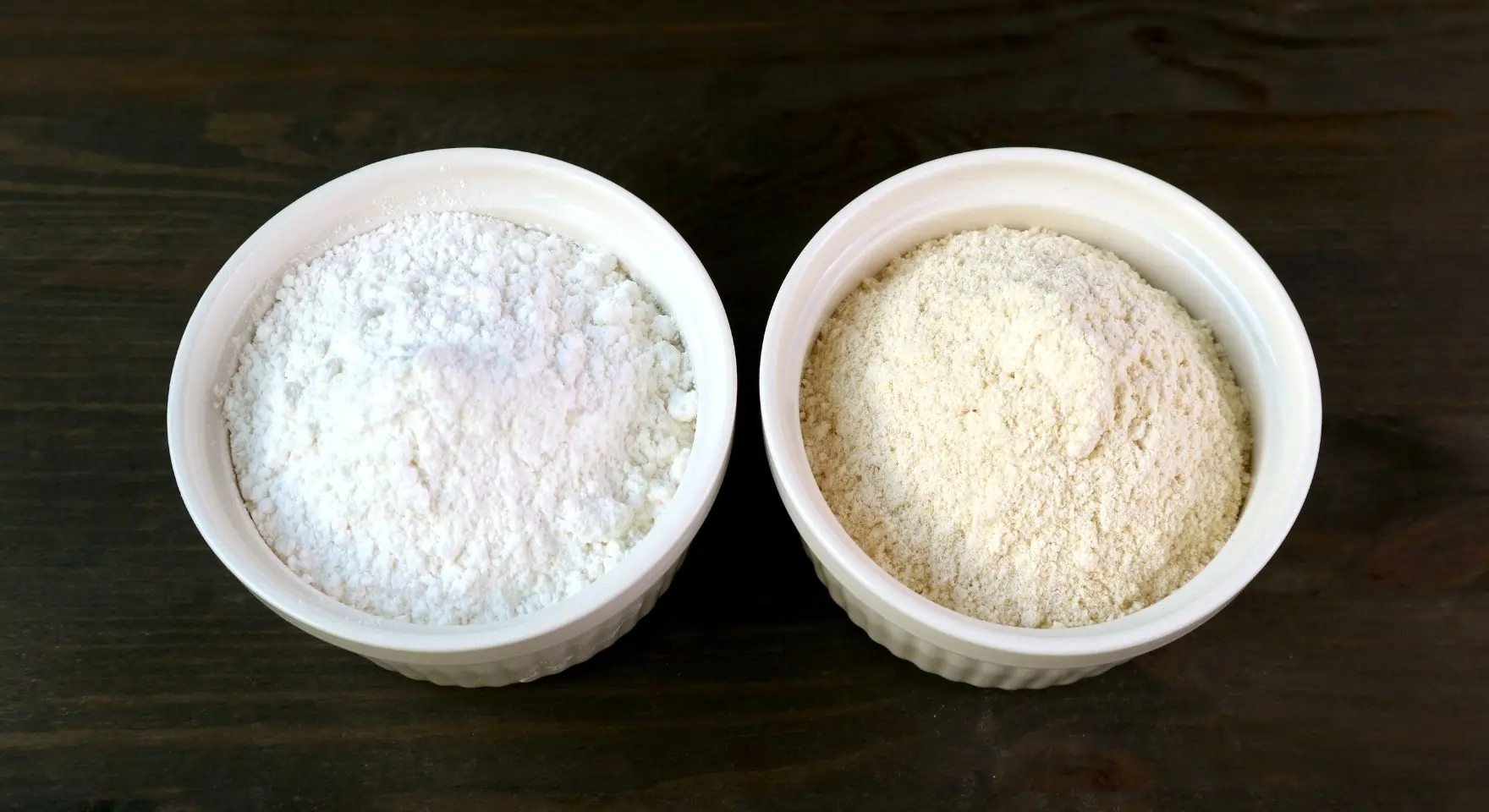


At a Glance
- Maltodextrin vs dextrose ultimately comes down to one number: Dextrose Equivalent (DE).
- Dextrose is nearly pure glucose (DE ~100). Maltodextrin, however, is a short-chain starch derivative (DE below 20).
- Osmotic load, not just sweetness, decides whether an ingredient works in a beverage or causes gut distress.
- Sugar and corn syrup solve sweetness and browning, while maltodextrin solves bulk, carrier, and texture.
- Erythritol isn’t a true substitute for any of these; it’s a different category altogether.
- Therefore, the right pick depends on the job in the formulation, not on which ingredient sounds “cleaner.”
What you’ll learn: how to match maltodextrin, dextrose, sugar, corn syrup, or erythritol to the function your formulation actually needs.
Introduction
Maltodextrin vs dextrose is a question formulators often skip past, assuming both carbohydrates behave the same way once they hit water. They don’t. Pick the wrong one, and the failure won’t show up on a spec sheet. Instead, it shows up in a spray-dried flavor that cakes in humidity, or a sports drink that cramps athletes mid-race.
Sugar, corn syrup, and erythritol get pulled into the same confusion, since all five ingredients are white, water-soluble, and vaguely “carb-like.” However, the differences that matter are digestion speed, sweetness, viscosity, and cost. The global maltodextrin market alone is on track to grow from roughly USD 4.2 billion in 2026 to USD 6.1 billion by 2035, which reflects just how much formulation work still runs through this single ingredient category.
This guide breaks down what separates these five carbohydrates and gives you a decision framework for each pairing. For sourcing food-grade Maltodextrin with COA, TDS, and SDS on every batch, Request a Quote.
What Is Dextrose Equivalent (DE)?
DE measures the degree of starch hydrolysis on a 0-100 scale. In short, it’s the single spec that predicts what an ingredient will do once it hits water.
Higher DE means more breakdown into simple sugars, which in turn means more sweetness, more reactivity, and more browning potential. Lower DE, on the other hand, means longer glucose chains survive intact, giving better carrier function and greater storage stability.
Dextrose sits at roughly DE 100, essentially pure glucose. Meanwhile, maltodextrin, by FDA definition, sits below DE 20, too low to legally be called a sugar. That single gap explains most of what follows in this guide.
Maltodextrin vs Dextrose: DE, Structure, and Function
| Attribute | Maltodextrin | Dextrose |
| DE Value | Below 20 | ~100 |
| Structure | Short glucose chains | Single glucose molecules |
| Sweetness | 10-20% as sweet as sucrose | Slightly less sweet than sucrose, but sharp |
| Primary Function | Bulking agent, carrier, texturizer | Rapid energy source, browning agent |
| Glycemic Index | High (60-105) | Very high (~100) |
| Typical Cost | Moderate | Moderate, often marginally lower per kg |
Dextrose comes from near-complete enzymatic hydrolysis, breaking starch all the way down to individual glucose molecules. Maltodextrin, by contrast, comes from the same starch sources, but hydrolysis stops early, leaving short glucose chains intact.
So, choose maltodextrin when you need bulk, mouthfeel, or a stable carrier for flavors and actives without adding sweetness. Choose dextrose instead when you need fast-acting energy, active fermentation, or a controlled browning reaction in baked goods.
Absorption, Digestion & Osmotic Load
Both ingredients ultimately hit the same bottleneck. Specifically, intestinal glucose transporters saturate at around 60g of glucose per hour, regardless of whether that glucose arrived as single molecules or short chains. Once digestive enzymes cleave maltodextrin’s chains, which happens quickly, it releases glucose almost as fast as dextrose does.
As a result, maltodextrin’s glycemic index often meets or exceeds dextrose’s, despite looking “less processed” on paper. Where the two genuinely diverge, however, is osmotic load. Dextrose exerts far more osmotic pressure per gram in solution, so dextrose-heavy beverages are more likely to cause cramping or poor gastric emptying at high concentrations.
This is precisely why sports formulations frequently blend glucose and fructose sources together instead of relying on a single carbohydrate. Doing so spreads absorption across two separate transporters, sustaining energy delivery for longer.
How Each Performs Across Applications
Maltodextrin vs Dextrose in Sports Nutrition
In hydration and sports beverages, maltodextrin’s lower osmotic load makes it the gentler option, especially when blended with dextrose or fructose for steady energy release and less GI distress. Baked goods, meanwhile, lean on dextrose or sugar instead, since their high reactivity drives the Maillard browning reaction that gives crust its color.
Other Applications
Spray-dried flavors and nutrient encapsulation rely on maltodextrin because its low sweetness lets it carry actives without altering taste. Protein powders and meal replacements use it similarly, adding caloric bulk and mixability without competing with protein flavor.
Formulating a beverage or powder and want a second opinion on which grade fits your process? Request a Sample to test it against your current carrier first.
Maltodextrin vs Sugar
Table sugar sweetens at full strength, while maltodextrin sits at just 10-20% of sucrose’s sweetness. Consequently, maltodextrin’s glycemic response is often as high, or higher, than sugar’s, even though it barely tastes sweet.
Choose maltodextrin when the formulation needs volume or texture, but the sweetness is already handled elsewhere. Choose sugar, on the other hand, when sweetness, crystallization control, or fermentability is the actual job at hand.
Maltodextrin vs Corn Syrup
Corn syrup brings moderate-to-high sweetness and heavy viscosity in liquid form. Maltodextrin, in contrast, is nearly unsweet and supplied as a dry, low-viscosity powder.
Corn maltodextrin vs corn syrup isn’t really a source question, since both start from the same corn starch. Rather, it’s a processing-degree question: corn syrup is hydrolyzed further and kept liquid, while corn maltodextrin is hydrolyzed less and spray-dried into powder.
Rice syrup and tapioca syrup are the most common liquid glucose substitutes, offering similar viscosity with slightly different flavor neutrality. Honey and agave, meanwhile, bring “natural” marketing appeal at higher cost.
So, choose maltodextrin for dry mixes or neutral-tasting bulking. Choose corn syrup instead when you need liquid sweetness plus moisture control in one ingredient.
Maltodextrin vs Erythritol
This comparison is closer to apples-to-oranges than a true substitution decision, since maltodextrin is a carbohydrate and erythritol is a sugar alcohol. Maltodextrin delivers roughly 4 kcal/g versus erythritol’s 0.2 kcal/g, a gap that matters enormously for calorie-conscious positioning.
Choose maltodextrin when you need carrier function or bulk and glycemic impact isn’t the priority. Choose erythritol, however, when the product’s entire positioning depends on low-calorie or low-glycemic claims.
Health & Safety Considerations
Both maltodextrin and dextrose carry FDA GRAS status and have passed JECFA and EFSA review. That said, regulatory clearance doesn’t mean they’re metabolically interchangeable, since maltodextrin’s glycemic index can equal or exceed dextrose’s despite looking “less processed.”
Additionally, gut microbiome research on resistant maltodextrin has shown measurable shifts in fecal bacteria at daily doses of 25g and 50g, well above what a typical formulation delivers per serving. It’s worth checking a study’s dose against your actual inclusion rate before drawing conclusions. Neither ingredient belongs as a primary component in a diabetic- or keto-positioned product; that job goes to erythritol instead.
Side-by-Side Quick Reference
| Ingredient | Source | Sweetness | Best For |
| Maltodextrin | Corn, wheat, potato, tapioca | Very low | Spray-dried flavors, protein powders, blended sports drinks |
| Dextrose | Fully hydrolyzed starch | Moderate | Brewing, baked goods, rapid-energy products |
| Table Sugar | Sugarcane, sugar beet | High | Confectionery, baking, beverages |
| Corn Syrup | Corn starch | Moderate-high | Confectionery, sauces, moisture retention |
| Erythritol | Fermented glucose | Moderate | Keto, diabetic-friendly, low-glycemic products |
Many sports nutrition and bakery formulations blend two of these rather than relying on one alone, letting maltodextrin handle carrier and texture while a smaller sugar or dextrose fraction handles browning or a targeted glycemic kick.
How to Choose: Buyer/Formulator Checklist
- Define the ingredient’s job: bulking, sweetening, viscosity, or energy source.
- Check the glycemic and digestion profile your product needs.
- Confirm sweetness intensity required relative to sucrose.
- Compare sourcing and landed cost at your required volume.
- Verify allergen status and regulatory compliance for your market.
- Request samples of your top two candidates before committing.
Decision Framework Close
Choose maltodextrin if you need bulk or carrier function without sweetness. Choose dextrose if you need fast energy or reliable browning. Choose sugar if sweetness and crystallization are the priority. Choose corn syrup if you need liquid sweetness plus moisture control. Finally, choose erythritol if the product’s value proposition is low-calorie or low-glycemic.
Verdict
There’s no universal winner here. Instead, the right choice is matched to function: bulking and carrying versus sweetening versus rapid energy, not to which name sounds more processed. If you’re past the evaluation stage, Elchemy works as a bulk maltodextrin supplier for food, beverage, and sports-nutrition manufacturers, with COA, TDS, and SDS on every batch.
Where to Buy
Elchemy supplies both maltodextrin and dextrose to manufacturers, with COA, TDS, and SDS provided on every batch. Before locking in a supplier, it’s worth comparing current bulk maltodextrin price trends against your target grade. Request a Sample to validate performance first.
Buyers with high-volume, standardized needs often go direct to a manufacturer for marginal cost savings. Those who need lead-time flexibility or a single point of QC accountability, however, typically work through a distributor like Elchemy instead.
Beyond Maltodextrin
This comparison is one piece of a larger sourcing decision. Sucrose itself is worth a separate look; the dextrose vs sucrose question comes up often once the maltodextrin question is settled. For carrier-carb depth beyond this guide, see maltodextrin vs dextrin / cluster dextrin and maltodextrin vs glucose.
FAQs
Maltodextrin vs dextrose: what’s the main difference?
Dextrose is pure glucose (DE ~100) that dissolves quickly and tastes noticeably sweet, while maltodextrin is a lower-DE starch derivative that adds bulk and texture with minimal sweetness.
What is Dextrose Equivalent (DE) and why does it matter?
DE measures how completely a starch has been hydrolyzed, predicting sweetness, reactivity, and stability, which makes it the key spec for choosing between carrier carbohydrates.
Is maltodextrin the same as corn syrup?
No. Maltodextrin is a low-DE, spray-dried powder with minimal sweetness, while corn syrup is a higher-DE liquid with noticeable sweetness and viscosity.
Can maltodextrin replace sugar in a formulation?
Only for bulk and texture, not sweetness, since maltodextrin has just 10-20% of sucrose’s sweetness.
Maltodextrin vs dextrose: which is better for athletes?
Neither alone is ideal. Maltodextrin’s lower osmotic load reduces GI distress, but most sports formulations blend it with dextrose or fructose to sustain energy release.
Conclusion
Maltodextrin, dextrose, sugar, corn syrup, and erythritol each solve different problems. Ultimately, the formulations that work best usually combine two of them rather than picking one as a universal replacement. Match the ingredient to the job, verify the spec, and talk to a bulk maltodextrin supplier when you’re ready to source at volume.