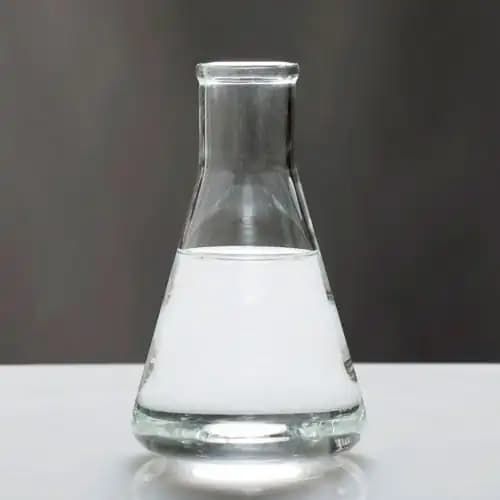
Polypropylene Glycol
ELHUMETM – PDO
Get Pricing For This Product
Need pricing? Request a quote for this product and we'll get back to you shortly.
Speed Up Your Sample Testing Process
Express Delivery in 24–48 Hours
A polymer of propylene oxide, used as a lubricant, emulsifier, and humectant in personal care products.
CAS Number
25322-69-4
HS Code
39069000
INCI Name
Polypropylene Glycol
Molecular Formula
C₆H₁₄O₃
Polypropylene Glycol
ELHUMETM – PDO
A polymer of propylene oxide, used as a lubricant, emulsifier, and humectant in personal care products.
CAS Number
25322-69-4
INCI Name
Polypropylene Glycol
HS Code
39069000
Molecular Formula
C₆H₁₄O₃
Get Pricing For This Product
Need pricing? Request a quote for this product and we'll get back to you shortly.
Speed Up Your Sample Testing Process
We deliver domestic samples within 24 - 48 hours, helping you evaluate product without delays.
Product Specification
Physical Properties
| Property | Specification |
|---|---|
| Appearance | White to light grey liquid |
| Density Or Specific Gravity | 1.01 g/mL at 20 °C |
| Viscosity | 105mm2/s |
| Refractive Index | n20/D 1.451 |
Chemical Properties
| Property | Specification |
|---|---|
| Water Solubility | <0.01 % (w/w) at 25 °C |
| Incompatibilities | Strong oxidizing agents, alkali metals, nitrides, strong reducing agents |
| Hazardous Reactions | Can form flammable/toxic gases with incompatible substances |
Thermal Properties
| Property | Specification |
|---|---|
| Boiling Point | >300 °C |
| Melting Point | -40 °C |
| Flash Point | 230 °C |
| Thermal Stability | Stable under normal conditions; avoid strong oxidizers |
Processing Methods & Reference Formulations
A. Cosmetic moisturizers
Add Polypropylene Glycol (PPG) to the water phase and heat for proper incorporation. It acts as a humectant and skin-conditioning agent, so ensure thorough mixing to achieve a uniform texture.
| Key Ingredients | Indicative Dosage (% w/w) |
|---|---|
| Water (Purified) | 75.00% |
| Glycerin | 5.00% |
| Polypropylene Glycol (PPG) | 5.00% |
| Cetyl Alcohol | 2.00% |
| Stearyl Alcohol | 2.00% |
| Dimethicone | 1.00% |
| Methylparaben | 0.20% |
| Propylparaben | 0.10% |
| Triethanolamine (TEA) | 0.50% |
| EDTA | 0.10% |
| Potassium Hydroxide | 0.30% |
| Fragrance | 0.20% |
B. Hair shampoo
Add Polypropylene Glycol (PPG) to the water or surfactant phase and heat to ensure proper solubilization. It enhances spreadability and conditioning, so mix thoroughly for even distribution in the shampoo.
| Key Ingredients | Indicative Dosage (% w/w) |
|---|---|
| Sodium Lauryl Ether Sulfate (SLES) | 12% |
| Cocamidopropyl Betaine | 6% |
| Polypropylene Glycol | 5% |
| Polyquaternium-67 | 1.5% |
| PEG-45M | 1% |
| PEG-150 Distearate | 1% |
| Glycerin | 3% |
| Deionized Water | 65% |
| Preservative, Fragrance, Citric Acid |
C. Liquid soaps
Add Polypropylene Glycol to liquid soap formulations during the cool-down phase to improve moisturizing properties and enhance skin feel. Ensure compatibility with anionic surfactants and maintain pH around 5.5–7 for optimal stability.
| Key Ingredients | Indicative Dosage (% w/w) |
|---|---|
| Polyropylene Glycol | 18.80% |
| Glycerol | 6.27% |
| 70% Sorbitol Solution | 17.09% |
| Sodium Laureth Sulfate | 30.23% |
| Stearic Acid | 12.99% |
| Myristic Acid | 6.05% |
| Lye (50% NaOH) | 6.05% |
| Triethanolamine | 2.49% |
D. Hair conditioners
In hair conditioner formulations, add Polypropylene Glycol during the cool-down phase to enhance slip and conditioning without affecting viscosity. Use at 1–5% as a humectant, emollient, and slip enhancer, improving spreadability and hair feel.
| Key Ingredients | Indicative Dosage (% w/w) |
|---|---|
| Cetearyl Alcohol | 5% |
| Behentrimonium Chloride | 2% |
| Polypropylene Glycol (PPG-9) | 5% |
| Cetyl Alcohol | 3% |
| Stearic Acid | 1.5% |
| Dimethicone | 1% |
| Glycerin | 3% |
| Deionized Water | 60-80% |
| Preservative, Fragrance, pH Adjuster | 2.49% |
Dosing Guidelines
A. Dosing by Application
| Products | Authorized dosage |
|---|---|
| Cosmetics cream/lotions | Upto 50% |
| Hair care- Shampoo | Upto 50% |
About Polypropylene Glycol
About Polypropylene Glycol
Regulatory Compliance
| Region | Max Allowed Level | Notes | Certification Body |
|---|---|---|---|
| China | - | No statutory maximum | NMPA - National Medical Products Administration |
| India | - | No explicit max for finished products | - |
| Japan | - | No explicit statutory maximum; aligns with international safety reviews | MHLW – Ministry of Health, Labour and Welfare |
| Republic of Korea | - | No statutory maximum | MFDS - Ministry of Food and Drug Safety |
| United States | 50% | The Cosmetic Ingredient Review (CIR) Expert Panel concluded that Polypropylene Glycol is safe for use in cosmetic products at concentrations up to 50.0%. | FDA |
| ASEAN | - | No statutory maximum | - |
| European Union | - | No specific restrictions under the EU Cosmetics Regulation | SCCS (Scientific Committee on Consumer Safety) |
FAQs - Polypropylene Glycol
Related Products
Related Products
Streamline
Your Chemical
Procurement
Get fast responses from real experts