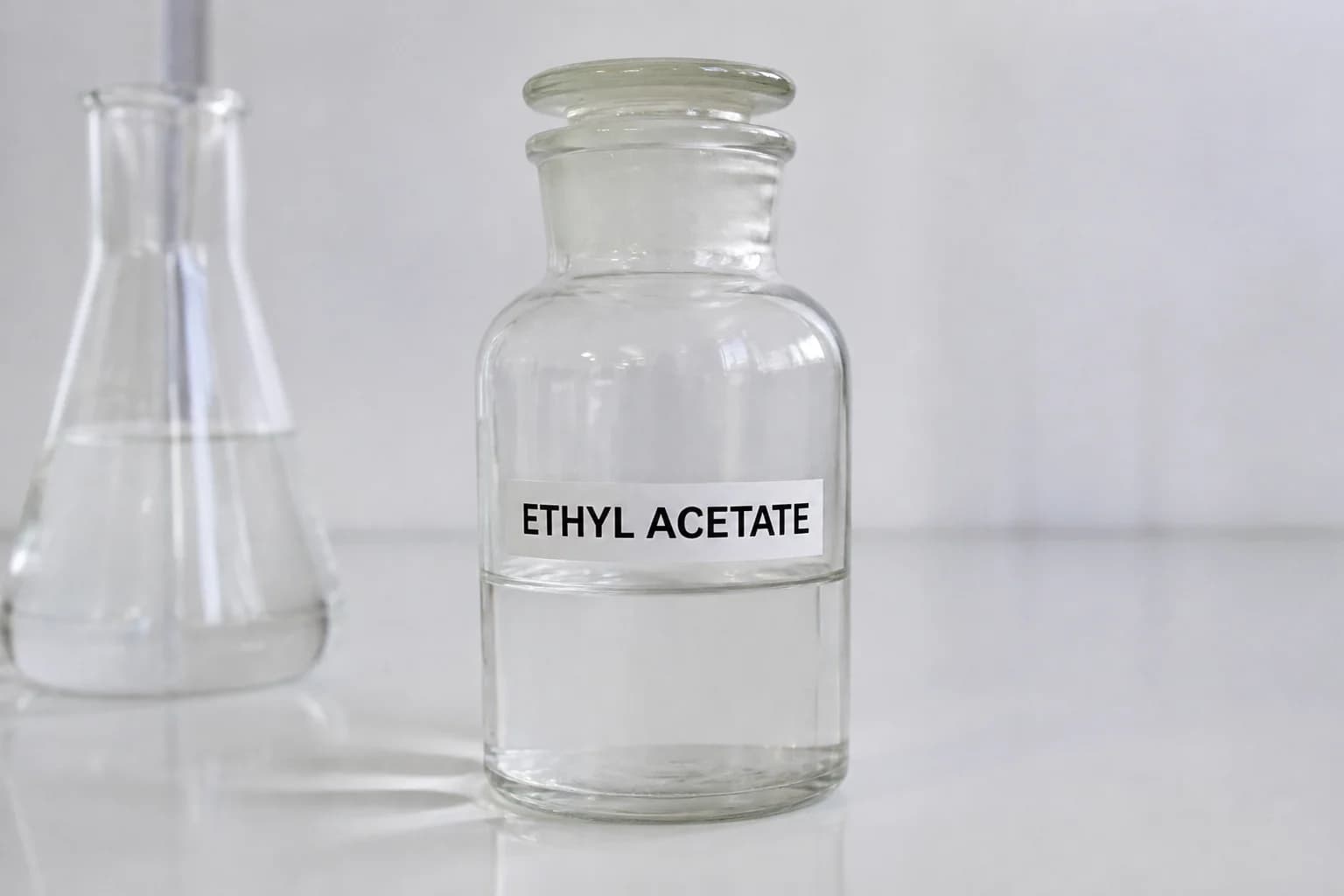
Ethyl Acetate
ELRASATM – EAC
Get Pricing For This Product
Skip the quote. Sign up now and see pricing instantly
Speed Up Your Sample Testing Process
Express Delivery in 24–48 Hours
Ethyl Acetate is a clear, colorless, fast-evaporating solvent known for its sweet, fruity aroma and excellent solvency power. With its low boiling point and high versatility, it is widely used across…
CAS Number
141-78-6
HS Code
2915.31
INCI Name
Ethyl Acetate
Molecular Formula
C4H8O2
Ethyl Acetate
ELRASATM – EAC
Ethyl Acetate is a clear, colorless, fast-evaporating solvent known for its sweet, fruity aroma and excellent solvency power. With its low boiling point and high versatility, it is widely used across coatings, adhesives, pharmaceuticals, cosmetics, and food flavoring industries.…
CAS Number
141-78-6
INCI Name
Ethyl Acetate
HS Code
2915.31
Molecular Formula
C4H8O2
Get Pricing For This Product
Skip the quote. Sign up now and see pricing instantly
Speed Up Your Sample Testing Process
We deliver domestic samples within 24 - 48 hours, helping you evaluate product without delays.
Product Specification
Physical Properties
| Property | Specification |
|---|---|
| Assay / Purity | 99.80 % w/w (Min) |
| Appearance | Clear, Colourless Liquid |
| Odor | Fruity, sweet odor |
| Molecular Formula | C4H8O |
| Molecular Weight | 88.11 g/mol |
| Density | 0.902 g/cm³ |
| Specific Gravity | 0.8950 - 0.8980 (at 27°C) |
| Viscosity | 0.426 cP (at 25 °C) |
| Refractive Index | 1.3720 (at 20°C) |
| Colour | 10.0 APHA (Max) |
| Water | 0.0500 % w/w (Max) |
| Residue On Evaporation | 0.0100 % w/w (Max) |
Chemical Properties
| Property | Specification |
|---|---|
| Pka | 25.6 |
| Ionic Nature | Non-ionic |
| Incompatibilities | Strong oxidizers, strong alkalis, strong acids, nitrates. Attacks rubber and some plastics. |
| Hazardous Decomposition Products | Carbon monoxide (CO), Carbon dioxide (CO2) |
| Acidity As Acetic Acid | 0.0100 % w/w (Max) |
Thermal Properties
| Property | Specification |
|---|---|
| Melting Point | -83.6 °C |
| Boiling Point | 77.1 °C |
| Flash Point | -4 °C (Closed Cup) |
| Autoignition Temperature | 427 °C |
| Thermal Stability | Stable under recommended storage conditions. |
About Ethyl Acetate
Ethyl acetate (CH3COOC2H5) is one of the highest-volume industrial ester solvents, valued for its fast evaporation, low toxicity relative to aromatic solvents, and clean fruity odour. It dissolves resins, nitrocellulose, coatings and adhesives, and serves as an extraction and reaction solvent in pharmaceutical and flavour manufacture and as a decaffeination solvent.
Ethyl acetate is sourced globally at large scale, and dependable supply is as much about consistent purity, low water/acidity and documentation as chemistry. Ethyl acetate (CAS 141-78-6) is TSCA-listed, GRAS as a flavouring under 21 CFR 182.60, and carries USP-NF and Ph.Eur. monographs.
Industrial buyers placing bulk orders also keep a close eye on ethyl acetate pricing, since contract rates feed directly into the cost of everything they produce downstream.
Manufacturing Process of Ethyl Acetate
Ethyl acetate is produced principally by the Fischer esterification of acetic acid with ethanol over an acid catalyst, or by the Tishchenko condensation of acetaldehyde, or by direct addition of acetic acid to ethylene. The crude ester is neutralised, then purified by fractional distillation to control water, acidity and residual ethanol/acetic acid. Molecular-sieve or azeotropic drying delivers the low water content required for coating and pharma grades.
Every shipment Elchemy supplies is tested for assay, water, acidity and non-volatile residue before dispatch, with a Certificate of Analysis travelling alongside each order.
Ethyl Acetate Price: Bulk Pricing for Industrial Buyers
If you're looking for current ethyl acetate pricing for bulk procurement, Elchemy provides quotes based on your specific requirements. Fill out the quote request form with your volume, grade, destination and packaging preference, and our team will revert with a detailed offer within 24 to 48 hours.
Pricing works on a quote basis rather than a published rate because the cost is driven by the price of ethanol and acetic acid feedstock and the broader petrochemical cycle, rather than tracking a fixed list.
Beyond that, several factors layer in to shape the final number: grade, committed volume, origin country, packaging format, freight, Incoterm choice (FOB, CIF or DDP) and applicable import duty (HTS 2915.31 for US-bound shipments).
For an approximate read on where the market sits, procurement teams often reference ethanol, acetic acid and oxygenated-solvent price indices, which give a sense of how rates are trending.
Trade publications also report the ethyl acetate price per kg as a unit-level benchmark, useful for spotting short-term regional shifts even on large industrial orders.
At bulk procurement scale, however, the ethyl acetate price per ton is the most relevant commercial unit, since contracts are typically negotiated and committed at that level.
For an exact rate, none of these references replaces a direct quote. The actual price depends on your contract structure, destination, committed volume and timing of dispatch, which is why a quote from our team will always be the most accurate number for your specific procurement.
Packaging & Logistics
Ethyl Acetate ships in 25 kg (55 lb) bags, 50 lb bags for the US market, or 1 MT (2,205 lb) FIBC jumbo bags (liquids ship in drums, IBCs or ISO tanks as applicable), supplied as per buyer requirements. A typical 20' container holds approximately 18 to 24 MT depending on packaging.
For US-bound orders, domestic stock supports faster fulfilment. Where sourcing is required from origin countries, transit times typically run 24 to 28 days to the US East Coast and 18 to 22 days to the West Coast. Elchemy offers EXW, FOB, CIF and DDP terms, depending on how your procurement team prefers to handle landed cost and customs.
Material should be stored in a cool, dry, well-ventilated area per the storage conditions on the TDS. Standard dispatch follows agreed contract terms, with expedited timelines available where needed. Samples are dispatched within 24 to 48 hours.
Why Choose Elchemy as a Trusted Ethyl Acetate Supplier?
Elchemy makes ethyl acetate procurement straightforward for industrial buyers. That means consistent material across the grades listed above, with a Certificate of Analysis for every batch and full documentation (TDS, SDS) as standard.
Because we source across multiple origins, we quote on the best landed cost for your destination rather than a single manufacturer's list price. Our partner plants operate to recognised quality standards (ISO 9001, plus food/pharma certifications where relevant), with Halal and Kosher certification available on request.
Beyond the US, Elchemy ships into 40+ countries with samples available for qualification before any bulk order, and pricing tailored to volume, destination and contract terms.
Safety & Handling
Classified under GHS as Flammable Liquid Category 2 (H225), Eye Irritant Category 2 (H319), STOT SE 3 (H336). DOT/UN: UN1173, Class 3 Flammable Liquid, Packing Group II.
Ethyl acetate is highly flammable - the dominant hazard. Vapour is heavier than air and forms explosive mixtures; all handling must be away from heat, sparks and open flame, with bonded/grounded transfer and flameproof equipment. Vapour causes eye, nose and throat irritation and, at high concentration, dizziness and drowsiness (CNS depressant). Repeated skin contact defats and dries the skin. Use in well-ventilated areas with appropriate respiratory and eye protection; store in a cool, flammable-store area.
The full 16-section GHS-aligned SDS is available alongside material orders.
- High Solvency: Excellent dissolving power with competitive price of ethyl acetate
- Function: Primarily used as a solvent and diluent. Also functions as a fragrance, perfuming agent, and flavoring agent.
- Fast Evaporation: Ideal for quick-drying applications supported by ethyl acetate price per litre
- Features: Strong solvency for a wide range of materials, fast evaporation rate, low toxicity, pleasant fruity odor, and biodegradability.
- Versatile Use: Suitable for multiple industries
- Benefits: Cost-effective, versatile, and considered a more environmentally friendly solvent choice compared to many alternatives. Its quick-drying property is highly advantageous in coatings and printing inks.
- Cost Effective: Bulk sourcing supported by optimized ethyl acetate current price
- Reliable Supply: Easy ethyl acetate buy and global availability
About Ethyl Acetate
Ethyl acetate (CH3COOC2H5) is one of the highest-volume industrial ester solvents, valued for its fast evaporation, low toxicity relative to aromatic solvents, and clean fruity odour. It dissolves resins, nitrocellulose, coatings and adhesives, and serves as an extraction and reaction solvent in pharmaceutical and flavour manufacture and as a decaffeination solvent.
Ethyl acetate is sourced globally at large scale, and dependable supply is as much about consistent purity, low water/acidity and documentation as chemistry. Ethyl acetate (CAS 141-78-6) is TSCA-listed, GRAS as a flavouring under 21 CFR 182.60, and carries USP-NF and Ph.Eur. monographs.
Industrial buyers placing bulk orders also keep a close eye on ethyl acetate pricing, since contract rates feed directly into the cost of everything they produce downstream.
Manufacturing Process of Ethyl Acetate
Ethyl acetate is produced principally by the Fischer esterification of acetic acid with ethanol over an acid catalyst, or by the Tishchenko condensation of acetaldehyde, or by direct addition of acetic acid to ethylene. The crude ester is neutralised, then purified by fractional distillation to control water, acidity and residual ethanol/acetic acid. Molecular-sieve or azeotropic drying delivers the low water content required for coating and pharma grades.
Every shipment Elchemy supplies is tested for assay, water, acidity and non-volatile residue before dispatch, with a Certificate of Analysis travelling alongside each order.
Ethyl Acetate Price: Bulk Pricing for Industrial Buyers
If you're looking for current ethyl acetate pricing for bulk procurement, Elchemy provides quotes based on your specific requirements. Fill out the quote request form with your volume, grade, destination and packaging preference, and our team will revert with a detailed offer within 24 to 48 hours.
Pricing works on a quote basis rather than a published rate because the cost is driven by the price of ethanol and acetic acid feedstock and the broader petrochemical cycle, rather than tracking a fixed list.
Beyond that, several factors layer in to shape the final number: grade, committed volume, origin country, packaging format, freight, Incoterm choice (FOB, CIF or DDP) and applicable import duty (HTS 2915.31 for US-bound shipments).
For an approximate read on where the market sits, procurement teams often reference ethanol, acetic acid and oxygenated-solvent price indices, which give a sense of how rates are trending.
Trade publications also report the ethyl acetate price per kg as a unit-level benchmark, useful for spotting short-term regional shifts even on large industrial orders.
At bulk procurement scale, however, the ethyl acetate price per ton is the most relevant commercial unit, since contracts are typically negotiated and committed at that level.
For an exact rate, none of these references replaces a direct quote. The actual price depends on your contract structure, destination, committed volume and timing of dispatch, which is why a quote from our team will always be the most accurate number for your specific procurement.
Packaging & Logistics
Ethyl Acetate ships in 25 kg (55 lb) bags, 50 lb bags for the US market, or 1 MT (2,205 lb) FIBC jumbo bags (liquids ship in drums, IBCs or ISO tanks as applicable), supplied as per buyer requirements. A typical 20' container holds approximately 18 to 24 MT depending on packaging.
For US-bound orders, domestic stock supports faster fulfilment. Where sourcing is required from origin countries, transit times typically run 24 to 28 days to the US East Coast and 18 to 22 days to the West Coast. Elchemy offers EXW, FOB, CIF and DDP terms, depending on how your procurement team prefers to handle landed cost and customs.
Material should be stored in a cool, dry, well-ventilated area per the storage conditions on the TDS. Standard dispatch follows agreed contract terms, with expedited timelines available where needed. Samples are dispatched within 24 to 48 hours.
Why Choose Elchemy as a Trusted Ethyl Acetate Supplier?
Elchemy makes ethyl acetate procurement straightforward for industrial buyers. That means consistent material across the grades listed above, with a Certificate of Analysis for every batch and full documentation (TDS, SDS) as standard.
Because we source across multiple origins, we quote on the best landed cost for your destination rather than a single manufacturer's list price. Our partner plants operate to recognised quality standards (ISO 9001, plus food/pharma certifications where relevant), with Halal and Kosher certification available on request.
Beyond the US, Elchemy ships into 40+ countries with samples available for qualification before any bulk order, and pricing tailored to volume, destination and contract terms.
Safety & Handling
Classified under GHS as Flammable Liquid Category 2 (H225), Eye Irritant Category 2 (H319), STOT SE 3 (H336). DOT/UN: UN1173, Class 3 Flammable Liquid, Packing Group II.
Ethyl acetate is highly flammable - the dominant hazard. Vapour is heavier than air and forms explosive mixtures; all handling must be away from heat, sparks and open flame, with bonded/grounded transfer and flameproof equipment. Vapour causes eye, nose and throat irritation and, at high concentration, dizziness and drowsiness (CNS depressant). Repeated skin contact defats and dries the skin. Use in well-ventilated areas with appropriate respiratory and eye protection; store in a cool, flammable-store area.
The full 16-section GHS-aligned SDS is available alongside material orders.
- High Solvency: Excellent dissolving power with competitive price of ethyl acetate
- Function: Primarily used as a solvent and diluent. Also functions as a fragrance, perfuming agent, and flavoring agent.
- Fast Evaporation: Ideal for quick-drying applications supported by ethyl acetate price per litre
- Features: Strong solvency for a wide range of materials, fast evaporation rate, low toxicity, pleasant fruity odor, and biodegradability.
- Versatile Use: Suitable for multiple industries
- Benefits: Cost-effective, versatile, and considered a more environmentally friendly solvent choice compared to many alternatives. Its quick-drying property is highly advantageous in coatings and printing inks.
- Cost Effective: Bulk sourcing supported by optimized ethyl acetate current price
- Reliable Supply: Easy ethyl acetate buy and global availability
Regulatory Compliance
| Region | Max Allowed Level | Notes | Certification Body |
|---|---|---|---|
| ASEAN | - | Not listed in the Annexes of the ASEAN Cosmetic Directive as a prohibited or restricted substance. | Compliance with ASEAN Cosmetic Directive. |
| United States | - | Approved as a synthetic flavoring substance for direct addition to food for human consumption. Generally Recognized as Safe (GRAS) for this use. The Cosmetic Ingredient Review (CIR) panel concluded it is safe as a cosmetic ingredient in the present practices of use and concentration. | Must comply with the Toxic Substances Control Act (TSCA). |
| European Union | - | Listed in the EU's cosmetic ingredient database (CosIng) with functions as a perfuming agent and solvent. Must be registered under REACH. | REACH Registration |
| Canada | - | Not found on Health Canada's Cosmetic Ingredient Hotlist of prohibited or restricted substances. | Listed on the Domestic Substances List (DSL). |
| India | - | The Bureau of Indian Standards (BIS) lists specifications for ethyl acetate (IS 229), but specific concentration limits in finished products were not found. | - |
| Japan | - | Not found to be specifically restricted under the Standards for Cosmetics by the MHLW. | Must comply with the Chemical Substances Control Law (CSCL). |
| Australia | - | Listed on the Australian Inventory of Industrial Chemicals (AICIS) with no specific restrictions noted for cosmetic or industrial use. | AICIS registration/compliance. |
| China | - | Listed in the Inventory of Existing Cosmetic Ingredients in China (IECIC). | NMPA (National Medical Products Administration) compliance for cosmetic use. |
| Republic of Korea | - | Not found to be specifically restricted in the Regulation on the Safety Standards of Cosmetics. | Compliance with Ministry of Food and Drug Safety (MFDS) regulations. |
FAQs - Ethyl Acetate
Related Products
Related Products
Streamline
Your Chemical
Procurement
Get fast responses from real experts