nonylphenol-8
ELSURFACTM – NPE8
Get Pricing For This Product
Need pricing? Request a quote for this product and we'll get back to you shortly.
Speed Up Your Sample Testing Process
Express Delivery in 24–48 Hours
Nonylphenol-8, also known as Nonylphenol Ethoxylate, is a non-ionic surfactant widely used in industrial cleaning, emulsification, and agricultural formulations. Trusted nonylphenol producers and…
CAS Number
9016-45-9
HS Code
3402.42.00
INCI Name
Nonylphenol
Molecular Formula
C15H24O(C2H4O)n
nonylphenol-8
ELSURFACTM – NPE8
Nonylphenol-8, also known as Nonylphenol Ethoxylate, is a non-ionic surfactant widely used in industrial cleaning, emulsification, and agricultural formulations. Trusted nonylphenol producers and suppliers provide high-quality variants suitable for multiple industries, including…
CAS Number
9016-45-9
INCI Name
Nonylphenol
HS Code
3402.42.00
Molecular Formula
C15H24O(C2H4O)n
Get Pricing For This Product
Need pricing? Request a quote for this product and we'll get back to you shortly.
Speed Up Your Sample Testing Process
We deliver domestic samples within 24 - 48 hours, helping you evaluate product without delays.
Product Specification
Physical Properties
| Property | Specification |
|---|---|
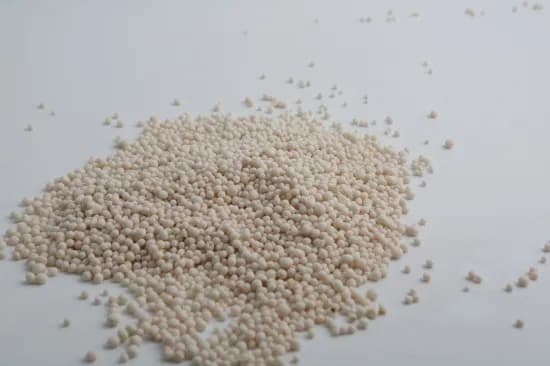
| Appearance | Colourless to pale yellow liquid |
| Odor | Mild |
| Molecular Formula | C15H24O(C2H4O)n |
| Molecular Weight | 572 g/mol |
| Density / Specific Gravity | ~1.06 g/cm³ |
| Viscosity | 330 mPa.s @ 20 °C |
| Refractive Index | n20/D 1.495 |
| Ph (2% Aqueous Solution) | Between 6.00 and 8.00 |
| Hlb Value | 12.6 |
| Hlb Comparison | The HLB value of nonylphenol ethoxylates increases with the number of ethylene oxide (EO) units. For comparison, NP-6 has an HLB of 10.9, NP-9 has an HLB of 12.9, and NP-10 has an HLB of 13.2. |
Chemical Properties
| Property | Specification |
|---|---|
| Ionic Nature | Non-ionic |
| Incompatibilities | Avoid contact with strong acids, strong bases, and strong oxidizers. |
| Hazardous Decomposition Products | Decomposition products are dependent on temperature, air supply, and the presence of other materials. In case of fire, toxic fumes may be released. |
Thermal Properties
| Property | Specification |
|---|---|
| Melting Point | 0 °C |
| Pour Point | -6 °C |
| Boiling Point | > 200 °C |
| Flash Point | 243.3 °C |
| Autoignition Temperature | 425 °C (for NPE9) |
| Thermal Stability | Thermally stable at typical use temperatures. |
Processing Methods & Reference Formulations
A. Environmentally Friendly Rust Remover
This formulation is designed for effective rust removal with simple, low-cost ingredients.
| Key Ingredients | Indicative Dosage (% w/w) |
|---|---|
| Phosphoric Acid | 0.3 - 1.0% |
| Citric Acid | 0.3 - 1.0% |
| Nonylphenol Ethoxylate (NP-10) | 1.9% |
| Hexamethylenetetramine | 0.9 - 2.9% |
| Dodecyl Sulfate | 1.3 - 3.8% |
| Ammonium Chloride | 0.3 - 1.0% |
| Tartaric Acid | 0.6 - 1.9% |
| Deionized Water | 87.1 - 94.4% |
B. Metal Polishing Agent
A formulation for polishing metal surfaces.
| Key Ingredients | Indicative Dosage (% w/w) |
|---|---|
| Sodium Dodecylbenzene Sulfonate | 2.0 - 7.0% |
| Sodium Oleate | 1.5 - 5.0% |
| Ethanol | 8.0 - 15.0% |
| Nonylphenol Ethoxylate (NP-10) | 4.0 - 8.0% |
| Polysorbate 80 | 5.0 - 8.0% |
| Oleic Acid Triethanolamide | 0.2 - 0.8% |
| Cocamide DEA Phosphate | 1.0 - 4.0% |
| Defoaming Agent | 1.0 - 4.0% |
| Sodium Phosphate | 0.5 - 2.5% |
| Sodium Citrate | 1.0 - 3.0% |
| Cysteine LBGAS | 0.3 - 1.2% |
| Potassium Hydroxide | 0.35 - 1.0% |
| Water | Balance to 100% |
Dosing Guidelines
A. Dosing by Application
| Application | Recommended / Max Dosage |
|---|---|
| Emulsion Polymerization | 2% active based on monomers |
About nonylphenol-8
As trusted nonylphenol producers and suppliers, we ensure consistent quality, reliable availability, and industry-standard packaging. Our Nonylphenol-8 products are manufactured with high purity and stability to meet diverse industrial and agricultural requirements.
We cater to global clients seeking nonylphenol ethoxylate solutions that deliver high performance, cost efficiency, and formulation flexibility.
About nonylphenol-8
As trusted nonylphenol producers and suppliers, we ensure consistent quality, reliable availability, and industry-standard packaging. Our Nonylphenol-8 products are manufactured with high purity and stability to meet diverse industrial and agricultural requirements.
We cater to global clients seeking nonylphenol ethoxylate solutions that deliver high performance, cost efficiency, and formulation flexibility.
Regulatory Compliance
| Region | Max Allowed Level | Notes | Certification Body |
|---|---|---|---|
| United States | - | Nonylphenol Ethoxylates (NPEs) are listed on the Toxic Substances Control Act (TSCA) Inventory. The EPA has issued a Significant New Use Rule (SNUR) for 15 NPs and NPEs, requiring EPA notification and review before any new use or resumption of a discontinued use. The FDA permits NPEs as indirect food additives in adhesives and other food contact materials under 21 CFR 175.105. | TSCA Inventory listing is required. |
| European Union | 0.1% | Highly restricted under REACH Annex XVII. NPEs shall not be placed on the market or used in concentrations ≥ 0.1% for applications like industrial/domestic cleaning, textile/leather processing, cosmetics (except spermicides), and as co-formulants in pesticides. They are also on the REACH Authorisation List (Annex XIV), meaning their use must be phased out unless a specific authorization is granted. | REACH Registration is required. Authorization may be needed for continued use past the sunset date. |
| Canada | - | Nonylphenol and its ethoxylates are listed as toxic substances under Schedule 1 of the Canadian Environmental Protection Act, 1999 (CEPA 1999). The government has implemented Pollution Prevention Planning Notices to achieve a >95% reduction in their use in products like soaps, detergents, and in textile and pulp & paper processing. | Compliance with CEPA 1999 and Pollution Prevention plans. |
| India | - | India currently lacks specific, broad regulations for NPEs in most sectors, though their environmental impact is a recognized issue. The Bureau of Indian Standards (BIS) has formulated a standard for 4-Nonylphenol (IS 17939:2022), but comprehensive restrictions on NPEs are not in place. | BIS certification may be required for specific chemicals. |
| Japan | - | Japan's Ministry of the Environment is designating Nonylphenol Ethoxylates (NPEs) as Class II Specified Chemical Substances under the Chemical Substances Control Law (CSCL). This will require manufacturers and importers to report planned quantities and implement measures to prevent environmental pollution. | Compliance with CSCL, including reporting and technical guidelines. |
| Australia | - | There are no specific restrictions on the use of NPEs in Australia or on the import of products containing them. However, the Australian Industrial Chemicals Introduction Scheme (AICIS) has assessed them and notes they may pose an unreasonable risk to the environment. | Listed on the Australian Inventory of Industrial Chemicals (AIIC). |
| China | - | China has banned the use of Alkylphenol Ethoxylates (APEOs), including NPEs, in sanitary cleaners. Other uses may still be permitted, but regulations are tightening. | Must be listed on the Inventory of Existing Chemical Substances in China (IECSC). |
| Republic of Korea | 0.1% | Nonylphenol and Nonylphenol Ethoxylates are restricted under K-REACH. Their manufacture, import, sale, or use is restricted in products like household cleaners, detergents, and for textile/leather finishing if the concentration is greater than 0.1% by weight. | K-REACH registration is required for quantities ≥1 ton/year. |
| ASEAN | - | The ASEAN Cosmetic Directive does not currently list Nonylphenol Ethoxylates as prohibited or restricted substances for cosmetic use. However, individual member states may have their own national regulations. | Notification to the regulatory authority in each member state where the product is marketed. |
FAQs - nonylphenol-8
Related Products

Related Products
Streamline
Your Chemical
Procurement
Get fast responses from real experts