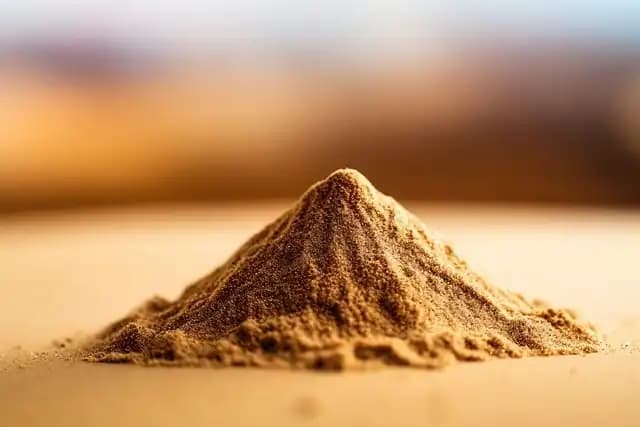
Barite
Get Pricing For This Product
Need pricing? Request a quote for this product and we'll get back to you shortly.
Speed Up Your Sample Testing Process
Express Delivery in 24–48 Hours
Barite, also known as barium sulfate (BaSO₄), is a mineral. It is a dense mineral with a high specific gravity commonly found in nature that forms in hydrothermal veins when minerals containing barium…
CAS Number
7727-43-7
HS Code
-
INCI Name
-
Molecular Formula
BaSO4
Barite
Barite, also known as barium sulfate (BaSO₄), is a mineral. It is a dense mineral with a high specific gravity commonly found in nature that forms in hydrothermal veins when minerals containing barium and sulfate come into contact with hot underground water. It is often found in…
CAS Number
7727-43-7
INCI Name
-
HS Code
-
Molecular Formula
BaSO4
Get Pricing For This Product
Need pricing? Request a quote for this product and we'll get back to you shortly.
Speed Up Your Sample Testing Process
We deliver domestic samples within 24 - 48 hours, helping you evaluate product without delays.
About Barite
Barite, a naturally occurring mineral primarily composed of barium sulfate, is an important resource in custom chemical manufacturing. Its high density and lack of reactivity make it valuable in industries that require materials with significant weight and stability. Barite is highly regarded for its ability to hold up under harsh conditions, making it suitable for uses where durability is needed.
One of barite’s key characteristics is its density, which exceeds that of many other minerals. This property makes it a popular choice in processes where additional weight is necessary but stability must not be compromised. Industries such as oil and gas drilling frequently use barite to add mass to drilling fluids, which helps control well pressure and prevents blowouts. Barite’s chemical stability also makes it suitable for use in various formulations, as it does not interfere with other components in mixtures.
In custom chemical manufacturing, barite’s crystalline structure allows for easy processing into fine powders. These powders are crucial in manufacturing settings where consistency and precision are important. Barite’s hardness and wear resistance further enhance its value, making it a dependable option for use in challenging environments. Applications in sectors like automotive coatings and rubber production rely on barite for improving the strength and performance of the final products.
Another positive aspect of barite is its low environmental impact. Its wide availability and minimal effect on the environment make it an appealing option for industries seeking sustainable choices. Barite maintains its properties in a variety of conditions, including changes in temperature and pressure, ensuring its continued usefulness in industrial applications.
When sourced from reliable suppliers, barite consistently meets the required standards for purity and performance. Its reliability and versatility make it a valuable resource for custom chemical manufacturing, supporting efficient operations and broad industrial use, especially in areas where high-density materials are necessary.
- High Specific Gravity: Ideal for use in oil drilling operations, ensuring effective weight in drilling fluids.
- Chemical Stability: Maintains performance under various environmental conditions.
- Non-Toxic & Eco-Friendly: Safe for use in a variety of industrial processes.
- Versatile Application: Used in paints, coatings, rubber, and plastic manufacturing.
- High-Quality Assurance: Consistent product quality ensures stable performance in industrial applications.
- Cost-Effective: Offers high performance at a competitive price.
About Barite
Barite, a naturally occurring mineral primarily composed of barium sulfate, is an important resource in custom chemical manufacturing. Its high density and lack of reactivity make it valuable in industries that require materials with significant weight and stability. Barite is highly regarded for its ability to hold up under harsh conditions, making it suitable for uses where durability is needed.
One of barite’s key characteristics is its density, which exceeds that of many other minerals. This property makes it a popular choice in processes where additional weight is necessary but stability must not be compromised. Industries such as oil and gas drilling frequently use barite to add mass to drilling fluids, which helps control well pressure and prevents blowouts. Barite’s chemical stability also makes it suitable for use in various formulations, as it does not interfere with other components in mixtures.
In custom chemical manufacturing, barite’s crystalline structure allows for easy processing into fine powders. These powders are crucial in manufacturing settings where consistency and precision are important. Barite’s hardness and wear resistance further enhance its value, making it a dependable option for use in challenging environments. Applications in sectors like automotive coatings and rubber production rely on barite for improving the strength and performance of the final products.
Another positive aspect of barite is its low environmental impact. Its wide availability and minimal effect on the environment make it an appealing option for industries seeking sustainable choices. Barite maintains its properties in a variety of conditions, including changes in temperature and pressure, ensuring its continued usefulness in industrial applications.
When sourced from reliable suppliers, barite consistently meets the required standards for purity and performance. Its reliability and versatility make it a valuable resource for custom chemical manufacturing, supporting efficient operations and broad industrial use, especially in areas where high-density materials are necessary.
- High Specific Gravity: Ideal for use in oil drilling operations, ensuring effective weight in drilling fluids.
- Chemical Stability: Maintains performance under various environmental conditions.
- Non-Toxic & Eco-Friendly: Safe for use in a variety of industrial processes.
- Versatile Application: Used in paints, coatings, rubber, and plastic manufacturing.
- High-Quality Assurance: Consistent product quality ensures stable performance in industrial applications.
- Cost-Effective: Offers high performance at a competitive price.
FAQs - Barite
Related Products
Related Products
Streamline
Your Chemical
Procurement
Get fast responses from real experts