Antimony Trioxide
ELRASATM – ATOx
Get Pricing For This Product
Need pricing? Request a quote for this product and we'll get back to you shortly.
Speed Up Your Sample Testing Process
Express Delivery in 24–48 Hours
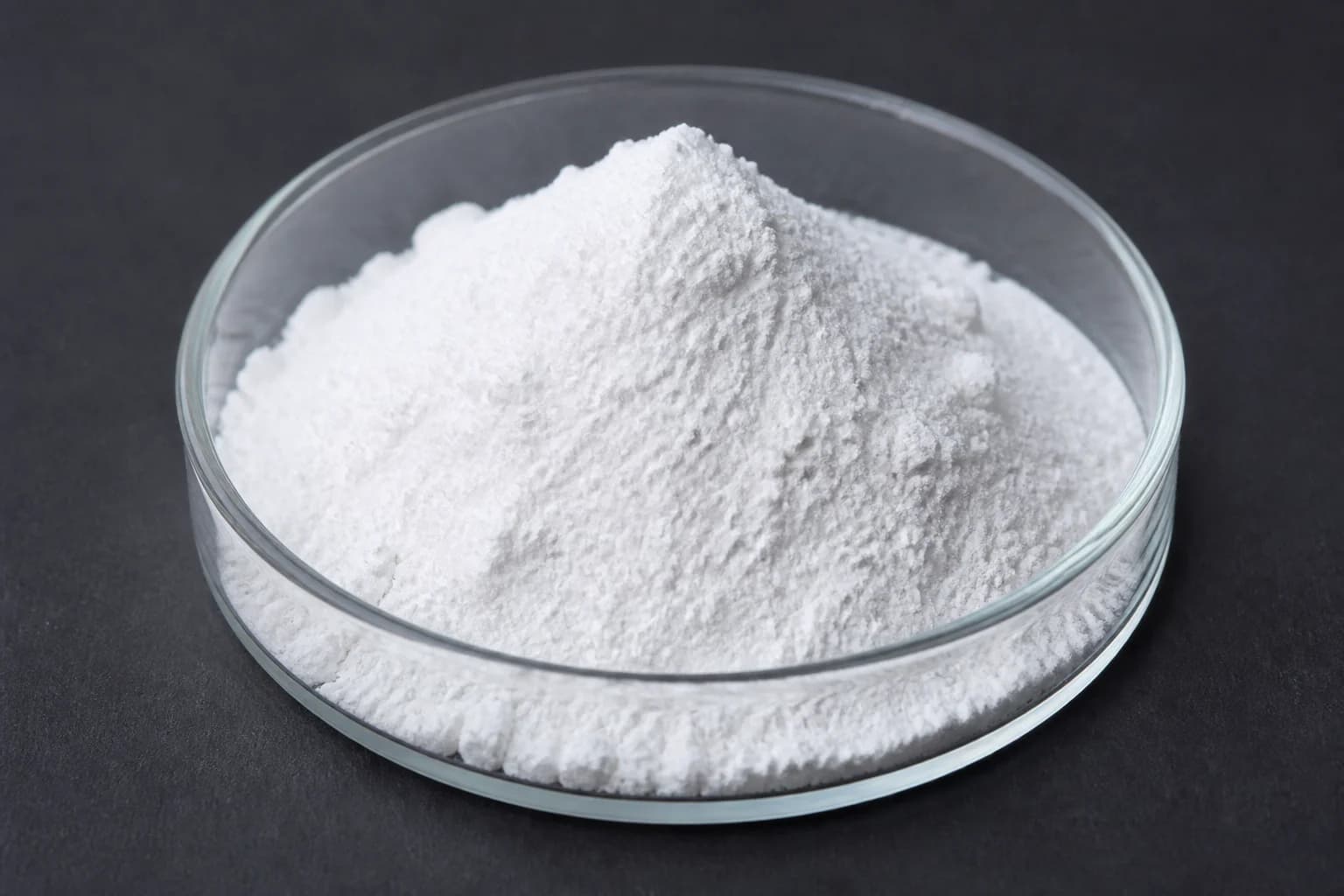
Antimony Trioxide is an inorganic antimony compound supplied as a fine white powder, used chiefly as a flame-retardant synergist and catalyst. It functions as a flame-retardant synergist,…
CAS Number
1309-64-4
HS Code
28.25.80.00
INCI Name
Antimony Trioxide
Molecular Formula
Sb₂O₃
Antimony Trioxide
ELRASATM – ATOx
Antimony Trioxide is an inorganic antimony compound supplied as a fine white powder, used chiefly as a flame-retardant synergist and catalyst. It functions as a flame-retardant synergist, polymerisation catalyst, opacifier, fining agent across plastics & flame retardants, PET…
CAS Number
1309-64-4
INCI Name
Antimony Trioxide
HS Code
28.25.80.00
Molecular Formula
Sb₂O₃
Get Pricing For This Product
Need pricing? Request a quote for this product and we'll get back to you shortly.
Speed Up Your Sample Testing Process
We deliver domestic samples within 24 - 48 hours, helping you evaluate product without delays.
Product Specification
Physical Properties
| Property | Specification |
|---|---|
| Appearance | White crystalline solid |
| Odor | Odorless |
| Molecular Weight (G/Mol) | 291.52 |
| Density Or Specific Gravity | 5.2 at 77 °F |
| Refractive Index | 1.5144 at 589 nm |
| Density | 5.2 at 77 °F |
Chemical Properties
| Property | Specification |
|---|---|
| Water Solubility | 0.0033 g/l at 22.2 °C |
| Hazardous Reactions | Hazardous decomposition products formed under fire conditions |
Thermal Properties
| Property | Specification |
|---|---|
| Melting Point | 1211 °F |
| Boiling Point | 2822 °F at 760 mmHg (sublimes); 1598 °F at 210 mmHg |
| Flash Point | Not flammable |
Processing Methods & Reference Formulations
A. Paints
Add Sb₂O₃ during the pigment dispersion or mill base phase to ensure even particle distribution and avoid agglomeration. Sb₂O₃ is sensitive to moisture, which can reduce its flame-retardant effectiveness and cause clumping. Store in dry conditions and avoid water-based systems unless surface-treated grades are used.
| Key Ingredients | Indicative Dosage (% w/w) |
|---|---|
| Polymer binder (e.g., PVC, epoxy) | 85% |
| Halogenated additive (plasticiser) | 5% |
| Antimony Trioxide | 1% |
| Divalent metal stannate (e.g., zinc stannate) | 4% |
| Aluminium Trihydroxide (smoke suppressant) | 4% |
| Pigments & fillers | 1% |
| Additives, stabilisers, etc. | — |
B. Textile
To ensure good adhesion to fibers, disperse Sb₂O₃ thoroughly in the polymer binder, like acrylic, PU, or EVA emulsions, before applying it to textiles. Maintain even distribution and avoid agglomeration to ensure consistent flame-retardant performance.
| Key Ingredients | Indicative Dosage (% w/w) |
|---|---|
| Water | ~68% |
| Brominated flame retardant | 16% |
| Antimony Trioxide | 5% |
| Dispersion agent | 1% |
| Thickener | 1% |
| Wetting agent | 1% |
| Coating resin | 8% |
C. Glass
Introduce Sb₂O₃ in the melting phase along with other raw materials to ensure thorough incorporation and proper fining during high-temperature processing. Sb₂O₃ can act as an oxidizing agent, so balance it with other redox-sensitive ingredients.
| Key Ingredients | Indicative Dosage (% w/w) |
|---|---|
| Silicon Dioxide | 64% |
| Boron Trioxide | 8.3% |
| Aluminum Oxide | 4% |
| Sodium Oxide | 6.5% |
| Potassium Oxide | 7% |
| Zinc Oxide | 5.5% |
| Titanium Dioxide | 4% |
| Antimony Trioxide | 0.6% |
| Chloride (as Chloride Ion or Source Compound) | 0.1% |
Dosing Guidelines
A. Dosing by Application
| Products | Authorized dosage |
|---|---|
| Flame retardants (plastics, etc.) | 2-10% |
| Pigment/additive (glass, ceramics) | <1% |
About Antimony Trioxide
Antimony trioxide (Sb2O3, ATO) is a fine white inorganic powder used above all as a flame-retardant synergist. Combined with halogenated (brominated or chlorinated) flame retardants, it dramatically boosts their effectiveness, making it essential to fire-safe plastics, textiles, rubber, paints and electronics. It is also a key polycondensation catalyst in PET (polyester) manufacture, and a fining agent and opacifier in glass and ceramics. Its dominant role is the halogen-antimony synergy: on its own ATO is a weak flame retardant, but with a halogen source it forms antimony halides in the flame that interrupt combustion, allowing much lower total additive loadings. Grade selection centres on particle size (finer grades disperse better and are more effective) and purity. Industrial buyers sourcing Antimony Trioxide in bulk also track antimony trioxide pricing closely, since it feeds directly into their downstream costs which is why working with an established antimony trioxide supplier and distributor like Elchemy matters.
- Effective Flame Retardant Synergist: Enhances flame retardancy and reduces smoke production in various materials.
- High Purity Standards: Ensures optimal performance in plastics, textiles, and electronics.
- Versatile Applications: Used in PET production, glass, ceramics, and as a colorant in paints and coatings.
- Eco-Friendly Production: Committed to sustainable manufacturing practices.
- Reliable Supply Chain: Ensures consistent availability and quality for global markets.
About Antimony Trioxide
Antimony trioxide (Sb2O3, ATO) is a fine white inorganic powder used above all as a flame-retardant synergist. Combined with halogenated (brominated or chlorinated) flame retardants, it dramatically boosts their effectiveness, making it essential to fire-safe plastics, textiles, rubber, paints and electronics. It is also a key polycondensation catalyst in PET (polyester) manufacture, and a fining agent and opacifier in glass and ceramics. Its dominant role is the halogen-antimony synergy: on its own ATO is a weak flame retardant, but with a halogen source it forms antimony halides in the flame that interrupt combustion, allowing much lower total additive loadings. Grade selection centres on particle size (finer grades disperse better and are more effective) and purity. Industrial buyers sourcing Antimony Trioxide in bulk also track antimony trioxide pricing closely, since it feeds directly into their downstream costs which is why working with an established antimony trioxide supplier and distributor like Elchemy matters.
- Effective Flame Retardant Synergist: Enhances flame retardancy and reduces smoke production in various materials.
- High Purity Standards: Ensures optimal performance in plastics, textiles, and electronics.
- Versatile Applications: Used in PET production, glass, ceramics, and as a colorant in paints and coatings.
- Eco-Friendly Production: Committed to sustainable manufacturing practices.
- Reliable Supply Chain: Ensures consistent availability and quality for global markets.
Regulatory Compliance
| Region | Max Allowed Level | Notes | Certification Body |
|---|---|---|---|
| Australia | - | Not permitted in cosmetics; aligns with EU and international bans. | - |
| China | - | Not permitted in cosmetics; listed as a banned substance. | - |
| Japan | - | Not permitted in cosmetics; aligns with EU and international bans. | - |
| Republic of Korea | - | Not permitted in cosmetics; aligns with EU/ASEAN bans. | - |
| United States | - | Not permitted as an intentional ingredient in cosmetics. OSHA/NIOSH workplace air limit: 0.5 mg/m³ (8-hour TWA) | - |
| ASEAN | - | ASEAN guidance for impurities: <5 mg/kg (as antimony) | - |
| European Union | - | Not allowed in cosmetics except as technically unavoidable impurity. | - |
FAQs - Antimony Trioxide
Related Products


Related Products
Streamline
Your Chemical
Procurement
Get fast responses from real experts