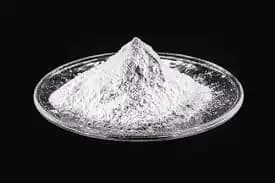
Allantoin
ELACTAVIATM – ALTN
Get Pricing For This Product
Need pricing? Request a quote for this product and we'll get back to you shortly.
Speed Up Your Sample Testing Process
Express Delivery in 24–48 Hours
A compound known for its soothing and skin conditioning properties, commonly used in skincare products.
CAS Number
97-59-6
HS Code
2933.21.0000
INCI Name
Allantoin
Molecular Formula
C₄H₆N₄O₃
Allantoin
ELACTAVIATM – ALTN
A compound known for its soothing and skin conditioning properties, commonly used in skincare products.
CAS Number
97-59-6
INCI Name
Allantoin
HS Code
2933.21.0000
Molecular Formula
C₄H₆N₄O₃
Get Pricing For This Product
Need pricing? Request a quote for this product and we'll get back to you shortly.
Speed Up Your Sample Testing Process
We deliver domestic samples within 24 - 48 hours, helping you evaluate product without delays.
Product Specification
Physical Properties
| Property | Specification |
|---|---|
| Appearance | Colorless to white solid |
| Odor | Odorless |
| Molecular Weight (G/Mol) | 158.12 |
| Density Or Specific Gravity | 0.951 g/mL at 25 °C (lit.) |
| Refractive Index | n20/D 1.442(lit.) |
| Ph (If Aqueous Solution) | 4.5 - 6 (5% in water, 20 °C) |
| Ph | 4.5 - 6 (5% in water, 20 °C) |
Chemical Properties
| Property | Specification |
|---|---|
| Pka | 8.96(at 25℃) |
Thermal Properties
| Property | Specification |
|---|---|
| Melting Point | 239 °C |
| Flash Point | 230-234°C |
| Boiling Point | Decomposes before boiling |
| Decomposition Temperature | Decomposes above melting point |
| Thermal Stability | Stable at room temperature; decomposes at high temperatures |
Processing Methods & Reference Formulations
A. Cosmetic cream
Dissolve allantoin in the water phase and heat to ensure complete solubility. Avoid adding during the cool-down phase, as it has limited solubility in cold water and may recrystallize.
| Key Ingredients | Indicative Dosage (% w/w) |
|---|---|
| Water (Aqua) | 70% |
| Glycerin | 5% |
| Cetearyl Alcohol | 4% |
| Caprylic/Capric Triglyceride | 6% |
| Isopropyl Myristate | 3% |
| Stearic Acid | 2% |
| Triethanolamine (TEA) | 0.8% |
| Benzalkonium Chloride (50% sol.) | 0.2% |
| Allantoin | 0.5% |
| Panthenol (Pro-Vitamin B5) | 1% |
| Tocopheryl Acetate (Vitamin E) | 0.5% |
| Dimethicone | 2% |
| Fragrance | 0.5% |
| Phenoxyethanol & Ethylhexylglycerin | 1% |
| Citric Acid (10% solution) | 0.4% |
B. Hair shampoo
Add allantoin to the heated water phase to ensure proper dissolution, as it has low solubility in cold water. Mix well to avoid grittiness or sediment in the final shampoo.
| Key Ingredients | Indicative Dosage (% w/w) |
|---|---|
| Primary surfactants | 8-12% |
| Secondary surfactants | 2-5% |
| Butters | 20-40% |
| Allantoin | 0.1–1% |
| Water | 40-50% |
| Other UV Filters, Antioxidants, Humectants, Fragrance/flavor etc. |
C. Facial Cleansers
When formulating facial cleansers, dissolve Allantoin (typically 0.1–0.5%) in the water phase by heating to ensure full solubility. Avoid overheating, as Allantoin can degrade at high temperatures. Stir gently to maintain clarity in clear formulations.
| Key Ingredients | Indicative Dosage (% w/w) |
|---|---|
| Deionized Water | 70% |
| EDTA-2Na | 0.10% |
| Sodium Cocoamphoacetate | 10% |
| Cocamidopropyl Betaine | 8% |
| Glycerine | 5% |
| Lauryl Glucoside | 4% |
| Panthenol | 1% |
| Allantoin | 0.3% |
D. Sunscreen cream
When adding allantoin to sunscreen, dissolve it in the water phase at 0.05–0.5% concentration and heat gently to ensure full solubilization. Maintain final pH between 5.0–7.0 for stability and compatibility with UV filters. Stir thoroughly to ensure uniform dispersion.
| Key Ingredients | Indicative Dosage (% w/w) |
|---|---|
| Homosalate | 6-10% |
| Ethylhexyl Methoxycinnamate | 5-9% |
| Ethylhexyl Salicylate | 2-6% |
| 4-Methylbenzylidene Camphor | 2-5% |
| Titanium Dioxide | 2-6% |
| Polydimethylsiloxane | 3-8% |
| Propylene Glycol | 3-6% |
| Allantoin | 0.05% to 0.3% |
| Plant extracts (e.g., safflower extract) | 0.3-0.6% |
| Emulsifiers and thickeners |
Dosing Guidelines
A. Dosing by Application
| Products | Authorized dosage % |
|---|---|
| Skin Care | 0.5-2% |
| Hair shampoo | 0.1-1% |
| Other Personal Care | 0.2-2% |
About Allantoin
About Allantoin
Regulatory Compliance
| Region | Max Allowed Level | Notes | Certification Body |
|---|---|---|---|
| Australia | - | No statutory maximum | - |
| China | - | No statutory maximum | NMPA - National Medical Products Administration |
| India | - | No BIS-specific limit | - |
| Japan | - | No specific limit | MHLW – Ministry of Health, Labour and Welfare |
| Republic of Korea | - | No statutory maximum | MFDS - Ministry of Food and Drug Safety |
| United States | 2% | The US FDA list Allantoin as a over-the-counter (OTC) skin protectant at 0.5% to 2%. | FDA |
| ASEAN | - | No statutory maximum | - |
| European Union | - | No explicit legal maximum, can be used at any safe concentration | SCCS (Scientific Committee on Consumer Safety) |
FAQs - Allantoin
Related Products
Related Products
Streamline
Your Chemical
Procurement
Get fast responses from real experts