

At a Glance
- Start with the application: The right propylene glycol supply route depends on intended use, required specification, documentation, and delivery needs.
- Confirm the grade before pricing: A supplier quote is only comparable when each supplier is quoting against the same approved requirement.
- Evaluate the delivered offer: Packaging, freight basis, documentation, sample support, and supply continuity can matter as much as the headline price.
- Ask for the paperwork early: Your quality and technical teams may need a certificate of analysis, technical data sheet, safety data sheet, and traceability information before approval.
- Use an application-specific RFQ: A clear request reduces delays and helps suppliers return a quote that can be evaluated fairly.
- Treat regulated uses differently: Food, pharmaceutical, and other regulated applications need product-specific qualification rather than a generic grade label.
What you’ll learn
This guide helps procurement and technical buyers choose, qualify, and purchase propylene glycol using a practical framework for grade, documentation, packaging, logistics, and supplier fit.
Introduction
Buying propylene glycol for a business is rarely as simple as finding the lowest listed price. The material may be used as a solvent, humectant, processing aid, heat-transfer component, or formulation ingredient, and each use creates different technical, quality, and commercial questions.
The practical answer is to source from a supplier that can match the intended application with the right specification, supporting documents, packaging, and delivery model. Buyers who are ready to compare an offer can start with Elchemy’s propylene glycol product options, then validate the material against their own approved requirements.
This guide is for procurement managers, formulators, operations leads, and quality teams who need a disciplined B2B buying process rather than a consumer-style product listing.
The short answer: where should B2B buyers source propylene glycol?
B2B buyers should source propylene glycol from a chemical supplier or distributor that can address the complete purchasing requirement, not only the product name. That means confirming application fit, product documentation, packaging, delivery location, and commercial terms before issuing a purchase order.
Online retail listings may be useful for spotting common package formats, but they often do not resolve the questions that matter for production use. A buyer may need documentation review, a sample, a consistent specification, or delivery arrangements that are not visible in a small-pack listing.
Propylene glycol is also known as 1,2-propanediol and is identified by CAS number 57-55-6. Its identity and broad physical information can be checked through PubChem’s propylene glycol record, but identity alone does not establish that a specific commercial product is suitable for a particular use.
Define the requirement before comparing suppliers
The best supplier comparison begins with a written requirement. Without one, two apparently similar quotes may refer to different grades, documents, package formats, delivery assumptions, or qualification responsibilities.
Start by naming the application and identifying the internal person or team responsible for technical approval. Procurement can then gather comparable commercial offers without taking on the role of regulatory or formulation approver.
Identify the application and use conditions
The application determines which questions a supplier must answer before a purchase decision can be made. A personal-care formulation, industrial process, food-related use, and heat-transfer system can each require a different technical review.
For example, a formulator may need to evaluate solvent behaviour and compatibility, while an operations team may focus on receiving, storage, transfer equipment, and batch consistency. Buyers working in personal care can use Elchemy’s personal care ingredient sourcing page as a relevant industry context, but should still evaluate the exact product against their own specification.
Separate grade, specification, and approval requirements
A grade label is useful shorthand, but it is not a substitute for a buyer’s approved specification. The label must be supported by current product documentation and assessed against the intended use, market, and internal quality requirements.
For food-related uses, do not assume that a generic “food grade” description confirms suitability for every formulation or jurisdiction. The FDA food-substance listing provides regulatory context for propylene glycol, but buyers should confirm that their exact intended use is covered by the applicable requirements.
| Buyer input | What to request from the supplier | Internal decision owner |
| Intended application | Confirmation of the proposed product’s intended-use fit and supporting documents | Technical or formulation team |
| Required specification | Product specification and current certificate of analysis format | Quality team |
| Required documents | Technical data sheet, safety data sheet, COA, and traceability details | Quality or regulatory team |
| Delivery location | Available package formats and quoted freight or delivery basis | Procurement or operations |
| Quantity required | Order basis, packaging suitability, and commercial quote | Procurement |
| Qualification route | Sample availability and the proposed approval process | Technical and quality teams |
Ask a propylene glycol supplier for the right information
A good supplier conversation produces evidence that several buying stakeholders can evaluate. The request should make it easy for quality, technical, procurement, and operations teams to review the same proposed product rather than reconstructing the offer later.
Ask for the product’s current technical and safety documentation early in the process. Elchemy’s propylene glycol technical documentation is a useful starting point for product evaluation, while the propylene glycol safety documentation should be reviewed alongside your site-specific handling procedures.
A complete supplier request should cover:
- Exact product name and proposed grade or specification.
- Certificate of analysis requirements and batch or lot traceability.
- Technical data sheet and safety data sheet availability.
- Packaging options appropriate to your receiving and storage process.
- Delivery location, freight basis, and requested delivery date.
- Sample or qualification requirements before a production order.
- Any market-, customer-, or application-specific documentation your internal team requires.
This approach protects the buyer from comparing incomplete offers. It also gives the supplier enough context to flag a missing requirement before the order reaches a critical stage.
Compare bulk propylene glycol offers fairly
The most useful comparison is not “which supplier has the lowest price?” It is “which offer meets the same approved requirement at the lowest acceptable total cost and supply risk?”
To compare offers fairly, use the same requested quantity, specification, packaging, delivery destination, and documentation requirement for every supplier. A lower unit price can become less attractive if it excludes freight, does not meet the document requirement, or creates extra qualification work.
| Comparison criterion | What a complete supplier response should state | Why the buyer should check it |
| Exact product and grade | The proposed product name, grade, and relevant specification reference | Prevents comparisons between technically different materials |
| COA, TDS, and SDS | Which documents are available and when they will be supplied | Enables quality and technical review before ordering |
| Packaging format | Available package type, nominal quantity, and handling considerations | Confirms compatibility with site receiving and storage |
| Order basis | Minimum order basis, quantity assumptions, and quote validity | Makes price comparisons like-for-like |
| Delivery coverage | Whether the supplier can deliver to the requested destination | Avoids an unusable quote or unplanned freight cost |
| Freight basis | Whether transport is included, excluded, or quoted separately | Clarifies total landed-cost assumptions |
| Sample route | Whether a sample can support the buyer’s qualification process | Helps manage formulation or quality risk |
| Supply continuity | How the supplier handles planned changes or supply interruptions | Supports production planning and source approval |
The table should be treated as a decision record, not a formality. It reveals where one supplier is offering a product but another is offering a complete, qualification-ready route to supply.
Match packaging and logistics to the operating reality
Packaging should fit the required volume, site handling equipment, storage conditions, and consumption rate. A package that is commercially convenient may still be operationally unsuitable if your facility cannot safely receive, transfer, or store it.
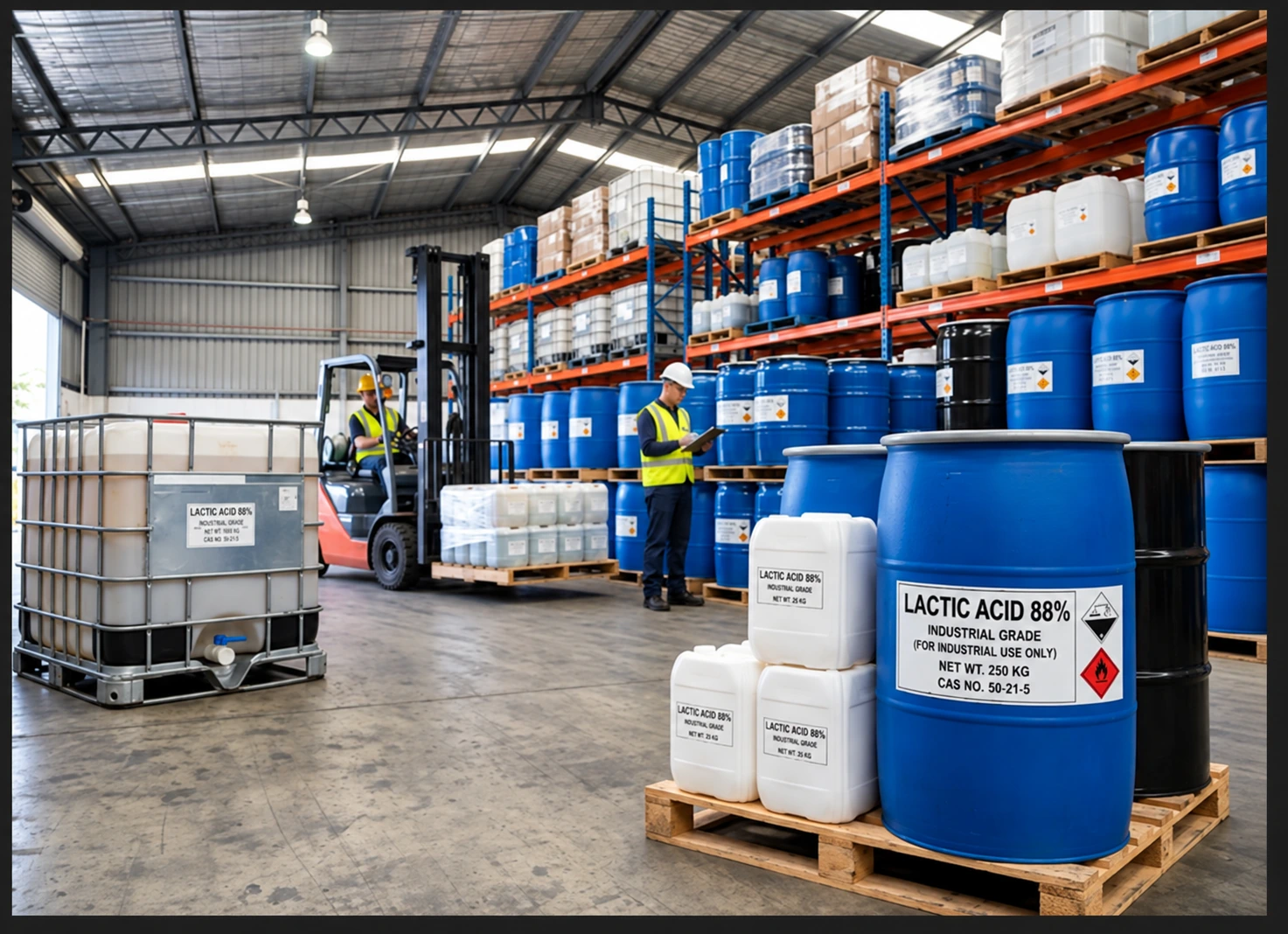
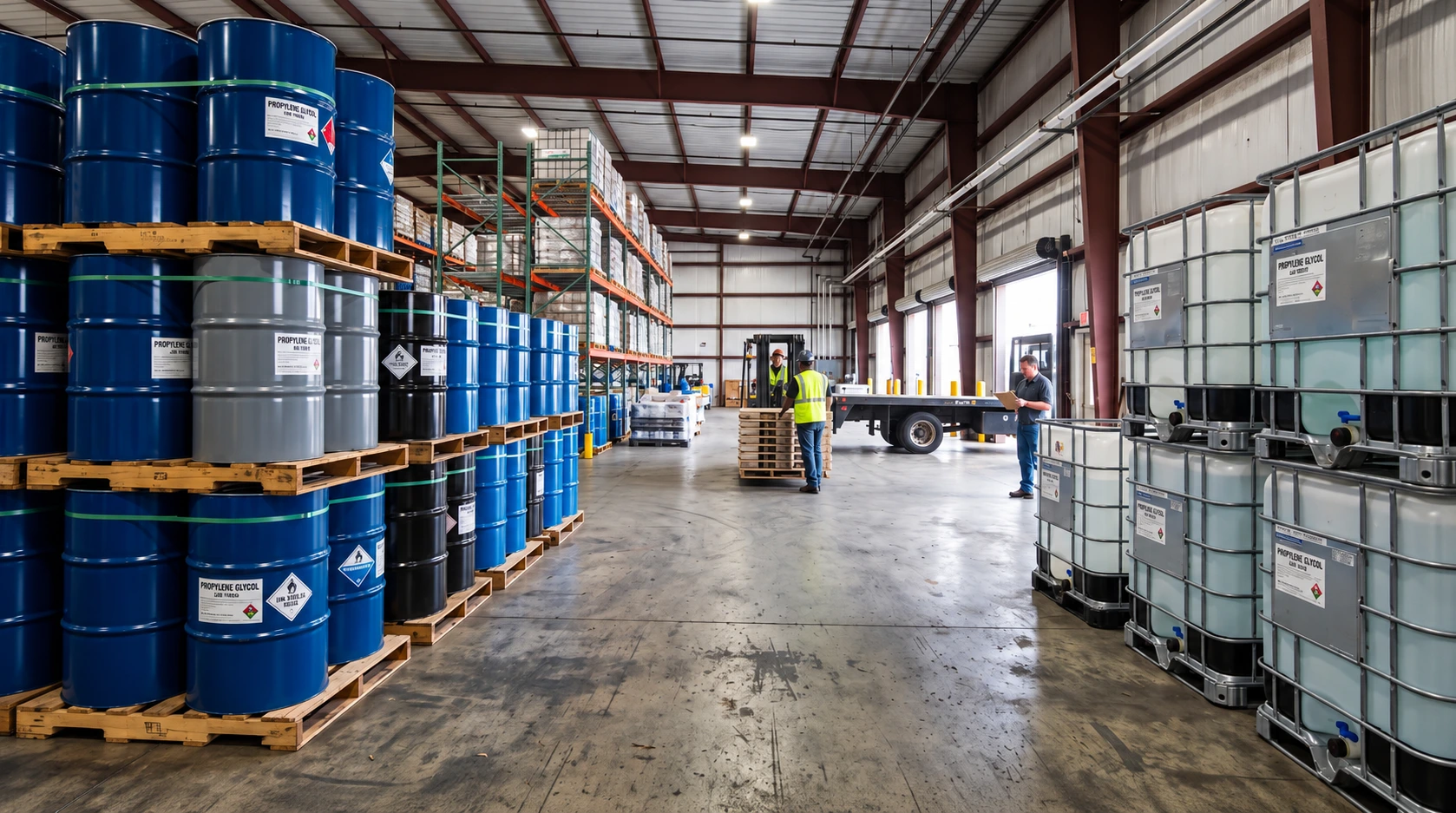
Elchemy’s current product information identifies HDPE drums, jerry cans, and ISO tanks as packaging formats for propylene glycol. Buyers should confirm which current options apply to their order and assess container compatibility, receiving procedures, product transfer, stock rotation, and required safety controls before committing.
For North American buyers, a supplier’s regional coverage can affect freight planning and responsiveness. Elchemy’s North American chemical supplier page provides a useful starting point for that discussion, but a quote should still state the specific delivery assumptions.
Use a cross-functional supplier qualification checklist
A short qualification process prevents a purchasing decision from moving ahead of technical or quality approval. It does not need to be complicated, but it should identify who owns each decision and what evidence is needed.
- Define the intended application. Record the end use, internal specification, annual or trial volume, and delivery point.
- Request the supplier package. Obtain the product description, technical documentation, safety documentation, and commercial quote.
- Verify specification alignment. Ask quality and technical stakeholders to compare the proposed product with the approved requirement.
- Check logistics fit. Confirm packaging, receiving capability, storage, transfer method, and delivery assumptions.
- Compare commercial terms consistently. Use the same quantity, package, location, and cost basis for each offer.
- Complete sample or trial steps where needed. Use a controlled qualification process rather than approving from a brochure alone.
- Document the approved source. Record product identity, documents reviewed, order conditions, and change-control expectations.
A sample can reduce uncertainty when internal qualification is required. Buyers who need to test material before a larger order can use Elchemy’s request a product sample route after confirming that the sample requirement is appropriate for their process.
Where different sourcing routes fit
The best sourcing route depends on the buyer’s risk profile and the complexity of the requirement. A small, low-consequence purchase may need only a straightforward commercial check, while a regulated or production-critical application may require documentation review, sampling, and formal quality approval.
Choose a simple distributor or stocked-supply route if the application is non-regulated, the internal specification is clear, and the supplier can provide the necessary documentation. Choose a deeper qualification route if the material affects finished-product performance, customer requirements, regulatory obligations, or business continuity.
For industrial users evaluating propylene glycol within a broader chemical-input portfolio, Elchemy’s chemical intermediate sourcing options may provide helpful context. For a future, broader cluster path, consider broader industrial glycol sourcing [Where to Buy Glycol: Industrial Buyer’s Guide].
When Elchemy may fit the buying requirement
Elchemy may be relevant for buyers seeking propylene glycol product information, technical documentation, pricing discussions, samples, and supply conversations for North American or global requirements. The appropriate route depends on the buyer’s application, approved product requirement, and commercial context.
Elchemy should not be selected solely because it appears in a search result or because a product name looks familiar. Buyers should use the same qualification standard they would apply to any shortlisted supplier: confirm the exact material, documentation, packaging, delivery basis, and internal approval status.
For formulation teams comparing humectant systems, Elchemy’s glycerine product specification details may be a relevant adjacent reference. It should not be treated as evidence that glycerine and propylene glycol are interchangeable in a particular formulation.
FAQs
1. Where can businesses buy propylene glycol in bulk?
Businesses can buy bulk propylene glycol from chemical suppliers and distributors that support industrial packaging, documentation, and delivery requirements. The right choice depends on your application, approved specification, order quantity, location, and qualification process. Ask each supplier to quote on the same basis before comparing commercial offers.
2. What should I include in a propylene glycol RFQ?
A propylene glycol RFQ should include the intended application, required specification or grade, quantity, preferred packaging, delivery location, required date, and documentation needs. Include any sample, quality, traceability, or regulatory-review requirements. This gives suppliers enough information to return a quote that is technically and commercially comparable.
3. Is industrial propylene glycol the same as food-grade propylene glycol?
No, buyers should not assume that industrial and food-related purchasing requirements are interchangeable. Grade labels, product documentation, and intended-use requirements must be reviewed against the buyer’s specification. For a food-related application, confirm the exact regulatory and quality requirements with the appropriate internal subject-matter owner before purchasing.
4. What documents should a propylene glycol supplier provide?
The documents depend on your use case, but buyers commonly request a technical data sheet, safety data sheet, certificate of analysis, and batch or lot traceability information. Additional documents may be needed for regulated or customer-specific requirements. Request them early so the technical and quality review does not delay the purchasing decision.
5. Can I order propylene glycol in drums, totes, or bulk shipments?
Packaging availability depends on the supplier, delivery region, product, and current commercial arrangement. Buyers should specify their required quantity, site-handling capability, and preferred format in the RFQ. Then confirm that the proposed package is compatible with receiving, storage, transfer, stock rotation, and safety procedures at the destination site.
6. How do I compare propylene glycol quotes from multiple suppliers?
Compare quotes using an identical requirement: product specification, quantity, packaging, destination, delivery basis, and documentation package. Do not compare a product-only price with an offer that includes freight, qualification support, or different packaging. A simple comparison matrix helps the team identify commercially attractive offers that are also technically complete.
7. Should I request a sample before placing a production order?
A sample is appropriate when your internal qualification process, formulation work, or quality procedures require one. It can help verify the material against approved requirements before a larger commitment. The sample itself does not replace a review of the supplier’s current documentation, commercial terms, and product identity.
8. What is the most important supplier-qualification question?
The most important question is whether the supplier can provide the exact material and evidence your application requires. Price, packaging, and delivery matter, but they should follow that confirmation. A supplier that cannot support the required specification, documents, or qualification route may not be a viable source for the intended use.
Choose a qualification-ready supply route
The right place to buy propylene glycol is the supplier that can meet your application, specification, documentation, packaging, and delivery requirements together. A disciplined RFQ and cross-functional review make it easier to identify that supplier before cost, timing, or quality issues reach production.
Use the same comparison standard for every shortlisted source. Confirm the documents, logistics, and technical fit before relying on a quoted price.
When you are ready to evaluate a current offer, request propylene glycol pricing with your application, required documents, quantity, packaging, and delivery location.