

At a Glance
- Asia: In August 2026, LABSA ran near USD 1.41 to 1.55 per kg in China. India ran near 1.44 to 1.60.
- US and Europe: The US ran near USD 1.90 to 2.10. Germany ran near 1.66 to 1.84.
- Acid slurry: In India, LABSA is usually sold as acid slurry, so quotes use both names.
- Main driver: Linear alkylbenzene (LAB) feedstock is the largest input, so LABSA tends to follow LAB and benzene.
- Trackers differ: Published series can differ by 30 percent or more, so confirm grade and price basis first.
- Compare smart: Judge quotes on active matter, packaging, and landed cost, not the headline per-kg figure.
What You’ll Learn
See the latest per-kg LABSA rates by region and what drives the acid slurry price trend. Learn how to check whether a supplier quote is fair before you buy in bulk.
Introduction
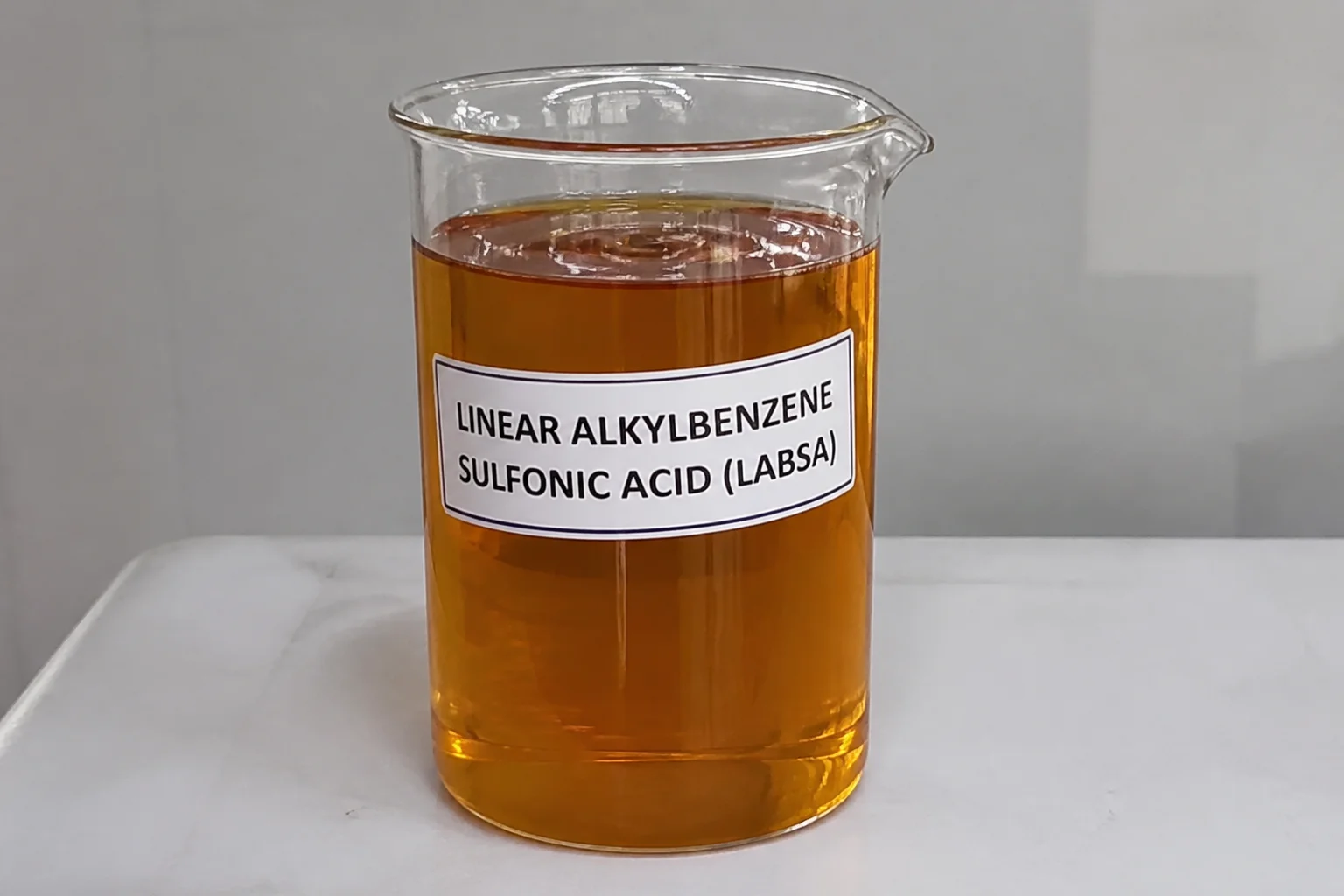
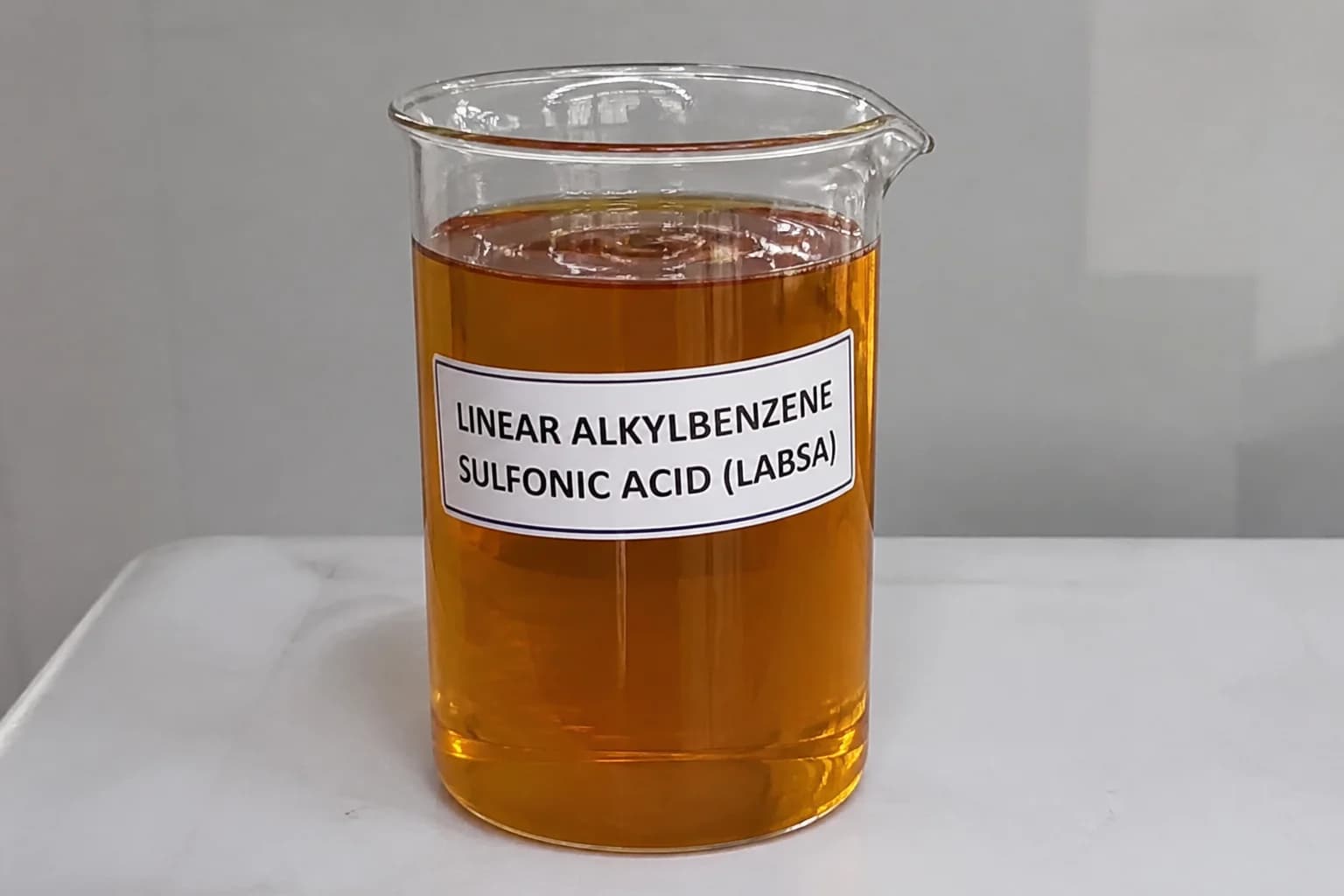
The LABSA price is a core cost for anyone making laundry powder, dishwashing liquid, or industrial cleaners. LABSA stands for linear alkylbenzene sulfonic acid. In India and nearby markets, the same material is sold as acid slurry, so quotes often use both names.
LABSA is a primary active ingredient in detergent and cleaning formulas, so its cost sets the base for many products. It moves with feedstock, energy, freight, and regional demand. For more on the end market, see home care and cleaning.
This guide gives current price ranges and explains what drives them. It also compares grades and packaging and shows how to check a supplier quote.
Current LABSA Price per Kg (2026)
These are indicative published ranges per kg, not quotes. The price of this chemical moves with feedstock and freight, so confirm a live figure before you budget.
|
Region |
Q1 2026 (USD per kg) |
August 2026 range (USD per kg) |
|
United States |
2.00 |
1.90 to 2.10 |
|
Germany |
1.75 |
1.66 to 1.84 |
|
India |
1.52 |
1.44 to 1.60 |
|
China |
1.48 |
1.41 to 1.55 |
Source: Expert Market Research, updated September 2026. The publisher calls its figures indicative.
The same publisher’s quarterly table shows lower levels for Q2 2026. It lists India at USD 1,145 per tonne and the US at USD 1,265. It lists China at USD 1,055 and Indonesia at USD 995. That is roughly USD 1.0 to 1.3 per kg. The two series are not directly comparable, and the page does not explain the gap.
IMARC reported India at USD 1,540 per tonne and Germany at USD 1,650 in Q2 2025. Those figures sit closer to the higher series. Treat all published figures as direction only.
Some quotes list LABSA only as sulfonic acid. A sulfonic acid price per kg may refer to the same material, so check the CAS number and active matter.
For today’s rate, start with the August 2026 range. Then Request a Quote with your grade, volume, and destination.
Acid Slurry Price (LABSA) in India
In India, LABSA is usually called acid slurry. It is commonly sold as 90% or 96% active matter, so check the grade on every quote.
The price depends on grade, order size, and seller type. A small drum order from a trader costs more per kg than a bulk order from a producer. A 90% grade usually costs less per kg than 96% but carries more water, so compare on active matter.
Trackers put India near USD 1.44 to 1.60 per kg in August 2026. For the current acid slurry price, request a live quote. Quotes in rupees need converting at the day’s rate. Confirm GST, freight, and packaging separately.
Check the date on any price you find online. Figures from 2024 or 2025 may be out of date.
Buyers comparing LABSA manufacturers in India should also compare grade, capacity, and documentation. For wider context, see sourcing from India.
Why Prices Differ by Region
- United States: The tracker links the premium to elevated domestic LAB feedstock and logistics costs.
- China: Ample regional LAB production capacity keeps prices lowest among the tracked markets.
- India: A large detergent-powder sector pulls on both domestic production and imports.
- Germany and Europe: Prices sit between Asia and the US. Import, energy, and compliance costs, including REACH, add to delivered cost.
LABSA Pricing in Ethiopia, Pakistan, and Other Import Markets
Import-dependent markets pay a delivered price, not an ex-works one. In Ethiopia, Pakistan, and similar markets, the quote depends on freight, port charges, inland transport, duties, and currency.
Ask for CFR or DDP quotes so the figure includes delivery. Compare the 96% grade on active matter, then add landed costs. The tracker above covers only a few countries, so a live quote is the reliable benchmark.
How Grade and Packaging Change the Price
LABSA 96% vs 90%
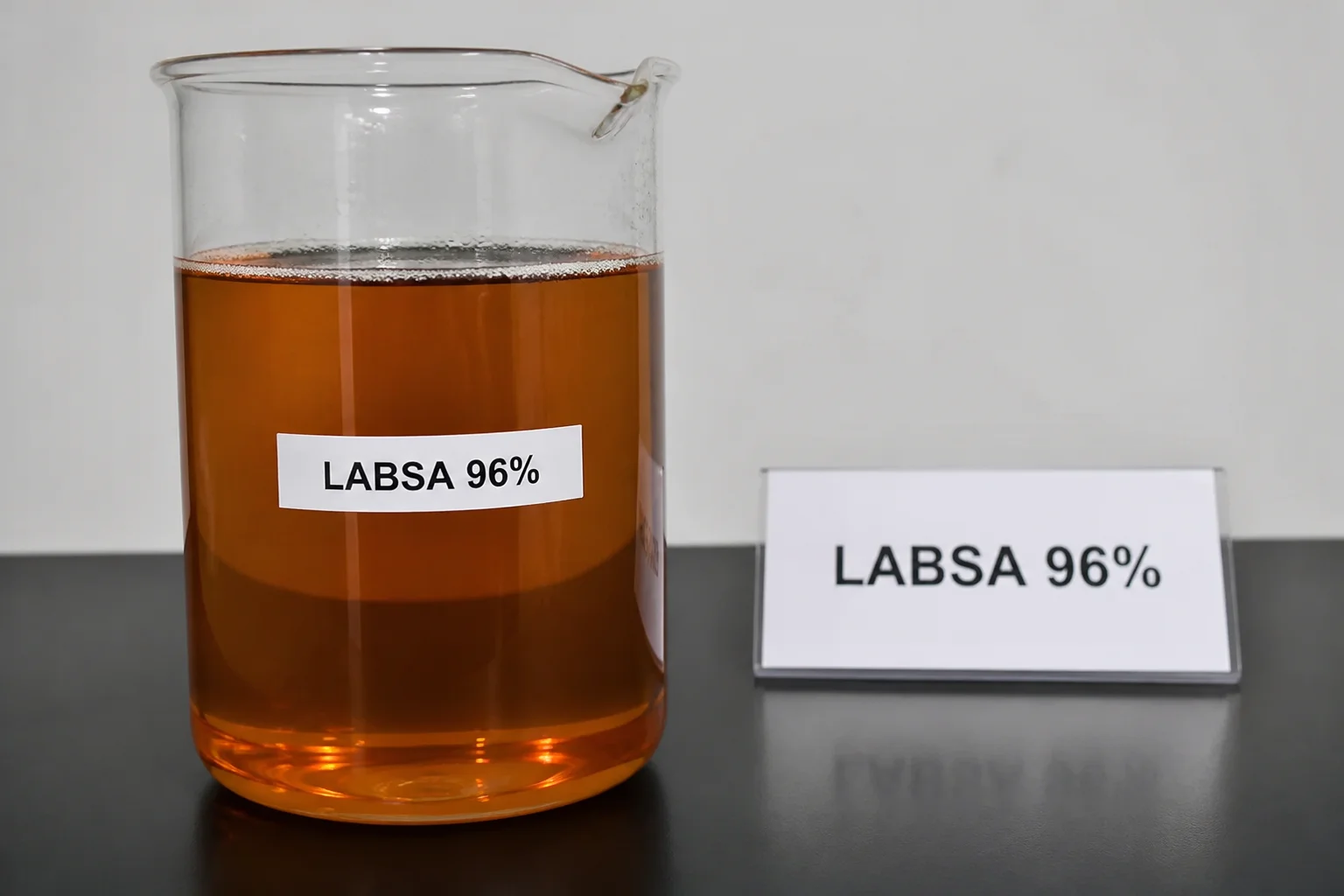
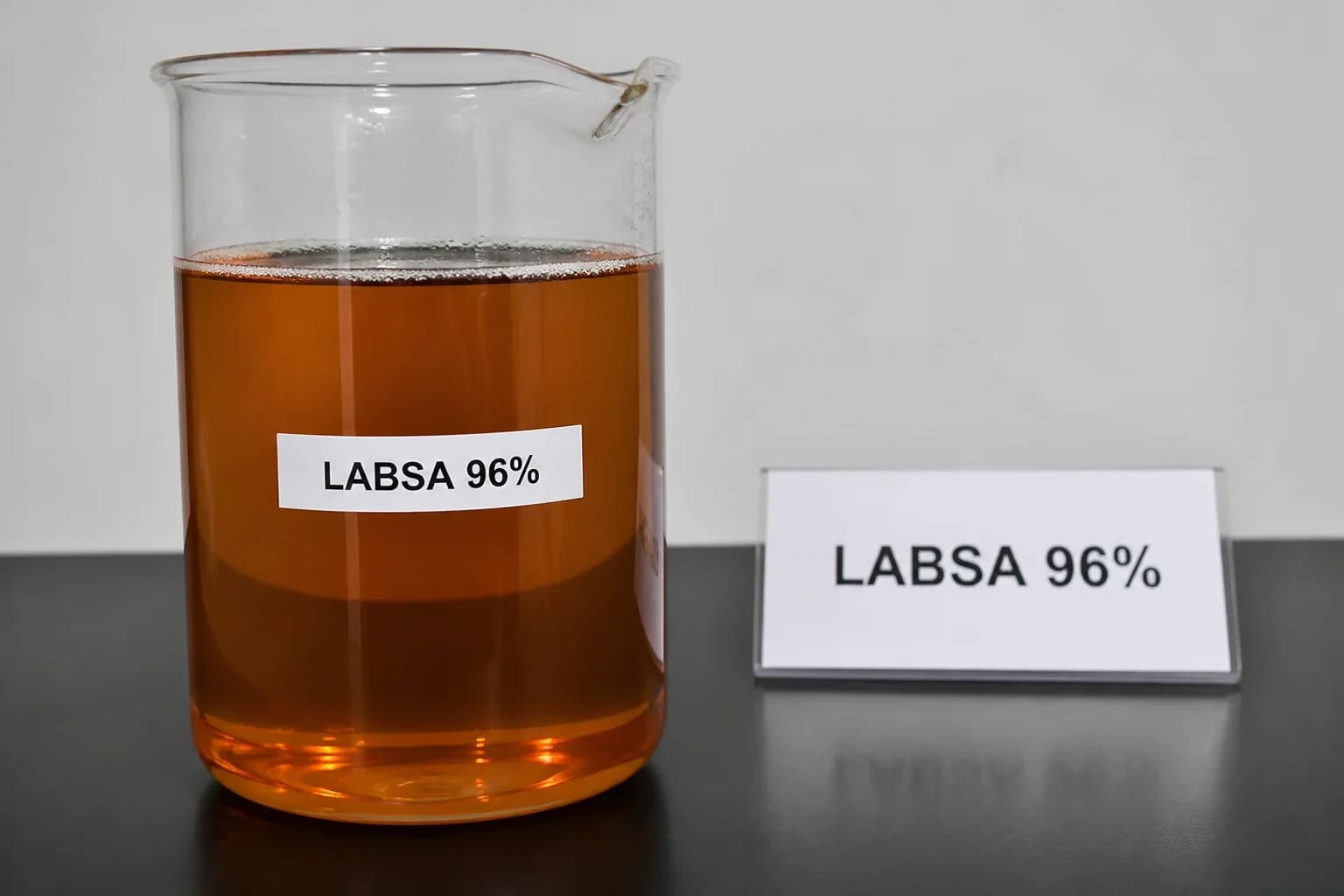
96% LABSA is the common standard for detergent use, so most quotes are benchmarked against it. The table shows the properties listed on Elchemy’s LABSA 96% page. A 90% grade usually costs less per kg but contains more water.
|
Property |
LABSA 96% |
|
CAS number |
27176-87-0 |
|
Chemical formula |
C18H30O3S |
|
HS code |
34021190 |
|
Appearance |
Brown liquid |
|
Active matter |
96% |
|
pH |
2 to 3 |
|
Density |
1.06 to 1.07 g/cm³ |
|
Packaging |
HDPE drums |
Compare quotes per kg of active matter, not per kg of product. A LABSA technical grade has relaxed color, free oil, and unsulfonated matter limits. It usually costs less than a commercial grade. Check those limits and the sulfate limit on every quote.
For detergent uses, see our guide to LABSA 96% applications.
Packaging Format
|
Format |
Best for |
Price per kg |
Note |
|
Bulk (flexitank, isotank, tank truck) |
Large, steady buyers |
Lowest |
Needs receiving tanks and pumps |
|
IBC totes |
Medium volumes |
Middle |
Forklift handling |
|
Drums |
Small buyers |
Highest |
Simple storage |
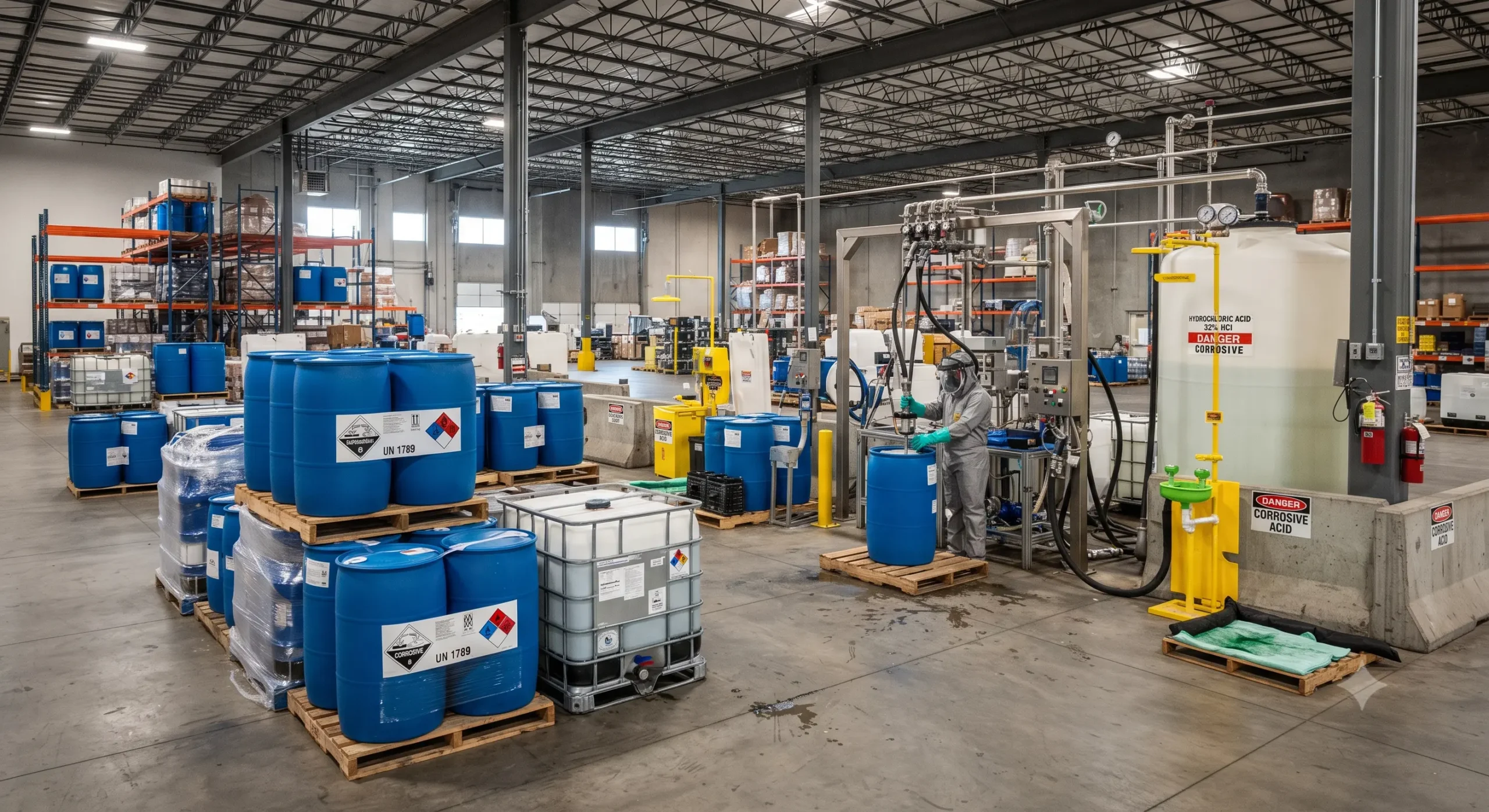
LABSA is corrosive, so use compatible HDPE or lined containers. Ask for pricing per IBC tote and per drum, not only per kg. Ask each supplier to quote the same grade in each format, then compare.
What Drives the Price of LABSA
Linear Alkylbenzene (LAB) Feedstock
Linear alkylbenzene (LAB) is the main feedstock and the largest cost component. Linear alkylbenzene prices set the base for LABSA, which tends to follow LAB, benzene, and crude oil.
Watching the linear alkyl benzene price trend helps buyers anticipate LABSA moves. This LAB price tracker shows LAB’s global average at USD 1.54 per kg in Q1 2025. It reached USD 1.67 in Q1 2026. LAB follows benzene and kerosene feedstock, and both firmed sharply in early 2026 on Middle East tensions.
In the US, LAB averaged USD 2.13 per kg in Q1 2026. In India, it averaged USD 1.58 per kg in Q4 2025. It reached USD 1.62 in Q1 2026, or about USD 1,620 per ton.
Sulfonation Inputs and Energy
Sulfonation needs a sulfonating agent such as sulfur trioxide, oleum, or sulfuric acid. Oleum and sulfuric acid price trends feed into LABSA cost. Plant utilization and energy costs also matter.
Neutralizing LABSA with an alkali such as caustic soda flakes gives linear alkylbenzene sulfonate (LAS). LAS is the sodium salt used in many detergents. LAS, also spelled sulphonate, is priced separately from LABSA, so check which product a quote covers.
Freight and Incoterms
Delivered price depends on the Incoterm. FOB leaves shipping, insurance, and customs to the buyer. CFR and CIF include freight to your port. DDP covers full delivery, including duties. LABSA is corrosive, so hazmat handling can add to freight and storage cost.
Order Size
Larger and contract volumes usually earn lower per-kg prices. Small spot orders cost more.
LABSA Price Trend: What Trackers Show
The headline series shows LABSA holding close to its Q1 2026 level through August 2026. The quarterly series shows steady gains. Its global average rose about 8.3 percent from Q1 2025 to Q2 2026.
Feedstock drove much of the move. LAB’s global average rose about 8.4 percent from Q1 2025 to Q1 2026. The LAB tracker calls the rest-of-2026 outlook firm.
What This Means for Buyers
- Budget with a range: Trackers disagree, so plan around a band, not one number.
- Expect a lag: LAB and benzene moves tend to reach LABSA quotes after a delay.
- Match contract type to outlook: Buyers can weigh fixed-price against index-linked supply when feedstock firms.
- Watch alternatives: Detergent makers may switch to other surfactants, such as SLS, when costs move.
- Recheck often: The trackers update monthly, so refresh your benchmark and request a live quote.
Outlook for Q2 2026
The quarterly series puts the global average at USD 1,110 to 1,180 per tonne for the rest of 2026. That is USD 1.11 to 1.18 per kg. It names a feedstock spike as the upside risk. It names a shift to other surfactant systems or weaker detergent demand as the downside risk.
Spot vs Contract Pricing
|
Factor |
Spot |
Contract |
|
Price |
Follows the market and can swing |
Stable for the contract term |
|
Flexibility |
Buy as needed |
Volume commitments |
|
Supply security |
Weaker in tight markets |
Allocated supply |
|
Best for |
Small or variable demand |
Steady, larger demand |
Many buyers split volume between the two. A backup supplier adds protection. For more, see supply chain diversification.
How to Check If a Quote Is Fair
- Match the specification. Compare the same grade, active matter, color, free oil, sulfate limit, and packaging.
- Normalize the price. Compare per kg of active matter, not per kg of product.
- Build the landed cost. Add freight, insurance, duties, port and inland costs, hazmat fees, and financing to the FOB price.
- Benchmark. Compare against published trackers and your own recent quotes, allowing for the gaps noted above.
- Watch for red flags. Prices far below market may signal quality problems. Unexplained changes from recent quotes, or no certificate of analysis, are also warning signs.
- Test. Verify the certificate of analysis on the first shipment with independent testing.
|
Cost element |
What to confirm |
|
FOB or ex-works price |
Grade, packaging, and Incoterm |
|
Freight |
Container type and route |
|
Insurance |
Cover and insured value |
|
Duties and taxes |
HS code, tariff, and GST or VAT |
|
Port and customs |
Handling and clearance fees |
|
Inland transport |
Distance to your plant |
|
Hazmat handling |
Corrosive classification and carrier rules |
|
Financing |
Payment terms and credit period |
To test a grade against your own specification, Request a Sample.
Common LABSA Pricing Mistakes
|
Mistake |
Fix |
|
Comparing 90% with 96% |
Compare per kg of active matter |
|
Ignoring landed cost |
Request DDP quotes or build the cost yourself |
|
Choosing price over consistency |
Qualify reliable suppliers and use price as the tiebreaker |
|
Accepting the certificate of analysis without checks |
Test first shipments independently |
|
Depending on one supplier |
Qualify a backup supplier |
FAQs
What is the LABSA price per kg?
In August 2026, one tracker put LABSA near USD 1.41 to 1.55 per kg in China. It showed 1.44 to 1.60 in India, 1.66 to 1.84 in Germany, and 1.90 to 2.10 in the US. These figures are indicative. Confirm a live quote for your grade, volume, and destination.
What is the acid slurry price in India?
Acid slurry is the common Indian name for LABSA. Trackers put Indian LABSA near USD 1.44 to 1.60 per kg in August 2026. Actual quotes depend on grade, order size, and seller, and they are often given in rupees. Compare 90% and 96% grades on active matter.
What factors move the price of LABSA?
LAB feedstock is the largest driver, followed by benzene and crude oil, sulfonation inputs, and energy. Detergent demand, regional capacity, freight, and Incoterms also matter. Grade, packaging, and order size change the price you pay. Always compare quotes on specification and landed cost.
Are LABSA and acid slurry the same product?
In practice, yes. Acid slurry is the common Indian trade name for linear alkylbenzene sulfonic acid. Both are sold at 90% or 96% active matter, so the grade matters more than the name. Always confirm the active matter, color, and free oil limits on the quote.
How does LAB cost affect LABSA?
LAB is the main feedstock, so LABSA tends to follow it with a lag as producers use up earlier stock. LAB’s global average rose about 8.4 percent from Q1 2025 to Q1 2026. Watching LAB, benzene, and crude oil helps buyers anticipate moves.
How can buyers check if a quote is fair?
Match the grade and active matter first. Then build the landed cost, including freight, duties, hazmat fees, and financing. Benchmark against published trackers and recent quotes, and treat prices far below market with caution. Verify the certificate of analysis with independent testing on the first shipment.
Conclusion
Prices follow LAB feedstock, regional demand, and freight, and published trackers disagree on the level. Compare LABSA suppliers on grade, active matter, packaging, and landed cost.
Elchemy supplies LABSA in bulk, with 96% active matter as the standard grade and other levels on request. Request a Quote with your specification.