

At a Glance
- Separate the company role from the material source: a supplier or distributor can provide IPA without producing it.
- Specify concentration and grade: 70%, 91%, 99% or 99.9% are not interchangeable commercial requirements.
- Qualify the actual product: request the current specification, SDS, CoA where required, packaging and origin for the quoted lot.
- Match the route to the requirement: direct producer qualification, distributor fulfilment and sourcing support each serve different buying needs.
- Treat this as a role-verified shortlist: it is not a ranking by capacity, quality, price, stock, safety or delivery speed.
Buyers researching isopropyl alcohol manufacturers will encounter a mixed market of producers, distributors, repackagers and specialty suppliers. That makes the commercial role just as important as the chemical name. A U.S. catalogue, warehouse or sales office does not itself prove where an offered lot was manufactured.
Isopropyl alcohol, also called isopropanol or 2-propanol, is CAS No. 67-63-0. The U.S. National Library of Medicine’s PubChem record identifies these names and the molecular formula C₃H₈O. For a defined commercial requirement, request an isopropyl alcohol quote from Elchemy with the grade, concentration, volume, packaging and delivery destination.
How this list was selected
Each company has a current first-party source supporting an IPA product, stated production position or U.S. commercial route. Inclusion is a practical research starting point, not a promise of availability, certification applicability, manufacturing origin, pricing or suitability for a specific use.
Role evidence last checked: 1 October 2026. Reconfirm the actual product, concentration, grade, origin, documents and delivery route before issuing an RFQ.
Publisher disclosure: Elchemy publishes this article and appears first as a supplier/sourcing partner and quote pathway. Elchemy is not presented here as a U.S. isopropyl-alcohol manufacturer. The sequence is not a ranking by capacity, quality, price, availability, safety or delivery speed.
Concentration, grade and delivery checks before an RFQ
| Buyer requirement | What to request | Do not assume |
| Industrial solvent or cleaning use | Exact concentration, technical specification, water/impurity limits, package and SDS | A generic 99% listing fits every process or substrate |
| Laboratory, analytical or regulated application | Named grade, product code, current specification, CoA where required and applicable quality documents | A technical, ACS, USP or other grade is interchangeable |
| Electronics or residue-sensitive process | Water limit, residue limit, relevant test method, packaging and handling requirements | A high assay alone establishes process compatibility |
| 70%, 91% or other aqueous solution | Exact concentration basis, water quality, grade and intended-use requirements | A diluted IPA product has the same specification as anhydrous IPA |
| Bulk, recurring or multi-site demand | MOQ, pack, cadence, supply route, lead-time basis, origin and destination delivery terms | A product page proves inventory or a delivery commitment |
The CDC’s NIOSH Pocket Guide lists IPA as a flammable liquid and identifies its DOT ID as UN1219. This is procurement context, not handling guidance. Buyers should use the current SDS, supplier documentation and their qualified EHS review for the actual product and site.
Isopropyl Alcohol Suppliers and Manufacturers to Consider
This is a role-qualified shortlist, not a performance ranking. Elchemy publishes the article and is listed first as the disclosed quote pathway.
| Company | Verified commercial role | U.S. route or origin context | Buyer question before RFQ |
| Elchemy | Supplier / sourcing partner | IPA product and quote pathway | Which source, grade, pack, documents and delivery terms fit the requirement? |
| LyondellBasell | North American IPA producer route | Anhydrous IPA product page states North America availability | Which exact grade, supplying site and delivery route apply? |
| Univar Solutions | Supplier / distributor | U.S. IPA catalogue and commercial route | Which producer, grade, origin and pack are proposed? |
| Brenntag | Supplier / distributor | U.S. IPA product route | Which exact material, documents and delivery lane apply? |
| CoreChem | Supplier / distributor | U.S. industrial IPA product route | Is the quoted material the stated 99% industrial grade or another product? |
| Modern Chemical | Supplier / distributor | U.S. solvent-distribution route | Which producer, concentration, grade and packaging are quoted? |
| Alliance Chemical | Manufacturer-record / supplier route | U.S. IPA documentation route | Does the manufacturer statement apply to the exact grade and concentration offered? |
| Ecolink | Industrial IPA supplier | U.S. product and pack route | Which product, pack, MOQ and delivery terms apply to the request? |
| ChemCeed | Specialty chemical supplier | U.S. specialty-solvent route | Which listed grade, documentation set and commercial route are available? |
| Vigon International | Specialty chemical supplier | U.S. specialty-chemical product route | Which grade, origin, pack and documents apply to the proposed material? |
1. Elchemy: isopropyl alcohol supplier and sourcing partner
Role: supplier / sourcing partner. Elchemy publishes this article and is not presented as a U.S. IPA manufacturer. Its isopropyl alcohol product provides a route to submit a defined requirement for sourcing review and quotation. Elchemy appears first as the publisher’s quote pathway; this is not a capacity, quality, price, availability, safety or delivery-speed ranking.
Buyer benefits:
- A requirement-led enquiry covering concentration, grade, volume, packaging, destination and document needs.
- A request for current source, origin, specification, SDS and CoA where required.
- Commercial review of the proposed material and delivery terms for the individual requirement.
2. LyondellBasell: North American IPA producer route
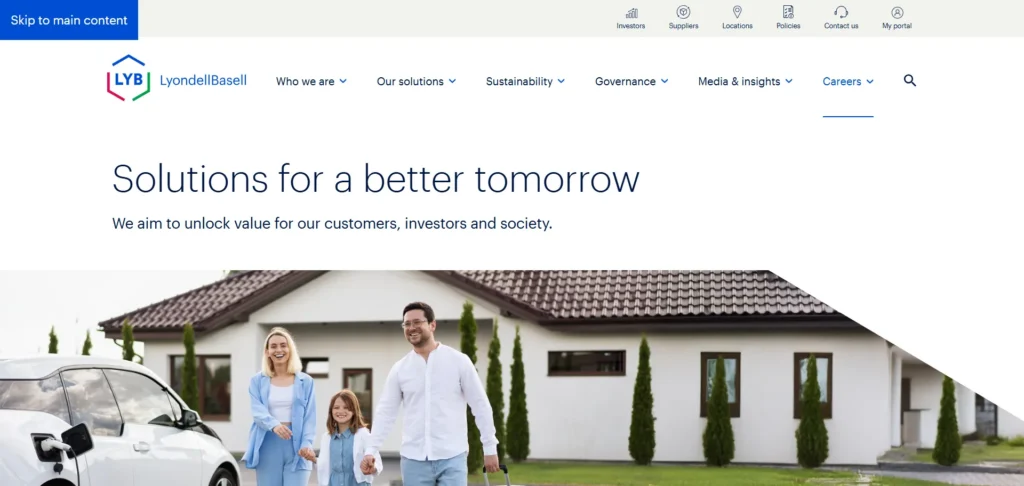
Role: producer route. LyondellBasell publishes an anhydrous isopropyl alcohol product that states North America availability and distinguishes its anhydrous product from USP material. It is a relevant direct-producer route when a buyer needs to qualify a defined solvent-grade IPA programme.
Ask for the exact grade, supplying site, specification, current documents, package, origin and destination-specific delivery terms. Do not carry an anhydrous product statement into a USP, laboratory or other requirement without product-specific confirmation.
3. Univar Solutions: IPA supplier and distributor
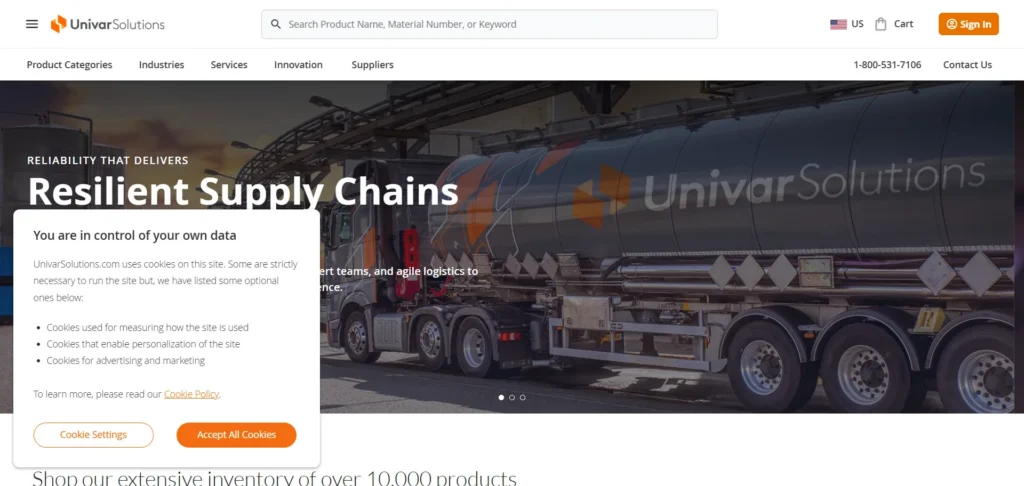
Role: supplier / distributor. Univar Solutions presents itself as an IPA supplier and distributor, with product options that may be relevant to industrial and formulation buyers. It is a commercial distribution route, not evidence that Univar manufactures every IPA product it offers.
Request the manufacturer or producer, grade, concentration, origin, specification, available packaging and document set for the exact lot. Confirm the proposed route rather than relying on a generic product family page.
4. Brenntag: IPA supplier and distributor
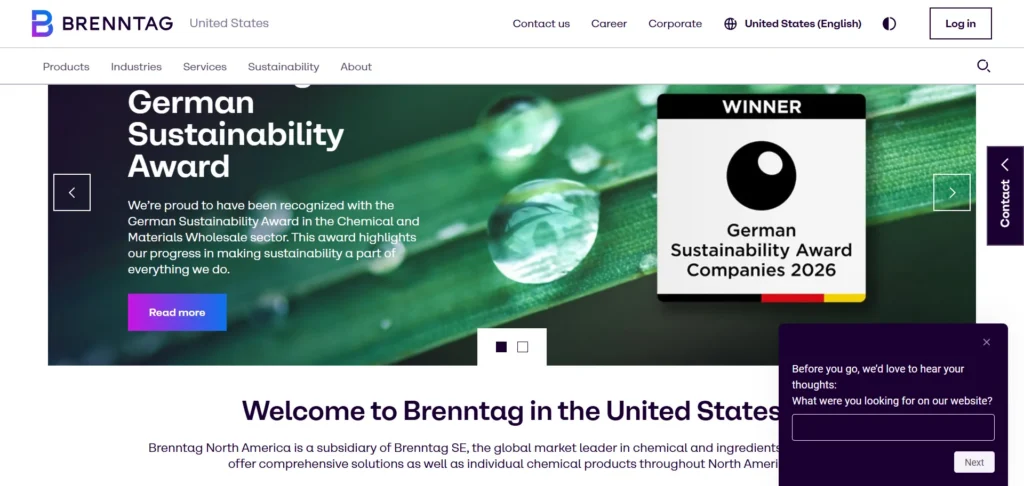
Role: supplier / distributor. Brenntag maintains a U.S. IPA product route and is relevant for buyers comparing distributor-led sourcing. Distributor coverage can be useful for commercial coordination, but it does not by itself establish the original producer or product origin.
Ask which grade and concentration are offered, who produced the quoted lot, what documents apply and how the material will be packaged and delivered to the stated destination.
5. CoreChem: industrial IPA supplier and distributor
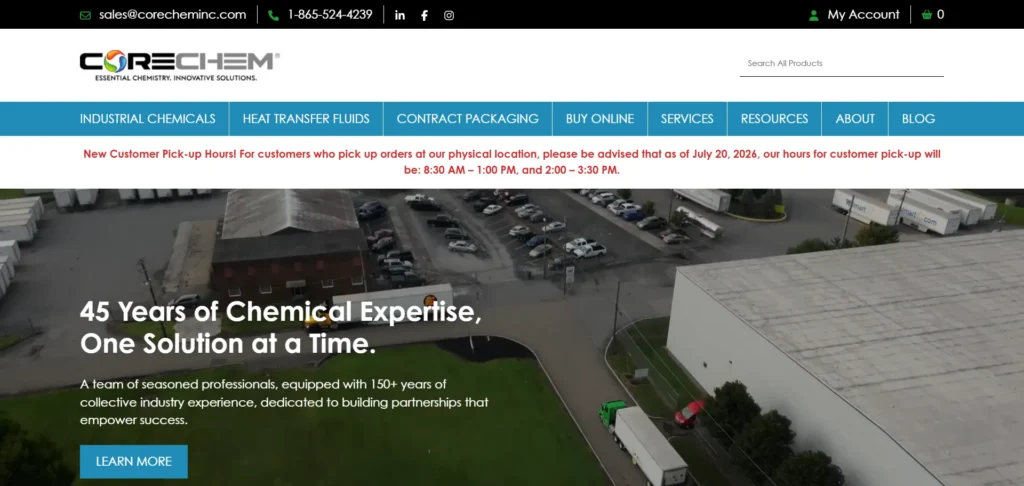
Role: supplier / distributor. CoreChem’s IPA page identifies a 99% industrial-grade product and a bulk supply route. It is useful when an industrial buyer is comparing a defined high-concentration product route, rather than a generic IPA name.
Confirm that the quotation matches the required concentration and grade, then request the current specification, SDS, source, package, MOQ and delivery basis. A displayed product or price range does not establish commercial terms for a different volume, destination or application.
6. Modern Chemical: solvent supplier and distributor
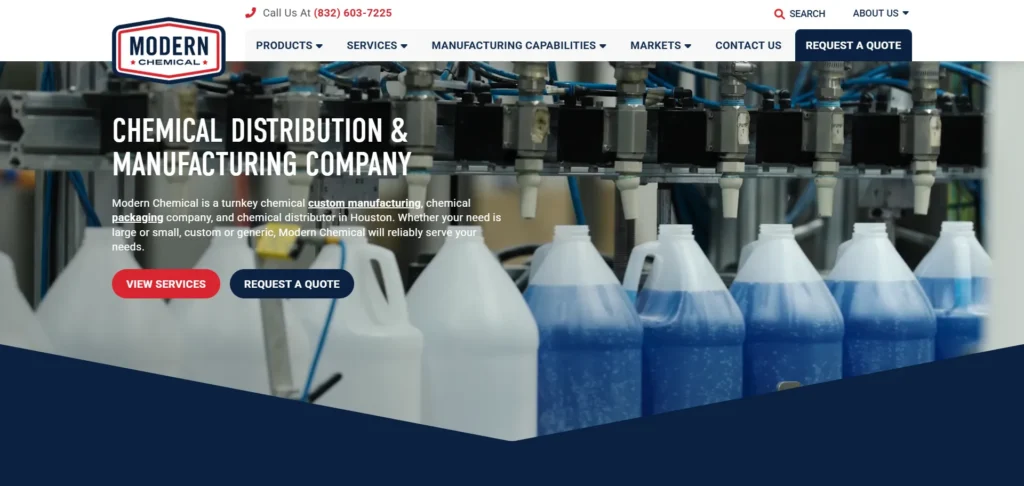
Role: supplier / distributor. Modern Chemical presents an IPA supplier and distributor route for solvent buyers. It is relevant for buyers who need to compare a distribution-led route against direct production or specialist sourcing.
State the required concentration, grade, volume, package and receiving location. Ask for the actual producer, product specification, current documents and origin that apply to the offered material.
7. Alliance Chemical: documented IPA manufacturer/supplier route
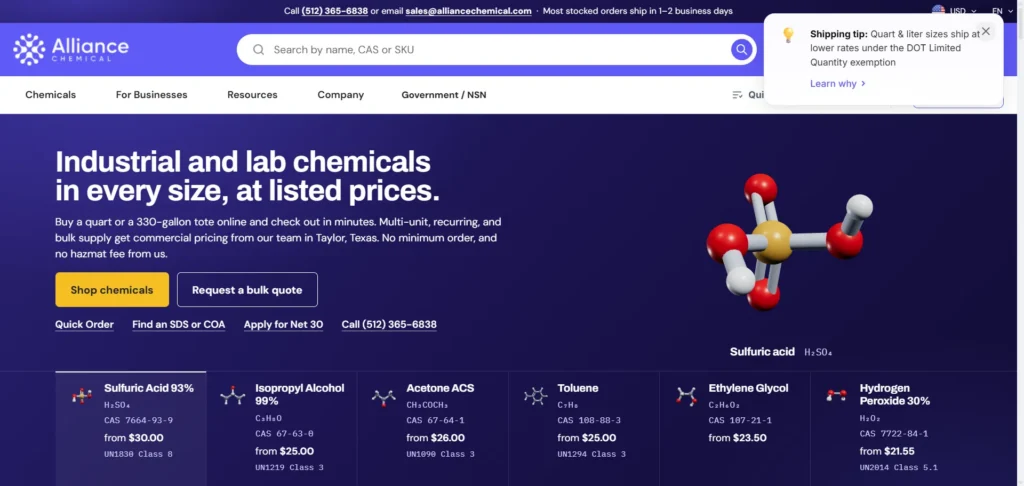
Role: manufacturer-record / supplier route. Alliance Chemical’s current documentation identifies it as manufacturer for specific IPA products, including a 70% USP-grade record. Its public IPA range also covers multiple concentrations and grades.
Treat this as evidence for the cited product rather than a blanket manufacturing claim. Confirm the exact concentration, grade, specification, lot documentation, packaging and commercial route before approval.
8. Ecolink: industrial IPA supplier
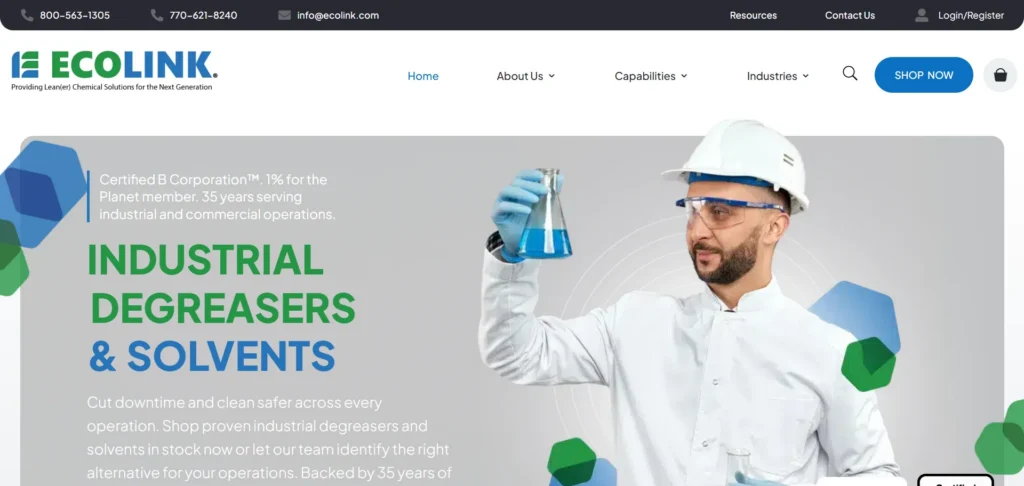
Role: industrial supplier. Ecolink lists a 99% IPA product in industrial pack formats, making it a relevant route for buyers comparing cleaning-solvent supply and packaging options.
Confirm the current product grade, source, pack, MOQ, documentation and destination-specific delivery terms. A product-page availability notice should be rechecked for the actual quantity and delivery point.
9. ChemCeed: specialty chemical supplier
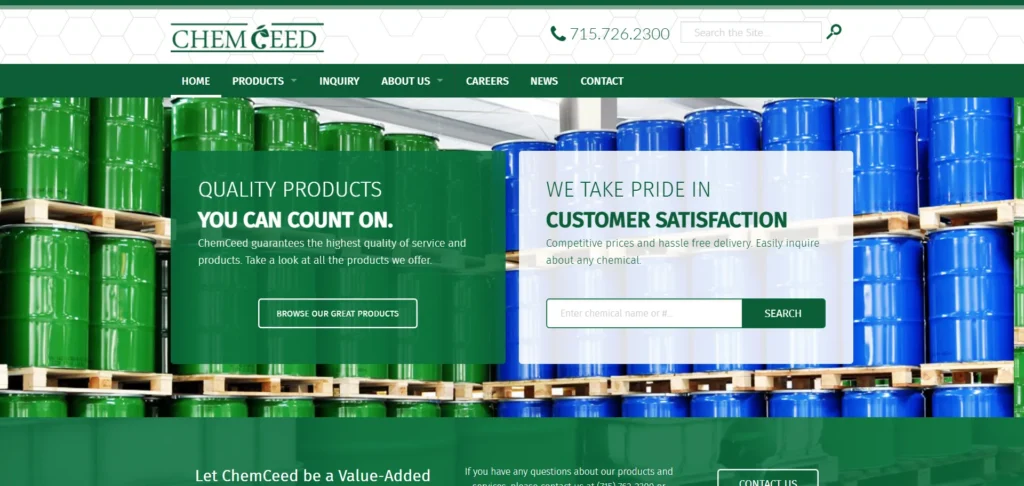
Role: specialty chemical supplier. ChemCeed’s solvent range lists isopropyl alcohol/isopropanol options across several stated grades. It is relevant when a buyer needs to investigate a specialty supplier route and make grade documentation central to the enquiry.
Specify the end use and approved grade. Confirm the product code, technical specification, quality documentation, origin, packaging and commercial route before treating any listed option as applicable.
10. Vigon International: specialty chemical supplier
Role: specialty chemical supplier. Vigon International publishes an isopropyl alcohol product route and associated product documentation. It belongs on a shortlist for buyers comparing specialty supply options rather than an asserted production relationship.
Request the current product specification, grade, origin, pack, SDS and CoA where required. Confirm the supplier’s commercial route and delivery terms for the exact request.
How to Compare Isopropyl Alcohol Manufacturers and Suppliers
| Decision factor | Direct producer route may suit | Supplier / distributor route may suit | Buyer input |
| Product origin | Direct source and manufacturing information are central | The buyer needs a commercially coordinated route | Required origin and traceability standard |
| Grade and concentration | A defined product needs producer-level technical discussion | A known grade can be sourced through a distribution route | Concentration, grade, test methods and impurity limits |
| Volume and continuity | Larger or recurring demand supports direct qualification | Multi-site delivery, mixed packs or sourcing flexibility are central | Volume, cadence and delivery locations |
| Documentation | A product-specific technical route is required | A distributor can coordinate a documented product offer | Specification, SDS, CoA where required and application needs |
Neither route is automatically better. Approve the specific product and commercial offer, not the company label. For a broader framework, see Elchemy’s guide to sourcing from manufacturers versus distributors.
What an Isopropyl Alcohol Supplier Needs in an RFQ
- Required material: isopropyl alcohol concentration, grade, product code if known, and relevant test methods or impurity limits.
- Use context: a high-level description sufficient to qualify the appropriate grade and documentation; do not rely on a generic use label.
- Quality documents: current specification, SDS, CoA where required, grade-specific certificates and any customer approval requirements. Use Elchemy’s supplier-approval checklist to structure the wider review.
- Source and traceability: required producer, country of origin, processing route or approved-source condition.
- Demand: initial order, annual volume, buying cadence and spot or recurring requirement.
- Logistics: destination, packaging, receiving constraints and required delivery date.
- Commercial basis: requested quote basis, MOQ, Incoterm, freight responsibility, quote validity and lead-time basis.
Use these chemical supplier-selection checkpoints to assess proposals against the same evidence. This is a procurement checklist, not a product-handling procedure.
What changes a bulk isopropyl alcohol quote
Bulk IPA quotes can differ because of concentration, grade, water and impurity limits, origin, package, volume, delivery point, transport classification, freight, trade terms and documentation requirements. A 70% solution, a 99% industrial solvent and a 99.9% reagent-grade material should not be compared as if they are the same offer.
Ask each candidate to quote the same approved specification and delivery basis. A lower unit price may reflect a different concentration, grade, source, packaging, document set or freight assumption. Keep continuity and alternative-source requirements visible in the RFQ; Elchemy’s guide to chemical supply-chain risks provides additional planning context.
If the decision is between alcohols rather than suppliers, route it through technical review. Elchemy’s denatured alcohol versus isopropyl alcohol guide is an ingredient-comparison resource, not a substitute for supplier qualification.
How Elchemy can support IPA sourcing
Elchemy is included as a supplier/sourcing partner and article publisher, not as a U.S. IPA manufacturer. Share the approved concentration, grade, volume, packaging preference, destination and documentation needs through the isopropyl alcohol quote pathway.
That supports review of potential product fit, source information, documentation and delivery options. It does not replace the buyer’s technical, regulatory, EHS or supplier-approval process. Before approval, obtain the current specification, SDS, CoA where applicable, origin and commercial terms.
FAQs
Where is isopropyl alcohol manufactured?
IPA is produced through multiple global and regional chemical routes. A company selling IPA in the United States may be a producer, importer, distributor or repackager. Request the actual producer, country of origin and processing route for the material proposed in the quote rather than inferring manufacture from a U.S. sales route.
Who sells 100% isopropyl alcohol?
Commercial offers are commonly described as 99%, 99.9% or another stated high-purity specification rather than a generic “100%” product. Suppliers in this guide may offer high-concentration IPA routes, but the buyer should request the exact assay, grade, water limit, documentation and packaging for the intended use.
Are isopropyl alcohol suppliers and manufacturers the same?
No. A producer manufactures IPA, while a supplier or distributor may source, package, warehouse and deliver it. Some companies can hold more than one role. Ask who produced the quoted material and which documents apply to the specific lot.
Is there a shortage of isopropyl alcohol?
Availability can change by grade, concentration, origin, packaging, location and transport route. Do not treat a general market statement as a current supply commitment. Request the supplier’s current lead-time basis, source continuity information and written delivery terms for the required material.
What is the difference between 70% and 99% isopropyl alcohol?
They are different commercial specifications. The appropriate choice depends on the approved use, concentration requirement, grade, water limit and documentation. Do not substitute one for the other without technical, regulatory and EHS review of the actual application.
Can Elchemy source isopropyl alcohol for U.S. buyers?
Elchemy provides a sourcing and quote pathway for a defined IPA requirement. Submit the concentration, grade, volume, packaging preference, destination and document requirements through the isopropyl alcohol product page. Availability and product fit are confirmed case by case.
Conclusion
The most useful way to compare isopropyl alcohol manufacturers and suppliers is to start with the approved concentration and grade, then qualify the producer or distributor role, origin, documents and delivery route. This 10-company list is a role-verified starting point, not a performance ranking.
When the requirement is defined, request an isopropyl alcohol quote with the specification, volume, destination and document needs to begin a documented sourcing review.