

At a Glance:
- 2025 brought 10-145% tariffs disrupting decades of free trade agreements
- USMCA protected some North American chemical trade but political will overrode guarantees
- US chemical industry faces $18B cost increases and potential 8,500 job losses
- China retaliation collapsed US polyethylene exports to 16-month lows
- Companies are nearshoring, diversifying suppliers, and renegotiating contracts
For 30 years, the US chemical industry operated under one assumption: trade barriers would keep falling. NAFTA eliminated tariffs with Canada and Mexico. The WTO reduced global duties. China joined the world trading system. Chemical companies built integrated supply chains spanning continents, specializing production where it made economic sense.
April 2025 shattered that assumption. President Trump announced sweeping reciprocal tariffs—10% baseline on nearly all imports, escalating to 145% on Chinese goods, 20% on EU products, and 25% on many others. Even USMCA partners Canada and Mexico initially faced 25% duties before temporary delays. The chemical industry went from expecting continued free trade to navigating the most aggressive protectionist policy in decades.
The debate over free trade vs tariffs isn’t theoretical for chemical manufacturers. It’s immediate and measurable. Companies that planned capacity expansions assuming tariff-free access now face stranded investments. Distributors watching margins evaporate from tariff-inflated costs are cutting staff. Specialty chemical makers depending on Chinese intermediates unavailable domestically have no good options.
Understanding what’s happening—and what comes next—matters for every business touching the chemical supply chain.
Free Trade vs Tariffs: The Fundamental Policy Tension
Free trade and tariffs represent opposite philosophies about how economies should interact.
Free Trade Philosophy:
Eliminate barriers. Let countries specialize in what they do best. Trade freely. Consumers benefit from lower prices. Companies access wider markets. Competition drives innovation and efficiency. Resource allocation follows economic logic rather than political boundaries.
The chemical industry thrived under this model. US Gulf Coast petrochemical facilities leveraged cheap shale gas to produce ethylene and polyethylene. Canadian plants specialized in certain derivatives. Mexican facilities handled labor-intensive processing and formulation. Each location contributed comparative advantages. The system worked.
Under free trade agreements like USMCA, chemical products move across North American borders duty-free. Regulatory cooperation reduces duplication. Companies invest knowing market access won’t disappear due to sudden policy shifts. The predictability enables long-term planning.
Tariff Philosophy:
Protect domestic industry. Correct trade imbalances. Use import duties to make foreign goods more expensive, encouraging local production. Create leverage in negotiations. Force trading partners to change behavior (like reducing fentanyl trafficking). Accept short-term disruption for long-term industrial policy goals.
The 2025 tariff wave followed this logic. The administration argued that decades of free trade produced massive trade deficits, hollowed out manufacturing, and enriched trading partners at America’s expense. Tariffs would reverse these trends by making imports expensive enough that companies relocate production to the US.
For chemical manufacturers, the choice isn’t philosophical. It’s practical. Both approaches create different operating environments with specific costs and benefits.
Free Trade Agreement and Tariffs: When Treaties Meet Political Reality
USMCA was supposed to guarantee tariff-free chemical trade in North America. It replaced NAFTA in 2020 with updated provisions specifically designed for the chemical sector. The agreement included:
- Zero tariffs on qualifying chemical products
- Simplified rules of origin (chemical reaction rule)
- Sectoral annex promoting regulatory cooperation
- Protection from sudden tariff implementation
Then 2025 happened. The administration imposed 25% tariffs on Canada and Mexico—overriding USMCA guarantees. This shocked the industry. Free trade agreements were supposed to provide certainty. Manufacturers had invested billions based on treaty commitments.
“For example, the USMCA (which had guaranteed tariff-free chemical trade in North America) was essentially overridden by the 2025 tariffs on Canada/Mexico—demonstrating that political will can trump trade treaties,” noted analysts tracking the situation.
After industry outcry and negotiations, the administration delayed tariffs on USMCA-compliant goods until April 2, then later clarified that products meeting USMCA requirements would remain tariff-free. Non-compliant products face 10-25% duties. This created two-tiered trade—some chemicals duty-free, others heavily taxed—forcing companies to verify compliance product by product.
What This Means for Free Trade Agreements:
Political will matters more than treaty text. When administrations decide trade agreements no longer serve their interests, they find ways around commitments. This uncertainty undermines the core value of free trade agreements: predictable market access enabling long-term investment decisions.
Companies can’t rely solely on treaty protections. Strategic planning must account for political risk that didn’t exist under previous frameworks.
The 2025 Tariff Reality: Market Impact on US Chemical Industry
Numbers tell the story better than rhetoric.
| Impact Category | Magnitude | Source |
| Total cost increase across chemical industry | $18 billion annually | Alliance for Chemical Distribution |
| Projected job losses in distribution sector | 8,500 jobs | ACD / John Dunham & Associates analysis |
| US PE exports to China | Collapsed to 16-month low | ICIS data (April 2025) |
| Effective tariff rate on Chinese ethylene derivatives | 45%+ (6.5% base + 25% Section 301 + 10-35% reciprocal) | HTS analysis |
| China retaliatory tariff on US chemicals | 125% | Chinese government announcement |
| Chemical cost inflation projection | 8-15% | Industry estimates |
| US chemical trade surplus (2024) | $28 billion | US Census Bureau |
| Jobs dependent on chemical exports | 200,000 | American Chemistry Council |
Specific Product Impacts:
- HDPE from China: Faces combined duties exceeding 70% in worst scenarios
- Monoethylene glycol: Freight costs up 170-228%, underlying prices up 33-37%
- Acrylic acid: Effective rates reaching 40%, triggering domestic sourcing shifts
- Specialty resins (epoxy, PET, ABS): Compounded Section 301 and reciprocal duties squeezing margins
- Benzene and aromatics from EU: Orders delayed due to 15-20% tariffs affecting automotive customers
Supply Chain Disruption:
Lead times extended dramatically. Products that moved through ports in days now take weeks. Additional documentation and customs reviews slow clearance. Compliance burden increased—determining exact tariff rates requires navigating complex HTS classifications, country-of-origin rules, and exemption applications.
Small and medium distributors lack expertise for this complexity. They’re hiring customs brokers and trade consultants—another cost layer. Larger companies have advantages here, widening competitive gaps.
Strategic Business Responses: How Companies Are Adapting

Chemical companies aren’t sitting idle. Multiple adaptation strategies are emerging:
1. Nearshoring and Reshoring Production
Some manufacturers are relocating facilities closer to end markets. Building US plants to serve US customers avoids import tariffs. Expanding Mexican operations under USMCA serves North America duty-free. Establishing European production for European customers eliminates transatlantic tariffs.
Pharmaceutical companies announced major commitments: Johnson & Johnson pledged $55 billion, Eli Lilly committed $27 billion to double US manufacturing, Merck plans a $1 billion facility. These moves take 3-5 years to complete but position companies for a higher-tariff future.
2. Supplier Diversification
Companies over-reliant on Chinese suppliers are developing alternatives in India, Southeast Asia, and Latin America. Costs might exceed China even before tariffs, but avoid tariff-laden Chinese imports.
Qualifying new suppliers takes months—technical evaluations, quality testing, regulatory approvals. Companies that started this process during earlier trade tensions (2018-2019) are better positioned now.
3. Contract Renegotiation
Long-term supply contracts written before 2025 don’t account for tariff costs. Suppliers and customers are renegotiating burden-sharing. Some contracts now include tariff escalation clauses—automatic price adjustments when rates change.
Negotiating leverage depends on alternatives available to each party. In specialty chemicals with few suppliers, manufacturers pass through most costs. In commodity chemicals with global competition, customers resist increases.
4. Tariff Engineering and Classification Review
Companies are reviewing product classifications to find lower tariff rates. Sometimes slight reformulation changes HTS classification. Sometimes adjusting country-of-origin through assembly operations qualifies products for preferential treatment.
These tactics operate legally but require expertise. Trade lawyers and customs specialists have become essential advisors.
5. Inventory Builds and Forward Buying
When tariff implementation dates approach, importers stockpile. Better to bring three months supply at current rates than face higher costs next month. This creates demand surges followed by lulls, making production planning chaotic.
Some distributors report customers hoarding—ordering far more than needed to lock in pre-tariff pricing. This distorts demand signals throughout supply chains.
The Broader Economic Impact: Winners and Losers
Not everyone loses from tariffs. Some domestic producers benefit when import competition faces duties. But overall, the chemical industry faces net negative impacts.
Losers:
- Chemical distributors: Margin compression from higher costs and customer pushback
- Specialty chemical manufacturers: Depend on imported intermediates with no domestic alternatives
- Export-focused producers: Face retaliatory tariffs in key markets (China, EU, Canada)
- Downstream industries: Automotive, construction, consumer goods face higher input costs
- Small/medium companies: Lack resources to navigate complex trade compliance
Potential Winners:
- Domestic producers of import-competing products: May capture market share if imports become uncompetitive
- Companies with diversified global production: Can redirect products to avoid tariff-affected routes
- Trade compliance consultants: Demand for expertise surges
- Countries exempt from tariffs: May attract redirected production capacity
Overall, economists at Jefferies estimate global chemical industry faces 0.8% headwind, with chemicals serving durable goods and clothing markets seeing 6% demand impact. Atradius projects global chemical production growing only 2.1% in 2025 and 1.5% in 2026—down from 3.3% in 2024—partly due to tariff impacts.
Looking Forward: Uncertainty as the Only Certainty
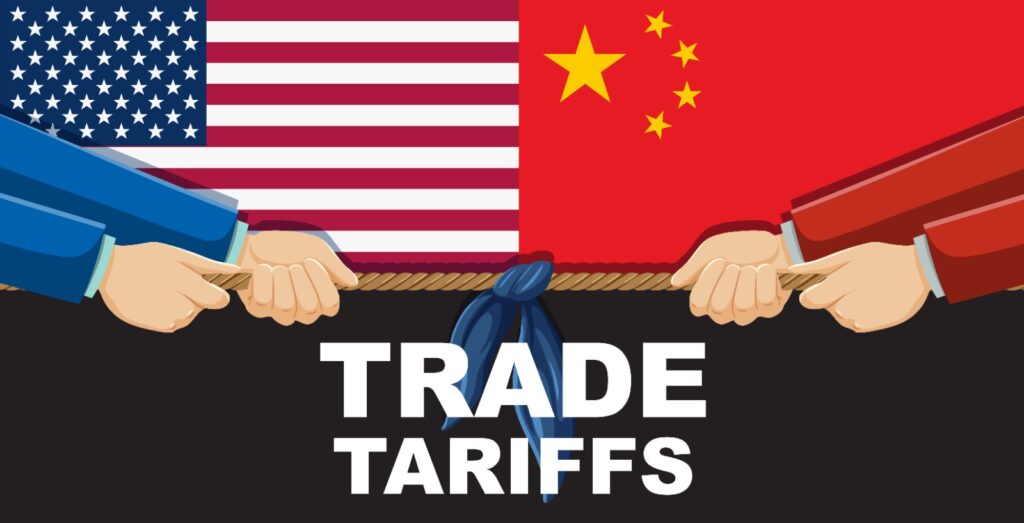
The 90-day pause on most reciprocal tariffs (excluding China) suggests potential negotiations. Seventy-five countries contacted the administration seeking deals. But substance remains unclear.
China shows no signs of conciliation. The 145% tariff on Chinese goods appears permanent unless major concessions occur. This forces permanent supply chain reconfiguration away from China for chemicals serving US markets.
USMCA protection for compliant goods provides some stability for North American trade. But the 2025 experience proved that treaty guarantees can be overridden when political priorities shift.
European negotiations could reduce the 20% tariff, but Germany’s chemical industry association notes Europe “cannot turn the other cheek” and must respond proportionally to protect its interests. Finding balance between appropriate response and self-harm is challenging.
What Companies Should Do:
- Scenario planning: Model outcomes ranging from further protectionism to renewed liberalization
- Supply chain flexibility: Develop multiple sourcing options for critical materials
- Regulatory engagement: Participate in industry group advocacy and government consultations
- Customer communication: Transparent discussions about cost impacts and pricing adjustments
- Investment caution: Delay major capacity additions until trade policy stabilizes
Conclusion
Free trade vs tariffs represents more than academic economic debate. For the US chemical industry, it’s the difference between integrated global supply chains and fragmented regional markets. It’s the difference between specialization-driven efficiency and forced localization despite higher costs.
The 2025 tariff wave demonstrates that decades of free trade momentum can reverse quickly when political priorities shift. USMCA provided some protection but political will trumped treaty language. The result: higher costs, supply disruption, job losses, and strategic uncertainty.
Chemical companies must adapt to this new reality while hoping for eventual policy stabilization. Those that succeed will be flexible, diversified, and prepared for continued volatility. Those that fail to adapt will find margins crushed and competitiveness eroded.
For businesses navigating the complex intersection of free trade and tariffs in chemical sourcing, Elchemy connects manufacturers and distributors with certified suppliers across multiple regions, providing strategic sourcing options that help mitigate tariff risks. Whether diversifying away from high-tariff countries, qualifying suppliers in free trade zones, or developing regional supply networks, explore sourcing solutions designed to protect your supply chain and maintain profitability despite trade policy uncertainty.