

At a Glance
- Chemical difference: Dichloromethane has two chlorine atoms; chloroform has three
- Volatility: DCM evaporates faster (boiling point 39.6°C vs 61.2°C)
- Toxicity: Chloroform is significantly more toxic and carcinogenic
- Solvent strength: Chloroform dissolves more compounds due to higher polarity
- Regulatory status: Chloroform faces stricter controls due to health concerns
- Laboratory use: DCM preferred for extractions; chloroform for NMR spectroscopy
- Cost: DCM is generally more economical for bulk applications
- Environmental impact: Both deplete ozone; DCM has shorter atmospheric lifetime
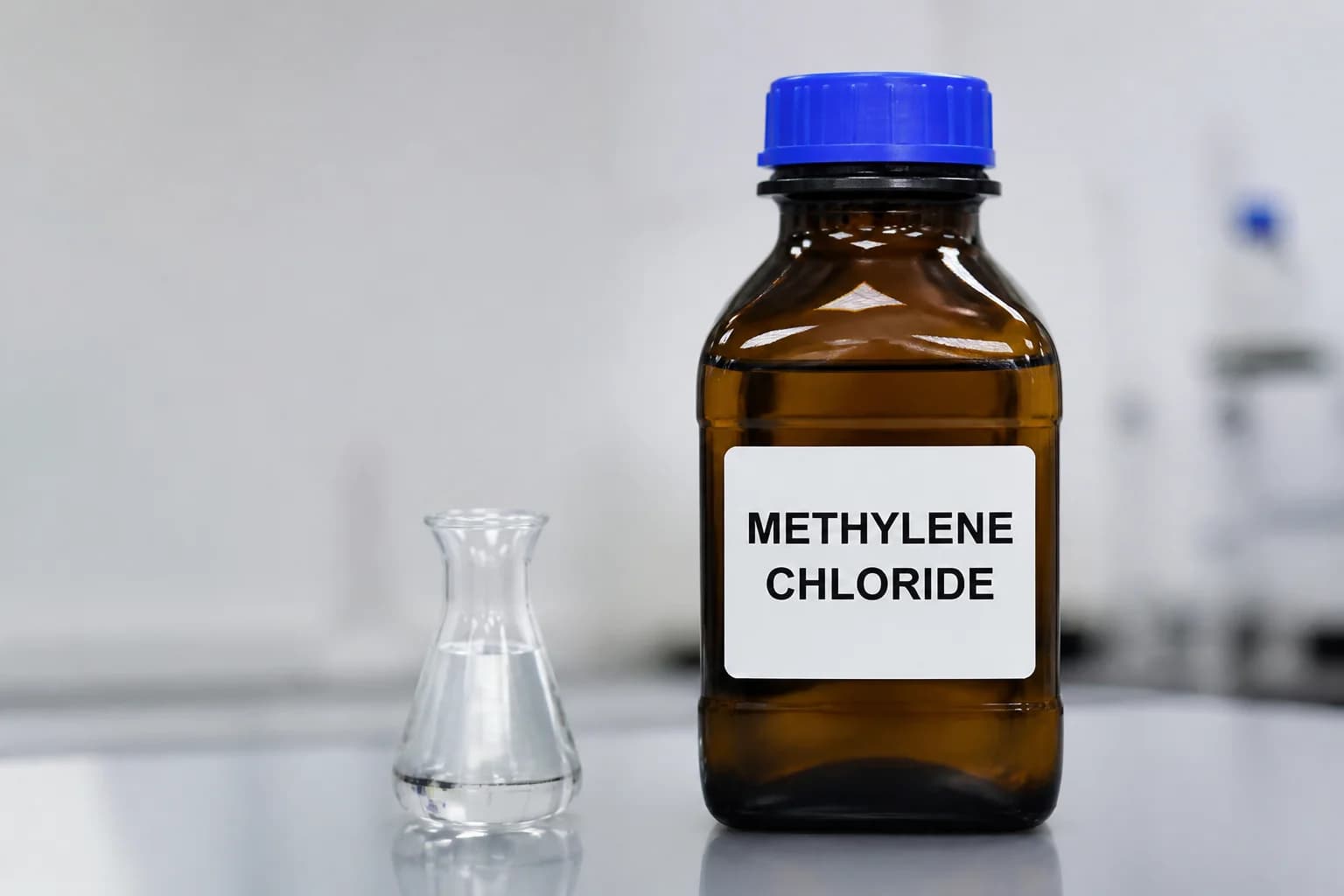
Walk into any chemistry laboratory and you’ll find these two clear, sweet-smelling liquids stored in dark glass bottles. Dichloromethane and chloroform have served as workhorse solvents for over a century, yet choosing between them involves weighing extraction efficiency against toxicity, solvent strength against safety protocols, and tradition against modern alternatives.
The debate of dichloromethane vs chloroform goes beyond simple technical specifications. Regulatory pressures have reshaped how chemists view these solvents. What was once standard laboratory practice now requires justification, documentation, and sometimes replacement with less effective but safer alternatives. Understanding the practical differences between DCM and chloroform helps chemists make informed decisions balancing performance requirements with health and environmental responsibilities.
Dichloromethane vs Chloroform: Chemical Structure
The difference between these solvents starts with a single chlorine atom that dramatically changes their properties.
Dichloromethane (DCM, Methylene Chloride)
Dichloromethane contains one carbon atom bonded to two hydrogen atoms and two chlorine atoms (CH₂Cl₂). This structure creates a moderately polar molecule with distinct chemical behavior. The two C-Cl bonds point in different directions, creating a dipole moment of 1.60 D.
The molecular weight of 84.93 g/mol makes DCM relatively light compared to other chlorinated solvents. This low molecular weight contributes to high volatility—DCM evaporates readily at room temperature, requiring careful handling to prevent atmospheric release and worker exposure.
Chloroform (Trichloromethane)
Chloroform features three chlorine atoms bonded to a single carbon with one remaining hydrogen atom (CHCl₃). The additional chlorine increases molecular weight to 119.38 g/mol and creates a more polar solvent with a dipole moment of 1.04 D.
The three bulky chlorine atoms create a molecule with greater London dispersion forces between molecules, contributing to chloroform’s higher boiling point and better dissolving power for certain compounds. This structure also makes chloroform more chemically reactive and potentially more hazardous to human health.
| Property | Dichloromethane (DCM) | Chloroform |
| Formula | CH₂Cl₂ | CHCl₃ |
| Molecular weight | 84.93 g/mol | 119.38 g/mol |
| Boiling point | 39.6°C (103.3°F) | 61.2°C (142.2°F) |
| Melting point | -96.7°C | -63.5°C |
| Density | 1.33 g/mL | 1.48 g/mL |
| Vapor pressure | 435 mmHg at 20°C | 197 mmHg at 20°C |
| Dipole moment | 1.60 D | 1.04 D |
| Dielectric constant | 8.93 | 4.81 |
Solvent Polarity and Dissolving Power
DCM Polarity
Dichloromethane sits in the middle of the polarity spectrum. It dissolves many organic compounds while remaining immiscible with water—a perfect combination for liquid-liquid extraction. The moderate polarity allows DCM to extract compounds ranging from relatively polar (like certain alkaloids) to non-polar (like hydrocarbons).
The dielectric constant of 8.93 indicates substantial polarity. This makes DCM effective for dissolving polar organic compounds that non-polar solvents like hexane cannot touch, yet it won’t dissolve highly polar compounds like salts or sugars that require water or methanol.
Chloroform Polarity
Despite having three chlorine atoms, chloroform actually shows lower polarity than DCM based on dipole moment. The tetrahedral arrangement of three chlorines creates partial cancellation of individual C-Cl dipoles. However, chloroform’s higher molecular weight and polarizability give it excellent dissolving power for a wide range of compounds.
Chloroform particularly excels at dissolving fats, oils, resins, and many organic polymers. Its ability to break hydrogen bonds makes it valuable for dissolving compounds that other solvents struggle with. This dissolving power explains chloroform’s historical use in extractions despite its toxicity concerns.
Toxicity and Health Hazards

The health risks associated with these solvents represent the most critical difference between them.
Dichloromethane Toxicity
DCM causes acute health effects through inhalation, skin absorption, and ingestion. The body metabolizes dichloromethane to carbon monoxide, which binds to hemoglobin and reduces oxygen-carrying capacity. This creates a delayed toxicity where symptoms appear hours after exposure ends.
Acute exposure effects:
- Dizziness and lightheadedness
- Headaches and nausea
- Central nervous system depression
- Elevated carboxyhemoglobin levels
- Potential cardiac effects in susceptible individuals
The IARC classifies DCM as “possibly carcinogenic to humans” (Group 2B) based on animal studies showing liver and lung tumors. Human epidemiological evidence remains limited, with some studies suggesting elevated cancer risks in workers with heavy exposure.
OSHA permissible exposure limit: 25 ppm over 8 hours
Chloroform Toxicity
Chloroform presents significantly greater health risks than DCM. Historical use as an anesthetic killed thousands before safer alternatives emerged. The liver and kidney toxicity from chloroform exposure can cause permanent organ damage even from single acute exposures.
Health concerns:
- Severe liver and kidney damage at moderate exposures
- Central nervous system depression (was used as anesthetic)
- Reproductive toxicity in animal studies
- IARC classification as “possibly carcinogenic” (Group 2B)
- Metabolizes to phosgene, a highly toxic compound
- Cardiac sensitization causing irregular heartbeats
Studies show chloroform causes liver and kidney tumors in rodents at concentrations workers might encounter. While human cancer evidence remains inconclusive, the animal data prompted strict regulatory controls.
OSHA permissible exposure limit: 50 ppm ceiling (not to be exceeded)
The greater toxicity of chloroform versus DCM has driven many laboratories to substitute DCM where technically feasible, despite DCM’s own health concerns.
DCM vs Chloroform in Laboratory Extractions

The practical differences between these solvents appear most clearly in routine laboratory work.
DCM Extraction Performance
Dichloromethane dominates liquid-liquid extraction procedures in modern laboratories. Its combination of moderate polarity, low boiling point, and relative safety (compared to chloroform) makes it the default choice for separating organic compounds from aqueous solutions.
Advantages in extractions:
- Lower boiling point allows easier solvent removal by evaporation
- Better layer separation due to lower viscosity
- Less toxic than chloroform for routine work
- Adequate extracting power for most organic compounds
- Forms clear solvent layers with aqueous phases
The high volatility that makes DCM easy to remove also creates handling challenges. Extractions require careful technique to prevent solvent loss. Fume hoods must maintain proper airflow to protect workers from vapor exposure.
Chloroform Extraction Performance
Chloroform extracts certain compounds more efficiently than DCM due to its greater dissolving power. Alkaloids, some pigments, and highly lipophilic compounds partition into chloroform more completely than into dichloromethane.
When chloroform outperforms DCM:
- Extracting compounds with strong hydrogen bonding
- Removing fats and waxes from plant materials
- Isolating certain alkaloids from natural sources
- Extracting compounds from highly polar aqueous solutions
- Working with materials that form emulsions in DCM
The higher boiling point makes chloroform easier to handle during extraction—less evaporative loss means better recovery. However, the health risks generally outweigh this practical advantage, leading most laboratories to accept slightly lower extraction efficiency with DCM rather than expose workers to chloroform.
Analytical Applications
Dichloromethane in Analysis
Gas chromatography and HPLC sample preparation frequently use DCM for dissolving analytes and preparing calibration standards. The solvent’s volatility assists in concentration steps before instrumental analysis. However, DCM’s volatility also means standards can change concentration over time if not properly sealed.
Chloroform in NMR Spectroscopy
Deuterated chloroform (CDCl₃) serves as the most common NMR solvent, far surpassing DCM use in this application. The reasons are both historical and practical:
- Widely available in deuterated form
- Dissolves most organic compounds effectively
- Provides good chemical shift dispersion
- Relatively unreactive with most samples
- Standard reference for chemical shift reporting
While CD₂Cl₂ (deuterated DCM) exists, its lower boiling point makes it less convenient for NMR work requiring variable temperature control or longer acquisition times.
Regulatory and Environmental Considerations
Ozone Depletion
Both solvents contribute to stratospheric ozone depletion through photochemical reactions. Chloroform’s longer atmospheric lifetime (0.5 years vs 0.4 years for DCM) gives it slightly greater ozone depletion potential. However, both remain in use because they aren’t covered under the Montreal Protocol like CFCs and other major ozone depleters.
Waste Disposal Requirements
Laboratories must handle chlorinated solvent waste as hazardous waste requiring specialized disposal:
- Never pour down drains
- Collect separately from non-halogenated solvents
- Store in compatible containers (avoid aluminum with chloroform)
- Label with accumulation start date
- Arrange pickup through licensed hazardous waste haulers
- Maintain disposal records per EPA requirements
Regulatory Trends
European REACH regulations classify both solvents as substances of very high concern. Some research institutions have implemented policies minimizing or eliminating chloroform use except where scientifically essential. DCM faces less severe restrictions but remains under regulatory scrutiny.
The trend points toward reducing use of both solvents through:
- Green chemistry solvent selection guides
- Method development with safer alternatives (ethyl acetate, 2-methylTHF)
- Risk assessments justifying continued use
- Engineering controls and exposure monitoring
Cost and Availability
Economic Factors
DCM typically costs less per liter than chloroform in bulk quantities, though prices fluctuate with feedstock costs and regulatory pressures. For industrial applications requiring large volumes, this cost difference influences solvent selection.
Chloroform availability has declined in some regions as manufacturers exit the market due to liability concerns. This reduced supply can create procurement challenges for laboratories requiring chloroform for specific applications where substitutes don’t work.
Sourcing Laboratory-Grade Solvents
For laboratories, research institutions, and industrial facilities requiring dichloromethane or chloroform for analytical work, extractions, or synthesis, sourcing from suppliers who provide complete safety documentation, certificates of analysis, and regulatory compliance support ensures both worker safety and method reliability. Elchemy’s technology-driven platform connects research and industrial organizations with verified suppliers of laboratory-grade solvents meeting HPLC, GC, and ACS specifications. Founded by engineers from IIT Bombay, IIT Delhi, and IIM Ahmedabad, Elchemy provides transparent access to quality chemicals from vetted global suppliers, complete with proper handling guidance and documentation supporting laboratory safety programs.
Conclusion
The choice between dichloromethane vs chloroform fundamentally balances extraction efficiency against health risks. DCM offers adequate dissolving power with lower toxicity, faster evaporation, and better regulatory acceptance. Chloroform provides superior extraction of certain compounds but imposes greater health hazards and stricter handling requirements. Modern laboratories default to DCM for liquid-liquid extractions except where chloroform’s specific properties prove essential. The trend toward greener chemistry pushes both solvents toward replacement with safer alternatives like ethyl acetate or cyclopentyl methyl ether, though complete elimination remains technically challenging for specialized applications where these chlorinated solvents still outperform available substitutes.