

At a Glance
- What nonylphenol is
- Why it is considered an endocrine disruptor
- Common sources and everyday exposure
- How it enters the environment
- Environmental persistence and bioaccumulation
- Effects on aquatic life
- Potential human health concerns
- Regulatory status and global restrictions
Nonylphenol doesn’t make headlines like other environmental contaminants, but this industrial chemical has been quietly accumulating in waterways, wildlife, and human tissues for decades. It appears in products most people use daily—from cleaning supplies to cosmetics—yet few consumers have heard of it. The reason for concern is simple: nonylphenol mimics estrogen in the body, disrupting hormonal systems in ways that scientists are still working to fully understand.
Understanding what is nonylphenol requires examining both the compound itself and its parent chemicals, nonylphenol ethoxylates, which are widely used industrial surfactants. This breakdown product is more toxic and persistent than the original compounds, creating an environmental problem that has prompted bans in several countries while remaining largely unregulated in others.
What Is Nonylphenol?
Nonylphenol is an organic chemical compound consisting of a phenol molecule attached to a nine-carbon (nonyl) chain. The industrial production process creates approximately 20 different isomers, with para-substituted nonylphenol being the predominant form. The molecular structure features both hydrophobic (hydrocarbon tail) and hydrophilic (phenol group) portions, giving it surfactant-like properties.
The compound rarely appears in commercial products directly. Instead, nonylphenol forms primarily through environmental degradation of nonylphenol ethoxylates—non-ionic surfactants used extensively in industrial detergents, paints, pesticides, plastics, and household cleaning products. When these ethoxylates enter wastewater treatment plants, biodegradation transforms them into nonylphenol and other metabolites that are actually more toxic and environmentally persistent than the parent compounds.
Key physical and chemical properties:
| Property | Value |
| Molecular formula | C₁₅H₂₄O (predominant isomer) |
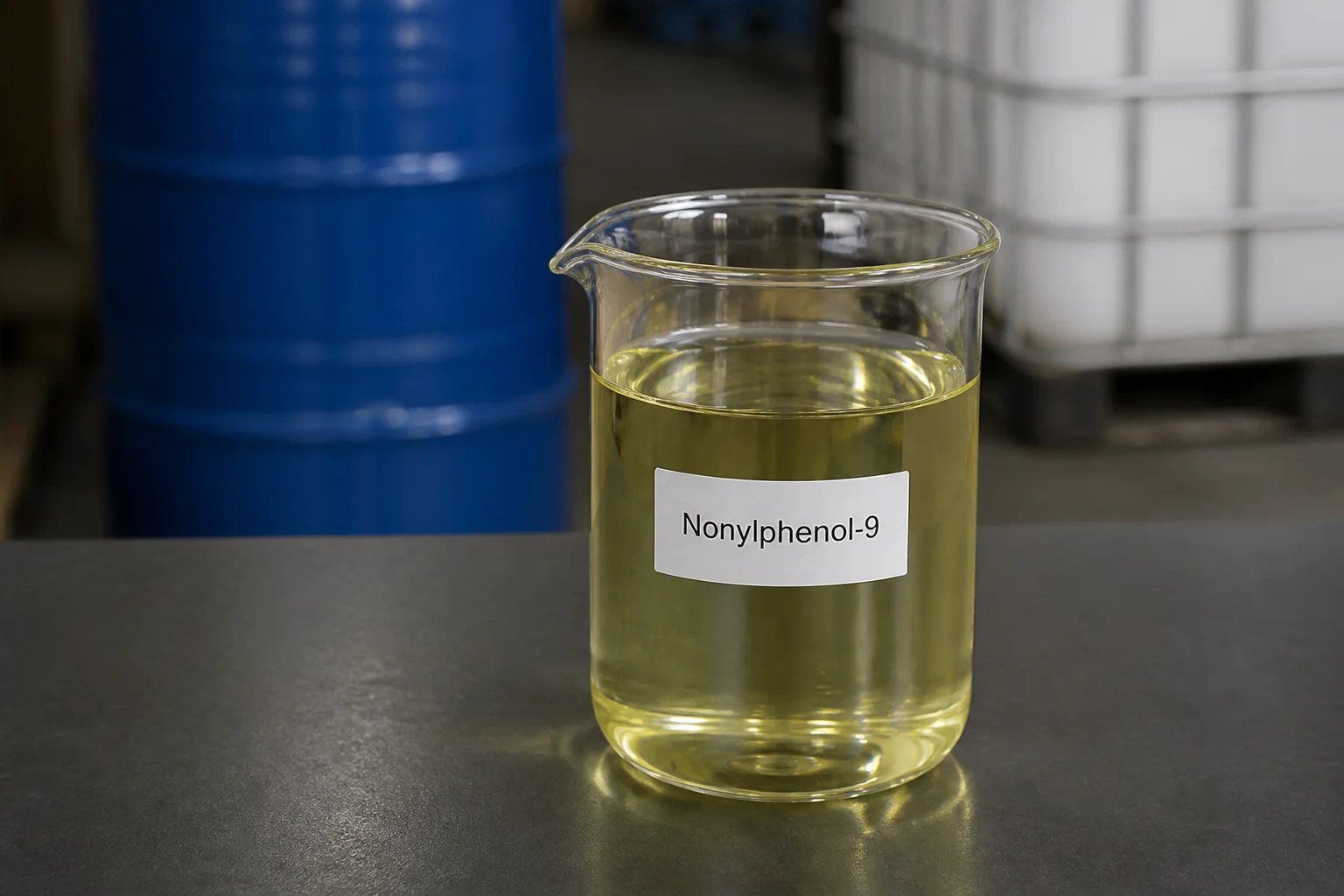
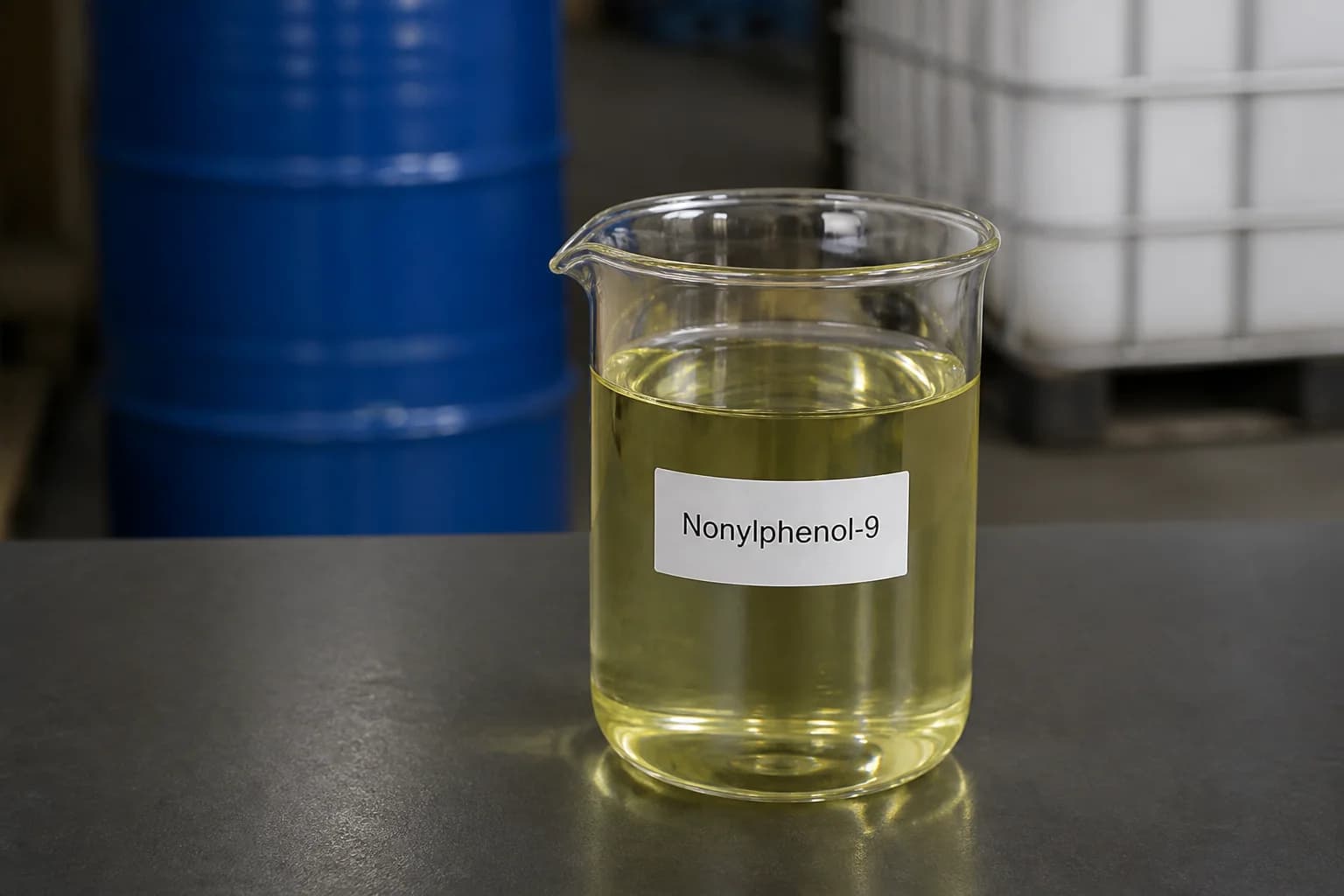
| Appearance | Clear to light yellow viscous liquid |
| Log Kow | 4.48 (highly hydrophobic) |
| Water solubility | Very low (6.35 mg/L at 25°C) |
| Melting point | -10°C |
| Boiling point | 293-297°C |
| Production volume (US) | 154,200 tons/year |
| Production volume (Europe) | 73,500 tons/year |
Origins and Pathways into the Environment
Industrial production: Manufacturers synthesize nonylphenol through acid-catalyzed alkylation of phenol with nonenes (nine-carbon olefins). This intentional production creates nonylphenol as an intermediate for making nonylphenol ethoxylates and other industrial chemicals.
Environmental degradation: Most environmental nonylphenol originates from the breakdown of nonylphenol ethoxylates in wastewater treatment plants, receiving waters, and soil. The biodegradation pathway shortens the ethoxylate chain progressively until only nonylphenol remains. Ironically, this breakdown product persists far longer than the original compound meant to biodegrade.
Major release sources:
- Wastewater treatment plant effluent
- Industrial discharge
- Agricultural runoff from treated sewage sludge applied to fields
- Landfill leachate
- Manufacturing facilities producing alkylphenols
The hydrophobic nature causes nonylphenol to partition into organic matter rather than remaining dissolved in water. It accumulates in sewage sludge (concentrations up to 2,000 mg/kg) and river sediments (up to 1,000 mg/kg), where it can persist for years.
Nonylphenol Toxicity: Endocrine Disruption Effects
The primary concern with nonylphenol centers on its ability to mimic the hormone estrogen, classifying it as an endocrine-disrupting chemical (EDC).
Mechanism of Action
Nonylphenol binds to estrogen receptors (ERα and ERβ), competing with natural estrogen (17β-estradiol) for receptor sites. The binding affinity is weak—approximately 100,000 times less potent than natural estradiol. However, environmental concentrations can be sufficiently high to compensate for this low potency, creating measurable biological effects.
Documented effects in aquatic organisms:
- Feminization of male fish (intersex characteristics)
- Production of vitellogenin (egg yolk protein) in males
- Reduced sperm counts and testicular atrophy
- Altered sex ratios in offspring
- Decreased survival of juveniles
- Effects observed at concentrations as low as 8.2 μg/L
Human Health Concerns

The discovery of nonylphenol’s estrogenic properties occurred accidentally in 1991 when researchers noticed breast tumor cells proliferating unexpectedly. Investigation revealed that nonylphenol leaching from polystyrene laboratory tubes was causing the effect.
Human exposure pathways:
- Contaminated food (particularly seafood from polluted waters)
- Drinking water (though levels typically low)
- Food packaging materials
- Cleaning products and cosmetics
- Indoor dust and air
Research has detected nonylphenol in human breast milk at concentrations around 32 ng/mL, with levels correlating positively with fish consumption. This raises particular concern because infants represent a vulnerable population during critical developmental stages.
Potential health effects under investigation:
- Reproductive system disruption
- Neurological development impacts
- Altered memory function
- Immune system effects
- Possible contribution to hormone-dependent cancers
Bioaccumulation and Persistence
Nonylphenol’s lipophilic (fat-loving) structure allows it to accumulate in adipose tissue and organisms’ fatty tissues. Bioconcentration factors in aquatic organisms range from 10 to 1,000 times ambient water concentrations.
Environmental persistence:
- Surface water: Several weeks to months
- Sediment: Many years (half-life >60 years in some studies)
- Soil: Months to years depending on conditions
- Does not readily mineralize under anaerobic conditions
Nonylphenol SDS: Safety and Handling Information

Safety Data Sheets for nonylphenol highlight multiple hazard classifications:
Health hazards:
- Acute toxicity (harmful if swallowed, inhaled, or contacts skin)
- Skin corrosion/irritation
- Serious eye damage
- Respiratory irritation
- Reproductive toxicity (Category 2)
- Aquatic toxicity (very toxic, long-lasting effects)
Handling precautions:
- Use in well-ventilated areas
- Wear protective gloves, clothing, eye protection, and face protection
- Avoid release to the environment
- Do not eat, drink, or smoke when handling
- Wash thoroughly after handling
Storage requirements:
- Keep container tightly closed
- Store in cool, well-ventilated area
- Keep away from heat, sparks, and open flames
- Incompatible with strong oxidizing agents
Disposal considerations:
- Treat as hazardous waste
- Do not discharge to drains or waterways
- Follow local, state, and federal regulations
- Professional disposal through licensed waste handlers required
Regulatory Status and Restrictions
European Union:
- Banned in most applications since 2003
- Listed as priority hazardous substance in Water Framework Directive
- Environmental quality standards: 0.3 μg/L (freshwater), 0.18 mg/kg (sediment)
Canada:
- Listed under Canadian Environmental Protection Act
- Strict controls on use and discharge
- Required pollution prevention plans
United States:
- EPA water quality criteria: 6.6 μg/L (freshwater), 1.7 μg/L (saltwater)
- No comprehensive ban, but voluntary phase-outs occurring
- Listed on Contaminant Candidate List for drinking water
Japan:
- Production and use strictly controlled
- Phasing out nonylphenol ethoxylates
Global trends show movement toward eliminating nonylphenol and its precursors from consumer products and industrial processes, though implementation varies significantly by region.
Conclusion
Nonylphenol exemplifies how industrial chemicals designed for beneficial purposes can create unintended environmental and health consequences. This endocrine-disrupting compound accumulates in waterways, sediments, and living organisms despite being more toxic than the parent surfactants from which it originates. While regulations in some regions have reduced its presence, nonylphenol remains a widespread contaminant in water supplies, wildlife, and human tissues globally. Understanding what nonylphenol is, where it comes from, and why it matters helps both industries seeking alternatives and consumers making informed choices about products that may contribute to environmental contamination.