

At a Glance
- Acrylic polymer emulsions hold over 45% share of the U.S. emulsion polymer market in 2025, driven by superior durability, UV resistance, and low VOC output
- Paints and coatings is the single largest application segment, accounting for roughly 45% of total acrylic emulsion consumption
- Over 55% of U.S. manufacturers have shifted to water-based acrylic emulsions, moving away from solvent-based systems
- The global acrylic polymer emulsion market was valued at approximately $7.5 billion in 2024 and is projected to reach $12.2 billion by 2033
- Adoption of water-based coatings including acrylic emulsions has reduced VOC emissions by 50% since 2005, per EPA data
Walk into any architectural coatings plant, packaging line, or adhesives manufacturing facility in the U.S. and water-based acrylic polymer emulsion is almost certainly part of the process. It is the binder in most interior and exterior paints sold in America. It holds flexible packaging laminates together, coats paper and paperboard, bonds floor tiles, and improves cement flexibility in construction.
The shift from solvent-based to water-based systems is not new. What has changed is the pace. Tightening EPA VOC regulations, state-level restrictions in California and New York, and corporate sustainability commitments have pushed manufacturers who were deferring the transition to act. For U.S. producers across sectors, water based acrylic polymer emulsion is no longer just a greener alternative. It is often the only compliant path forward.
Understanding where it is used and why it outperforms in each context helps procurement and formulation teams make smarter sourcing decisions.
What Is Acrylic Polymer Emulsion, Exactly?
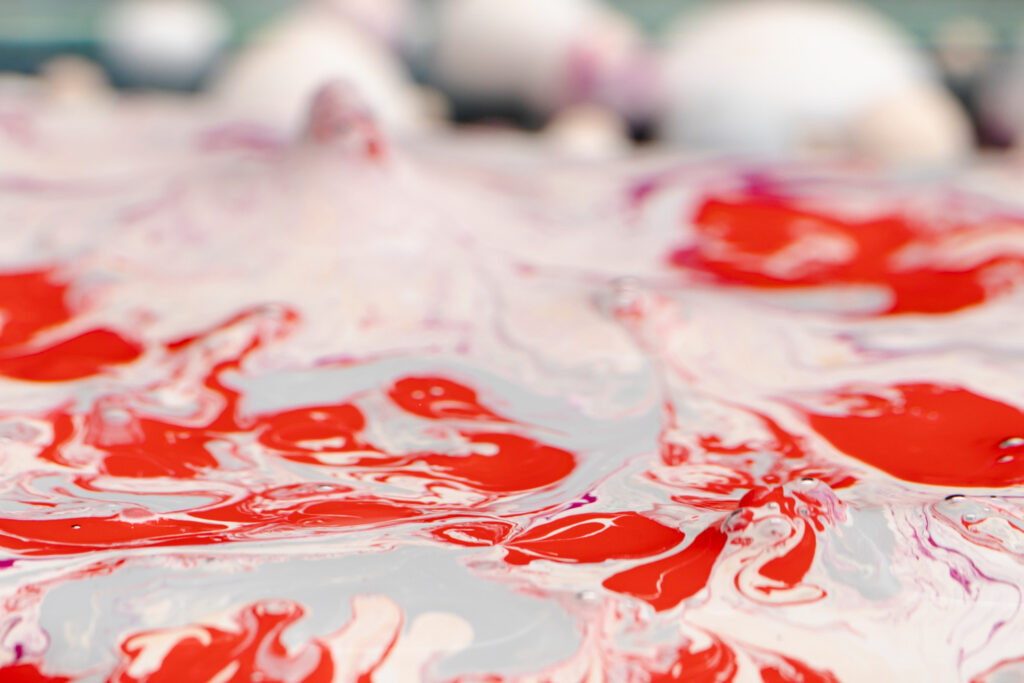
Before getting into applications, the chemistry deserves a quick explanation because it is what makes this class of materials so adaptable.
A water-based acrylic polymer emulsion is produced through emulsion polymerization. Acrylic monomers, typically combinations of methyl acrylate, butyl acrylate, ethyl acrylate, and methyl methacrylate, are polymerized in water in the presence of surfactants. The result is a stable dispersion of fine acrylic polymer particles in water.
When the emulsion is applied to a surface, water evaporates and the polymer particles coalesce into a continuous, flexible, adhesive film. That film is what delivers adhesion, weather resistance, chemical resistance, and durability.
The key formulation lever is monomer selection. Hard monomers like methyl methacrylate raise the glass transition temperature, adding hardness and block resistance. Soft monomers like butyl acrylate lower it, adding flexibility and adhesion. By adjusting this balance, chemists tailor emulsions for radically different end-use conditions. That flexibility across applications is what explains why acrylic emulsion turns up in everything from exterior masonry paint to food packaging adhesives.
7 Key Applications of Acrylic Polymer Emulsion for U.S. Manufacturers
1. Architectural Paints and Interior Coatings
This is the dominant use case. Acrylic emulsions serve as the primary binder in both interior and exterior architectural paints, making them white, colorfast, durable, and washable. The American Coatings Association notes that architectural coatings form the largest and most concentrated segment of U.S. paint manufacturing.
For interior applications, acrylic emulsions deliver scrub resistance, low odor, and fast drying. For exterior use, all-acrylic grades provide UV stability, chalk resistance, and weather durability that solvent-based or vinyl acetate formulations cannot match at the same environmental profile. Premium interior paints in the U.S. now routinely achieve zero or near-zero VOC status using optimized acrylic emulsion binders combined with coalescent-free formulation strategies.
Why U.S. manufacturers choose it: EPA National Emission Standards under the Clean Air Act, plus California CARB and similar state-level regulations, make high-performance waterborne binders essential for compliance. All-acrylic emulsions meet these thresholds without sacrificing performance.
2. Industrial and Protective Coatings
Industrial maintenance coatings, direct-to-metal primers, anti-corrosion finishes, and floor coatings all use water-based acrylic emulsions. These applications demand a different performance profile than architectural coatings: early water resistance, chemical resistance, adhesion to challenging substrates, and film hardness.
Self-crosslinking acrylic emulsions are commonly specified here. Crosslinking builds a tighter polymer network after application, improving solvent resistance and durability under mechanical stress. In January 2023, Engineered Polymer Solutions launched a high-solids acrylic emulsion specifically for direct-to-metal coatings in industrial maintenance and railcar finishes, reflecting the active innovation in this segment.
Why U.S. manufacturers choose it: VOC regulations and workplace safety requirements have made solvent-based industrial coatings increasingly difficult to specify. Waterborne acrylics close the performance gap while meeting compliance thresholds.
3. Construction: Concrete, Masonry, and Roofing
Construction is one of the largest and fastest-growing end-use segments for acrylic polymer emulsions in the U.S. The construction sector is projected to grow at roughly 4% annually through 2028, and acrylic emulsions sit at the center of several key product categories.
Specific construction applications include:
- Elastomeric roof coatings: All-acrylic emulsions with high elongation and tensile strength form flexible, weatherproof membranes on low-slope roofs
- Concrete sealers: Penetrating and film-forming acrylic sealers protect concrete from moisture, chloride ingress, and freeze-thaw cycling
- Cement modifiers: Adding acrylic emulsion to cement repair mortars and tile adhesives improves bond strength, flexibility, and water resistance
- Masonry coatings: Exterior masonry paints use acrylic emulsions for their alkali resistance and efflorescence control on concrete block and brick
Why U.S. manufacturers choose it: Construction-grade acrylic emulsions meet demanding performance specs while enabling water-based formulation. LEED and green building certification programs favor low-VOC materials, giving acrylic emulsion-based products a market access advantage.
4. Paper and Paperboard Coatings

Paper coatings are a significant but less discussed application for acrylic polymer emulsions. Both coating-grade papers and functional barrier papers use acrylic emulsions as binders or as barrier-forming layers.
In graphic arts applications, acrylic emulsion-based overprint varnishes and inks provide water resistance, rub resistance, and gloss on packaging printed surfaces. In barrier coatings for food packaging paperboard, specialized acrylic emulsions with oil, grease, and moisture resistance allow paper to substitute for plastic laminate layers. Adoption of waterborne coatings in meat and dairy packaging has climbed roughly 19% annually since 2021 as brands seek alternatives to fluorinated barrier chemistries.
Why U.S. manufacturers choose it: FDA indirect food contact compliance and the phase-out of PFAS-based barriers are accelerating acrylic emulsion adoption in food packaging paper applications. Waterborne acrylic barrier coatings are positioned as the compliant, scalable alternative.
5. Adhesives and Sealants
Pressure-sensitive adhesives for labels and tapes, laminating adhesives for flexible packaging, flooring adhesives, and construction sealants all rely on acrylic polymer emulsions. The performance driver here is the tunable balance between tack, peel strength, and shear resistance.
In flooring adhesives, high-solids acrylic emulsions with good filler acceptance bond resilient flooring, LVT, and commercial carpet systems. In flexible packaging, the combination of high peel adhesion values and temperature stability across a wide service range makes waterborne acrylic adhesives viable even in demanding retort and frozen food applications.
Why U.S. manufacturers choose it: The shift away from solvent-based contact adhesives in flooring and packaging is driven by both worker safety and air quality regulations. Acrylic emulsions deliver equivalent bonding performance without hazardous solvent content.
6. Textiles and Nonwovens
Textile coatings and nonwoven binders represent a specialized but substantial segment for acrylic emulsions. In textile applications, acrylic emulsion backcoatings are applied to carpets, upholstery fabrics, and technical textiles to improve dimensional stability, abrasion resistance, and flame retardancy.
In nonwovens, acrylic binders are used in filtration media, geotextiles, and hygiene products to bond fiber webs without weaving. The Solvay launch of a reactive surfactant for vinyl-acrylic and acrylic latex systems in 2022 reflected continued innovation in APE-free emulsifier chemistry for textiles, responding to restrictions on alkylphenol ethoxylates in textile manufacturing.
Why U.S. manufacturers choose it: PFAS restrictions in textiles and tightening effluent standards for textile mills are pushing formulators toward clean-chemistry acrylic emulsion systems.
7. Automotive Coatings and Specialty Finishes
Automotive is an evolving segment for waterborne acrylic emulsions. Underbody coatings, stone-chip primers, interior trim coatings, and refinish primers increasingly use water-based acrylic systems as OEMs push toward lower VOC manufacturing footprints.
In March 2024, Dow expanded its acrylic emulsion production capacity in North America specifically to serve growing demand from the construction and automotive sectors. In September 2025, Dow also launched a next-generation acrylic polymer emulsion for coatings and adhesives with reduced VOC emissions and enhanced durability.
Why U.S. manufacturers choose it: Automotive OEM environmental specifications are ahead of regulatory minimums. Waterborne acrylic systems meet both the OEM requirements and the EPA thresholds that govern auto manufacturing plants under state implementation plans.
The Regulatory Case: EPA VOC Limits and What They Mean
The regulatory driver behind U.S. adoption of water-based acrylic emulsions is straightforward. Under the Clean Air Act, the EPA regulates VOC emissions from coating operations. Architectural coatings, industrial maintenance coatings, and auto refinishing all have category-specific VOC limits measured under EPA Method 24.
State regulations go further. California’s South Coast Air Quality Management District (SCAQMD) and similar regional boards in the Northeast have VOC limits below federal floors. For manufacturers selling nationally, the California threshold effectively becomes the ceiling for product design.
Water-based acrylic emulsions contain water as the carrier rather than organic solvents. The residual VOC content, primarily from coalescents and any retained monomers, can be formulated to meet even the most restrictive state limits. VOC regulations such as EU REACH, U.S. EPA Method 24, and state-level rules favor emulsions with negligible solvent content and non-toxic profiles. Zero-VOC architectural paints built on acrylic emulsions are commercially available and are now the standard for premium interior paint products.
Why Water-Based Acrylic Emulsion Beats Solvent-Based Systems?
The performance case matters as much as the compliance case. Solvent-based systems have not survived in the market purely through regulatory inertia. They offered real performance advantages in adhesion, hardness, and chemical resistance that waterborne systems historically struggled to match. That gap has closed.
| Performance Property | Water-Based Acrylic Emulsion | Solvent-Based System |
| VOC Emissions | Very low to zero | High |
| UV and Weather Resistance | Excellent (rutile-grade) | Good to excellent |
| Adhesion to Substrates | Excellent with proper grade | Excellent |
| Drying Speed | Fast | Fast to moderate |
| Worker Safety | Low hazard | Flammable, inhalation risk |
| Cleanup | Water cleanup | Solvent cleanup |
| Regulatory Compliance | Meets current U.S. limits | Increasingly restricted |
| Bio-based Options Available | Yes | Limited |
Emerging Trends Worth Watching
Bio-based acrylic emulsions are moving from concept to commercial reality. Arkema partnered with Catalyxx in September 2025 to develop low-carbon, bio-based acrylic resins using proprietary fermentation technology. Bio-acrylic acid derived from renewable feedstocks reduces the carbon footprint of the emulsion without significant performance compromise.
PFAS-free and APE-free formulations are becoming baseline requirements, not premium options. Both fluorosurfactant-free and alkylphenol ethoxylate-free emulsion grades are now standard offerings from major producers including Engineered Polymer Solutions, which launched a fluorosurfactant-free all-acrylic emulsion in May 2025.
High-solids, low-VOC grades are gaining ground in industrial applications where transfer efficiency and film build matter. High solids content reduces the number of coats needed and improves productivity while keeping VOC totals well below regulatory thresholds.
Sourcing Acrylic Polymer Emulsions: What U.S. Buyers Should Know
Procurement of acrylic polymer emulsions in the U.S. involves both domestic and imported supply. Domestic producers including Dow, BASF, Arkema, Lubrizol, and Mallard Creek Polymers supply a wide range of grades. Import supply from Asian producers, particularly for commodity grades used in construction coatings and paper, is also significant.
Raw material price volatility is the primary supply-side risk. Acrylic acid, the primary monomer, is derived from propylene and tracks crude oil and natural gas prices. When energy markets spike, monomer costs follow, and emulsion prices adjust accordingly.
Buyers managing large coatings or adhesive programs should consider forward buying or contract pricing during stable monomer markets, as well as dual-sourcing from domestic and imported emulsion suppliers. Platforms like Elchemy, which connects U.S. buyers with verified chemical and polymer suppliers, offer access to quality-verified acrylic emulsion grades from Asian producers with complete documentation, helping procurement teams manage cost exposure without compromising on specification compliance.
Final Thoughts
Water-based acrylic polymer emulsion has earned its position as the dominant binder technology across U.S. coating, adhesive, and construction applications. The environmental compliance advantage is real. So is the performance case across the seven categories covered above.
What makes this material particularly valuable for U.S. manufacturers right now is the combination of regulatory tailwind, formulation versatility, and an active innovation pipeline. Bio-based options, PFAS-free grades, and next-generation high-performance emulsions are all moving from R&D into commercial availability.
The question for procurement and formulation teams is no longer whether waterborne acrylic emulsions belong in the specification. It is which grade, from which source, at what price structure matches the specific application need.